
Locs take color differently than loose hair. The texture holds pigment in a way that creates depth and dimension you cannot get with straight strands, which is why lived-in color and glossy natural texture are trending for locs right now.
This collection of 19 dyed locs ideas covers the full spectrum, from subtle caramel highlights to bold rainbow ombres, across short, medium, and long lengths. Whether you need to camouflage a visible grow-out line or want to make a statement with an updo, each section gives you the colorist lingo and upkeep timeline so you can bring the photo to your next appointment.
Dark Brown Base With Blonde Two-Tone Locs
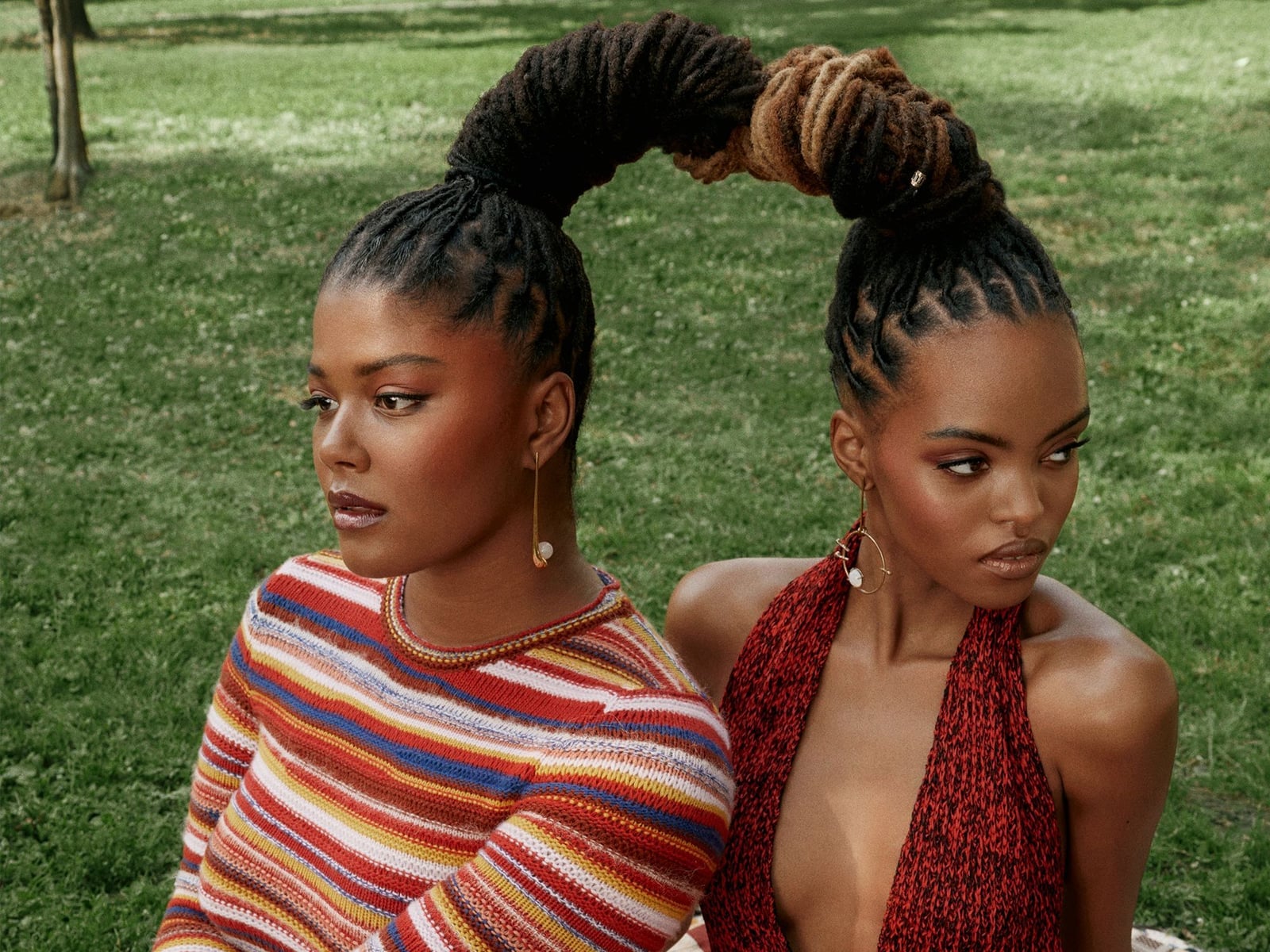
The high updo shows contrast with dark brown roots giving way to bright blonde ends. This two-tone effect on wavy locs works best when the colorist paints each loc individually, keeping the transition line soft. Thick locs at mid-back length carry the dimension best, since the weight of the hair helps the blonde read as a deliberate fade. Ask your colorist for: dark brown base with blonde tips. A purple shampoo once a week prevents brassiness, and a root touch-up every eight to ten weeks keeps the two-tone crisp.
Shoulder Length Locs With Undercut
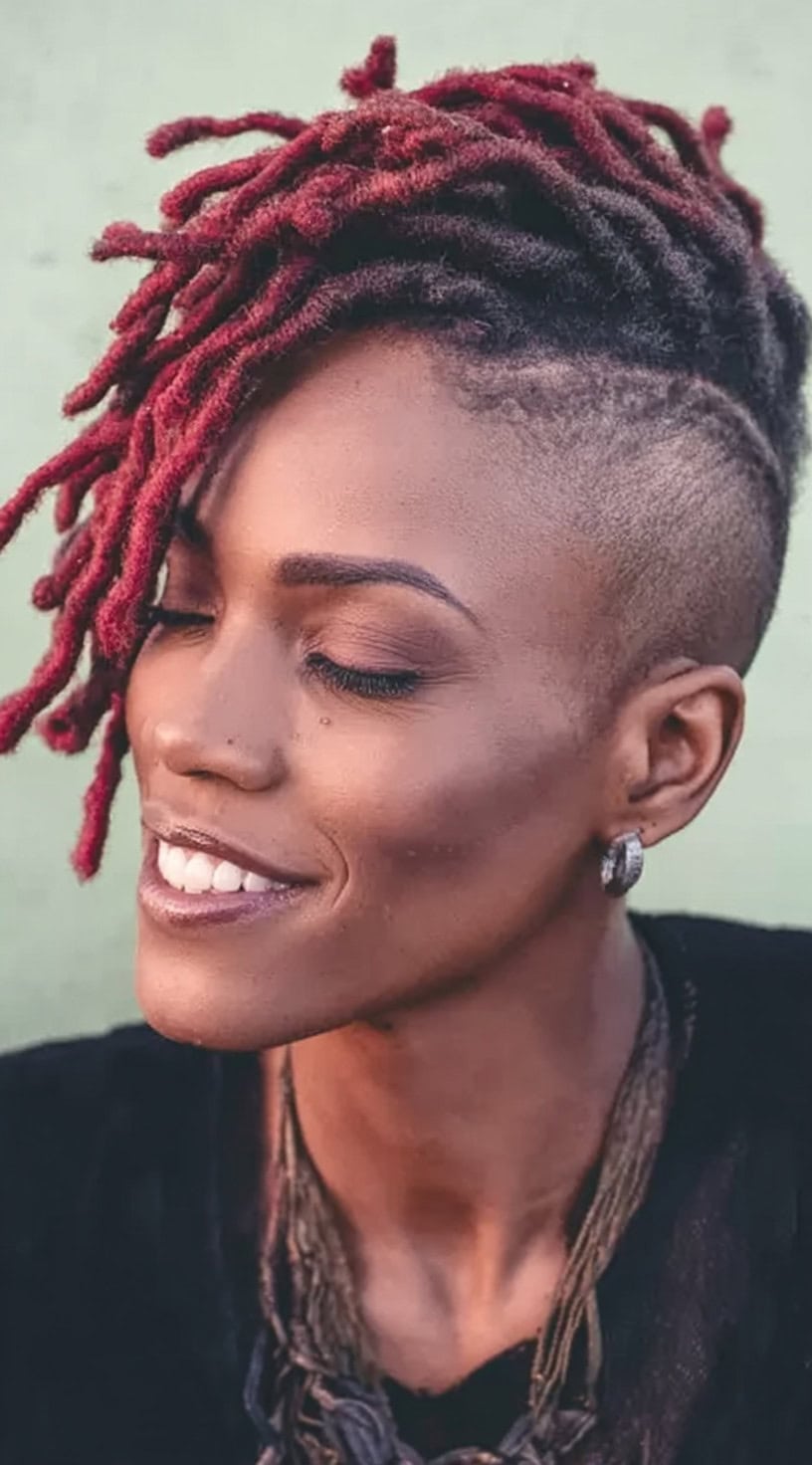
Wondering if a vibrant red undercut is too much for your routine? For medium-density locs that hit the shoulders, the bold hue actually simplifies styling, since the shaved section cuts down on bulk and the side-swept bangs soften the whole shape. The wavy texture keeps the red from looking flat, and the undercut adds an edge that suits square or oval face shapes without overwhelming them. Ask your colorist for: vibrant red color with undercut. Just know the red will demand attention, so commit to the upkeep or pick a shade closer to your natural base.
Mid-Back Locs With Rainbow Ombre Undercut
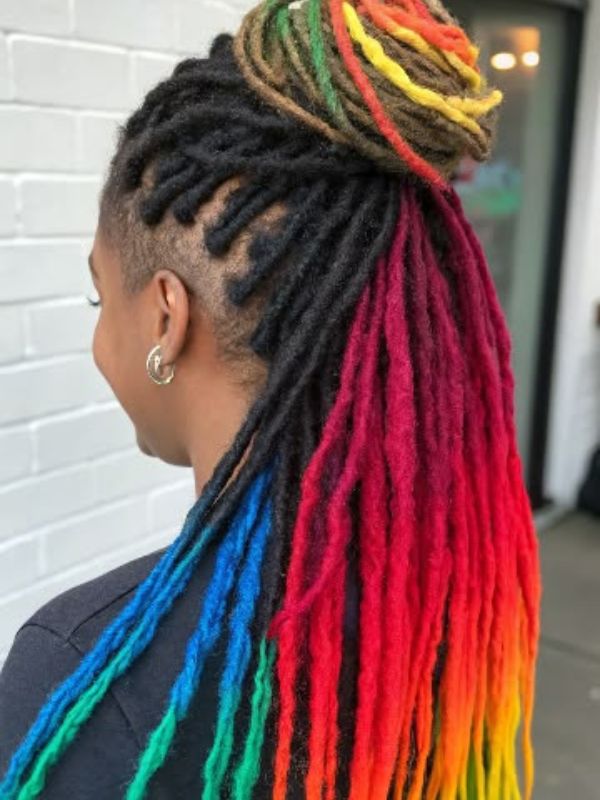
A black base that melts into a rainbow ombre is not a casual color choice, especially when the locs are styled into an updo that reveals the undercut. The technique is precise: each loc is sectioned and painted individually, with the colors shifting from red and pink near the roots to blue and green at the ends, so the gradient looks seamless rather than striped. Thick, coily locs at mid-back length hold the saturation well, and the undercut creates a clean contrast that lets the ombre pop. Ask your colorist for: black base with rainbow ombre, undercut. The honest drawback is the maintenance: expect to refresh the ombre every eight to twelve weeks, and use color-safe products to keep the shades from muddying into brown.
What to discuss before the appointment:
- How many colors you want in the ombre
- Whether the undercut should be shaved or faded
- How often you can commit to touch-ups
Mid-Back Faux Locs With Auburn Copper Highlights
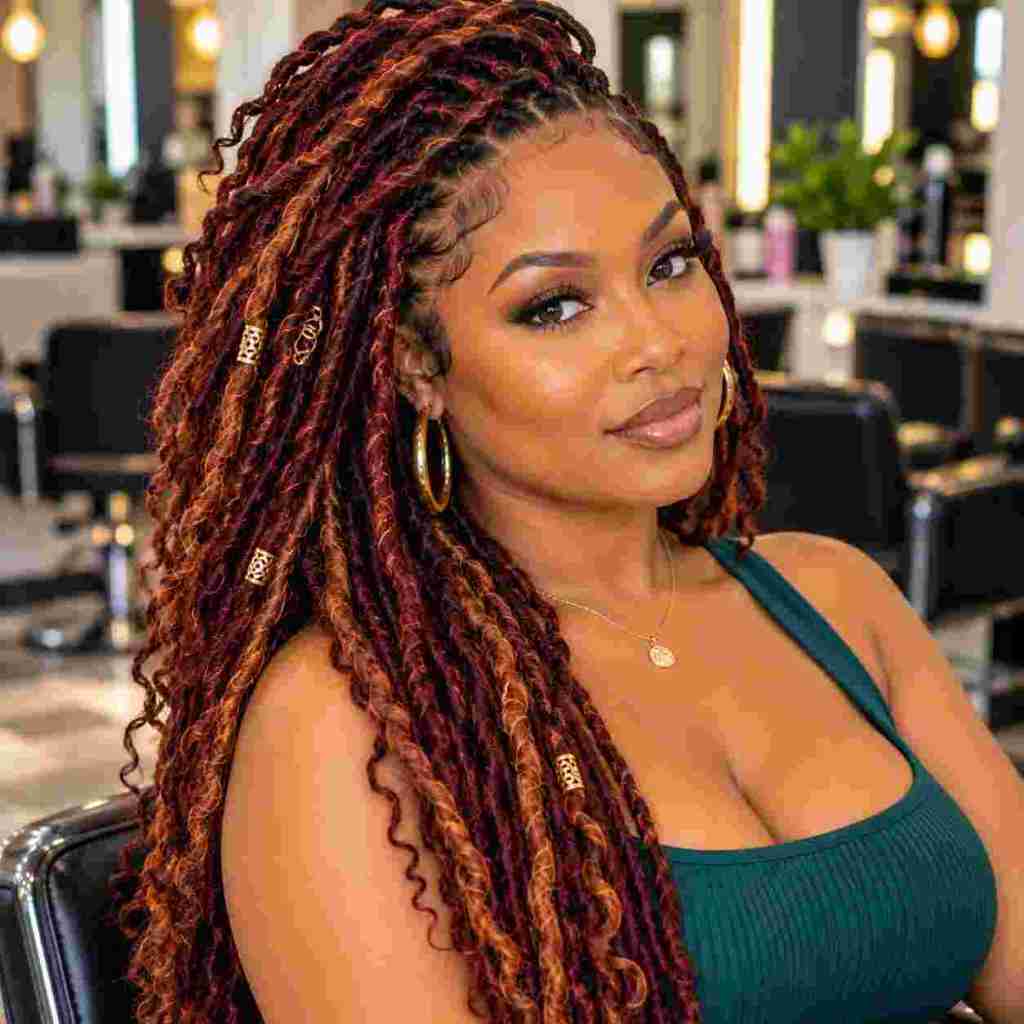
The blend of auburn and copper over a dark base gives these faux locs a warm, lived-in quality that plain color can’t match. The highlights are woven through the wavy texture in thin strands, so the effect is dimensional rather than striped, and the mid-back length lets the color move as you do. Thick faux locs carry the blend without looking heavy, and the middle part keeps the front clean. Ask your colorist for: dark base faux locs with auburn and copper highlights. To keep the warmth from fading, a leave-in conditioner every few days helps maintain moisture, and a color-refreshing treatment every ten to twelve weeks will keep the copper from going dull.
Shoulder Length Faux Locs In Deep Burgundy
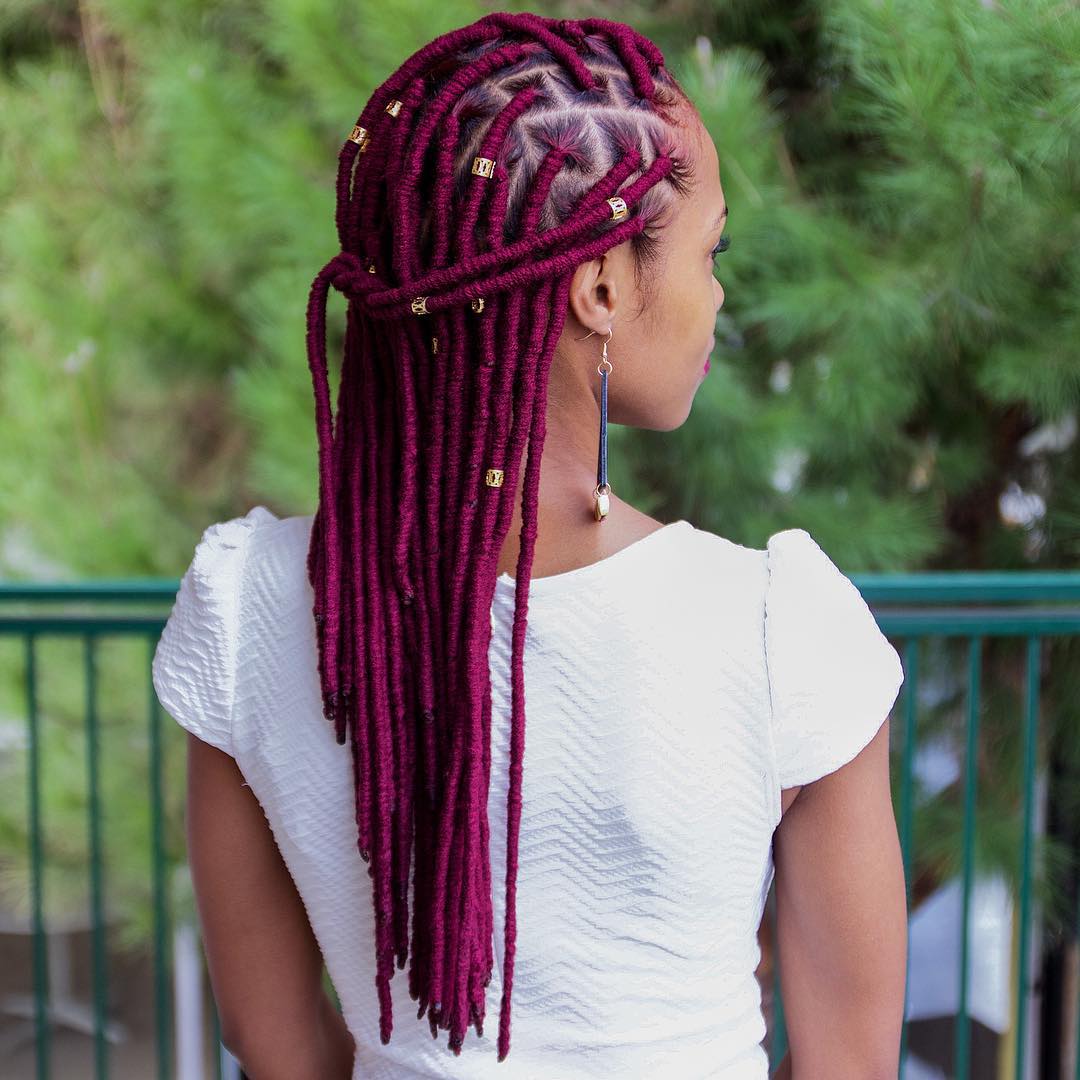
Compared to a brighter red, deep burgundy is a darker shade that still commands attention. These shoulder-length faux locs are styled half-up, half-down with intricate braids and beads. The wavy texture and thick density give the burgundy depth, and the side parting adds a soft asymmetry that works for both casual days and dressier occasions. Ask your stylist for: shoulder length faux locs with deep burgundy. The color holds well on faux hair, but expect to refresh the tone every six to eight weeks if you want the richness to stay.
Mid-Back Locs In Honey Blonde Space Buns
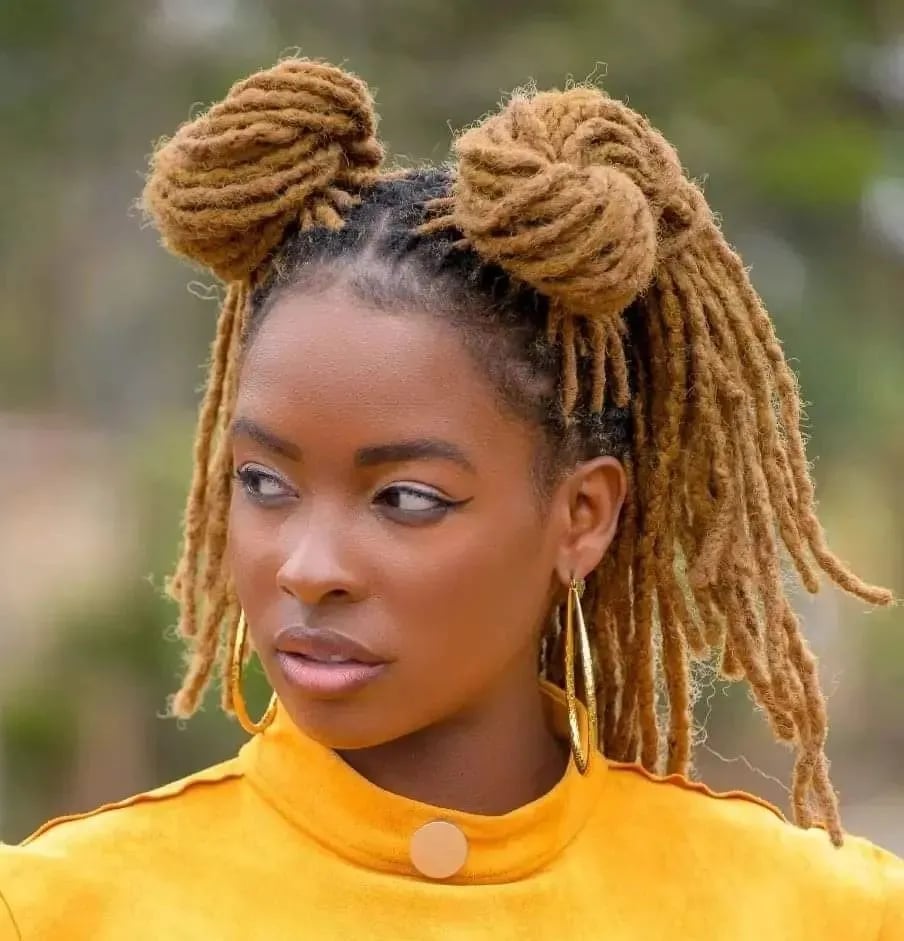
How much time do you have? That is the real question before committing to honey blonde on thick, coily locs. Achieving even saturation through every loc requires a careful application process and patience, so plan for a full salon day. The payoff is a mid-back length set of two space buns with the remaining locs falling loose, all in a warm honey blonde with subtle highlights for dimension.
This is a salon-leaning transformation best suited to those with thick locs at mid-back length. Honey blonde reads warm against fair to medium complexions. Ask your colorist for: honey blonde locs, two space buns. Between salon visits, use dry shampoo to refresh the buns and schedule a toning appointment every four to six weeks to keep brassiness at bay.
Mid-Back Locs With Multi-Colored Updo
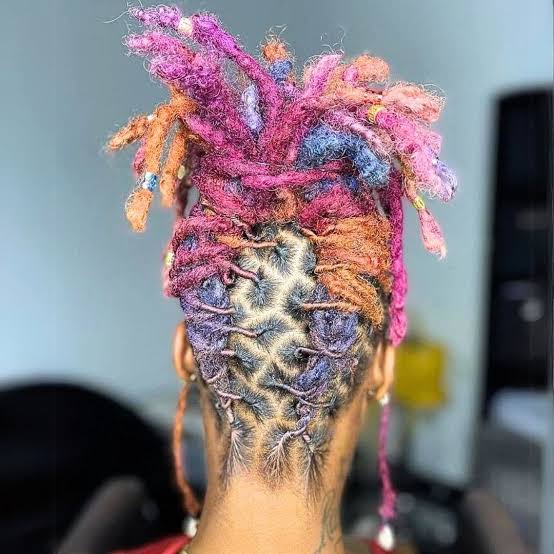
The back view reveals the real work here. Thick, mid-back length locs are gathered into an intricate updo with visible braided sections at the nape, and the color placement follows the form. Sections in pink, orange, blue, and purple are woven through the dark base, so each twist and braid catches a different hue. The middle parting keeps the crown neat while the color does the talking.
This design works for thick locs of mid-back length and suits any face shape. Ask your colorist for: multi-colored locs, pink orange blue purple, intricate updo. Color-safe shampoo and cool water rinses help the vivid shades hold their intensity. Plan a refresh appointment every four to six weeks to keep the brights from fading into pastels.
Shoulder Length Locs With Subtle Rainbow Highlights
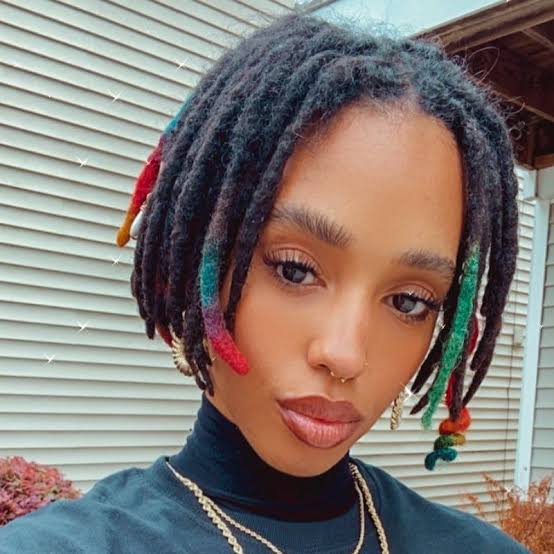
This is what happens when you want color without the commitment of a full rainbow. Shoulder-length locs with medium density wear a dark base with thin strands of red, yellow, green, and blue woven through, and the loose, air-dried finish keeps the effect understated. The trade-off: subtle rainbow highlights are harder to spot from a distance, so if you want the color to read clearly, ask for thicker sections or a higher contrast. For a low-key everyday look, this version blends in naturally.
Mid-Back Locs With Red Orange Contrast Updo
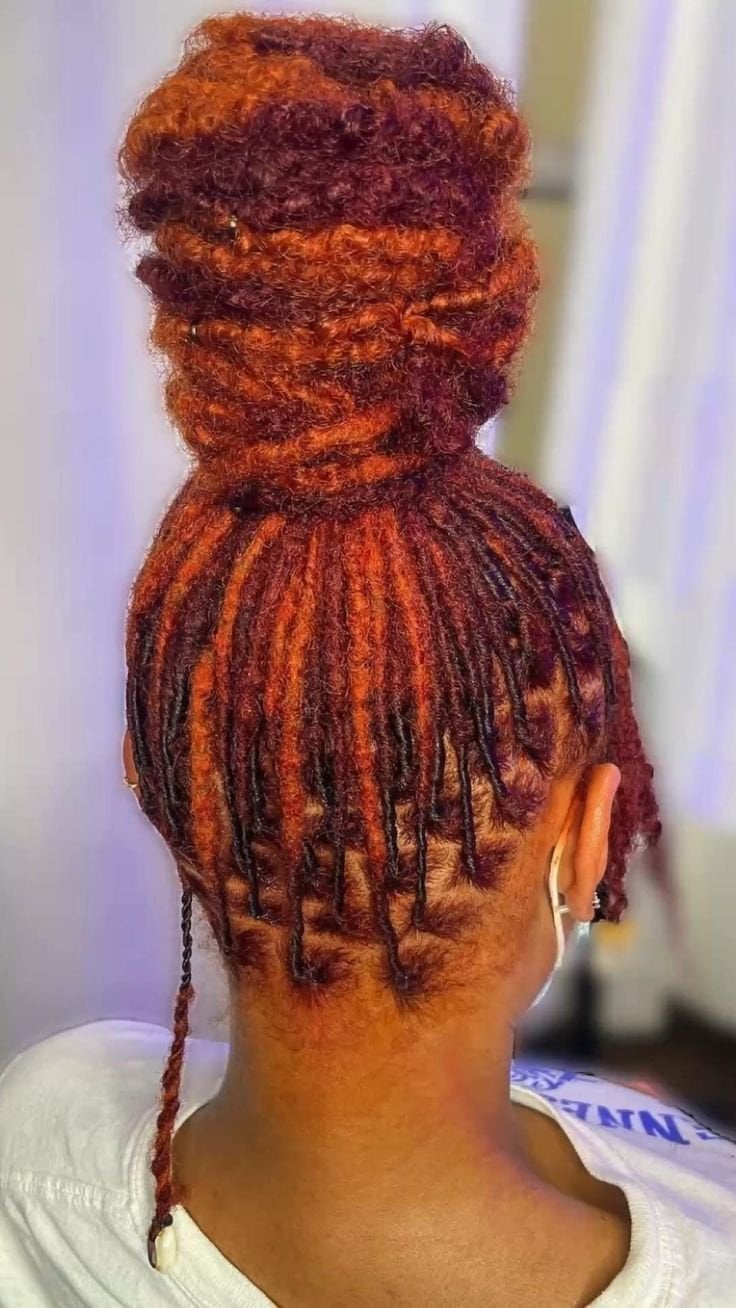
Can warm tones work on cool complexions? They can, with the right depth. Mid-back length locs are pulled into an updo with braided sections at the nape, and the color story is a red and orange contrast against a dark base. The warm tones shift in appearance from every angle, especially with the back view showing the braided detail and a single strand extending down.
This look suits medium to deep complexions, where the red and orange read vibrant and bold. Ask your colorist for: dark base locs with red and orange tones, updo with braids. A hair net helps the updo hold its shape overnight. Color refresh every six to eight weeks keeps the contrast sharp.
Shoulder Length Locs In Uniform Vibrant Red
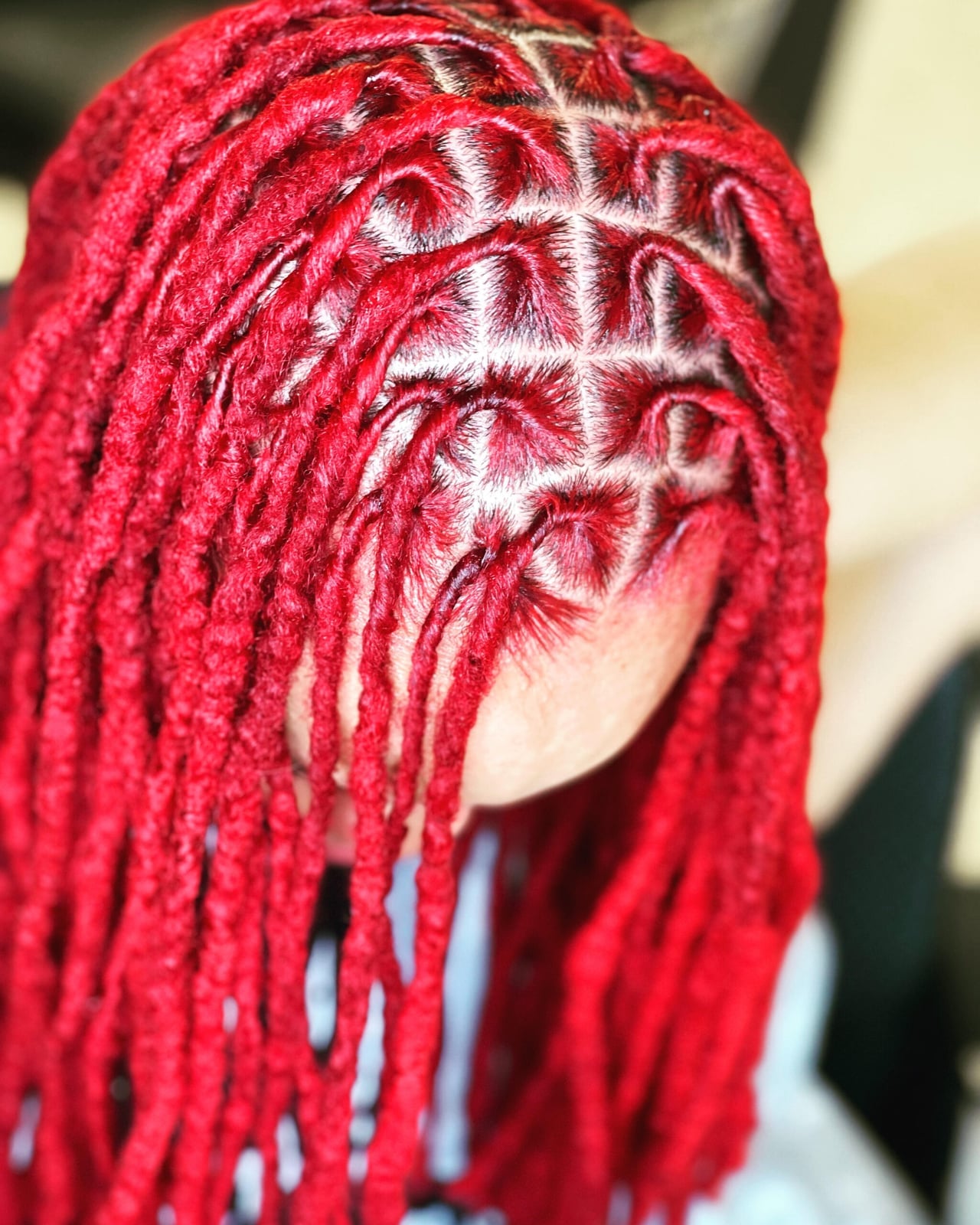
The overhead view is the tell: a neatly braided grid pattern on the scalp, with every loc in a uniform vibrant red from root to tip. Shoulder-length locs with dense texture carry this single-shade approach well, since there is no second color to distract from the intensity. The upkeep is straightforward but nonnegotiable. Red fades faster than cooler tones, so a color-depositing shampoo extends the life between appointments. Trim the locs every eight to ten weeks to keep the ends clean. Ask your colorist for: shoulder length locs, uniform vibrant red color, braided scalp pattern.
Mid-Back Locs With Purple Tips
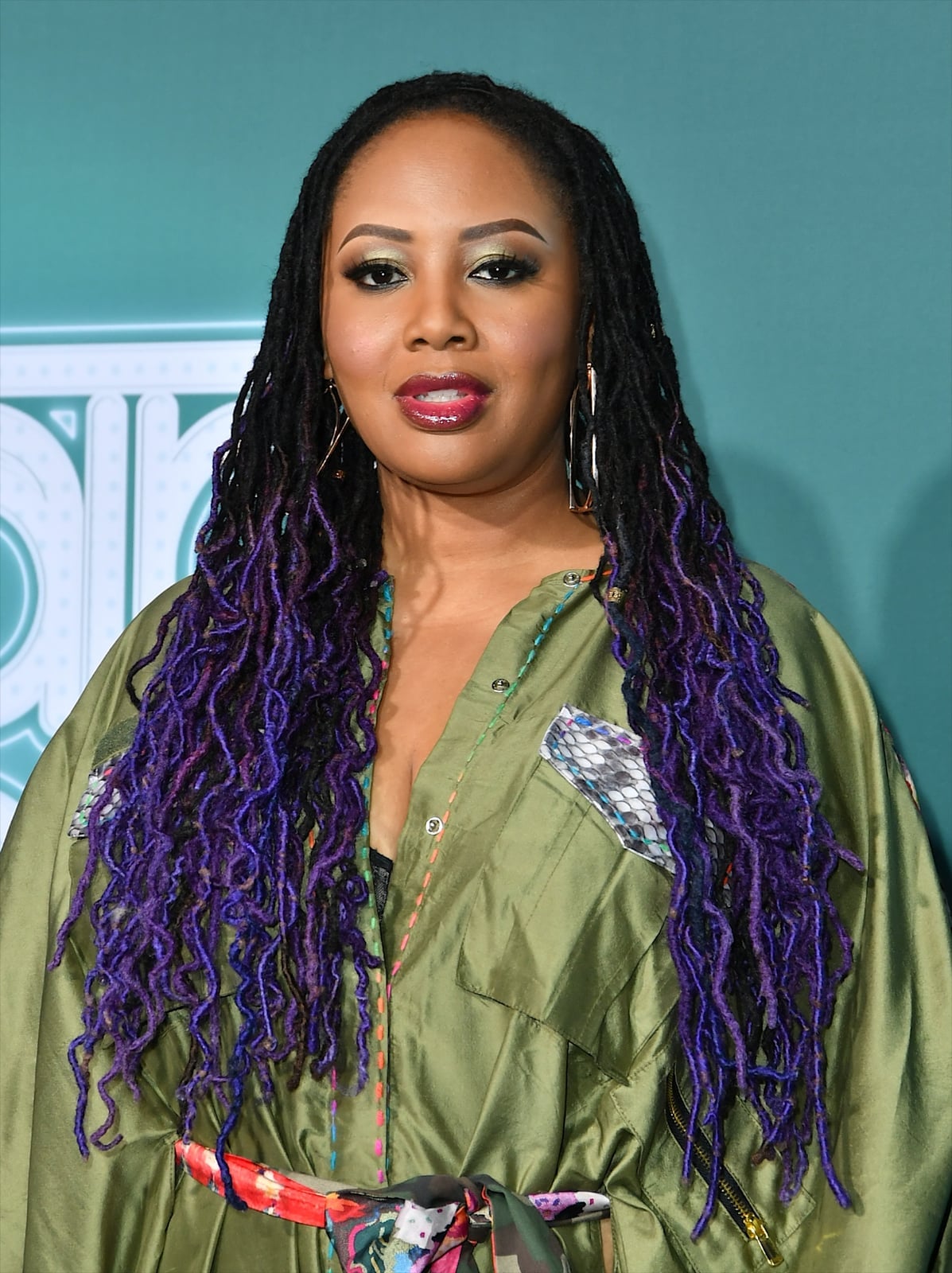
The design is straightforward: a black base runs from root to mid-length, then shifts to a vibrant purple at the tips. The transition is clean, not a gradient. Dense locs of at least mid-back length are ideal, as the color needs enough length to show as a deliberate accent. Ask your colorist for: black base with purple tips, no blending. This is a salon-only project, not a box-dye weekend. The purple will need refreshing every six to eight weeks to stay bright, and a color-depositing conditioner between appointments helps keep the tips from turning muddy.
Collarbone Length Locs In Warm Copper Updo
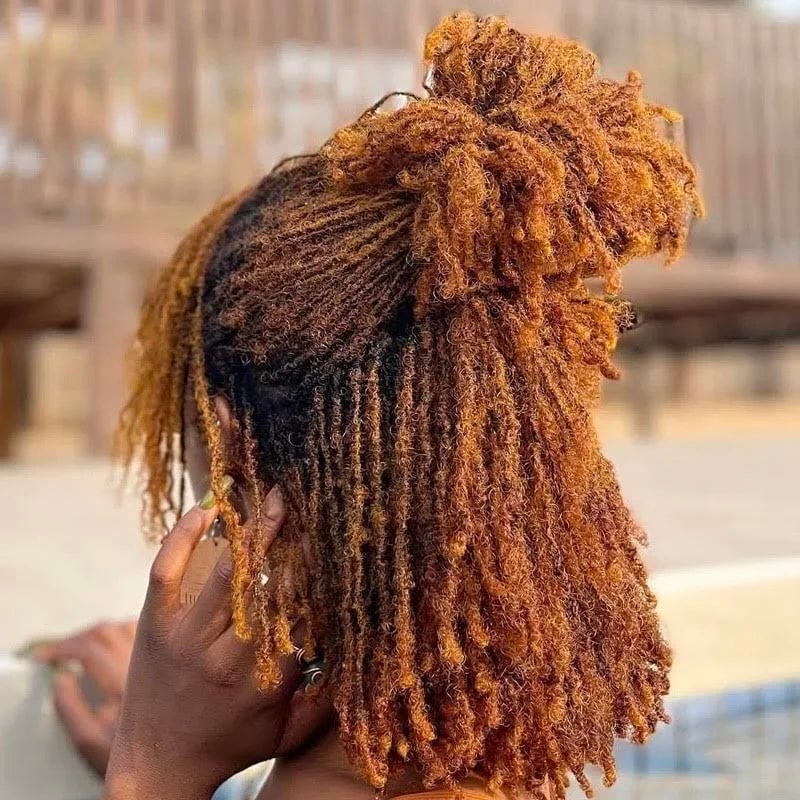
A warm copper tone looks natural against darker roots in an updo with a root shadow. The colorist applies a rich copper from mid-length to ends, leaving the regrowth dark so the updo has depth at the crown. Thick, coily locs at collarbone length hold the shape best, and the voluminous bun keeps the copper visible from every angle. Ask your colorist for: warm copper locs with dark root shadow. This is a strong choice for a wedding or evening event, where the color catches warm light without looking unnatural.
Shoulder Length Locs In Purple Pink Black Buns
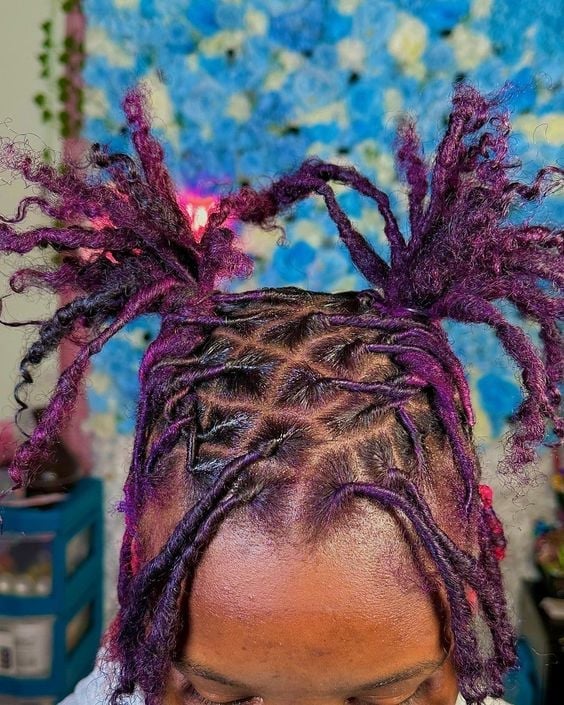
The two high buns keep the multicolor effect contained and intentional. Coily, dense locs at shoulder length provide enough weight for the buns to sit firmly. Ask your colorist for: shoulder length locs, purple pink black color blocks. The honest drawback is upkeep: three vibrant tones mean a toning appointment every four to six weeks, and one shade fading faster than the others is a real risk.
Shoulder Length Locs In Vibrant Blue
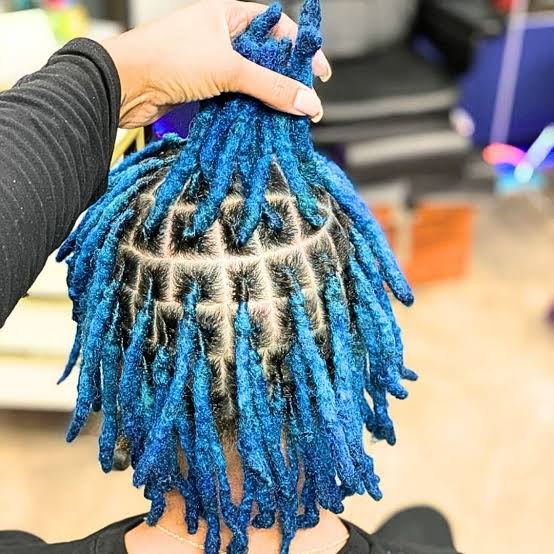
The back view here shows a precise grid parting that gives the vibrant blue color a graphic quality. The darker roots ground the look, keeping it from reading as a wig. Medium density locs at shoulder length work well for this style, as the parting lines stay crisp without gaps. Ask your colorist for: shoulder length locs, vibrant blue color with dark roots, grid pattern. The grid requires a steady hand and a full session in the chair; it is not a style you touch up yourself between visits.
Collarbone Length Locs With Red Accents Updo
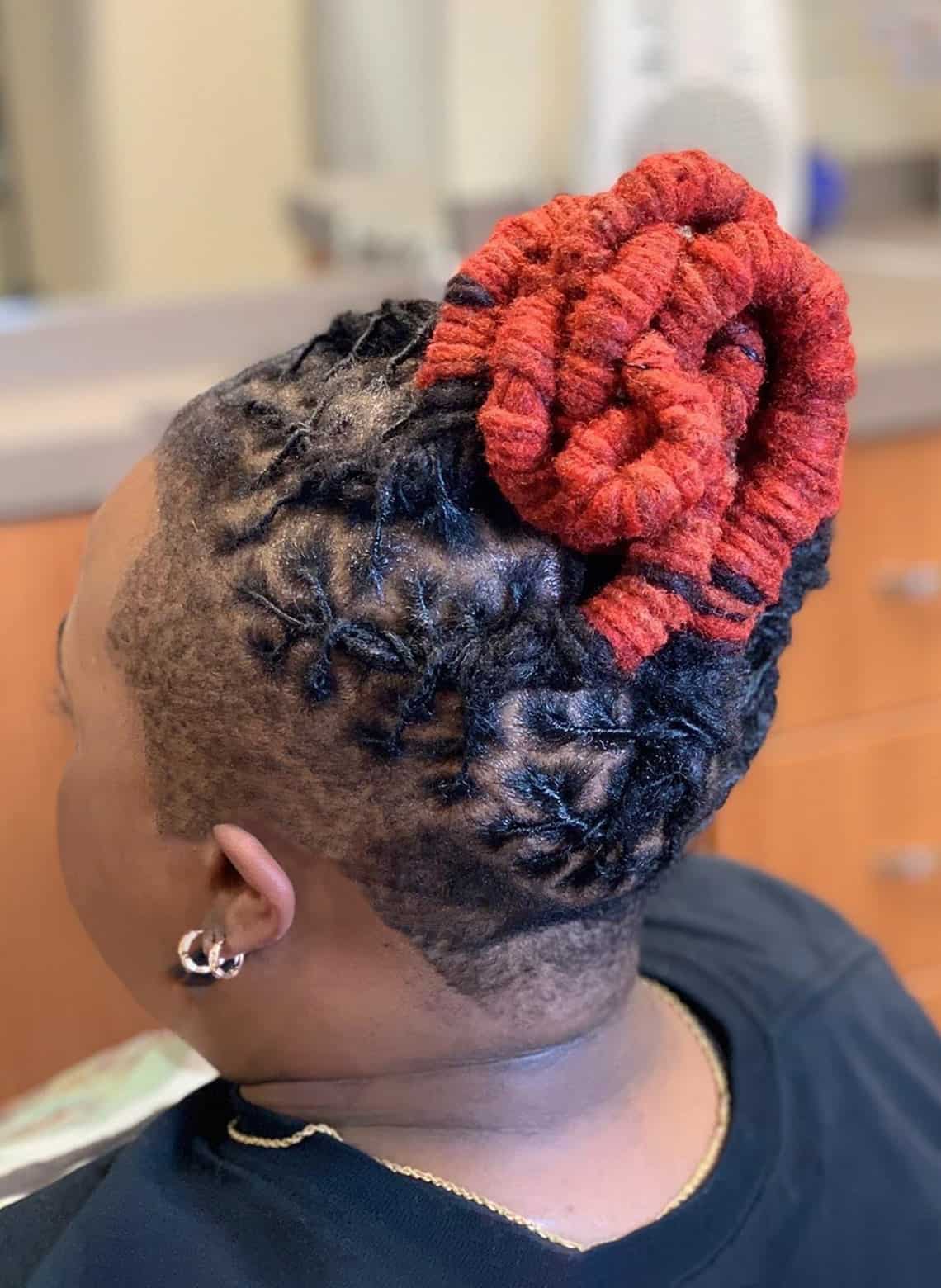
How do red accents hold up in an updo through a full day? The secret is placement. Here, the vibrant red locs are woven into a large top bun against a black base, so the color stays visible even when the style shifts. The sides feature a clean fade, which keeps the silhouette modern. Collarbone length is the minimum for this bun to have enough mass. Ask your colorist for: collarbone length locs, black base with red accent locs. The red will need a refresh every six to eight weeks, and a satin scarf at night prevents the bun from loosening.
Collarbone Length Locs In Rich Warm Copper, Middle
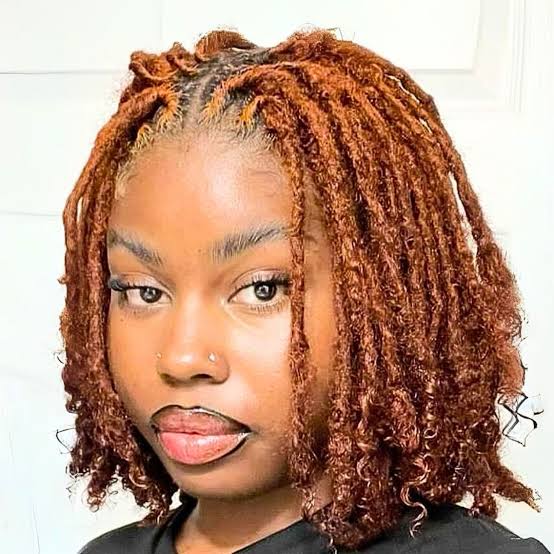
A warm copper this saturated shows every turn of the loc, which is why the middle parting and the loose, curled ends earn their keep: the color needs structure to sit on. Medium density locs falling to the collarbone give the shade enough surface to read as copper and not orange. Ask your colorist for: collarbone length locs, rich warm copper color, curled ends. That last word matters. Copper is a broad church, and the difference between a brassy orange and a deep burnished tone is a conversation about tone, not a swatch. This is a salon job: a single process over locs is slow, section by section, and a home box cannot promise an even result across that density. Bring the photo, point at the ends, and say the word copper twice.
Mid-Back Locs With Blonde Highlights
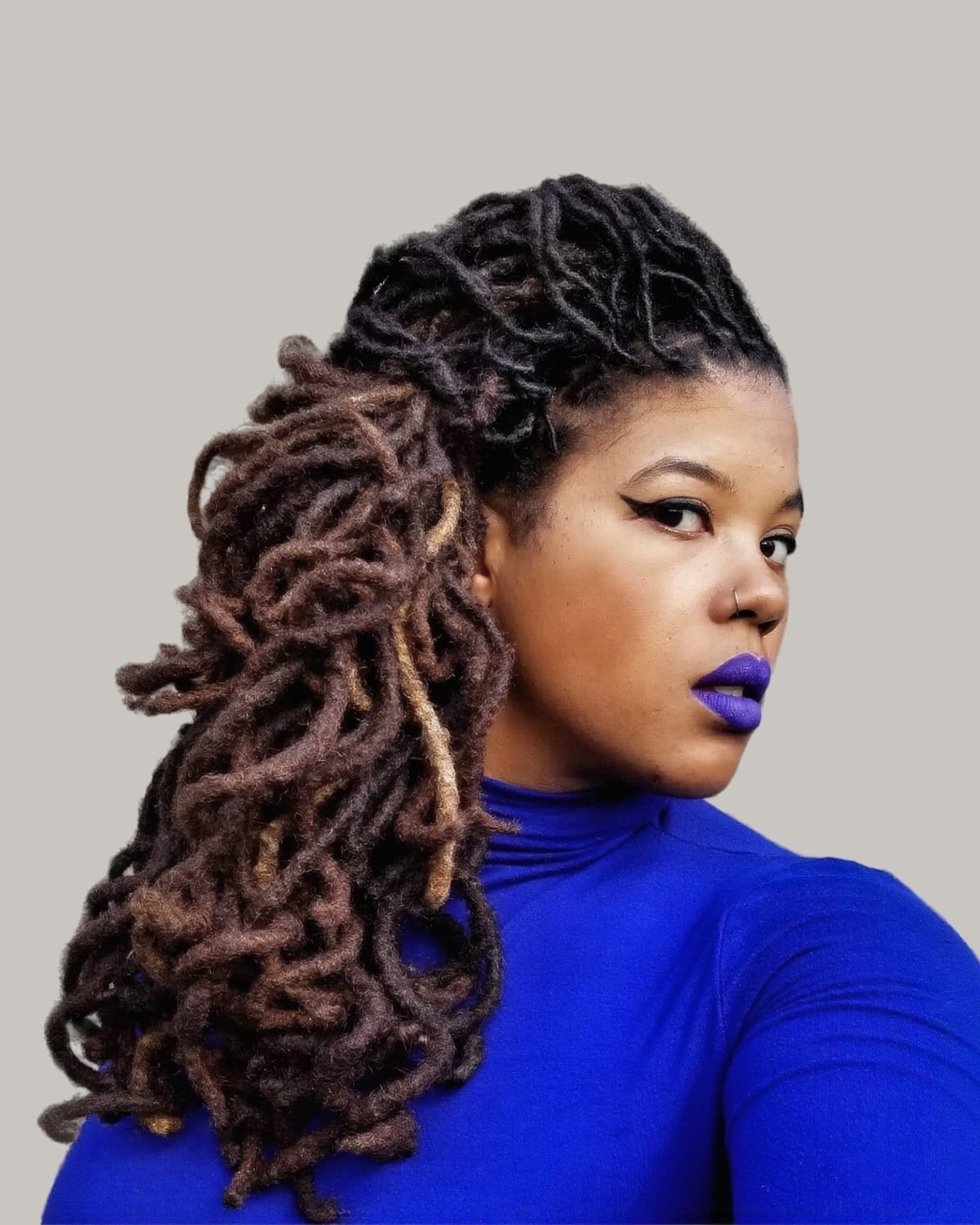
Blonde on a dark brown base is a patience game, and mid-back locs make it a long one. The highlights are scattered rather than banded, which means your colorist is lifting selected sections instead of painting a stripe, and that is slow work on dense locs. Budget a long appointment for the first round and expect a second pass if the lift is uneven, which it often is on a dark base. Ask your colorist for: dark brown base, blonde highlights, loose style.
Then the calendar takes over. Blonde on locs drifts warm within weeks, so a toning appointment every six to eight weeks keeps the highlights from sliding toward brass. A purple shampoo between visits buys you a little time. Trims run every ten to twelve weeks, and a loose mid-back length means the ends are old hair doing old-hair things, so keep them conditioned. The honest math: this is a color you commit to in hours, not a one-and-done.
Shoulder Length Microlocs With Caramel Highlights
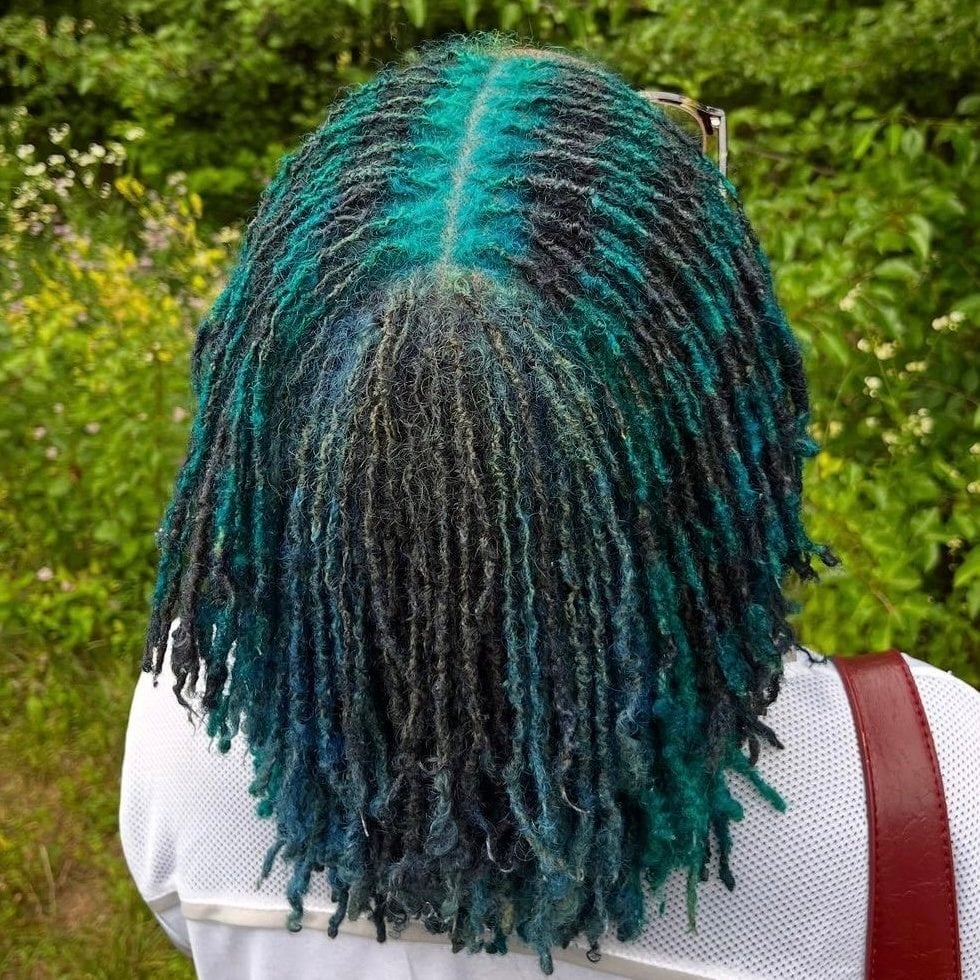
Do caramel highlights even show up on fine microlocs, or do they disappear? They show, quietly. On a dark base with a fine, coily texture, subtle caramel adds warmth without a stripe, giving dimension without a statement. Bolder colors on thicker locs stand out; this one stays subtle at shoulder length and lets the coil pattern be the focus. Ask your colorist for: dark base microlocs, subtle caramel highlights. The catch is upkeep: fine microlocs need a lightweight oil to stay moisturized, and the highlights want a refresh every ten to twelve weeks before they fade into the base.
Mid-Back Locs With Warm Brown Red Ombre
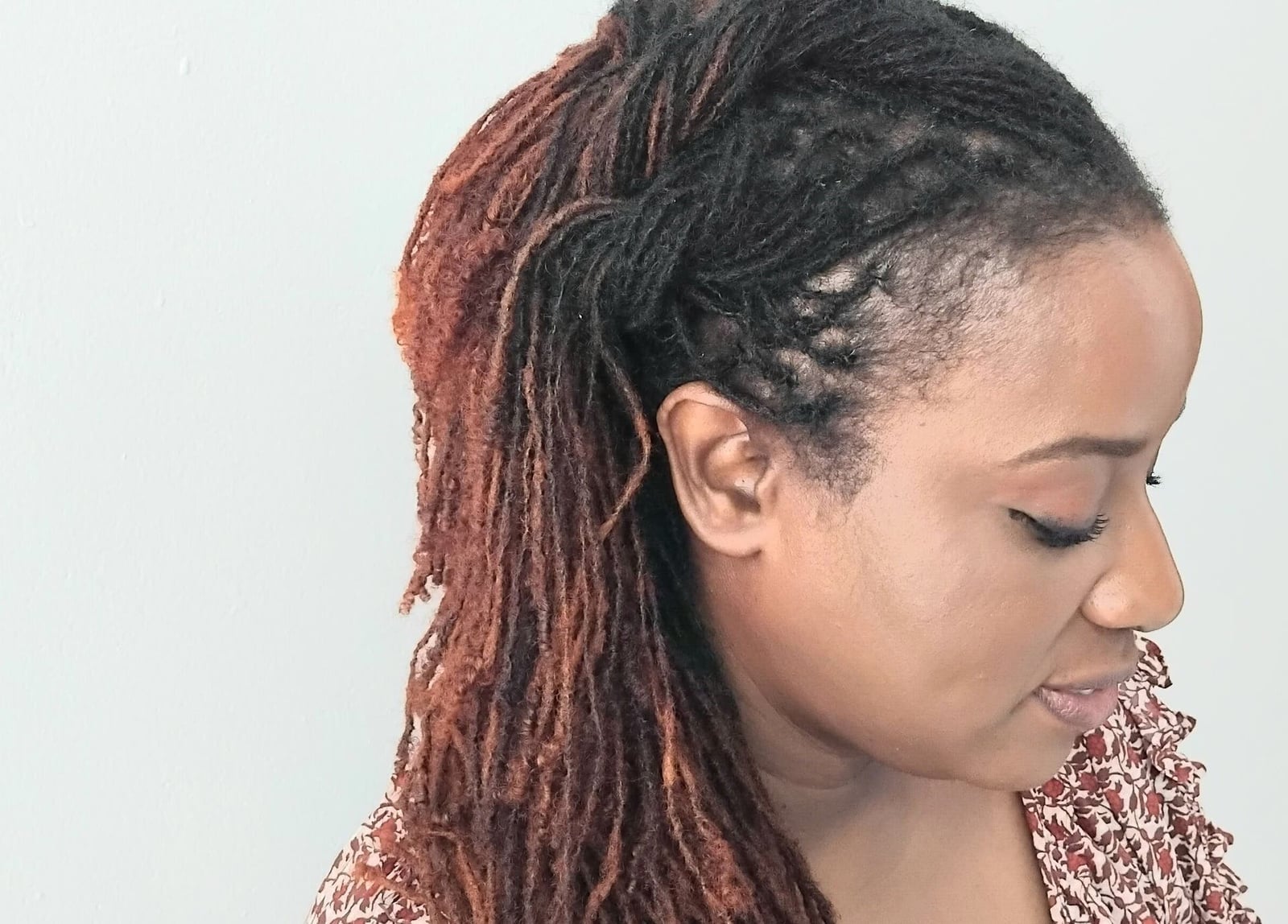
The transition here is gradual, a dark base sliding into warm brown and then red toward the ends, which is exactly the kind of color that typically looks better three weeks in than on day one. Fine locs worn loose and natural let the gradient move as the hair moves, and a side parting gives the ombre a diagonal to travel down. Ask your colorist for: dark base locs, warm brown and red ombre, loose style.
How it wears: the red end of the gradient is the first to fade, usually toward a softer brown-red that most people prefer anyway. Refresh every eight to ten weeks to keep the ends red instead of rusty, and use a leave-in conditioner to keep fine locs from drying out at the tips. The grow-out is kind to you. Because the base stays dark, root regrowth blends in for weeks and the ombre simply creeps lower as the locs grow, which is a rare thing in a dyed loc.
Final Thoughts
For vibrant colors, consider the health of your locs and consult a professional for less damaging application. For subtle highlights or ombres, assess your base color and choose tones that complement your natural shade. Dyed locs are a bold and beautiful way to express yourself.
- Deep condition locs weekly to maintain moisture after coloring.
- Use color-safe shampoos and conditioners to preserve vibrancy.
- Avoid excessive heat styling to prevent color fade and damage.
- Rinse locs with cool water to help seal the cuticle and retain color.
- Schedule professional toning every 6-8 weeks for maintenance.

