
Bangs on a round face are a geometry problem, and the answer is angle. Soft face-framing layers and curtain bangs have replaced the heavy, straight-across fringe that used to add width instead of cutting it, and lived-in color keeps the grow-out line from turning into a hard stripe.
What follows is 20 haircuts that put that geometry to work, from long mid-back layers to chin-length bobs and one curly shag, with styling time and trim rhythm spelled out for each. This is your guide to Trendy Bangs for Round Face shapes, built for fine hair that falls flat by noon and for anyone who has ever watched a fresh fringe part itself down the middle by lunch.
Long Layered Cut With Soft Curtain Bangs

A middle part with long layers is the most forgiving way to wear bangs on a round face. The layers start below the chin and run through mid-back length, so the cut pulls weight downward instead of building width at the cheeks. Soft curtain bangs split at the center and sweep out, which adds a vertical line where a round face wants one. The straight, thick texture here carries that shape cleanly, and the dark brown base with subtle highlights keeps the surface from reading flat.
Ask your stylist for: long layers with soft curtain bangs, middle part. Thick, straight hair at mid-back or longer is the right starting point. Fine hair can wear the same cut, though the layers need to be cut wider to avoid looking stringy. If your hair is very curly, the curtain bangs will shrink up a full inch or more, so have them cut longer than you think you want.
Thick Wavy Mid-Back With Curtain Bangs

The trick with thick, wavy hair is that the stylist has to remove weight before shaping anything. On this mid-back cut, the long layers are sliced through the interior so the wave can move without turning into a triangle, then the curtain bangs are cut dry and point-cut at the ends. That last step matters on a round face: a heavy, solid fringe sits like a shelf across the forehead and rounds everything out, while a broken-up edge keeps the line soft.
Ask your stylist for: mid-back length with long layers, curtain bangs, middle part.
- Interior layers to remove bulk before the shape is cut
- Curtain bangs cut dry so the wave is accounted for
- A middle part that lets the bangs sweep out on both sides
For daily wear, air dry or diffuse and finish with a texture spray through the lengths. A trim every eight to ten weeks keeps the layers from collapsing into one heavy block.
Collarbone Layers With Soft Curtain Bangs
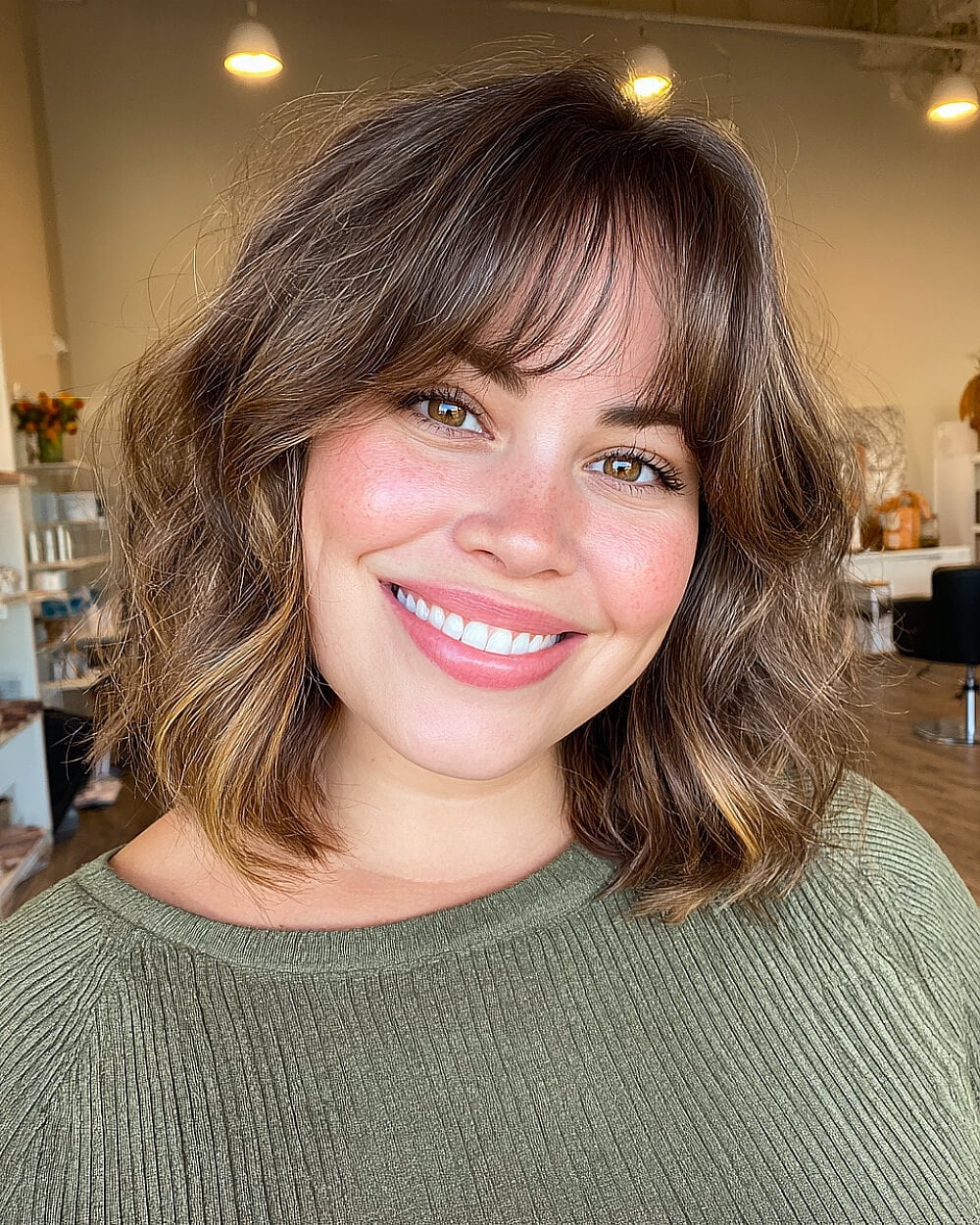
Against a mid-back cut, collarbone length is the lower-commitment version of the same idea, and it suits medium-density wavy hair better than fine hair that needs length to hold a wave. The soft curtain bangs and a slightly off-center part break the width at the cheek on a round face, and the dark brown base with blonde highlights gives the layers something to catch. The wavy blowout keeps its shape from a workday through dinner without a full restyle in between.
Ask your stylist for: collarbone length layers, curtain bangs, side part.
Thick Wavy Collarbone Cut With Curtain Bangs
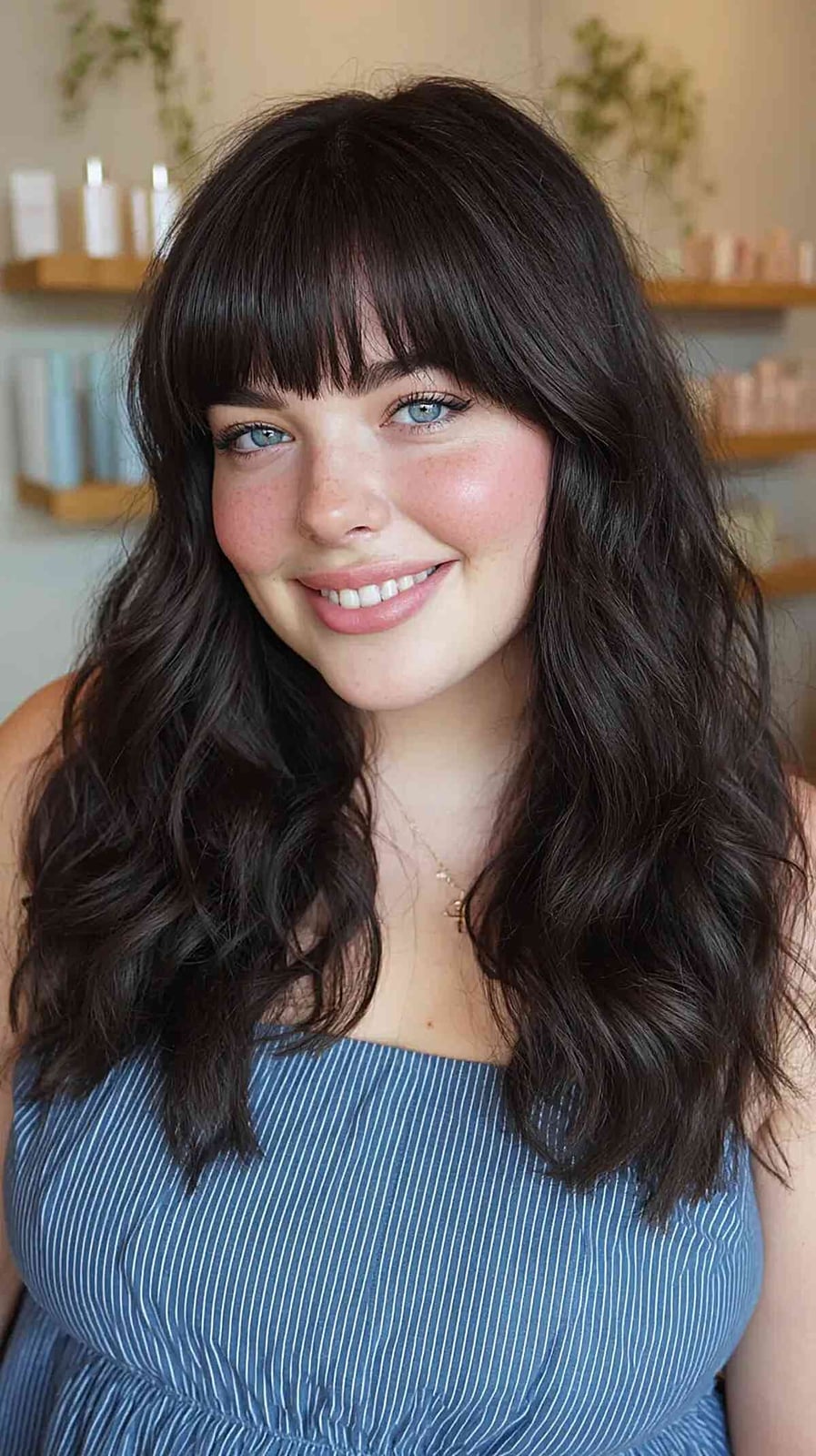
How much styling does a collarbone cut actually take when the hair is thick and wavy? Less than you expect, provided the layers are cut to work with the wave instead of against it. This length sits right at the shoulder, which is where thick hair tends to flip, so the soft layers are angled to send the ends under rather than out. The curtain bangs and side part keep the front from closing in on a round face.
Ask your stylist for: collarbone length cut, soft layers, curtain bangs, side part. In practice, rough dry with your head tipped to one side, then smooth the bangs with a round brush. A sea salt spray through the lengths brings out the wave without crunch. Book a trim every six to eight weeks, since collarbone length loses its shape fast once the ends hit the shoulder.
Mid-Back Waves With Curtain Bangs and Side Part
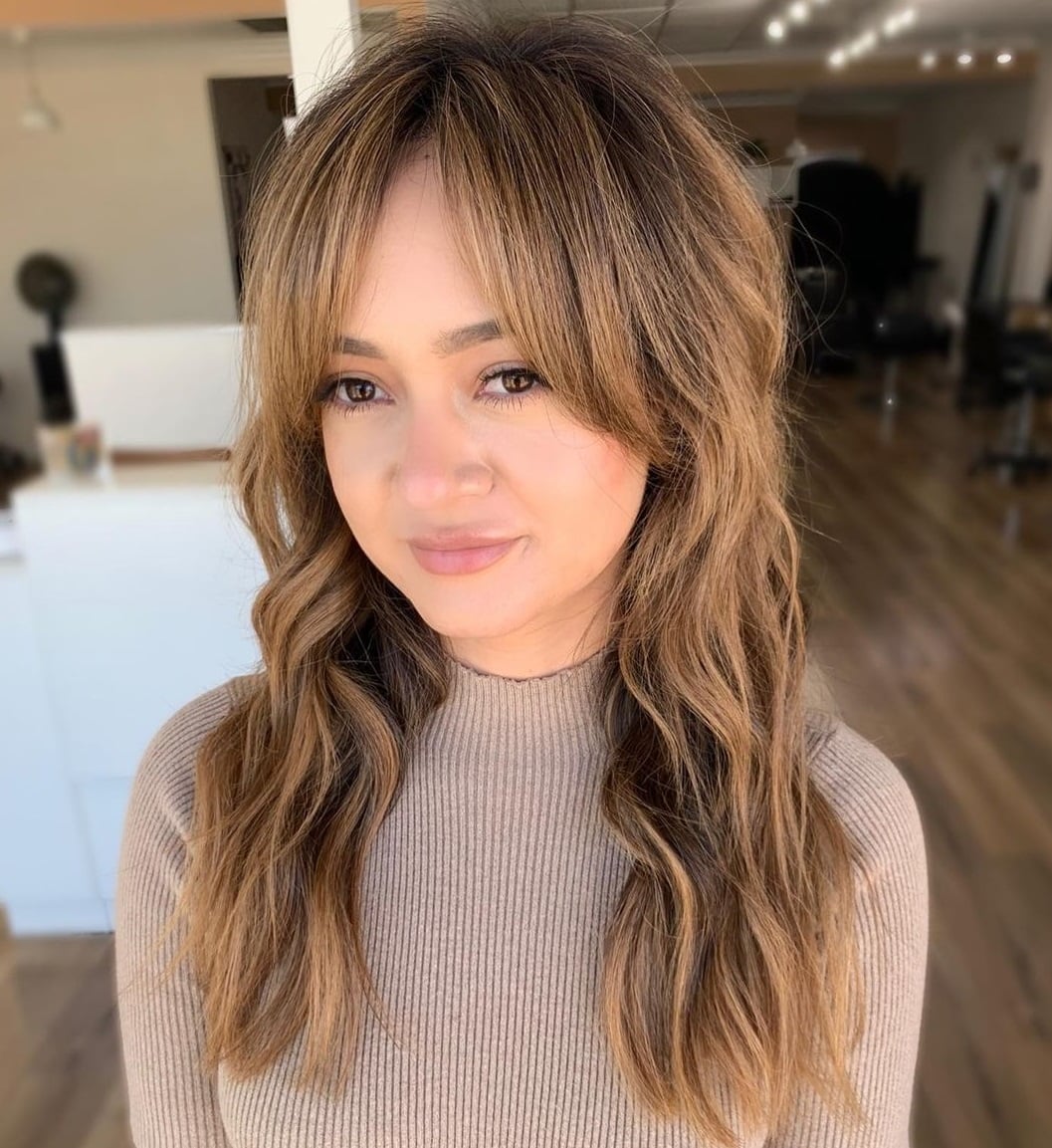
A side part changes what curtain bangs do. Instead of splitting evenly, the fringe sweeps across the forehead in one direction, which puts a diagonal line across a round face and drops the volume to one side. On this mid-back cut the layers are long and connected, so the wave stays loose rather than stacked, and the warm brown base with blonde highlights runs through the ends where the movement shows.
Ask your stylist for: mid-back layers, curtain bangs, side part. Be specific about the part, because a stylist who defaults to a middle part will cut the bangs symmetrically and you lose the sweep. Say you want the bangs longer on the heavy side and blended into the cheekbone layers. Medium-density wavy hair holds this shape with the least work; very fine hair will need a round brush on the bangs daily to keep the lift.
Collarbone Layers With Soft Curtain Bangs, Mid-Back

The trick with a round face is that the bangs need to do the elongating while the length does the framing. Here, collarbone layers and curtain bangs on a mid-back cut create that exact balance, with a medium brown base and subtle highlights adding depth. The loose waves and side part give the face a soft diagonal line without a blunt stop. Medium-density wavy hair benefits most from this design because the layers have enough weight to hold shape without turning stringy. Ask your stylist for collarbone length layers, curtain bangs, side part. This is a salon-only cut, as the curtain bangs need precise blending into the layers to avoid a chunked look.
Mid-Back Ash Blonde With Voluminous Curtain Bangs

Ash blonde requires regular upkeep. The voluminous curtain bangs and long layers look glossy after a blowout, and the cool tone typically needs toning every four to six weeks to keep brassiness away. The mid-back length and side part create vertical lines through the body of the hair. Ask your stylist for mid-back length, long layers, voluminous curtain bangs, and a side part. The volume in the bangs requires a round brush and heat every wash, so plan on styling time each time you shampoo.
Collarbone Shag With Textured Curtain Bangs

How does a shag actually sit on a round face without widening it? The answer is in the textured curtain bangs and the middle part. The collarbone length stops the shag layers from stacking too wide at the jaw, while the honey blonde with lighter highlights keeps the air-dried texture from looking flat. Thick, wavy hair holds the shape naturally.
Ask your stylist for collarbone shag cut, textured curtain bangs, middle part. The upkeep is forgiving: a trim every eight weeks to keep the layers defined, and a texturizing paste on the bangs between washes.
Collarbone Cut With Wispy Bangs and Layers

Fine, wavy hair can struggle to hold a bang shape, but wispy bangs solve that by requiring minimal weight. The collarbone layers here are cut with a light hand, so the light brown base with blonde highlights moves without clumping. The middle part and the wispy bangs land just above the brows, which draws the eye upward and away from the widest part of a round face. Ask your stylist for collarbone length layers, wispy bangs, middle part. The fine texture means a quick blast with a round brush is enough to set the bangs, no heavy product needed.
Chin Length Auburn Bob With Side-Swept Bangs

A straight-across bob on a round face can look like a helmet. The side-swept bangs on this chin-length auburn bob change the equation entirely, cutting a diagonal line across the forehead that breaks up the roundness. The textured layers keep the wavy medium-density hair from sitting too heavy at the jaw. Fall and winter are the natural seasons for the auburn shade, as the warm tone looks richer in lower light. Ask your stylist for chin length bob, textured layers, side-swept bangs. This is a salon-only cut because the side-swept angle needs to be cut dry to land correctly.
Chin Length Bob With Wispy Bangs

A chin-length bob with wispy bangs and a middle part relies on fine, wavy texture to keep the air-dried finish from looking messy. The subtle highlights add dimension without weight, so the wispy bangs stay feathery. Ask your stylist for: chin length bob, wispy bangs above eyebrows.
This cut asks very little of you in the morning. Air dry or rough dry with a hairdryer, then work in a texturizing product for separation. The fine texture means the bob holds its shape for about a day before the waves relax, which is fine if you like a lived-in look. A trim every six weeks keeps the bangs from turning into a curtain you did not ask for.
Shaggy Chin Bob With Full Bangs

Can you ask for a shaggy bob with full bangs without the stylist giving you a 2006 emo fringe? Yes, if you use the right words. This chin-length cut keeps the bangs straight across and dense, while the choppy layers in the back prevent the bob from sitting like a helmet. Ask your stylist for: chin length shaggy bob, full bangs, choppy layers.
Collarbone Waves With Blunt Bangs

A blunt bang is cut with zero point cutting, which means the stylist has to be precise enough that the line lands exactly where the eyebrows start. The collarbone length and loose waves keep the hair soft, so the blunt bangs provide intentional structure. Ask your stylist for: collarbone length cut, blunt bangs, middle part. The medium density and wavy texture give the bangs enough weight to lie flat, but a flat iron is still the fastest way to guarantee a clean finish. A trim every four weeks keeps the blunt edge from splitting or bending at the wrong angle.
Collarbone Shag With Short Bangs

Short bangs on curly hair work best when the curl pattern is medium density and the cut is a shag, because the layers prevent the hair from piling into a triangle. This collarbone length with a middle part and blonde highlights gives the curls enough movement to balance a round face. Ask your stylist for: collarbone shag, short curly bangs, middle part. Apply curl cream to damp hair and air dry or diffuse for definition. This is a good cut for a casual summer season where you want the hair to look intentional with the least effort.
Chin Length Textured Bob With Choppy Bangs

A textured bob with choppy bangs and a side part looks like it rolled out of bed and decided to be interesting, but getting that undone finish takes a skilled stylist. The dark brown base with subtle highlights adds depth; the choppy bangs require a texturizing spray and a few minutes of finger-combing every morning. The honest drawback is that the bangs need a trim every three weeks, and if you skip it, the choppy ends start looking ragged. Ask your stylist for: chin length textured bob, choppy bangs, side part.
Mid-Back Shag With Micro Bangs
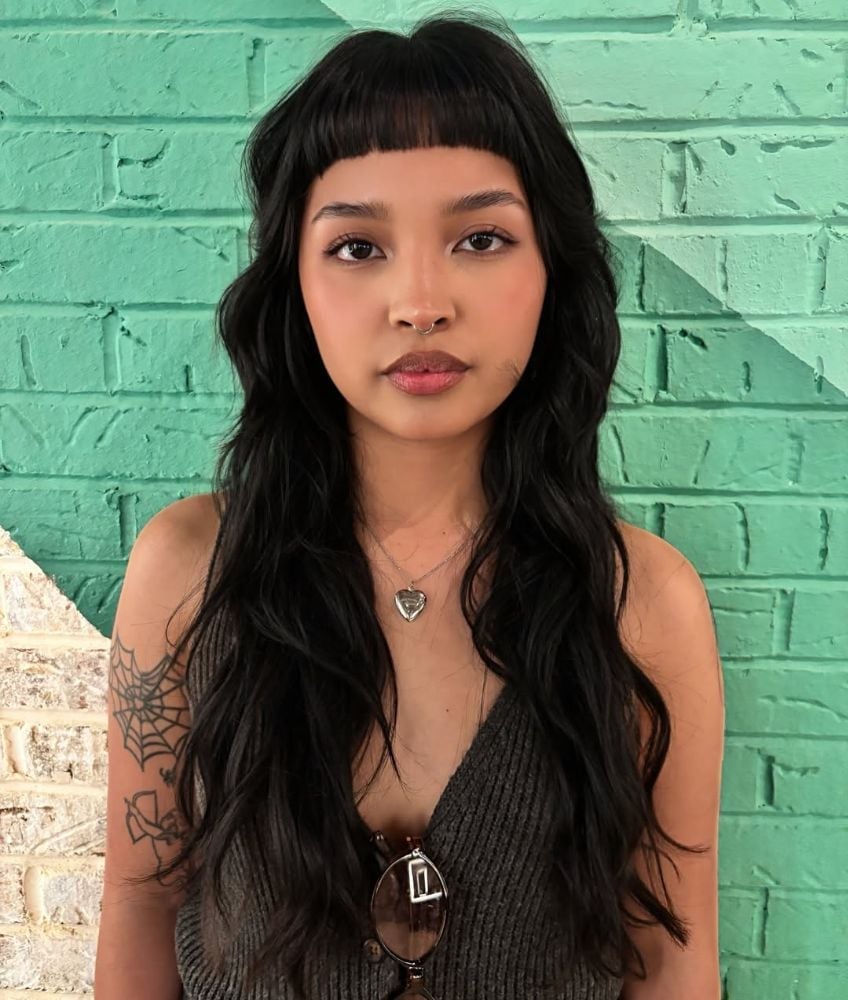
How much commitment does a micro fringe demand? More than a standard curtain bang, and that is the trade for the sharpest line in the room. A mid-back shag with a mullet silhouette carries thick, wavy black hair down past the shoulders, and the micro bangs sit high on the forehead with nothing between them and the cut. The layers carry the texture, so the bangs stay clean and short. Round faces get a strong horizontal line up top and plenty of movement below, which keeps the proportions from reading soft.
Ask your stylist for: mid-back shag, micro bangs. The fringe hits above the brow, so grow-out shows in about three weeks, and salon visits come every six to eight weeks to keep the line crisp. Between trims, air-dried texture is the whole styling plan: a small amount of pomade pressed into the bangs separates them and keeps them from sitting flat. The wavy shag layers want a texture spray and nothing more. A micro bangs shag cut is a decision to make with a stylist, and the upkeep is the real price.
Shoulder Length Platinum With Curtain Bangs

Shoulder length thick, straight hair cut in long layers and blown out with a middle part and prominent curtain bangs looks polished, but the tone needs refreshing every four to six weeks before brass creeps in. Ask your stylist for: shoulder length cut, voluminous curtain bangs, middle part. Compare it to a lived-in brown: that shade stretches to eight or ten weeks between toning appointments, while platinum keeps you in the chair twice as often. The curtain bangs themselves suit round faces because the middle part and the length past the chin pull the eye down. Choose platinum if you will keep the appointments. Choose a softer base if you will not.
Mid-Back Updo With Wispy Bangs

An updo looks finished when a few grams of hair stay loose at the front. Long layers in thick, wavy dark brown hair sweep up into the style, and the wispy bangs stay down in a middle part, broken into fine pieces that frame the face. On a round face those strands add soft vertical lines where a slicked-back updo would leave a blank oval.
Ask your stylist for: mid-back updo, wispy face-framing bangs. Be specific about the bangs: ask for them cut to sit loose and piecey, not blunt, so they can be styled away from the updo and still look polished. Ask how much length to leave in the front layers, since that is what gets pulled out as face-framing pieces. A texture spray on the bangs before styling gives them enough grip to hold shape through an event. The updo itself is a salon build, and the bangs need a trim every four to six weeks to stay wispy and keep their shape.
Fine Hair Updo With Blunt Bangs, Dark Brown
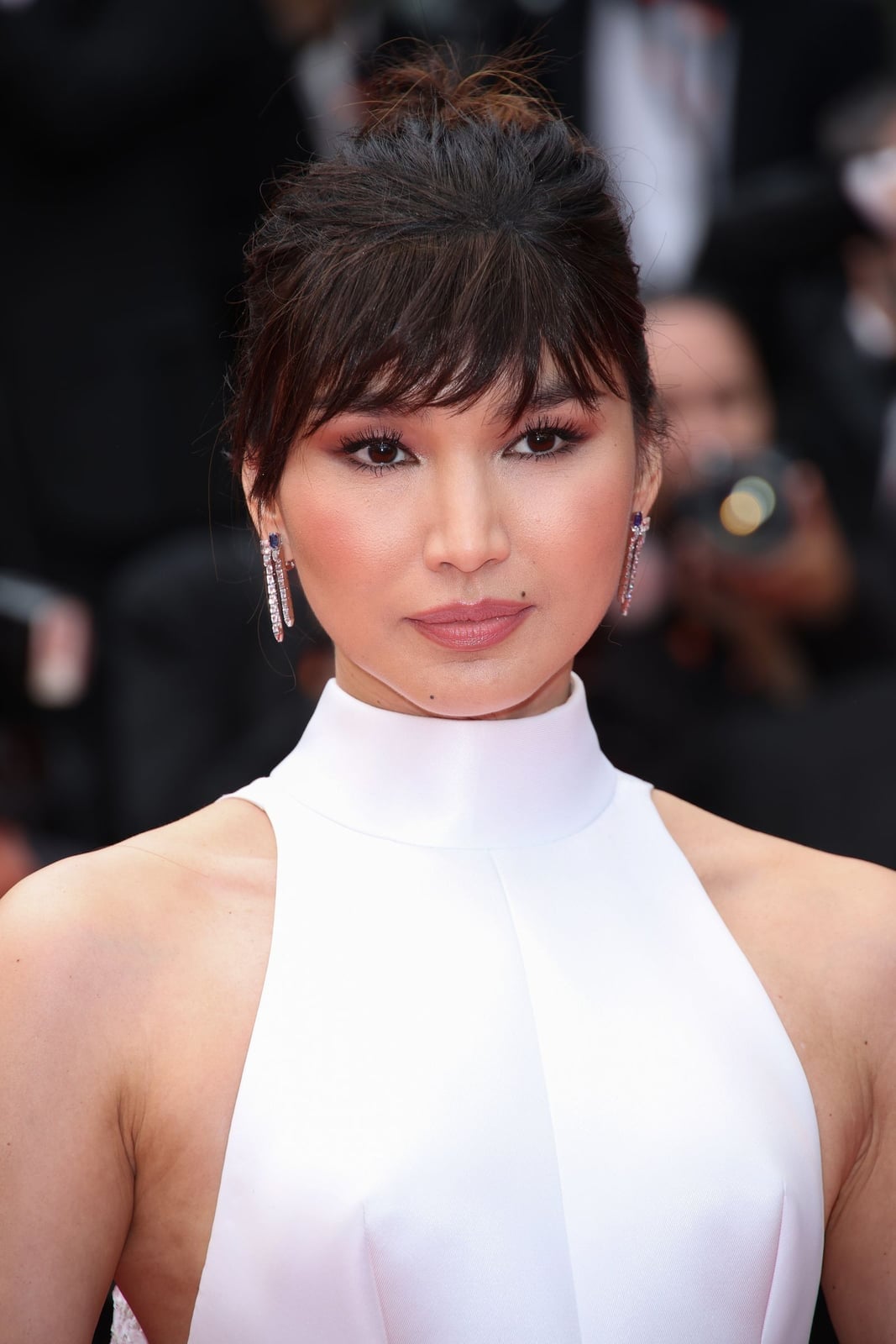
The catch is real: on low-density hair, a heavy fringe can swallow the forehead and leave the updo looking top-heavy. Keep the bangs slightly narrower than the brow line, and a smoothing serum keeps them sleek. A trim every four to six weeks holds the line.
Mid-Back Curly Hair With Curly Bangs
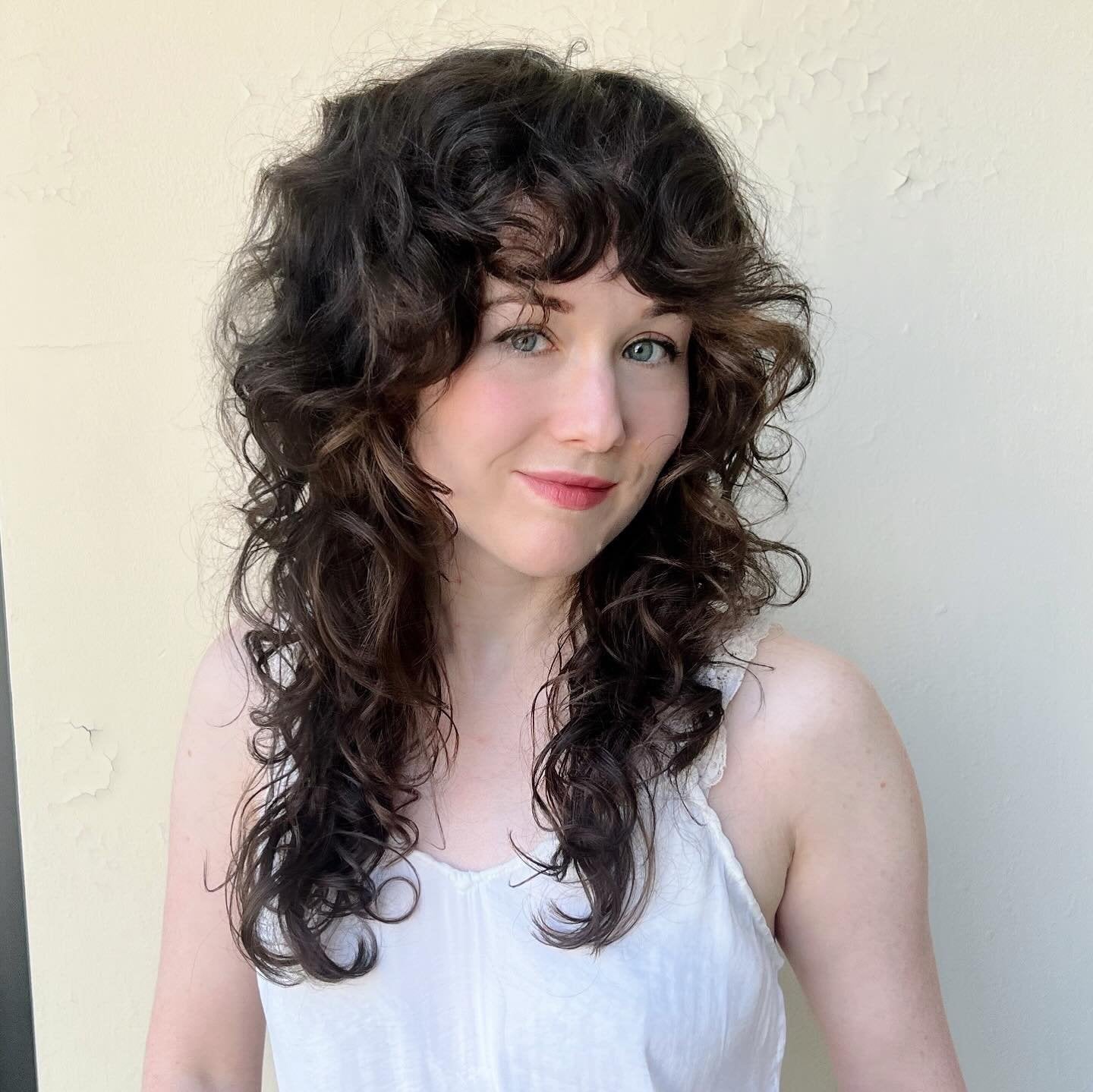
Can you cut curly bangs at home? You can, and the result will tell you why most people should not. Curly bangs shrink as they dry, sometimes by a third of their wet length, so a wet cut made at the brow ends up halfway up the forehead. Mid-back layers in thick, curly dark brown hair need a stylist who cuts the bangs dry, curl by curl, and checks the shape as it springs up. Ask your stylist for: mid-back layers, curly bangs. The layers should start low enough that the curl pattern stays intact instead of collapsing into a triangle.
At home, the styling is where the shape holds or falls apart. Work a curl-defining cream through soaking wet hair, rake the bangs into place with your fingers, and diffuse on low heat without touching them until they are mostly dry. Scrunch out the cast last. Curly bangs need a trim every six to eight weeks, and the shape is easier to maintain when you keep the middle part consistent. The curl pattern does the work once the cut is right.
Final Thoughts
For a round face, favor bangs that create vertical lines or angles, like curtain bangs or a side sweep, and let the overall length fall below the chin. Blunt, heavy bangs cut straight across can shorten the face and add width where you do not want it.
- Trim bangs every three to four weeks to hold the shape.
- Style bangs daily with a small round brush and heat.
- Use dry shampoo at the roots of bangs to absorb oil.
- Refresh the layers every eight to ten weeks.
Find the bangs that make your round face feel perfectly balanced.

