Blonde balayage is a hand-painted color technique that creates a soft, natural-looking transition from darker roots to lighter ends. For 2027, the trend is leaning into richer, warmer tones and a lived-in finish that grows out gracefully and needs less frequent salon visits.
This collection of 16 Blonde Balayage Ideas covers every length from chin-length bobs to mid-back waves, and every texture from pin-straight to coily curls. Whether your hair is fine and needs volume or thick and wants dimension, you will find a version here that solves the problem of a stark grow-out line or a color that fades brassy.
The 16 looksOpen list +
Caramel Butter Blonde Voluminous Waves
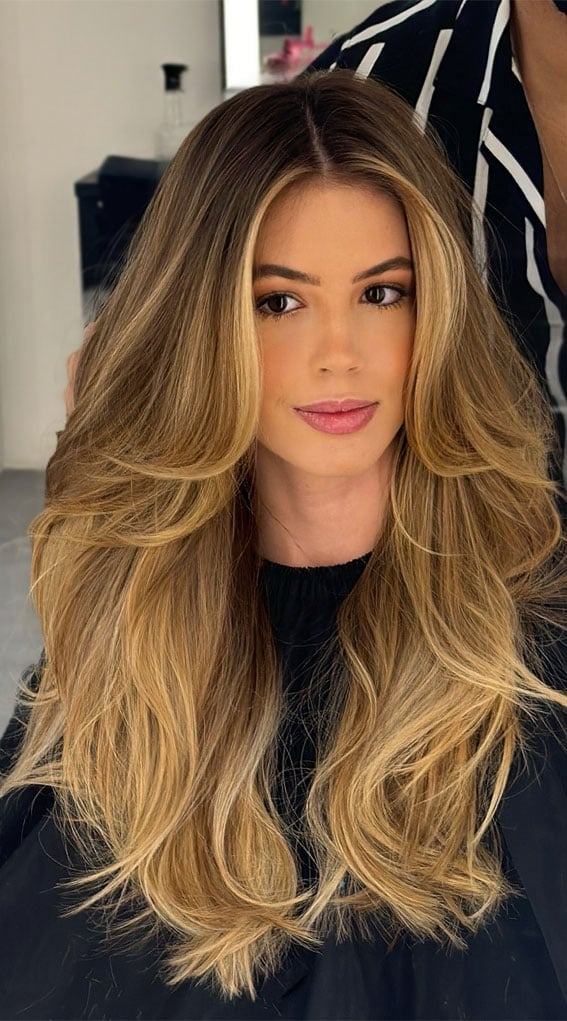
That mid-back length hits a sweet spot: long enough to move, short enough to not tangle in your bag strap. The caramel butter blonde balayage uses lighter tones swept through thick, wavy hair, with face-framing pieces that soften the jawline for oval and heart-shaped faces. The middle parting and voluminous waves give it a polished finish that reads as effort rather than accident.
Ask your colorist for: caramel butter blonde balayage with face-framing layers. A large barrel curling iron and a heat protectant spray get you the wave structure. A gloss treatment every six to eight weeks keeps the caramel tone from drifting brassy, especially if you wash with warm water.
Lived-In Warm Blonde Balayage
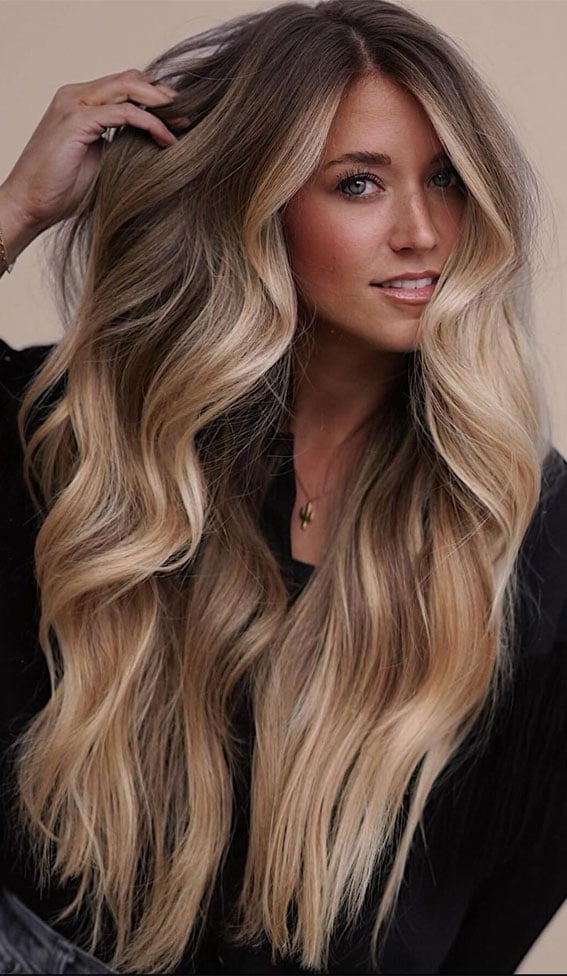
The trick to a lived-in blonde is the root line. This mid-back length uses a warm blonde balayage with a darker root that graduates into lighter tones through thick, wavy hair. The darker base means the grow-out period stretches longer than a full highlight, and the loose waves help the dimension read as natural rather than salon-fresh.
Ask your colorist for: warm blonde balayage with a darker root. This technique works best on wavy texture that can air-dry or use a diffuser without looking flat. You will want a toning appointment around week ten to keep the warmth from tipping into orange territory.
Collarbone Warm Blonde Balayage Blowout
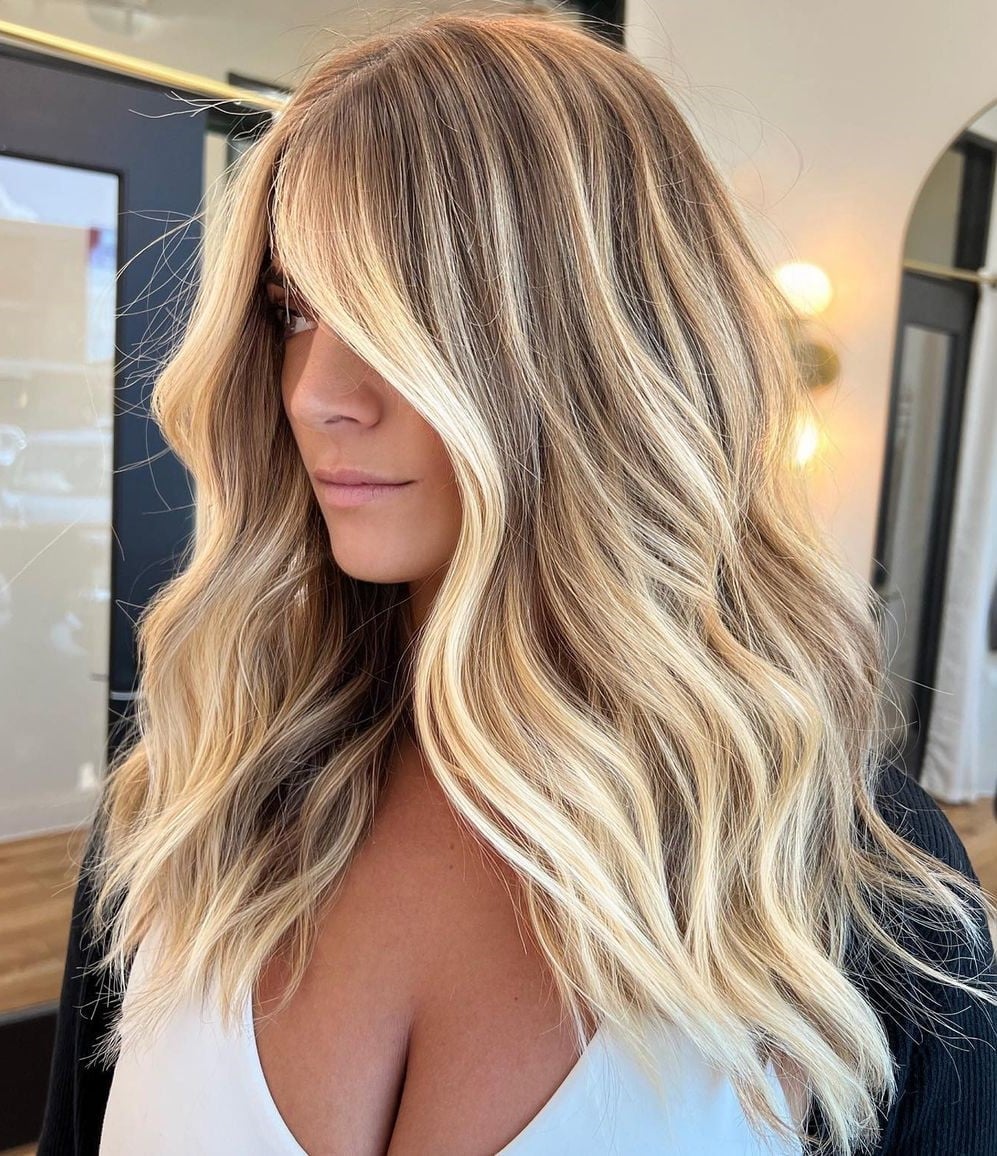
What do you call a warm blonde that avoids a root appointment every month? This collarbone-length balayage. The technique blends lighter tones into a darker base through face-framing layers and curtain bangs, with a middle parting that opens the face. The soft wave blowout prevents the collarbone length from reading as too severe, especially on square or oval faces where the framing pieces do the work.
Ask your colorist for: collarbone length warm blonde balayage with face-framing layers. A round brush during blow-drying gives the curtain bangs their sweep. A trim every six to eight weeks keeps the shape from turning into a shag you did not ask for.
Mid-Back Dark Blonde Balayage With Curtain Bangs
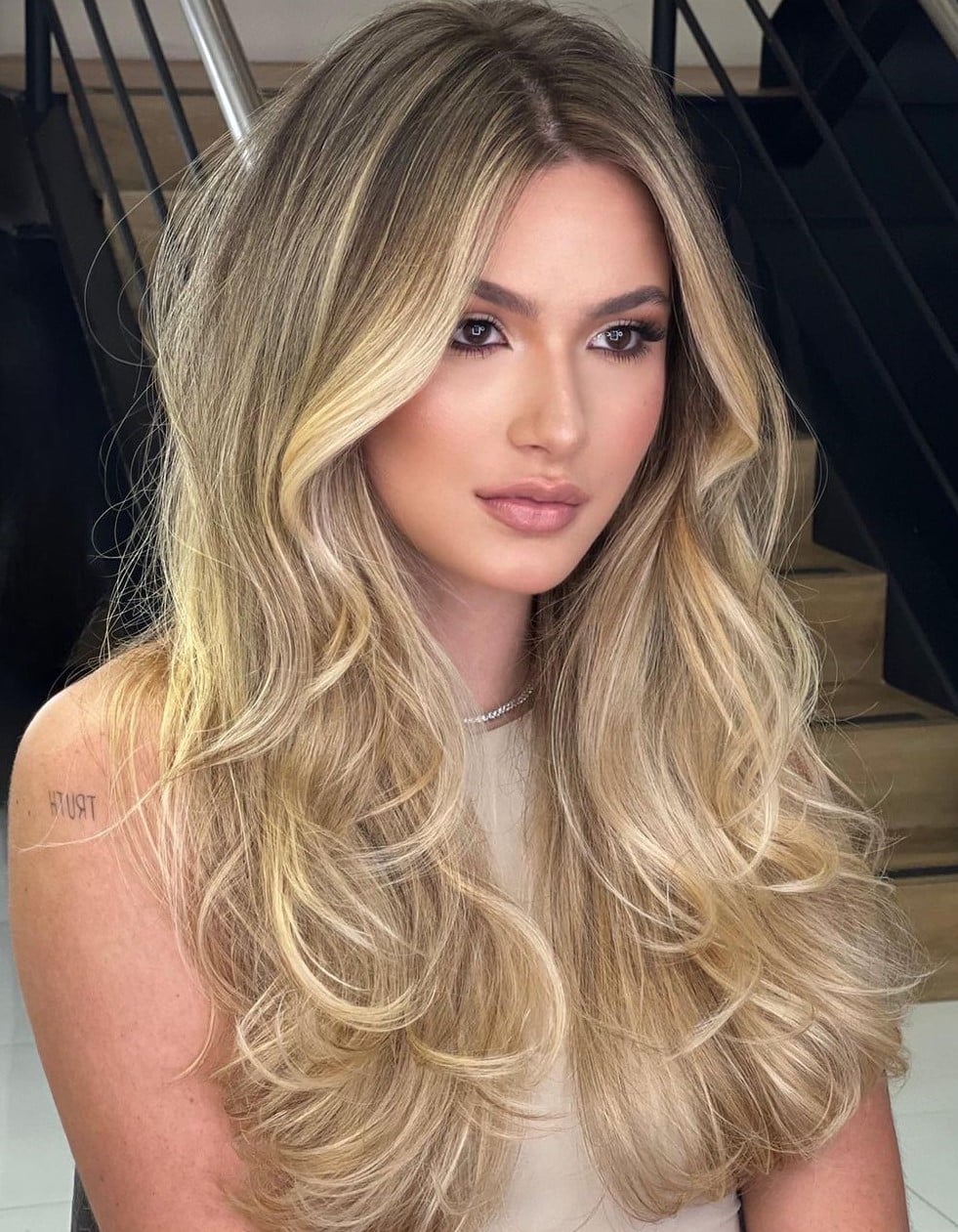
This mid-back length with long layers and curtain bangs lets the dark blonde balayage and lighter blonde highlights fade out naturally. The side view shows how the loose waves carry the color from root to end without a hard line, which means you can stretch the next appointment by a couple of weeks.
Ask your colorist for: mid-back dark blonde balayage with long layers and curtain bangs. The curtain bangs are styled with a round brush, and the long layers keep the weight from pulling the wave out. A trim every eight weeks keeps the ends healthy enough to hold the balayage blend.
Warm Blonde Balayage Mid-Back Blowout
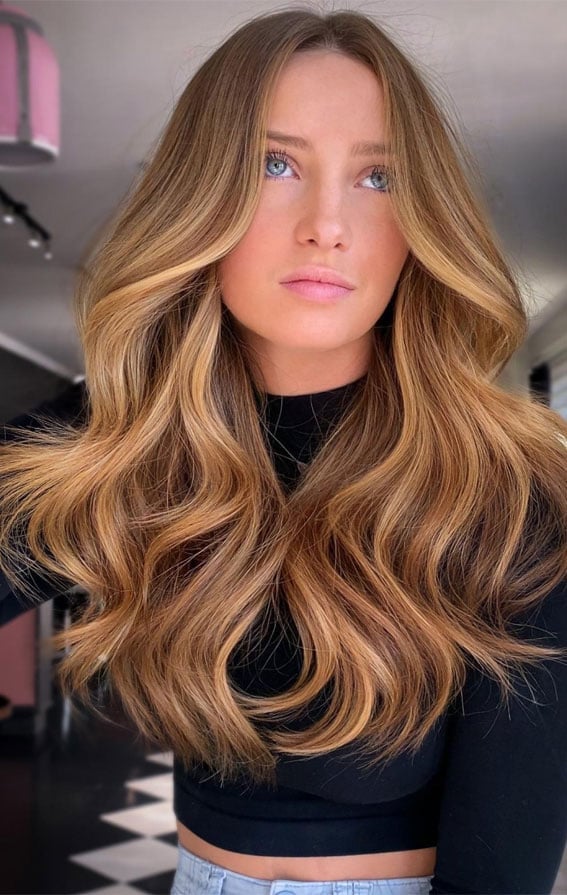
A mid-back blowout this polished does not happen by accident. The warm blonde balayage uses lighter pieces blended into a darker base through soft face-framing layers and curtain bangs. The loose waves from the blowout give the length movement without the triangle effect that long layers can create on thick hair.
Ask your colorist for: warm blonde balayage with soft face-framing layers and a blowout finish. A volumizing spray at the roots before blow-drying lifts the crown, and a light-hold hairspray keeps the wave intact for the work day. This is a salon-only color build, but the blowout is doable at home with practice and a round brush.
Dark Blonde Balayage Bob With Curtain Bangs
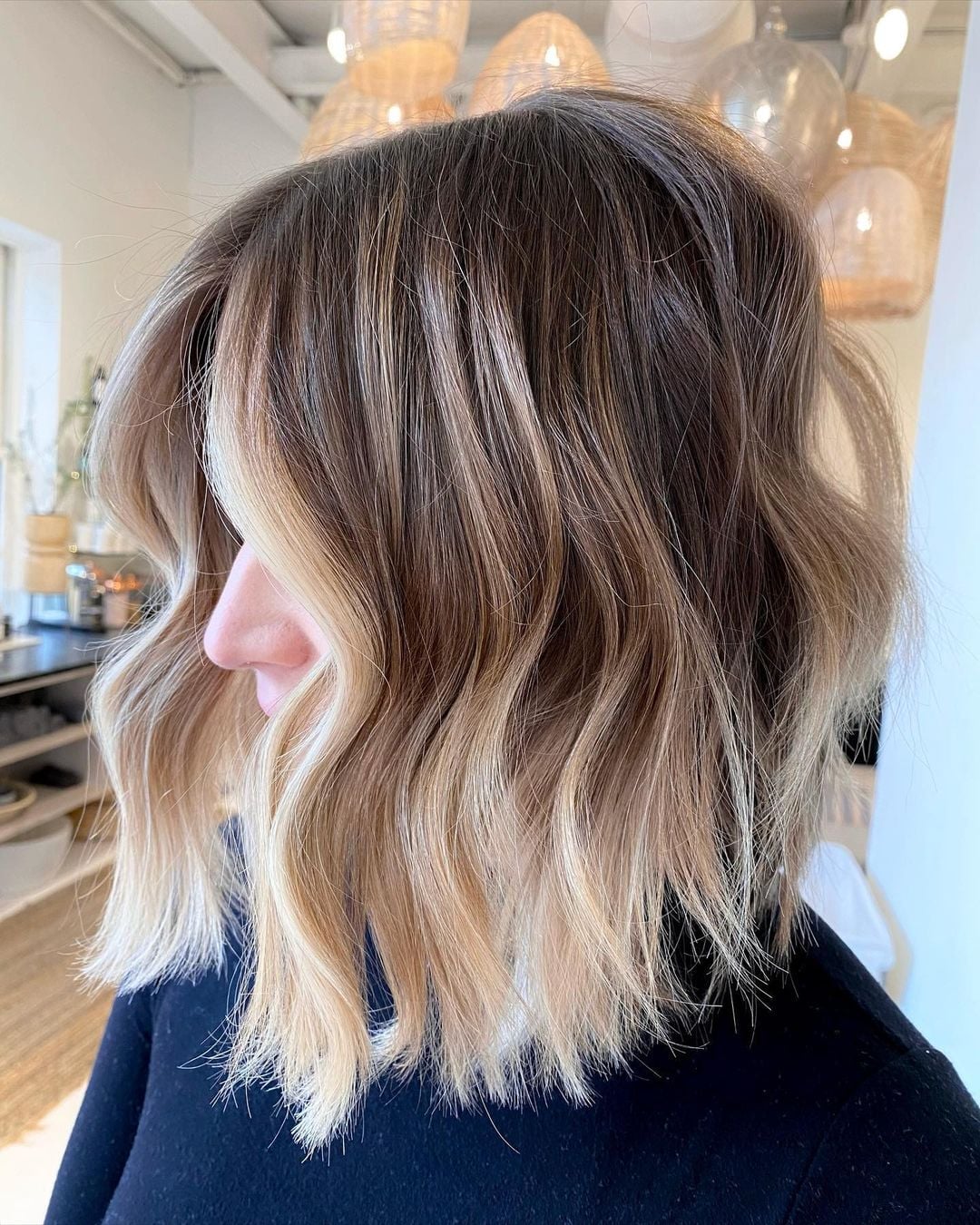
The collarbone bob gets a soft, wavy blowout that lets the dark blonde balayage melt into lighter ends, with curtain bangs doing the face-framing work. This cut genuinely suits medium density hair, since fine strands might not hold the bob’s shape without falling flat. Ask your colorist for: dark blonde bob with balayage, curtain bangs. Blow-dry those bangs with a small round brush to keep them sweeping outward, and plan on a trim every six to eight weeks to maintain the line.
Golden Wheat Blonde Balayage Waves
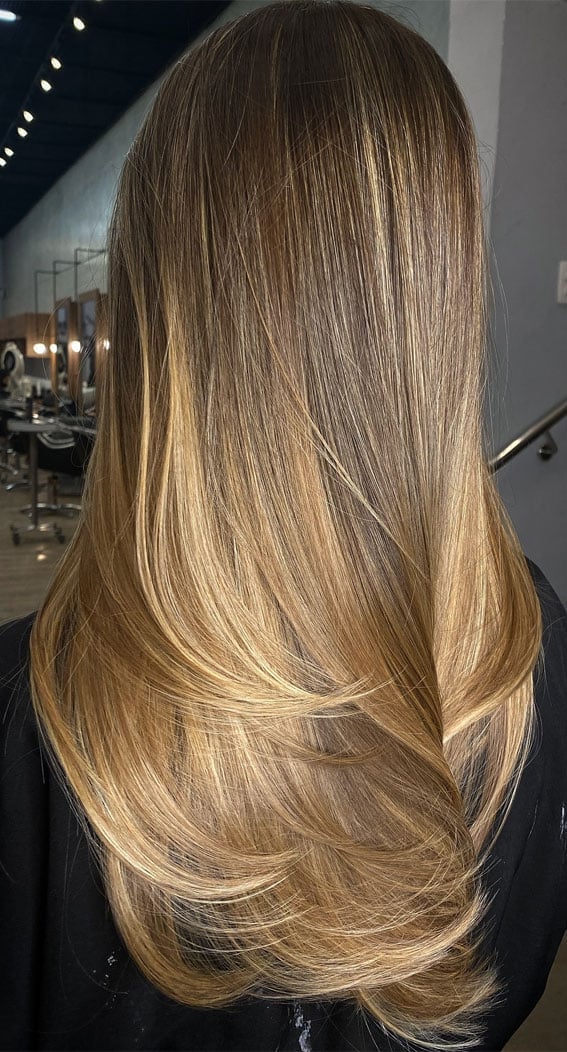
Wondering how to get those warm, dimensional waves without the stripe effect? The golden wheat blonde balayage is painted on thick, mid-back length hair, starting darker at the roots and sweeping lighter through the lengths, all finished with a glossy, loose wave. Ask your colorist for: golden wheat blonde balayage with face-framing layers. A lightweight oil on the mid-lengths and ends will boost that sheen. Trim every eight to ten weeks keeps the layers moving with the wave pattern.
Honey Blonde Balayage Mid-Back Blowout With Curtain Bangs
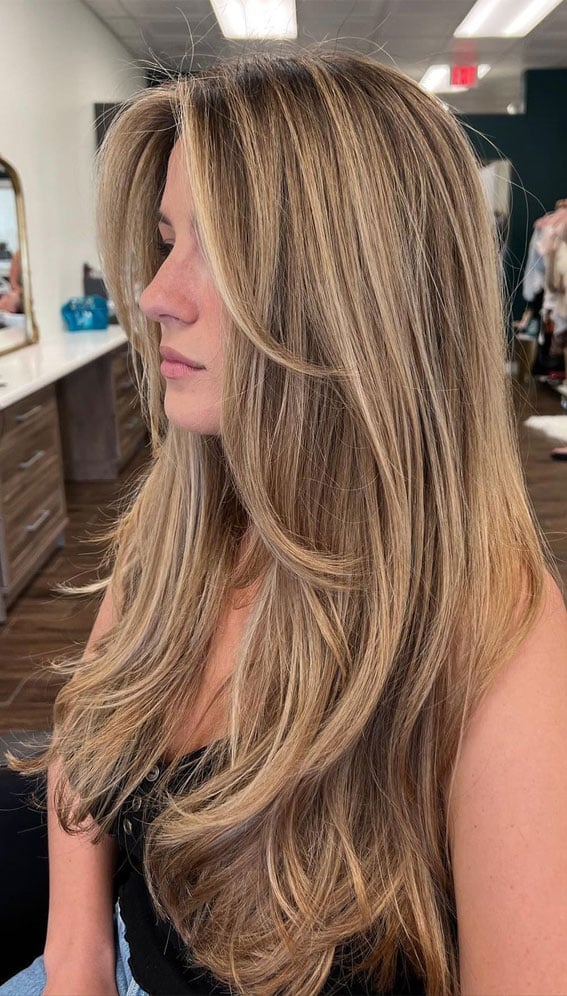
Notice how the honey blonde balayage is brightest around the face, then melts into a deeper base through the mid-back length. That placement, plus the curtain bangs, is what gives this blowout its soft, flowing shape. Ask your colorist for: honey blonde balayage with soft face-framing layers and a blowout. To keep the volume from dropping by noon, work a volumizing mousse into the roots before you dry. A trim every six to eight weeks will keep the layers and bangs on speaking terms.
Ash Blonde Balayage Chin Bob With Short Bangs
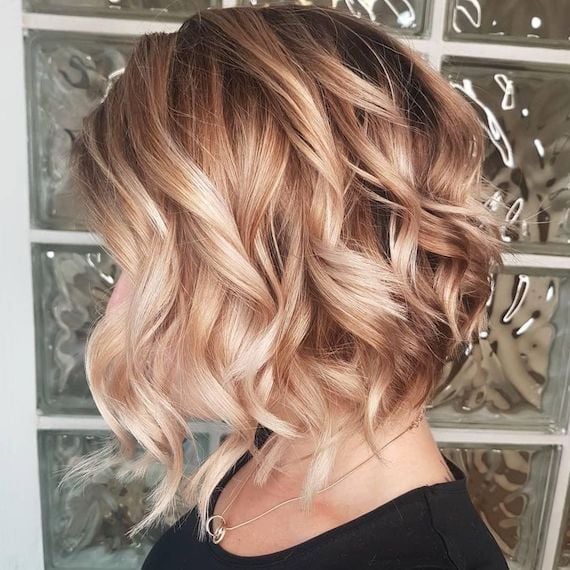
This one sits between a classic bob and something edgier: a chin-length angled cut with short bangs and textured waves, the ash blonde balayage weaving lighter pieces through a darker base. Those bangs and textured ends need a trim every four to six weeks or they start to look shaggy. Ask your colorist for: chin-length angled bob with ash blonde balayage and short bangs. Use a texturizing spray on the ends to keep the waves piecey without stiffening the whole cut.
Mid-Back Curly Blonde Balayage
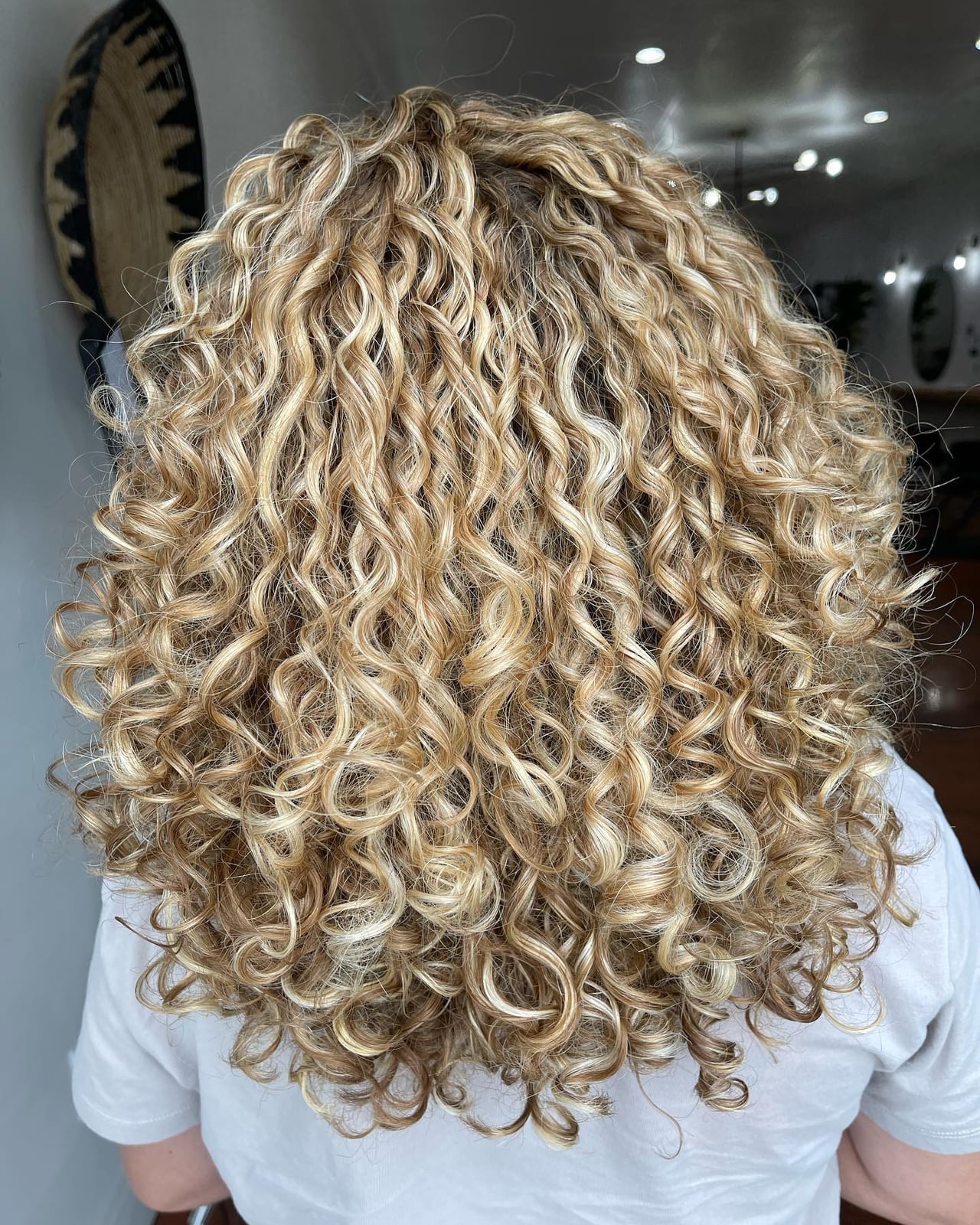
Can balayage work on curls without turning into a mess? Yes, when it is painted on a dark base and left to air-dry, so the blonde highlights catch each defined curl instead of getting lost. This mid-back length style is built for thick, curly hair that can handle the dimension. Ask your colorist for: mid-back curly hair with blonde balayage. Work a curl-defining cream through wet hair and diffuse on low heat, then leave it alone, brushing will only blur the pattern. A trim every eight to ten weeks keeps the layers from weighing down the curls.
Chin Length Bob With Straight Balayage
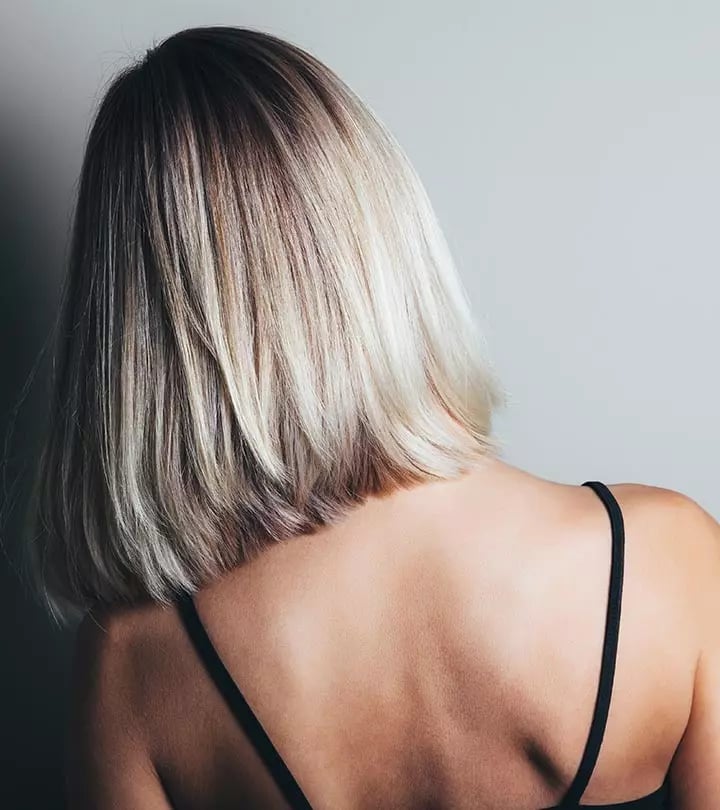
A chin length bob leaves nowhere for a color mistake to hide, which is why the dark blonde base running into lighter blonde balayage has to be placed with precision. On straight, fine hair, the balayage transition shows every hand-painted sweep, and the subtle blowout finish keeps the line clean at the jaw. Ask your stylist for: chin length bob with balayage. This is salon territory. A patchy transition on fine hair looks like a grow-out line, and matching it at home is not realistic. Book the cut and color together, then keep the bob trimmed every six to eight weeks to hold the shape.
Short Bob With Side-Swept Bangs Balayage
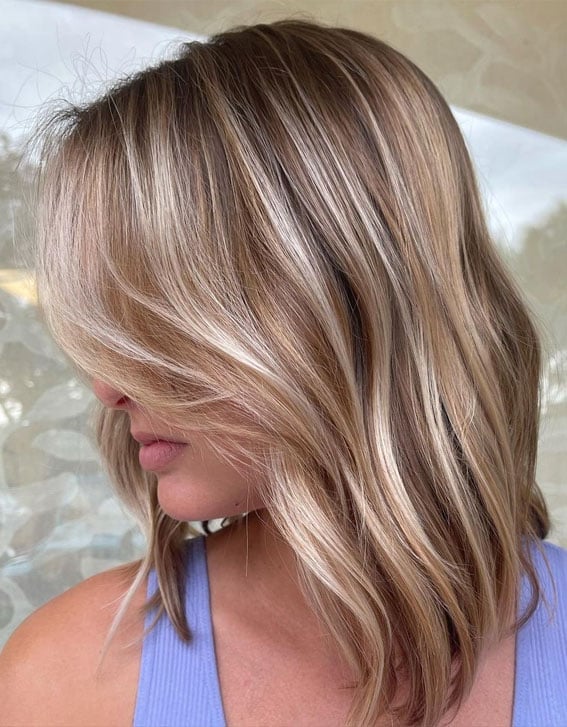
Side-swept bangs cut across this chin length bob at an angle, and the medium blonde base with lighter blonde balayage follows the same diagonal. Wavy, medium texture carries the loose blowout without collapsing at the crown. Ask your stylist for: short bob with side-swept bangs. Round and oval faces get along well with a side-swept fringe, since the diagonal softens the forehead. Upkeep is the catch: a short bob with side-swept bangs generally needs a trim every four to six weeks to stop the fringe from grazing the eyes, and the wavy blowout needs a round brush and a texturizing spray each morning to keep its shape.
Platinum Blonde Balayage With Smoky Roots
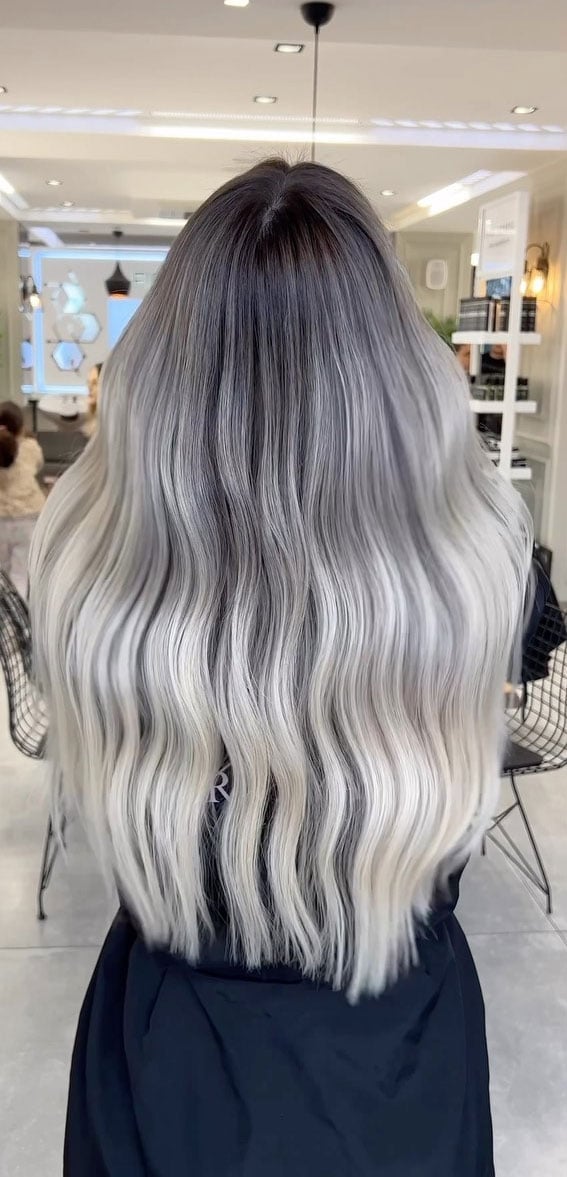
What exactly are smoky roots doing on a platinum blonde? They soften the grow-out line: the darker base sits a few shades off the platinum, so regrowth shows up as shadow instead of a stripe. The balayage is painted through mid-back length, thick, wavy hair and set in loose waves, which keeps the platinum contrast moving instead of sitting flat. Ask your colorist for: platinum blonde balayage with smoky roots.
Thick, wavy texture gives the color plenty of surface to catch, and layers through the mid-back length stop the weight from pulling the waves down. Plan on a toning appointment every four to six weeks; platinum lifts fast and shifts warm without one. A purple shampoo once a week between visits keeps the ash tone cool. The loose waves are the easy part: rough-dry, then wrap sections around a large barrel and shake them out.
Shoulder Length Curly Blonde Balayage
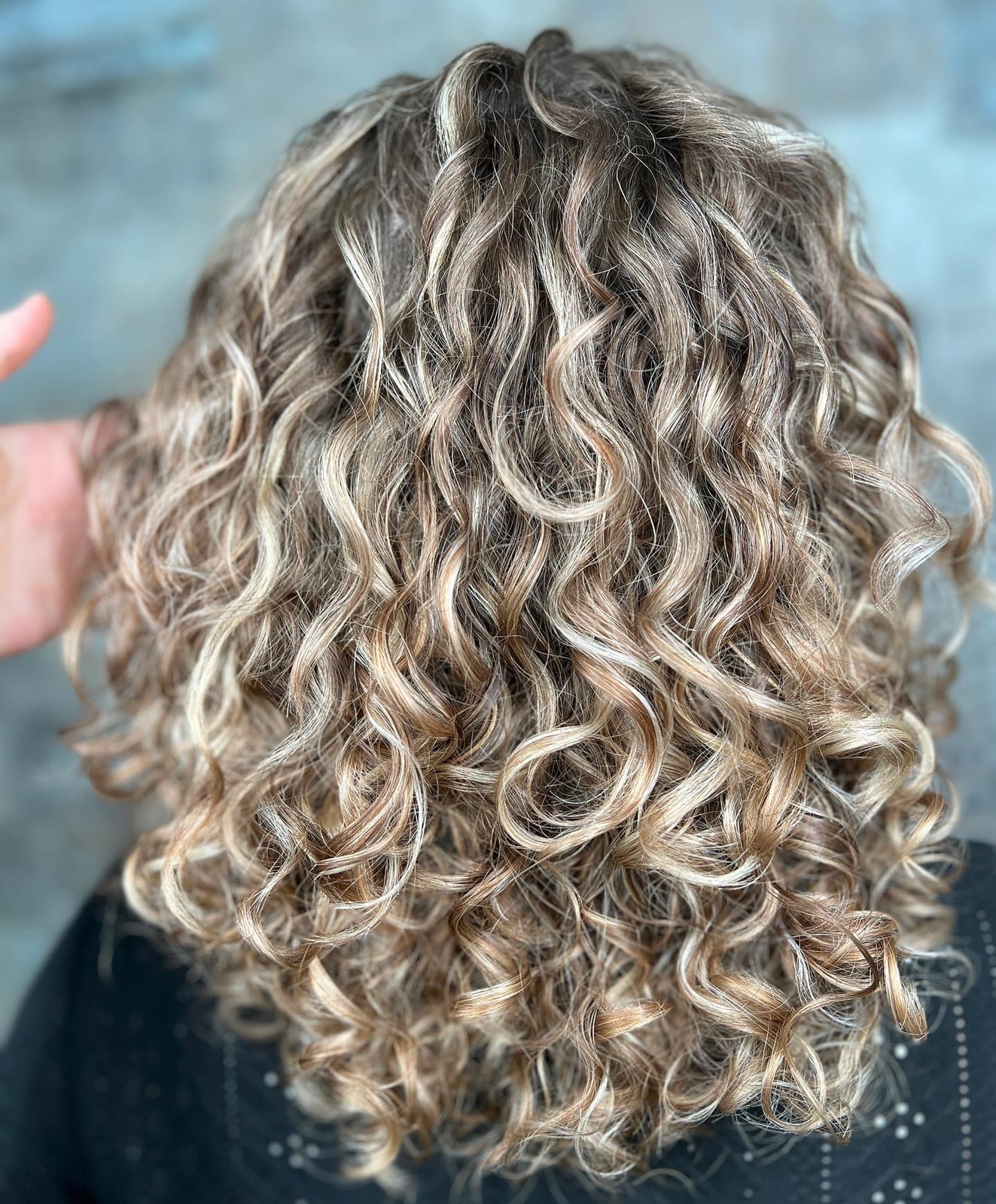
Shoulder length curly hair with a blonde balayage on a dark base gets its dimension from the curl pattern itself, since every turn of a defined curl picks up a different amount of light. Compare it with the mid-back version of the same idea: at shoulder length, layers do more of the work, releasing the curl so it springs instead of hanging in one weighty mass. Thick, curly texture air-dried with a middle parting shows the balayage best, because the dark base sits underneath and the blonde catches on top. Ask your colorist for: blonde balayage on dark base. If the curls are fine instead of thick, ask for fewer layers and more length, since too much layering on loose curls turns into frizz.
Mid-Back Ash Blonde Balayage Transition
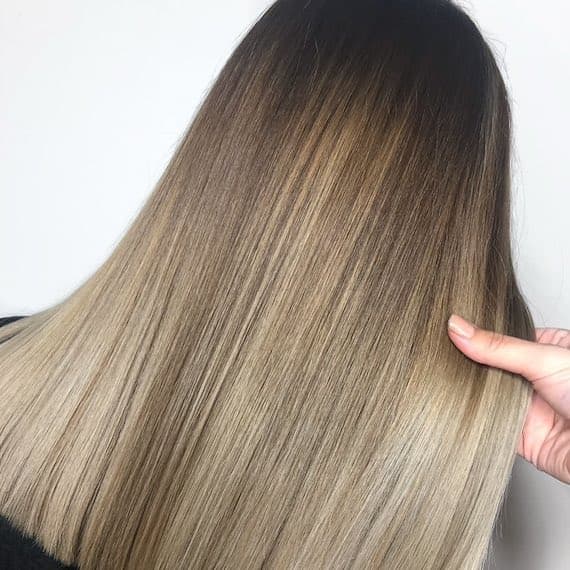
A dark brown base handing off to ash blonde across mid-back length is the hardest color transition to keep clean, because the two shades sit far apart on the color wheel. The balayage is painted so the shift happens gradually through thick, straight hair, and air-drying leaves the blend visible from root to tip. Ask your colorist for: dark brown to ash blonde balayage.
Here is the part worth knowing before you commit: ash blonde over a dark brown base is prone to brassiness, and the warmth shows up within weeks if you skip maintenance. A purple shampoo once or twice a week slows it, and a toning appointment every six to eight weeks keeps the ash from drifting gold. If your schedule cannot absorb that rhythm, a warmer blonde on the same base asks far less of you. Thick, straight texture is the easy half: a smoothing serum and a rough dry are enough.
Collarbone Taupe Blonde Balayage
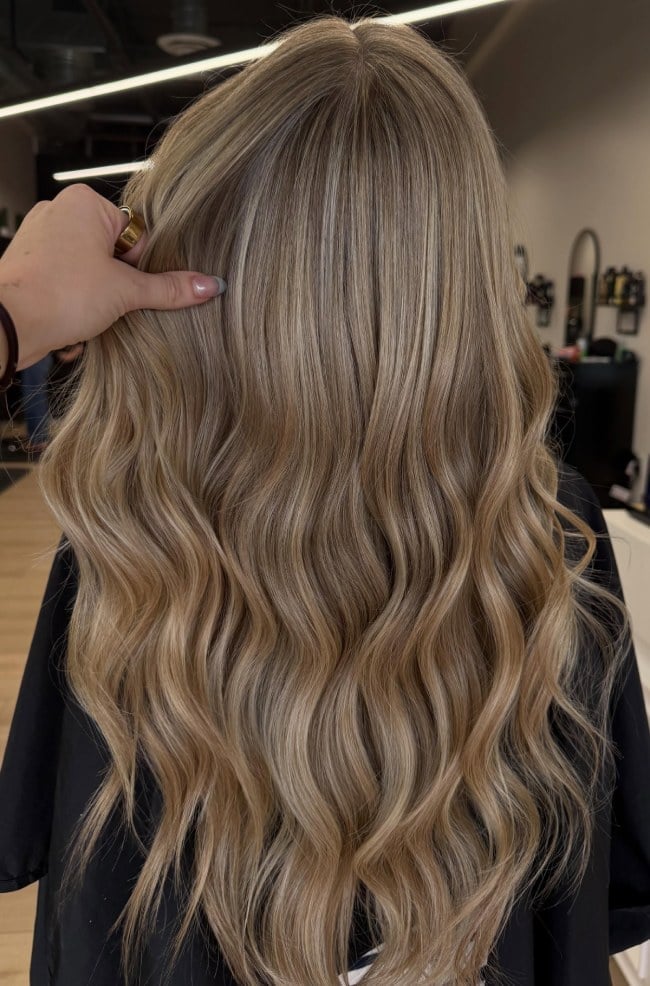
Wondering if taupe blonde is the shade that finally gets you out of your usual warm blonde rut? This collarbone-length cut with soft layers and a side part shows off a taupe blonde balayage with visible dimension, giving the waves a lived-in feel rather than a fresh-from-the-salon look. The wavy texture and medium density hair carry the color well, and the muted tone keeps it from tipping into ash gray territory. Ask your colorist for: collarbone length taupe blonde balayage with soft waves. A texturizing spray will boost the natural movement and keep the waves from falling flat; plan on a trim every six to eight weeks to maintain the shape.
Final Thoughts
For a softer grow-out, opt for balayage with a darker root and blended highlights. For more contrast, choose bolder, lighter pieces against a deeper base.
- Trim every 8-12 weeks to maintain shape and refresh ends.
- Use a color-safe shampoo and conditioner to preserve tone.
- Deep condition weekly to maintain gloss and combat dryness.
- Toning may be needed every 6-10 weeks depending on fade.
Balayage offers a spectrum of blonde beauty for any style.