Blonde hair in 2027 leans dimensional, with lived-in color and soft face-framing layers taking center stage over flat, single-process shades. The shift is toward glossy natural texture and curtain bangs that move with your hair, not against it.
This collection of 20 Blonde Hair Ideas spans the spectrum, from low-maintenance root shadows to high-impact platinum, and from chin-length bobs to ultra-long waves. Whether your hair is fine and falls flat, you’re battling a visible grow-out line, or you want a fringe that actually behaves, there’s a version here that fits your texture, length, and upkeep tolerance.
The 20 looksOpen list +
Cool Ash Blonde With Face-Framing Highlights

How do you get blonde that doesn’t read as brassy or flat? Start with a cool ash blonde base and ask for highlights that stay close to the face, not scattered everywhere. The photo shows long hair in a soft blowout with curtain bangs and gentle waves, the color concentrated around the front pieces. That placement is the trick: it brightens without demanding an all-over lift.
Medium to thick wavy hair starting at shoulder length or longer works best here; the curtain bangs soften round and heart faces. Ask your colorist for: long cool ash blonde with face-framing highlights and curtain bangs. The fringe needs a round brush and a blow-dry forward every wash, plus a trim every six to eight weeks to keep the shape intact.
Mid-Back Honey Blonde Balayage
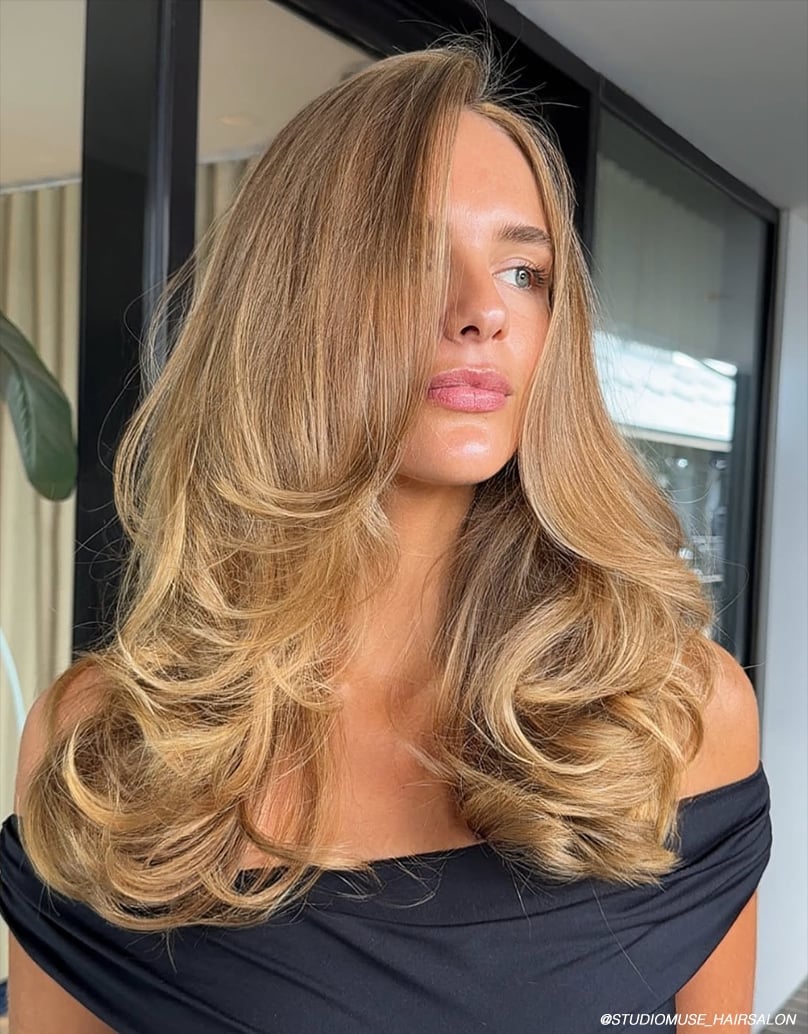
What sets this apart is the balayage technique itself, painted freehand so the lighter pieces land where the sun naturally hits. The photo shows mid-back wavy hair with a honey blonde finish and curtain bangs, the color melting from root to tip with no visible line. That soft transition keeps the grow-out low-pressure and the dimension high.
Thick wavy hair of mid-back length or longer holds the paint strokes best; curtain bangs suit most face shapes. Ask your colorist for: mid-back honey blonde balayage with curtain bangs. A trim every eight to ten weeks keeps the ends looking fresh.
Long Honey Blonde With Face-Framing Layers
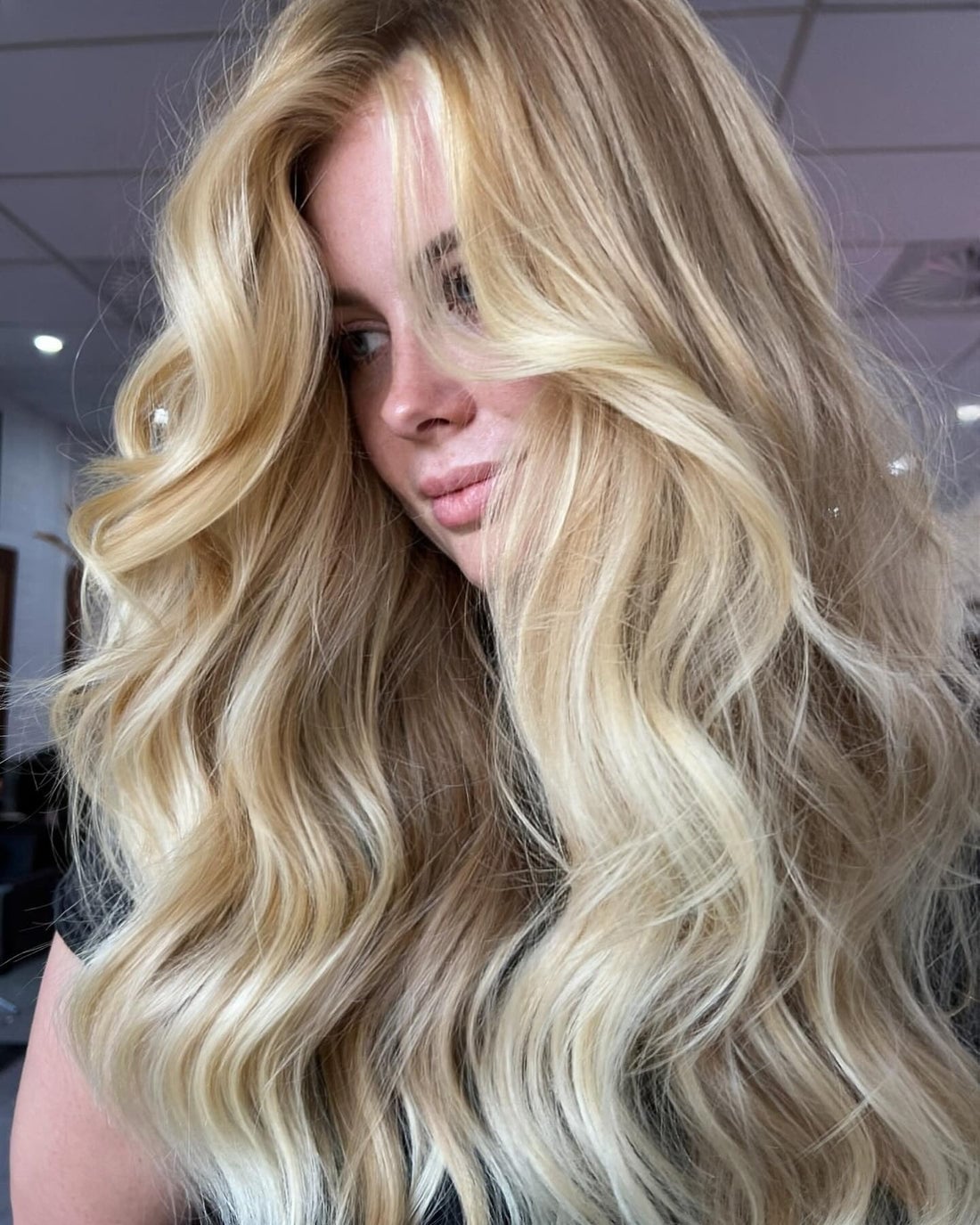
The honey blonde base here is dense enough to support lighter highlights without washing out. The photo shows long, thick wavy hair with curtain bangs and face-framing layers, the color applied to create movement rather than a uniform wash. That thickness is what makes it work: fine hair would look weighed down, but this texture lets the layers breathe.
Thick wavy hair starting at shoulder length or longer is the sweet spot; the face-framing layers soften angular faces. Ask your colorist for: long honey blonde with face framing layers and curtain bangs. A larger barrel curling iron enhances the loose waves, and a trim every six to eight weeks keeps the shape from getting heavy.
Beige Blonde Mid-Back Waves With Root Shadow
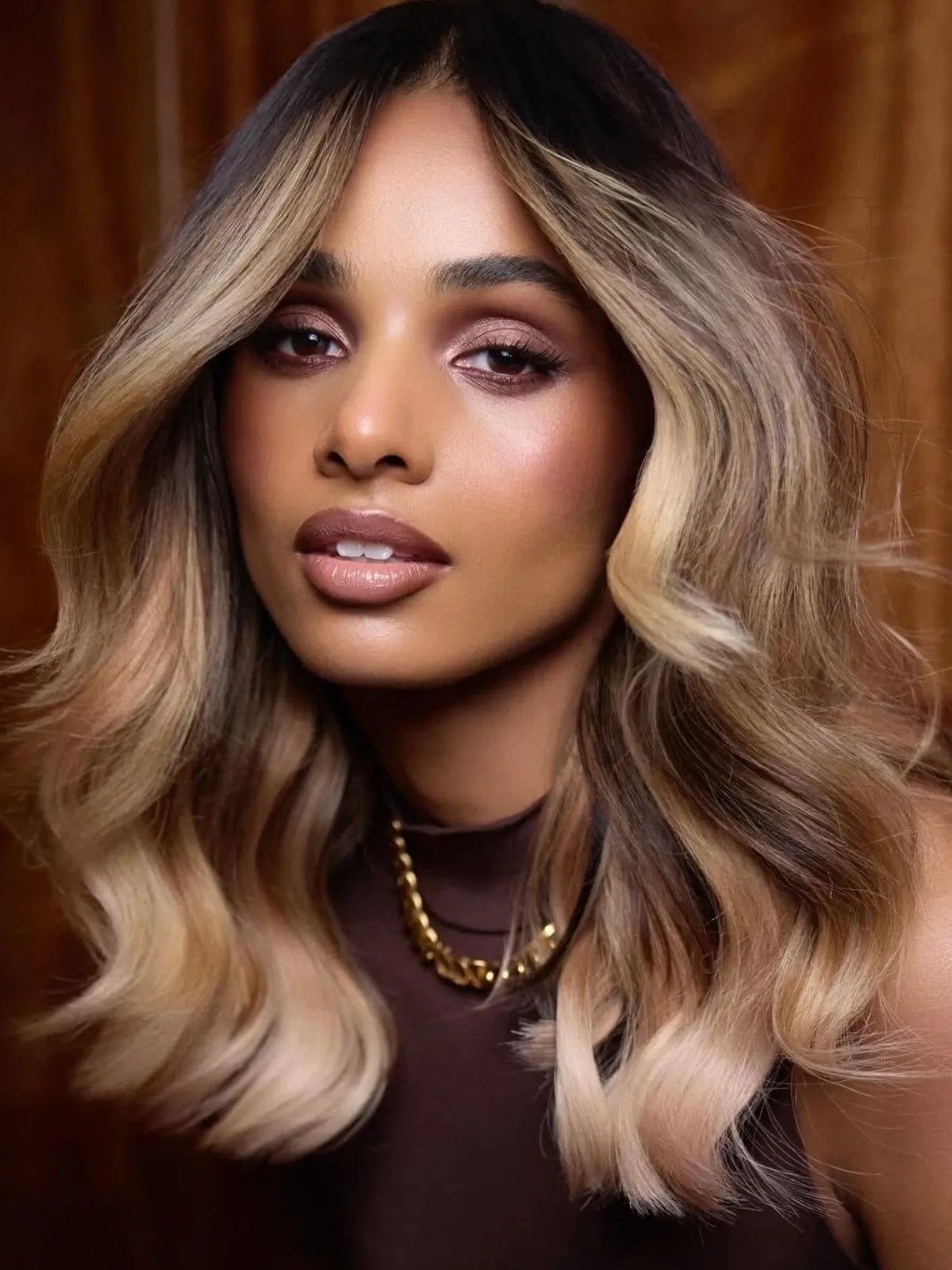
Compare this to a straight platinum or a solid beige blonde, and the difference is the root shadow. The photo shows thick wavy mid-back hair with a beige blonde shade, a darker root shadow, and lighter highlights woven through the lengths. That shadow at the scalp is what makes the grow-out look intentional rather than neglected, buying you weeks between salon visits.
Thick wavy hair of mid-back length or longer carries the dimension well; the root shadow suits anyone who wants a softer maintenance cycle. Ask your colorist for: mid-back beige blonde with root shadow and face-framing layers. A sea salt spray on damp hair enhances the natural wave pattern, and the baseline needs a trim every eight to ten weeks.
Shoulder Length Shag With Dirty Blonde Highlights
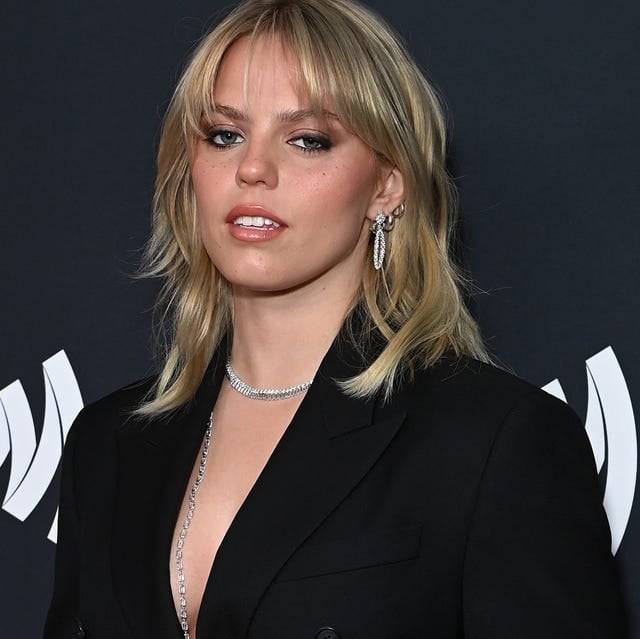
A shag cut lives or dies on texture, and the dirty blonde highlights here give it room to breathe. The photo shows a shoulder-length shag with curtain bangs, styled in textured waves, the lighter pieces subtle enough to read as natural sun exposure. That lived-in color is the point: it supports the cut’s choppy layers without demanding constant toning.
Medium density hair starting at shoulder length is ideal; the shag suits most face shapes. Ask your stylist for: shoulder length shag with curtain bangs and dirty blonde highlights. A texturizing paste worked through dry hair gives that piecey finish, and a trim every six to eight weeks keeps the layers from blending into one shape.
Collarbone Ash Blonde With Subtle Highlights
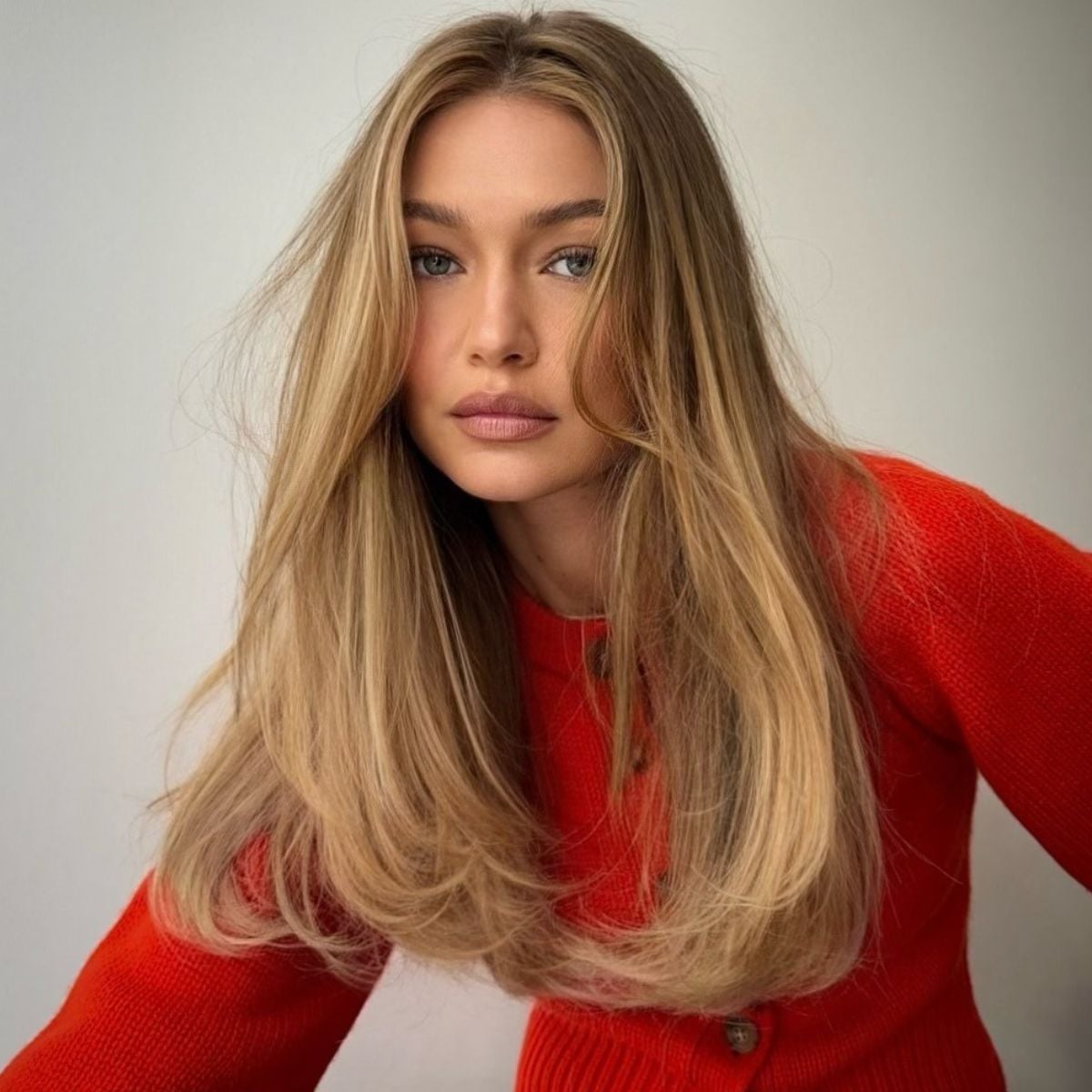
Subtle highlights on an ash blonde base at collarbone length keep fine, straight hair looking deliberate without making it look busy. What you’re buying is a smooth blowout with soft face-framing layers, a middle part, and enough dimension that the tone doesn’t fall flat. Fine hair is the catch: ash blonde turns dull fast when the highlights are spaced too far apart, and a home box on top of salon lightening tends to go muddy. Ask your colorist for: collarbone ash blonde with subtle highlights. Book the salon, then plan a volumizing spray at the roots before blow-drying and a toning appointment every 8-10 weeks.
Platinum Blonde Collarbone Waves With Root Shadow
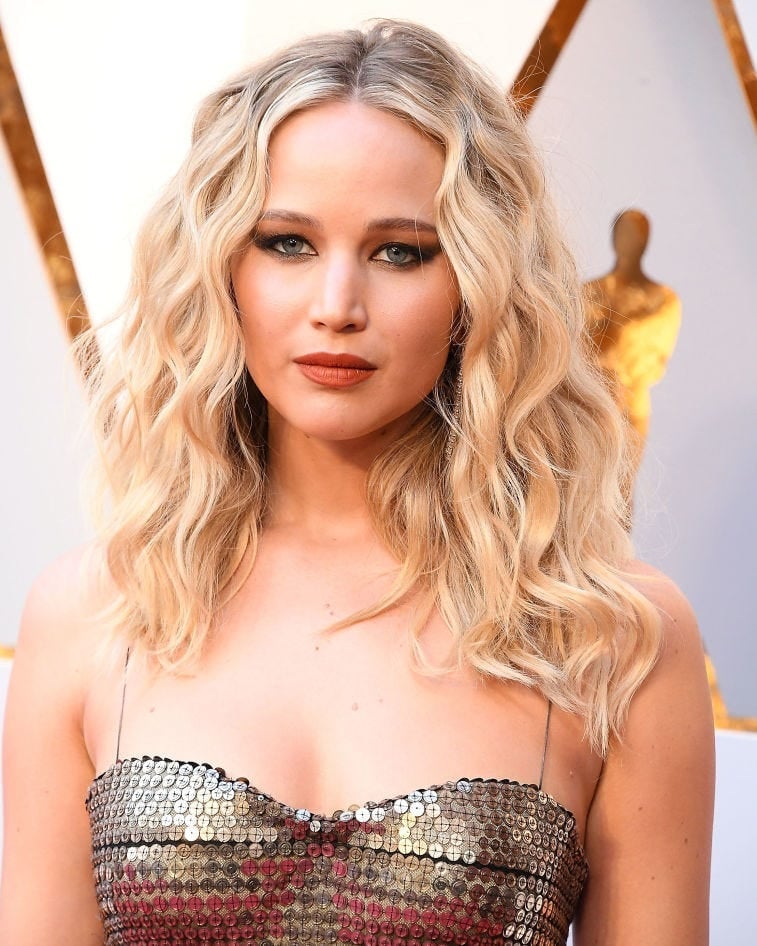
Does platinum have to mean a root touch-up every three weeks? Not when a root shadow is part of the brief. The darker base at the scalp gives the bright collarbone-length platinum somewhere to sit, and it blurs the grow-out line for weeks instead of days. Fine, wavy hair wears this well: beach waves with a middle part add body without any weight, and the length keeps the whole thing from reading as a full platinum statement. It lands hardest in summer, when the contrast between shadow and light does the most work against sun and salt. Ask your colorist for: platinum blonde with root shadow. Expect about four hours in the chair. Scrunch mousse through damp hair, let it dry, and tone every 6-8 weeks.
Sandy Blonde Collarbone With Finely Woven Highlights
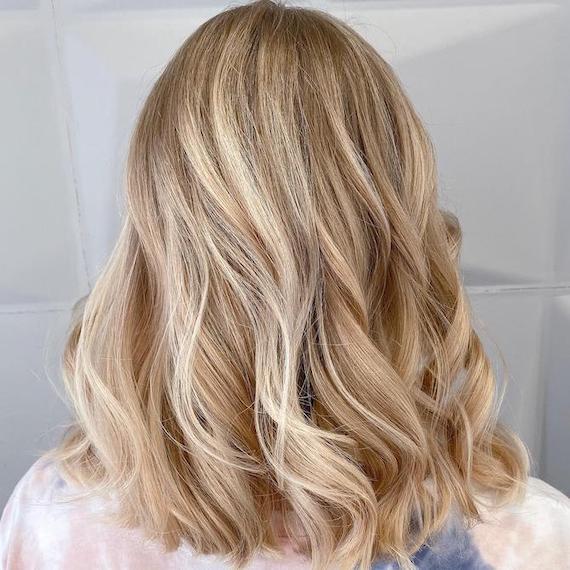
Sandy blonde at collarbone length with lighter pieces woven through the whole head looks dimensional from the back, which is where most color work actually gets judged. The mistake is asking for finely woven highlights on thick, wavy hair and expecting a single appointment to nail it: fine weaves need a colorist who can place them around the wave pattern, or the lighter strands disappear into the bulk. Ask your colorist for: sandy blonde with finely woven highlights. Sandy shades tend to pick up brass between visits, so plan on a toning appointment every 6-8 weeks. A smoothing serum on dry ends and a trim every 8-10 weeks keep the collarbone line clean.
Chin Length Bob In Golden Blonde
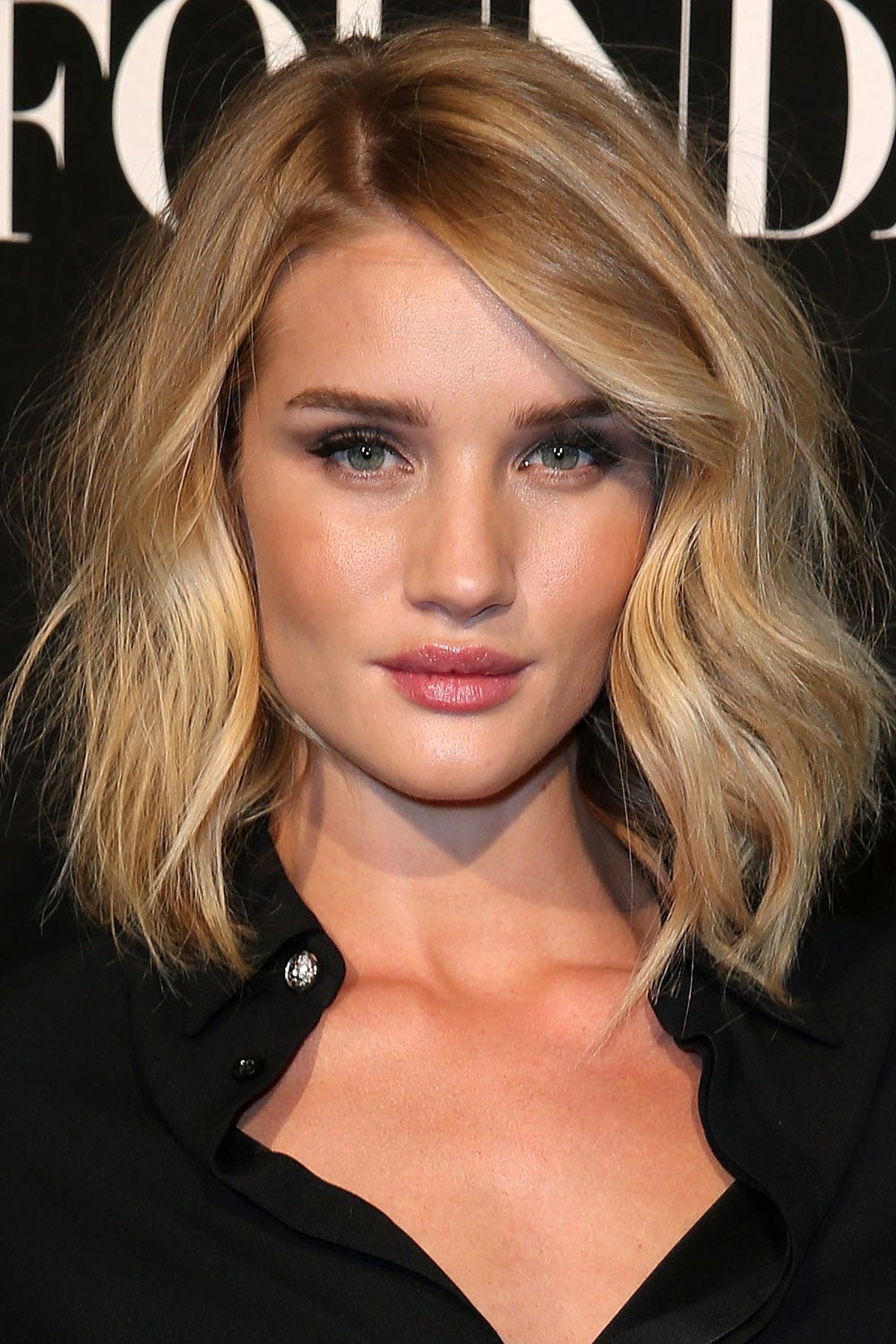
Golden blonde is the shade that makes a chin-length bob look deliberate from across the room, because warm tones catch the shape of the cut. The technique is in the placement: a side part pushes weight to one side, and textured waves break up the line so the bob does not sit flat. Medium-density, wavy hair holds that shape best, and chin length is the honest minimum for this cut. Ask your stylist for: chin length bob in golden blonde with textured waves. A texturizing spray or paste through dry hair gives the tousled finish, and the cut needs a trim every 6-8 weeks to keep the bob at chin length.
Chin Length Ash Blonde Bob With Wispy Bangs
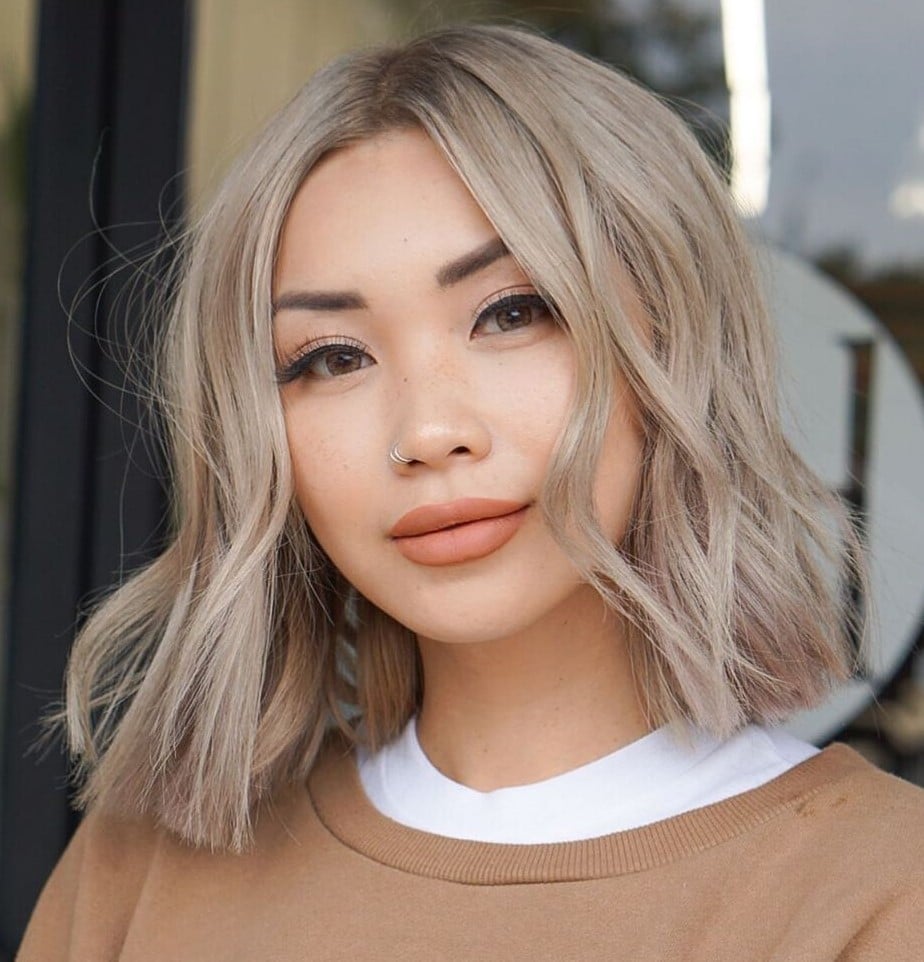
How do you get wispy bangs and a root shadow without the whole thing looking like two separate haircuts? Ask for the transition by name, and be specific about how soft you want it.
- Chin length ash blonde bob, cut blunt at the ends
- Short wispy bangs, long enough to sit below the brow
- Subtle darker roots, blended not banded
- Loose waves through the lengths, not a straight finish
Ask your colorist for: ash blonde with subtle darker roots. The blend matters more than the shade: a hard line at the root looks like grow-out, while a soft melt adds depth. Fine, wavy hair suits this best, since wispy bangs need to sit light on the forehead. Keep the bangs in place with a light hold hairspray, and tone every 8-10 weeks.
Chin Length Platinum Bob With Choppy Bangs
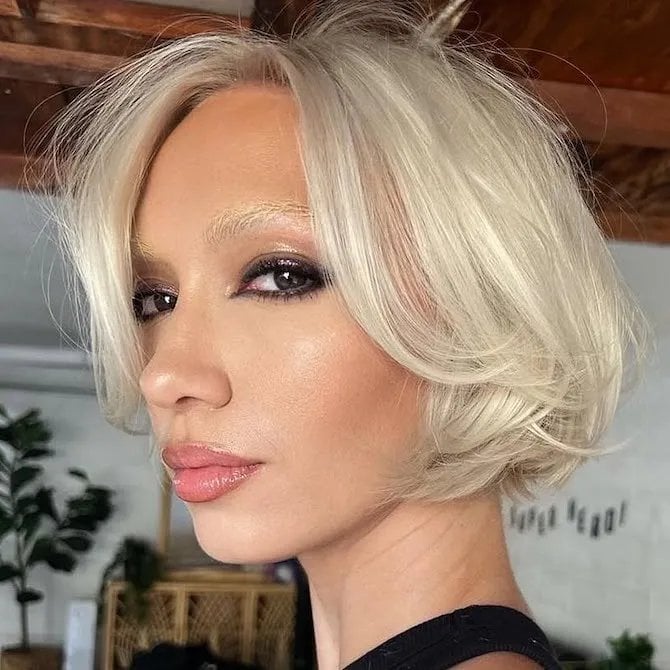
A chin-length bob in bright platinum works best when the cut and the color are both sharp. The choppy bangs and middle parting give it an edge that straight fine hair can carry without extra bulk. Ask your colorist for: chin length platinum blonde bob with choppy bangs. Platinum on fine texture usually needs heat styling to look polished, and a texturizing spray helps the choppy pieces separate instead of lying flat. A toning appointment every four to six weeks keeps the shade from turning brassy.
Shoulder Length Dirty Blonde With Blended Highlights, Face-Framing
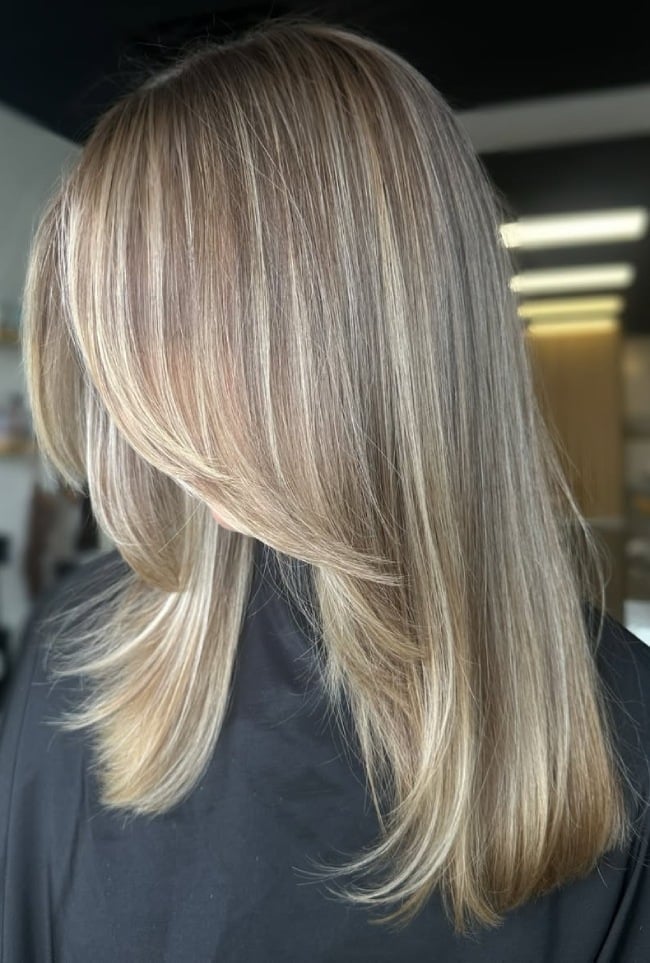
Chunky highlights can overwhelm fine straight hair, but blended ones layered through a dirty blonde base create soft dimension without the stripe effect. The face-framing layers and side parting here make the color feel natural rather than painted on. Ask your colorist for: shoulder length dirty blonde with blended highlights and face-framing layers. This is strictly a salon job; the fine weaving takes a practiced hand. A round brush and blow dryer at home is enough to keep the slight bends smooth between cuts.
Shoulder Length Shag With Dirty Blonde Highlights, Close-Up Take
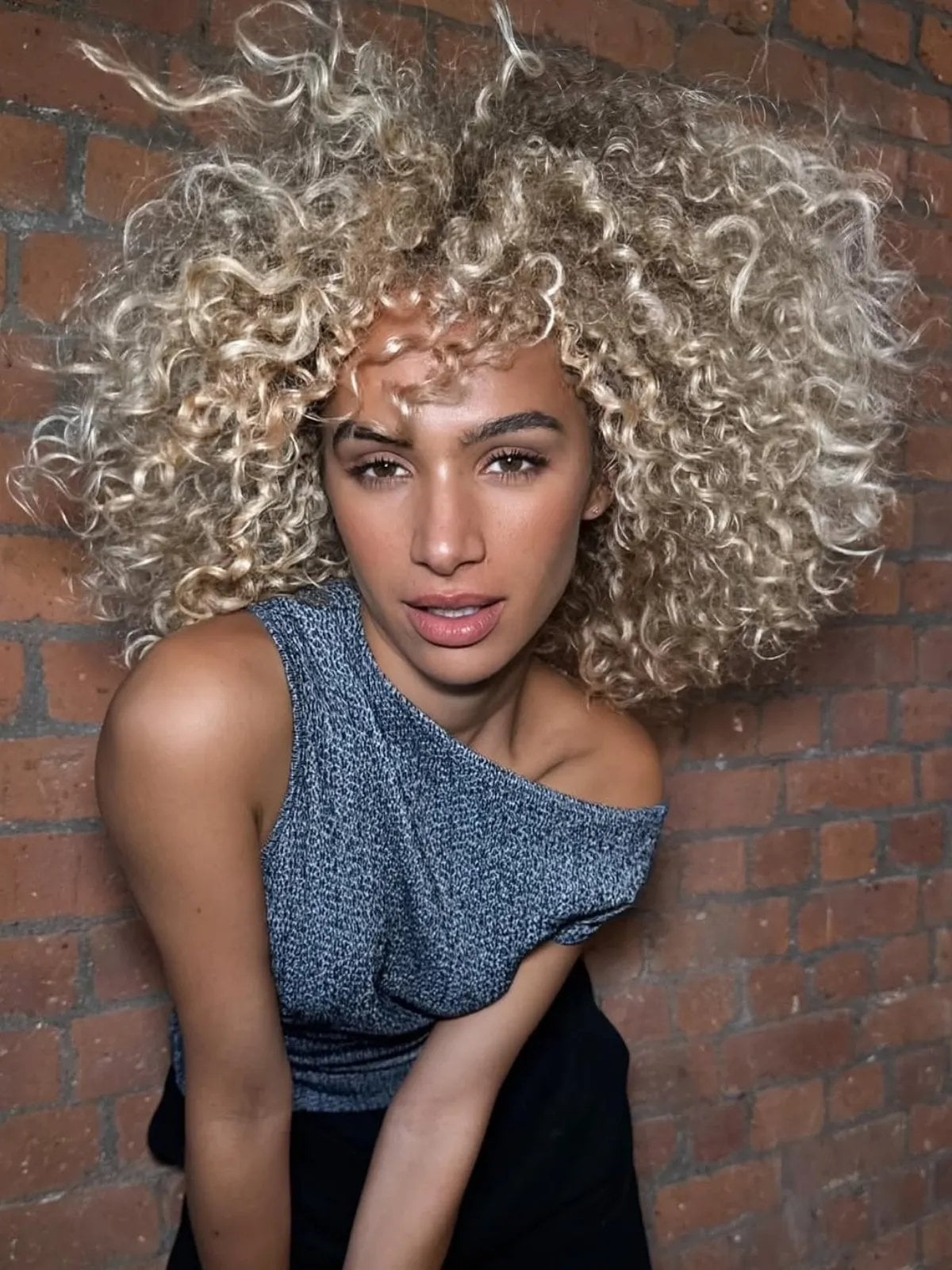
A shoulder-length shag with curtain bangs relies on texture to do the work, but the dirty blonde base with lighter highlights is what keeps the layers from blending into one flat tone. The trade-off is that a true neutral blonde on thick wavy hair can be a battle; it often pulls slightly warm or cool depending on your water and products. Ask your colorist for: shoulder length shag with curtain bangs and dirty blonde highlights. The shag needs a trim every six to eight weeks to hold its shape, and a texturizing paste through dry hair is the only styling it really asks for. Skip this if you prefer a uniform color, because the highlights are meant to look deliberately uneven.
Mid-Back Toasted Caramel And Honey Blonde
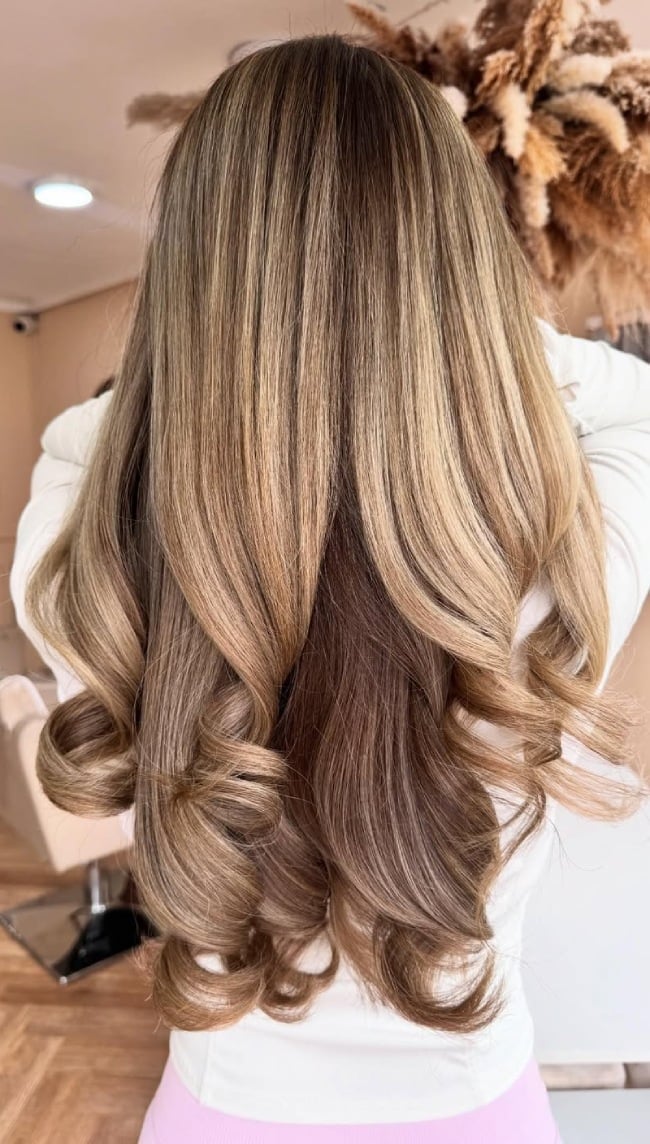
Toasted caramel and honey blonde is a warm combination that lands naturally in autumn, when cooler weather makes rich tones feel sun-kissed. The seamless highlights run through long layers and curled ends, so the color shifts as the hair moves. Ask your colorist for: mid-back hair with toasted caramel and honey blonde highlights. Thick wavy texture at this length needs the layers to prevent it from looking heavy, and the curled ends add shape without requiring a full hot-roller set. A large barrel iron for the ends and a trim every eight to ten weeks keeps the blend clean.
Thick Mid-Back Neutral Blonde With Highlights
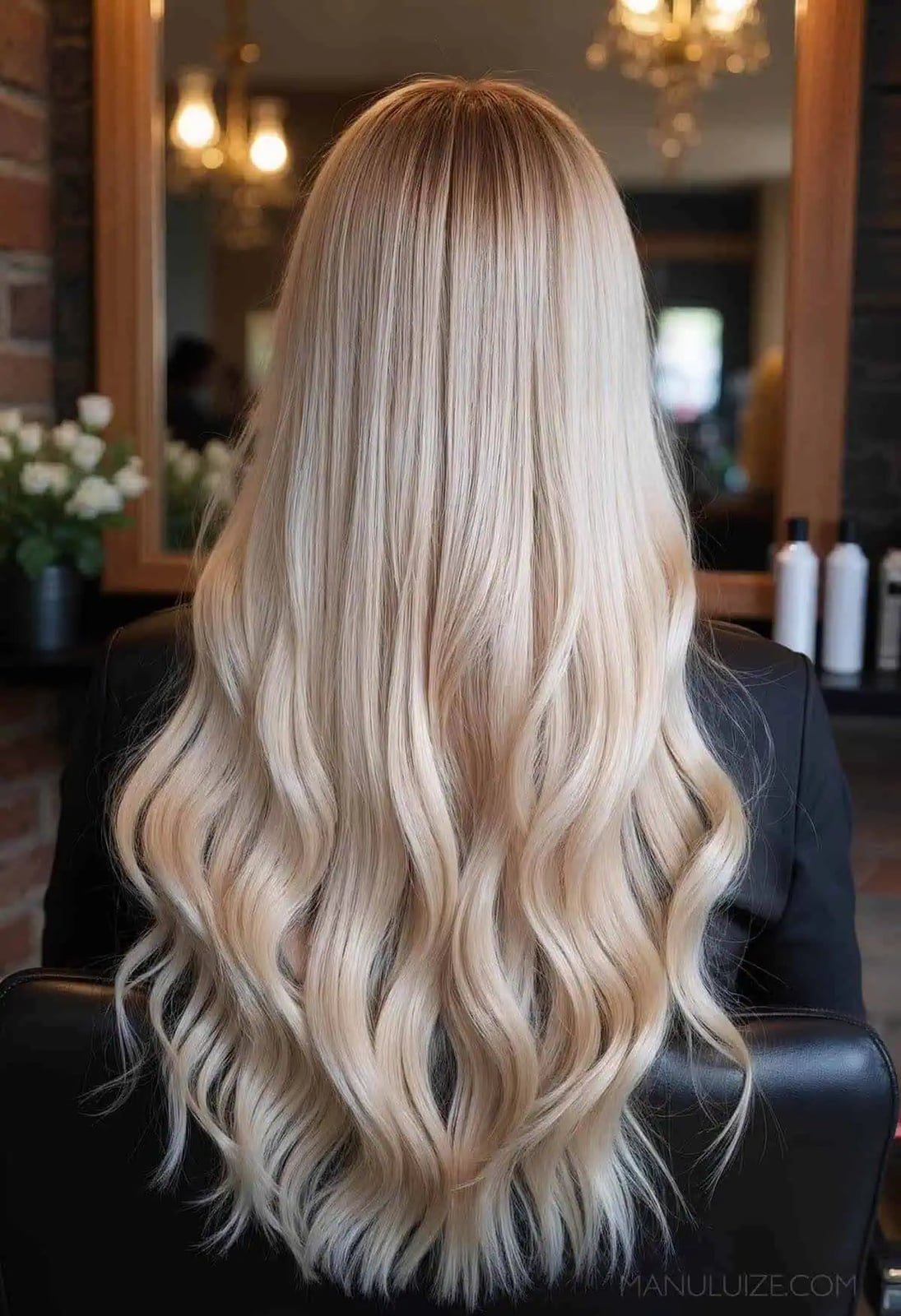
Thick straight hair at mid-back length is one of the best canvases for a uniform neutral blonde because the density carries the color evenly without hot spots. The subtle highlights add just enough movement to stop the shade from reading as flat. Ask your colorist for: mid-back neutral blonde with subtle highlights. A diffuser on low heat is all this texture needs to encourage soft waves, and an eight to ten week trim rhythm prevents the ends from dragging the color down. It is a low-maintenance option for anyone who wants blonde without the constant toning schedule of platinum.
Long Honey Blonde With Subtle Lighter Highlights
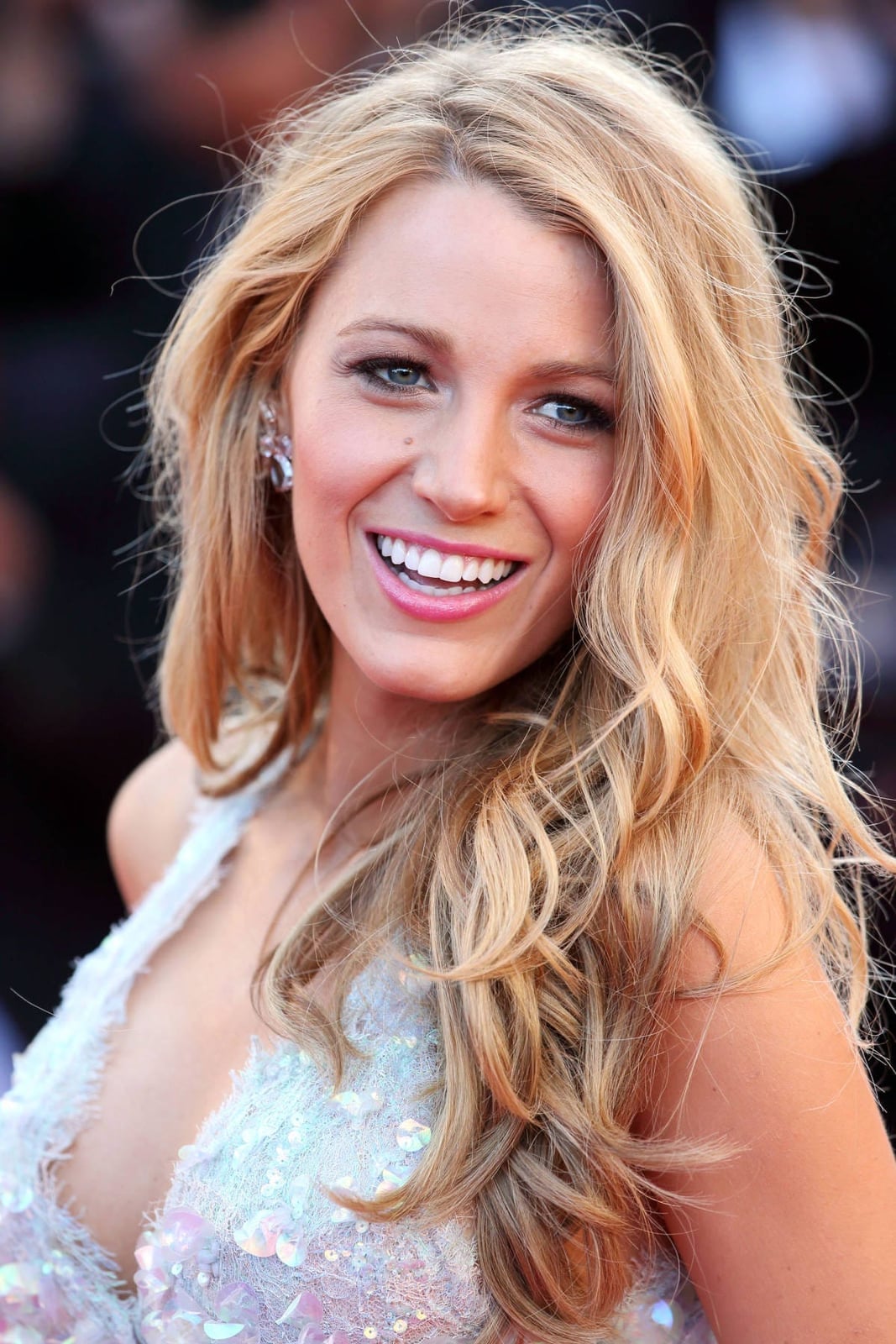
Thick, wavy hair has a built-in advantage for honey blonde: it holds loose waves without a curling iron. The mid-back length here uses long layers to prevent the shape from getting heavy, and the honey base with lighter highlights adds dimension. Ask your colorist for: long honey blonde with subtle lighter highlights and long layers. A volumizing product at the roots before blow-drying keeps the lift going, and a trim every eight to ten weeks maintains the shape.
The subtle highlights mean the grow-out is forgiving, no harsh line demanding a salon visit at week five. That makes this a practical choice for anyone who wants dimensional color without frequent appointments. The texture does the work.
Long Ash Blonde With Darker Roots
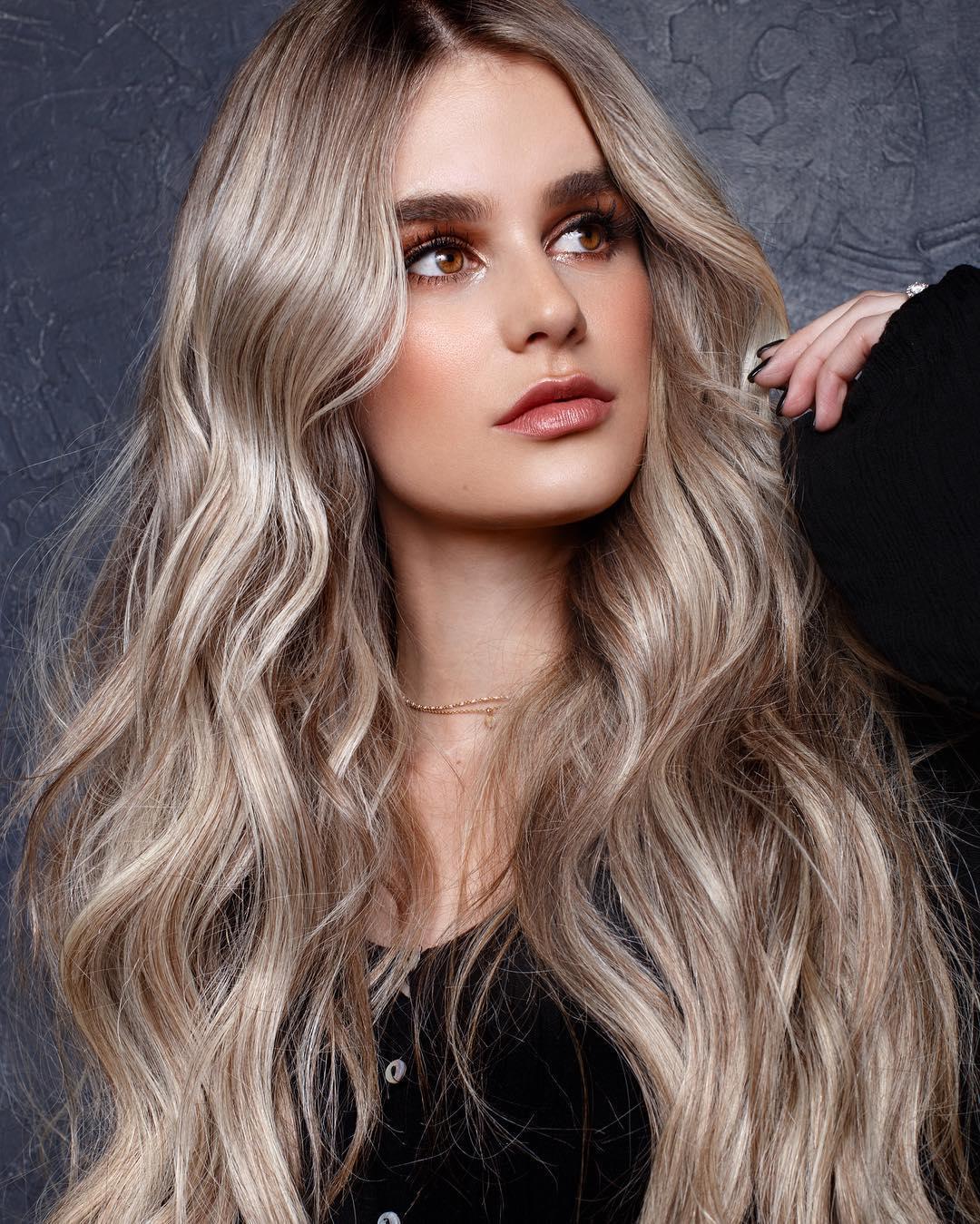
Darker roots are blended into ash blonde highlights for a low-maintenance color that grows out naturally, so you can stretch salon visits to eight or even ten weeks. Ask your colorist for: long ash blonde with darker roots and lighter highlights. The ash tone cools the overall effect, while the darker base keeps it from washing out finer features.
This is a salon-only process. Achieving that seamless blend between cool ash and darker roots takes a colorist who knows how to paint, not just foil. The payoff is a dimensional blonde that looks deliberate, not faded.
Long Champagne Blonde With Face-Framing
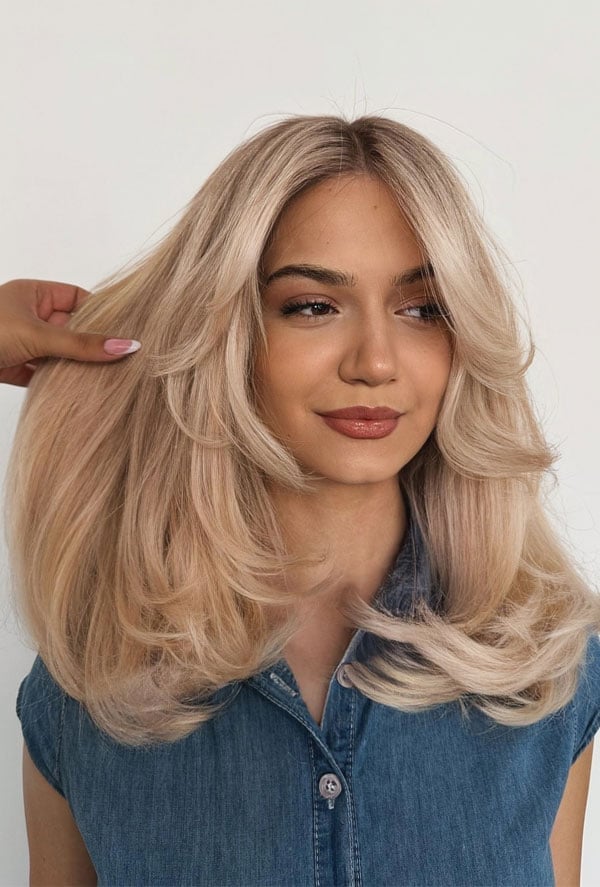
Wondering how to describe a warm but not honey-toned blonde to your colorist? Champagne is the answer: it sits between beige and gold, with enough lightness to look blonde but enough warmth to avoid looking ashy. Ask your colorist for: long champagne blonde with lighter highlights and face-framing layers. The face-framing pieces should start lighter than the rest to brighten the area around your face. A smoothing serum on the mid-lengths and ends seals the cuticle for a glossy finish.
Mid-Back Platinum Blonde With Soft Waves
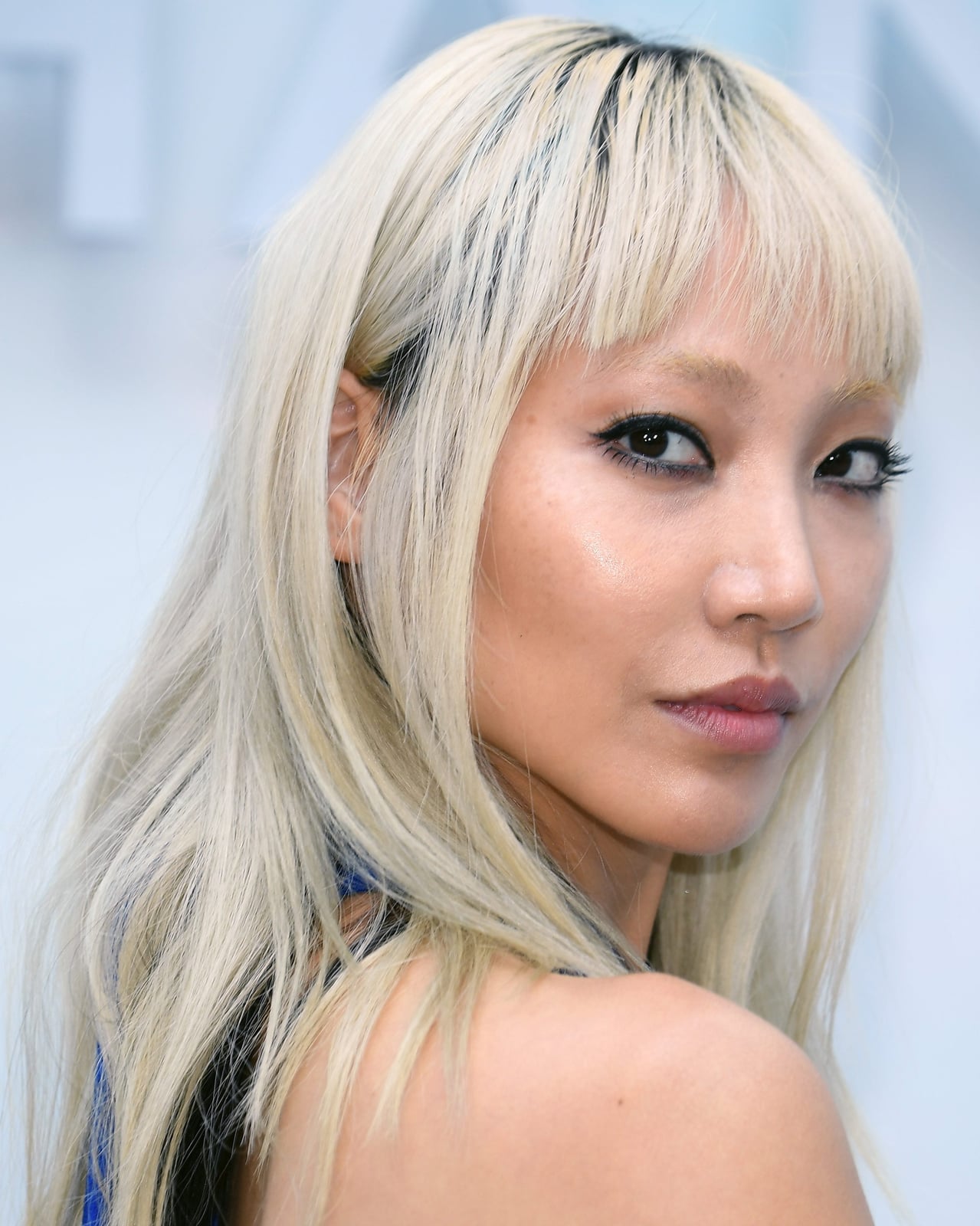
Platinum blonde on thick, curly hair looks striking, but it comes with a catch: the lightest shade of blonde requires the most moisture. Curly texture is naturally drier than straight hair, and lifting to platinum strips even more hydration. Ask your colorist for: mid-back platinum blonde with soft waves. A color-depositing conditioner used weekly prevents the tone from turning brassy between salon visits.
Ultra-Long Icy Platinum Blonde Sleek
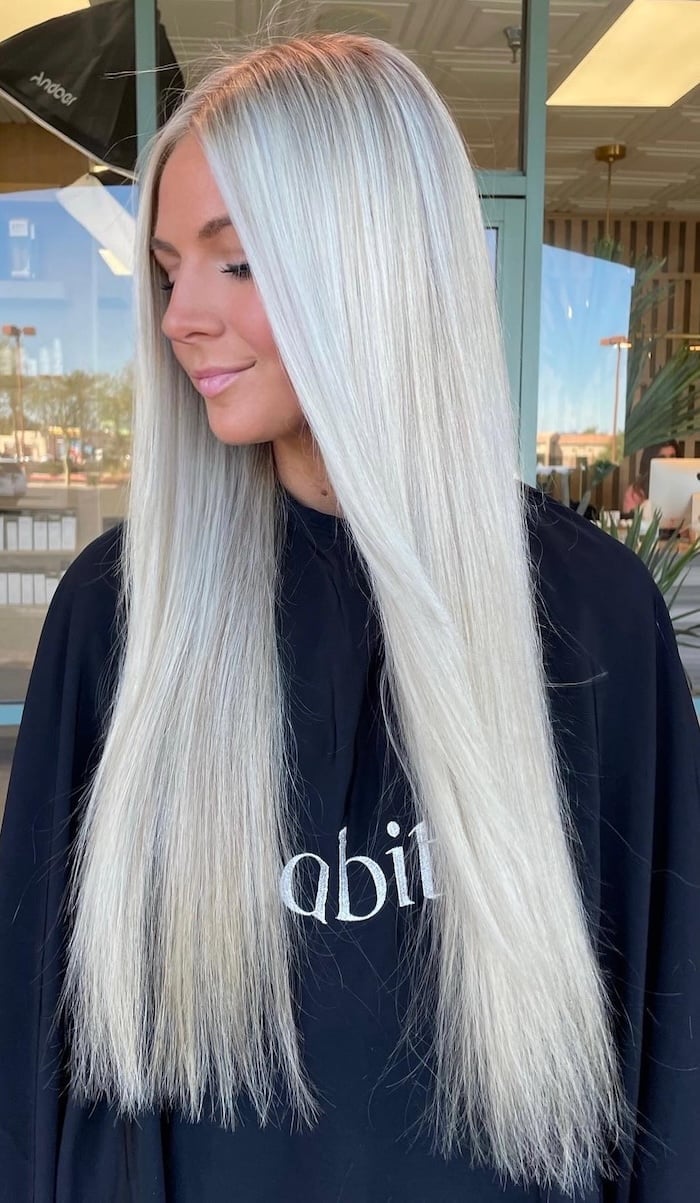
The practical reality of icy platinum blonde is that it demands upkeep. The ultra-long length here is fine and straight, which reflects light and makes every root visible. Ask your colorist for: ultra-long sleek icy platinum blonde. Regular toning appointments every four to six weeks keep the shade from yellowing, and a silk pillowcase reduces friction that can cause breakage on fine strands. The glossy finish requires a heat protectant before any styling.
This is not a color you can ignore for two months. The commitment is real, but the result is a uniform blonde that looks deliberate from root to end.
Final Thoughts
For fine hair, stick with subtle highlights and a blunt baseline to keep strands looking full. For thick hair, a deeper root shadow or balayage breaks up density and adds movement without extra weight.
- Trim split ends every six to eight weeks to maintain healthy blonde length.
- Use a purple shampoo once a week to keep brassiness at bay.
- Deep condition weekly to combat dryness from lightening.
- Always apply a heat protectant before styling.
Pick the blonde that fits how you live, not just how it looks in the mirror.