Braids to the back are a versatile styling choice that moves hair away from the face and into a sleek, practical line, a technique that has been refined for 2027 with a focus on intricate patterns and rich texture.
From shoulder-grazing cornrows to waist-length knotless styles, this collection of 15 ideas spans the full spectrum of upkeep, from low-maintenance classics to more intricate, high-detail looks. Whether your hair is fine, thick, coily, or relaxed, there is a braid pattern that suits your density and your daily routine. If your hair tends to fall flat or your part never stays put, these back-focused styles solve both problems at once.
The 15 looksOpen list +
Neat Dark Brown Cornrow Braids to Shoulders
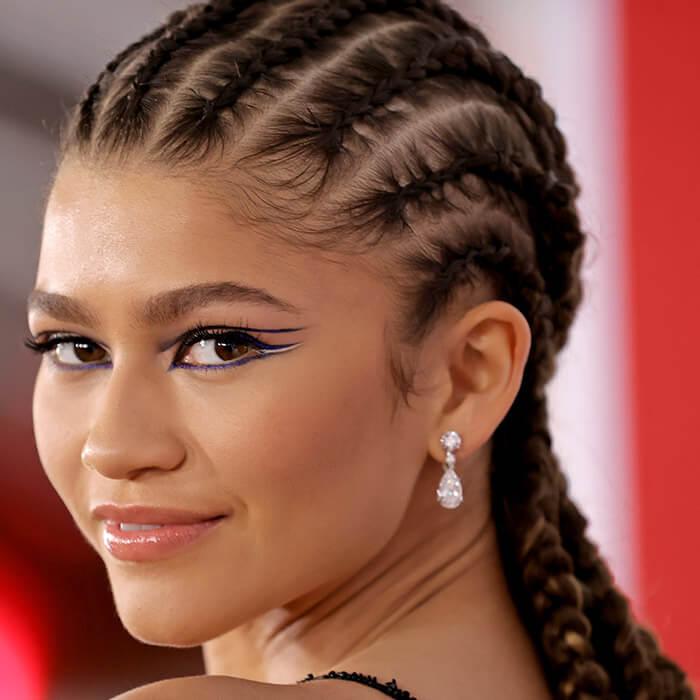
On straight, thick hair in dark brown, that precision reads as a uniform surface rather than a pattern. Ask your stylist for: shoulder-length neat cornrows, dark brown color. Medium to thick density handles the tension best, and most face shapes can wear the middle parting without adjustment. Book the salon session, then keep the parting crisp with a small amount of hair balm and trim stray hairs weekly.
Collarbone Box Braids With Subtle Highlights
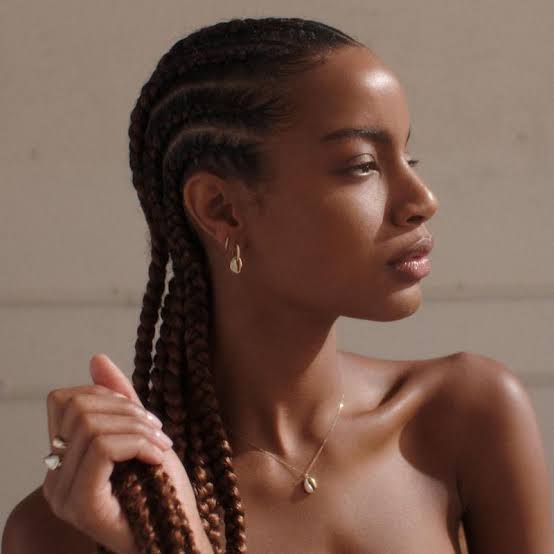
Wondering whether collarbone length is long enough for box braids? It is, and the shorter drop keeps the style from pulling at the scalp. Brown braids with lighter highlights running through them give the wavy, thick texture a dimensional look along the length instead of only at the roots. Ask your stylist for: collarbone length box braids with subtle highlights. Medium to thick hair holds the sections firmly at this length, and the middle parting keeps the front balanced. Fine hair can wear it too, though the braids may look sparser. If you want elongation, ask for a little more length below the chin. Use a light oil sheen on the braid shafts and skip heavy products that weigh them down.
Ash Blonde Crown Braid and Ponytail
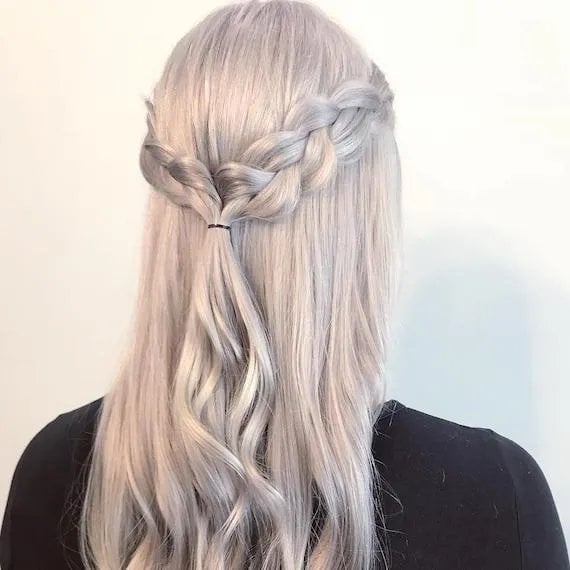
Set this against a full head of braids and the difference is control: one delicate braid crosses the crown into a low ponytail, leaving collarbone-length hair loose and wavy. Full braids win on hold and low morning effort. The crown braid wins on softness, and ash blonde with silver undertones makes that softness visible, since the pale shade shows every twist in the plait. Ask your stylist for: collarbone wavy hair, crown braid into low ponytail, ash blonde. Medium density suits it best, and a middle parting keeps the braid symmetrical.
- collarbone length with soft layers so the loose hair moves
- a crown braid fine enough to sit flat
- ash blonde with silver undertones, toned to keep the cool cast
Mid-Back Medium Box Braids With Blonde Highlights
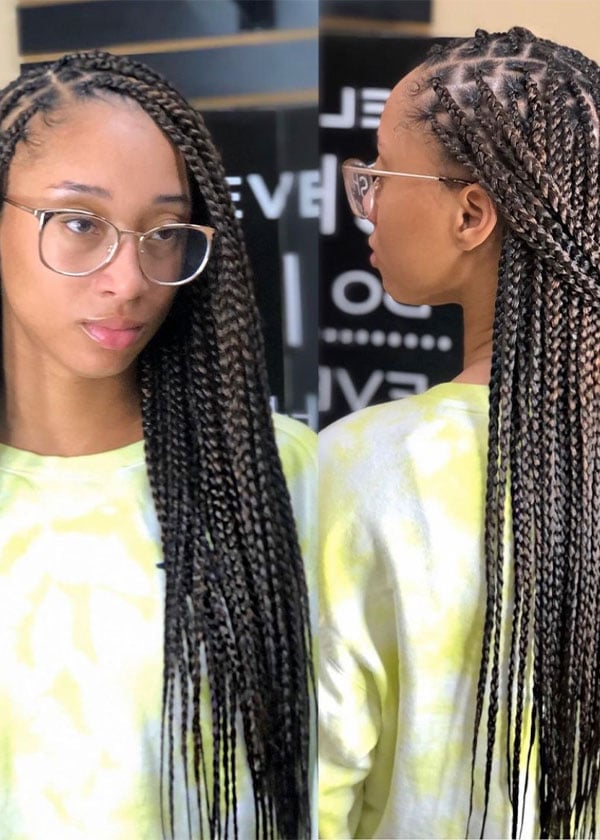
Mid-back is the length where box braids stop being a hairstyle and start being a commitment, because the braids hang low enough to catch on bag straps and chair backs all day. Medium sections in straight, medium-density hair keep the weight distributed, and a dark brown base with blonde highlights woven through gives the color variation without a full head of bleach. Ask your stylist for: mid-back medium box braids with blonde highlights. The middle parting keeps the front neat as the braids settle.
Upkeep is where this length earns its keep or doesn’t. A leave-in conditioner on the braid ends prevents the dryness that sets in past the shoulder blades, and a toner refresh every four to six weeks keeps the blonde from turning brassy against the brown. Expect a retouch at the roots around the six to eight week mark, since new growth at the parting shows first. The braids themselves hold for weeks with nightly scarf protection, though the longer they stay in, the more the roots frizz.
Uniform Black Box Braids Mid-Back Length
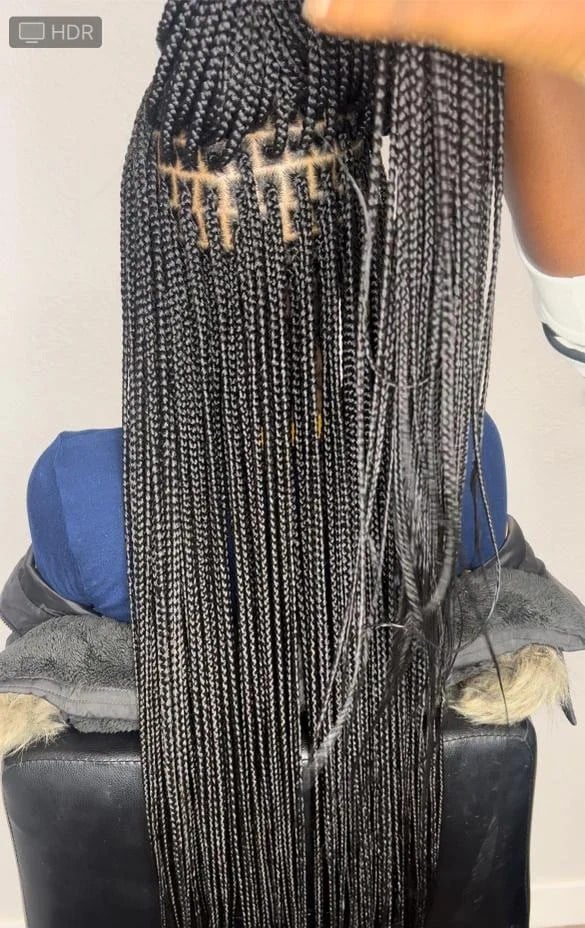
Uniform black box braids at mid-back read as one solid shape from behind, with a middle parting that splits the rows evenly and straight, thick texture that keeps each section dense to the ends. The trade-off is weight. That density is what makes the style look so uniform, and it is also what makes a long day feel long: the braids pull at the parting by evening, and sleeping on them takes some getting used to. Ask your stylist for: mid-back uniform black box braids. If your scalp is sensitive or your hair is fine, a shorter length or lighter sections will serve you better. Otherwise, keep the parting hydrated with a scalp serum and trim flyaways at the braid bases weekly.
Knotless Box Braids With Subtle Blonde Highlights
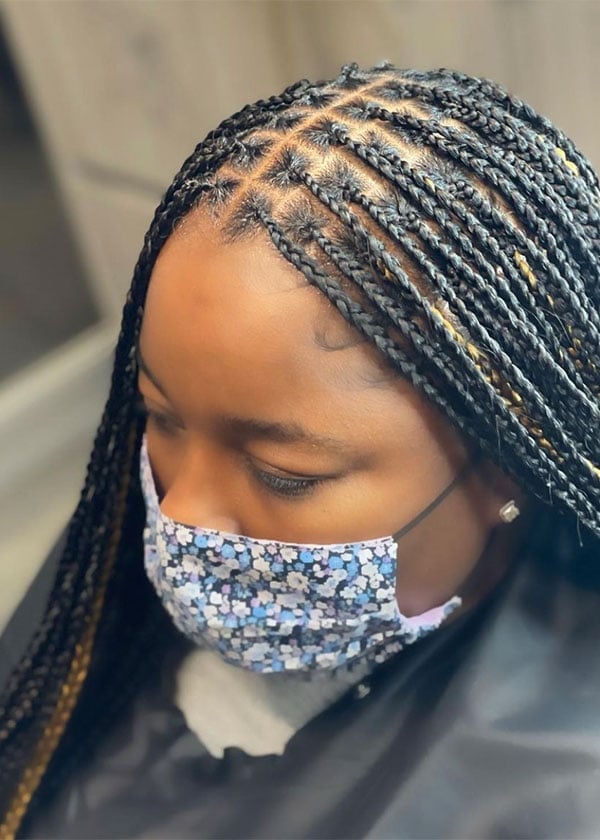
How do you add color to box braids without it looking like an afterthought? The answer is subtle blonde highlights woven through a black base. These mid-back knotless braids use a middle parting and small, uniform sections to keep the contrast soft rather than stripey. Thick hair at least mid-back length works best for a blended effect. Ask your stylist for: mid-back knotless box braids with subtle blonde highlights. The highlights stand out against the base, and the knotless technique means less tension at the root.
A light braid sheen spray keeps the luster up without disturbing the placement. Avoid heavy manipulation of the highlighted strands, and you will only need a touch-up every eight to ten weeks as new growth appears. The blonde grows in gradually, so the line is never harsh.
Mid-Back Cornrows Leading into Long Braids
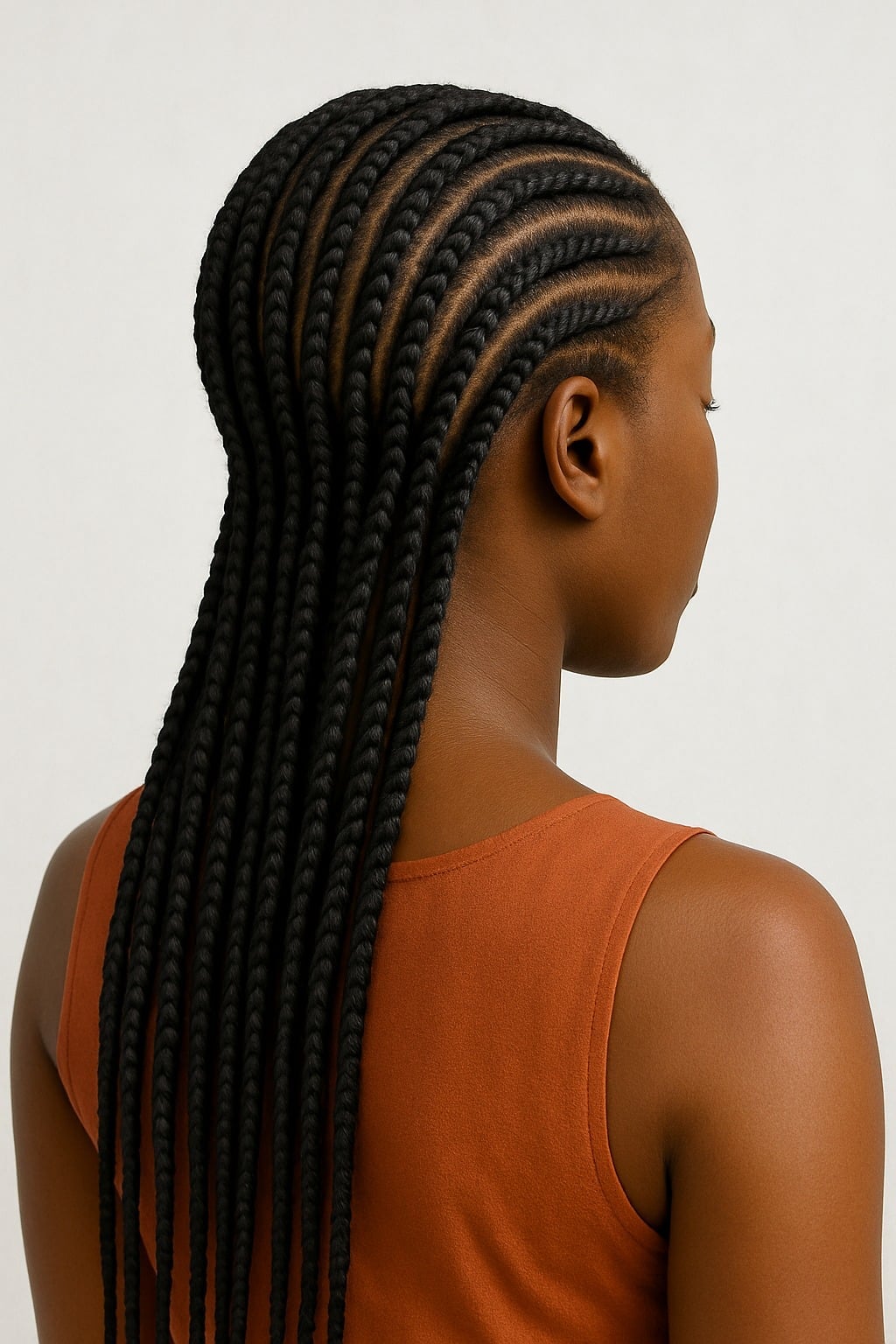
The transition from scalp-close cornrows to free-hanging length requires precise parting work. Here, neat black cornrows start at a middle parting and run straight down the back, then continue into long individual braids at mid-back length. The cornrows keep the top smooth, while the extended braids add movement below. Thick hair of mid-back length holds the structure best. Ask your stylist for: mid-back cornrows into long straight braids.
Keep the scalp clean and dry, and use a braid balm on the cornrow parting for a smooth finish. The cornrow section typically stays fresh for three to four weeks; the braided length holds much longer, needing only a trim every ten to twelve weeks.
Mid-Back Stitch Braids with Geometric Pattern
Stitch braids and cornrows both sit flat to the scalp, but stitch braids create a denser, more graphic line. This version uses a precise geometric pattern along the crown, with the braids falling straight back to mid-back length. The color is black with subtle brown undertones, which adds depth without distracting from the pattern. Thick hair of mid-back length is ideal for this technique, as the stitches need enough density to register clearly. Ask your stylist for: mid-back stitch braids with geometric scalp pattern.
A lightweight edge control applied daily keeps the stitch lines crisp. The pattern remains clean for about two weeks; after that, you will want a refresh or a gentle scalp wash to maintain the definition. It is a look that works best for fashion-forward occasions, not for someone who prefers low-maintenance styling.
Mid-Back Stitch Braids with Styled Baby Hairs
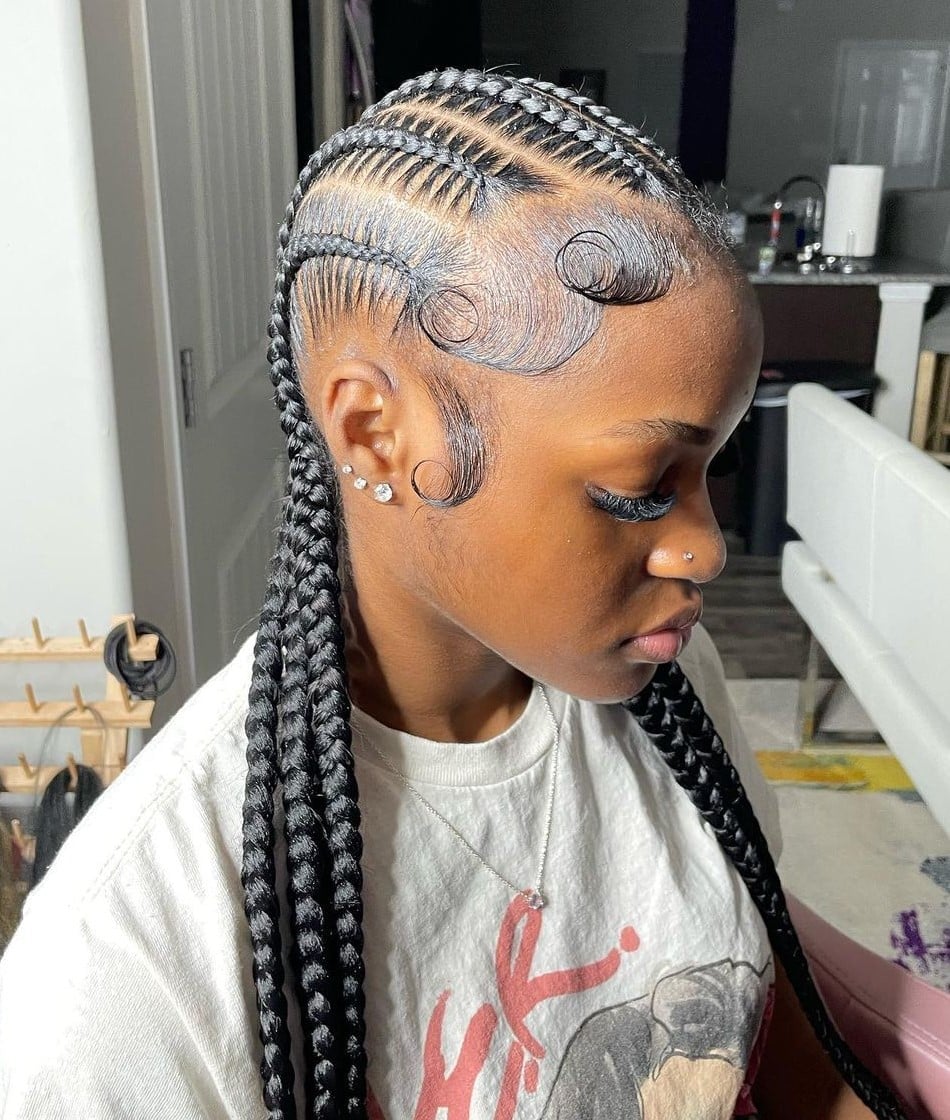
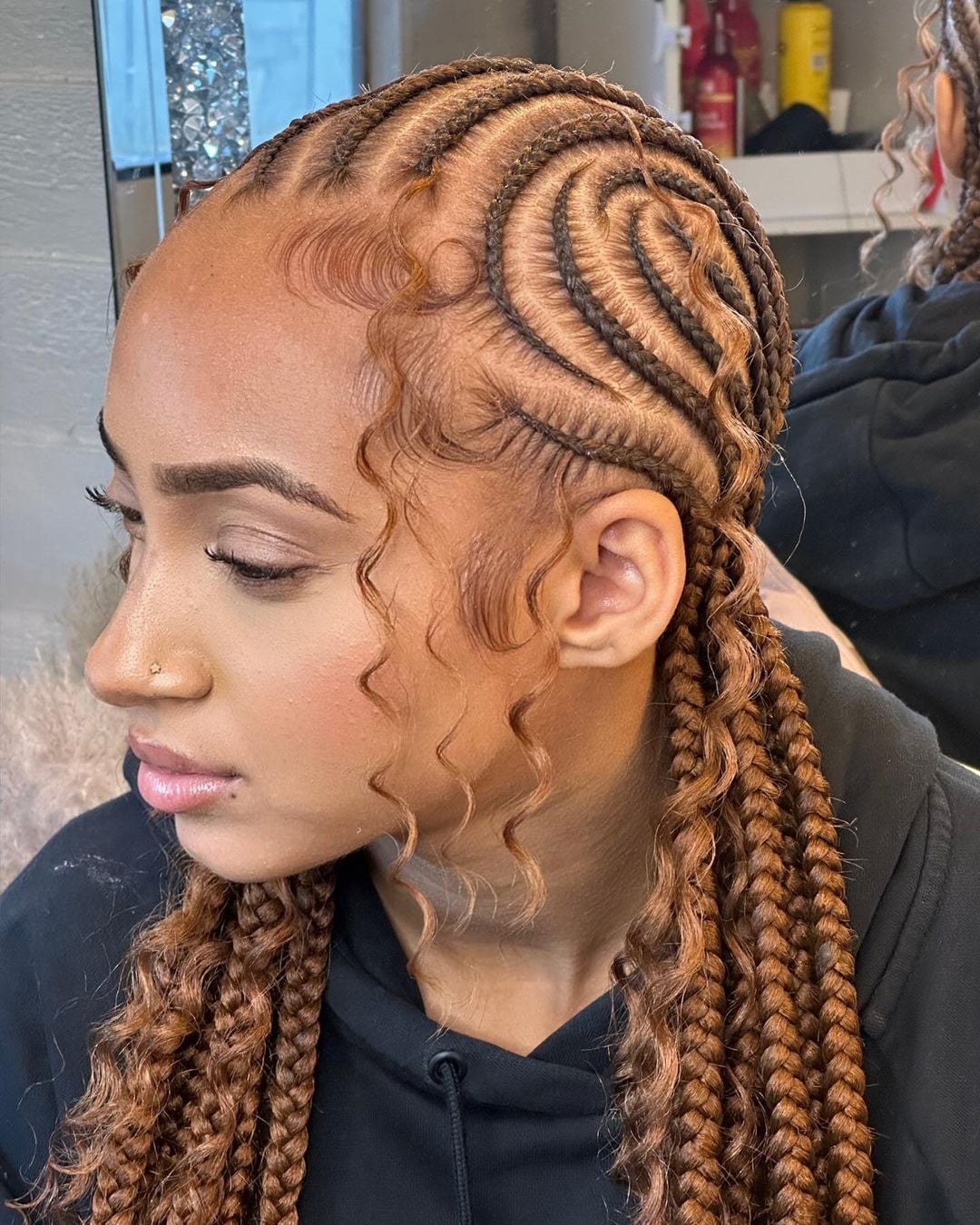
Styled baby hairs add a deliberate finishing touch to stitch braids, turning the hairline into its own detail. Here, thick black stitch braids extend to mid-back length with a precise middle parting, while the baby hairs along the forehead are sculpted into intricate curves. Thick hair of mid-back length provides the density for the braids to read cleanly. Ask your stylist for: mid-back stitch braids with styled baby hairs. Use a soft brush and a touch of gel to set the baby hairs each morning, and keep the braids moisturized with a spray to prevent dryness. The baby hairs need daily attention; the braids themselves hold for about two weeks before the roots need a touch-up.
Mid-Back Knotless Braids with Geometric Parting
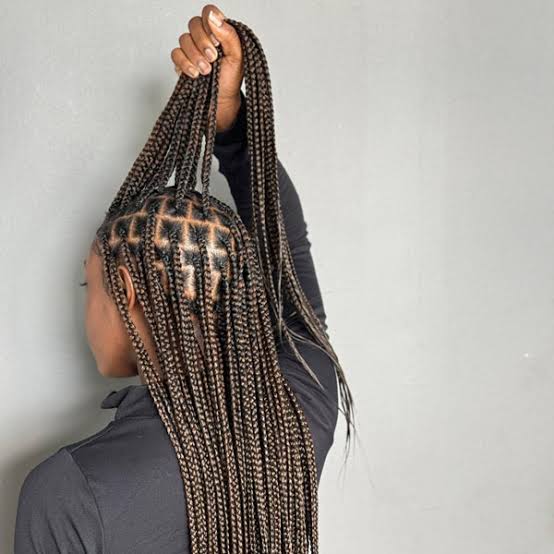
Geometric parting patterns on braids look impressive, but they require a steady hand and a clear plan. These mid-back knotless braids feature a dark brown base with subtle blonde highlights, and the parting is a precise geometric design on the scalp. Medium density hair of mid-back length works best, as the parting lines need to be visible without being overwhelmed by thickness. Ask your stylist for: mid-back knotless braids with geometric parting. This is a salon-only request: the math of the parting needs a professional who can map the sections evenly. A scalp serum applied to the parting lines keeps them from looking dry, and a silk bonnet at night protects the geometry from flattening. The highlights will need a toning appointment around the six-week mark to keep the blonde from pulling warm.
Mid-Back Fulani Braids with Beads
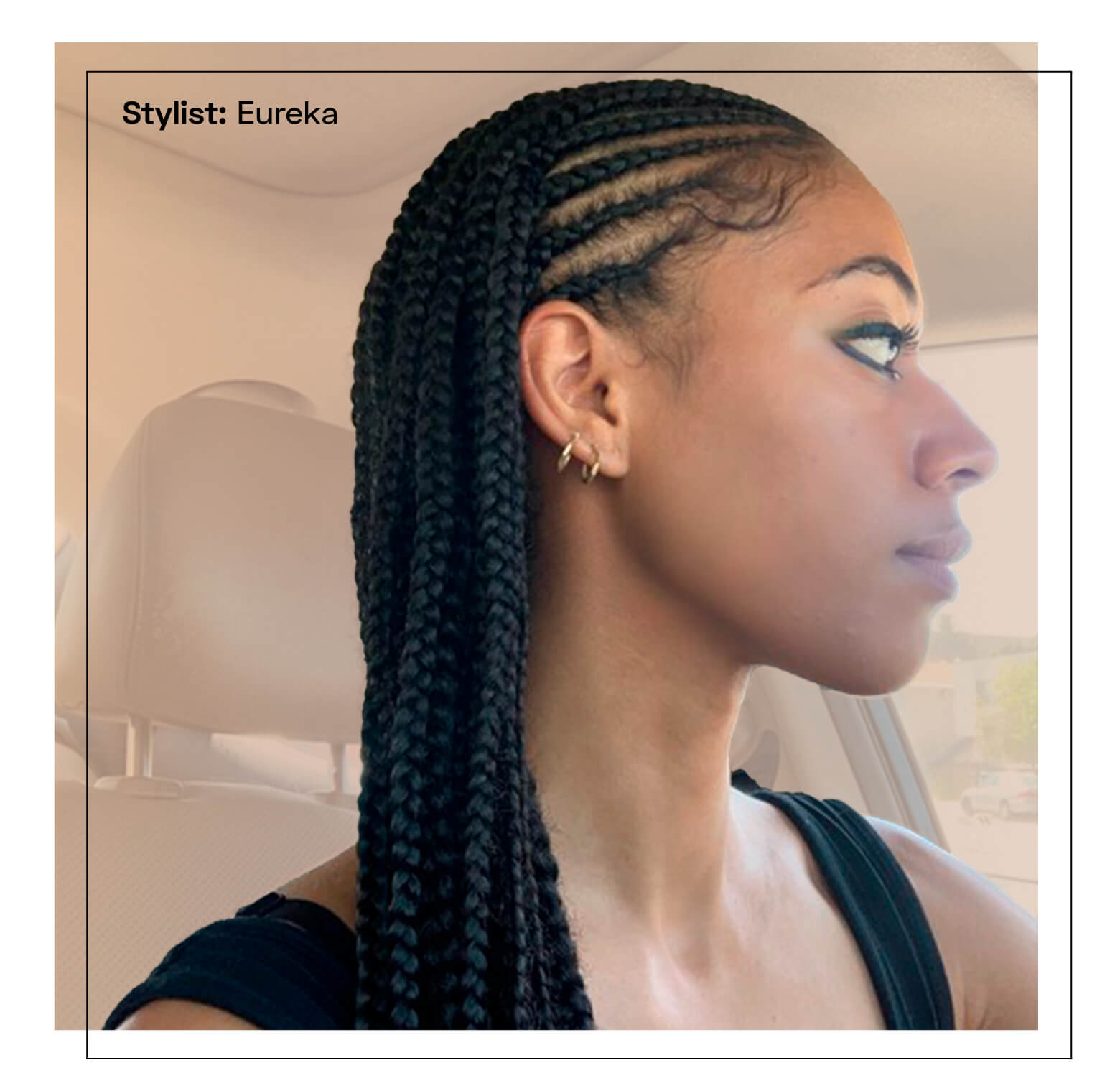
Who says you can’t wear your culture and your jewelry at the same time? These mid-back Fulani braids mix black, blonde, and brown strands, with smaller braids framing the face and larger ones flowing straight back. The beads at the ends add a gentle clink with every turn of the head, which is a bonus you didn’t know you needed. This style genuinely suits thick hair that can carry the weight of the braids and the adornments. Ask your stylist for mid-back Fulani braids with beads. The beads need a little respect when you wash: secure them well and check that they don’t snag on your towel.
Long Black Box Braids with Wavy Ends
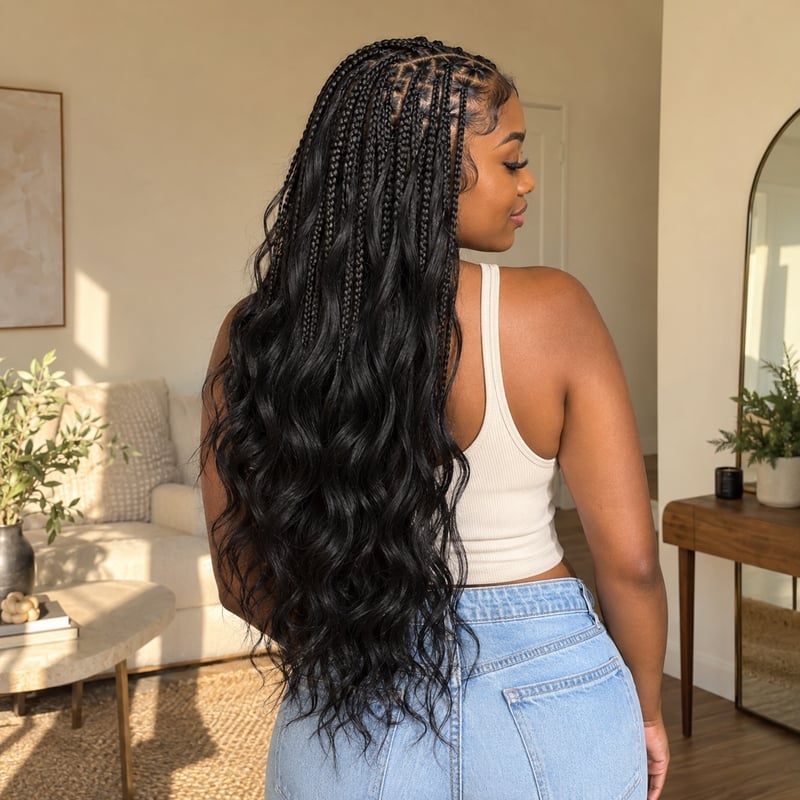
The finish is what sets these long black box braids apart. Each braid runs straight and dense from a middle parting, then relaxes into a wave at the tip, so the top stays neat and the lower length falls looser. The wavy ends come from dipping the last few inches in hot water or setting them with flexi rods while the braid is still damp, which gives that crimped, bendy texture without heat damage. The middle parting keeps the scalp visible and the part lines clean, which matters more than you’d think when the braids are this thick. Ask your stylist for mid-back long box braids with wavy ends. This is a salon job through and through, because getting the tension even across the whole head takes a practiced hand.
Mid-Back Knotless Braids with Loose Curls
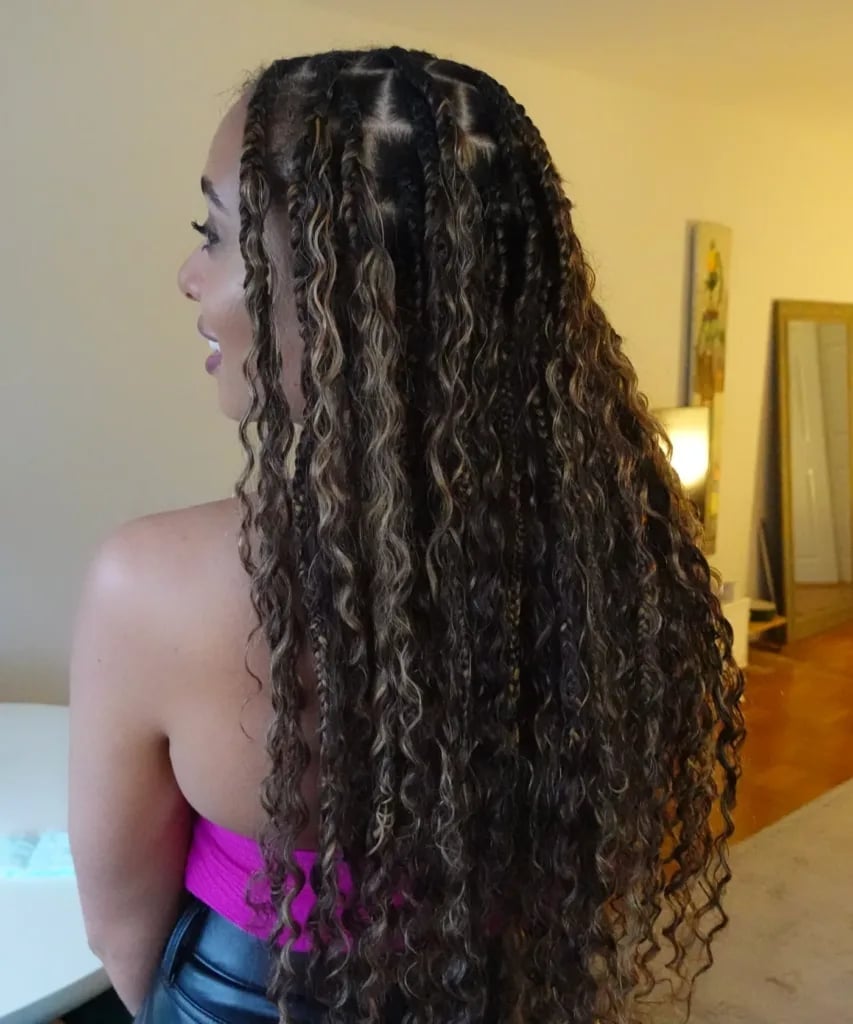
Knotless braids already sit flatter at the root than traditional box braids, which makes them gentler on the scalp and easier to style in a middle parting. The real trick here is the transition: the braid runs smooth for most of its length, then opens into loose, voluminous curls that carry the dark brown and blonde highlights. The contrast between the structured braid and the free curl is what gives the style its dimension. That same contrast is also the drawback. The curls need daily attention to stay defined, and they tangle with the braided section if you skip a satin bonnet at night. Ask your stylist for mid-back knotless braids with loose curly ends. Plan on refreshing the curls with a light mist and your fingers each morning, because a brush will undo the whole effect.
Vibrant Purple Box Braids with Wavy Ends
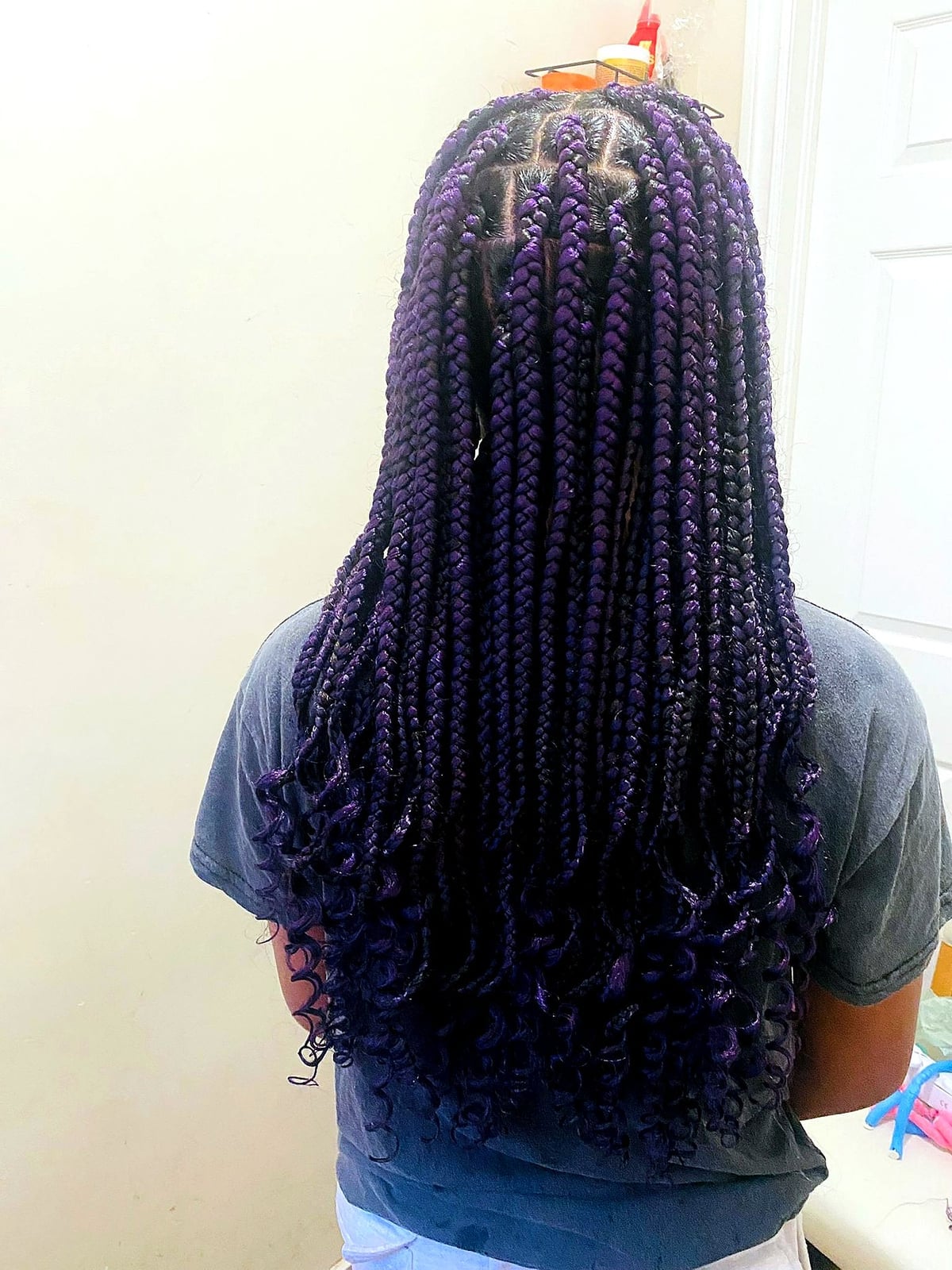
How do you ask for purple that actually looks purple and not a washed-out lilac? Start with the exact shade name, because “purple” covers a lot of ground. Bring a reference photo and say you want a vibrant, saturated violet, the kind that looks purple from across the room. These box braids are thick, parted down the middle, and the square root sections are visible before the braids fall into wavy ends at mid-back. The color is the whole point, so the base needs to be light enough to take the dye without turning muddy. Ask your colorist for mid-back vibrant purple box braids with wavy ends. Use a color-safe shampoo and a hydrating conditioner on the wavy ends, because purple fades faster than any natural shade.
Long Thick Single Braid in Black
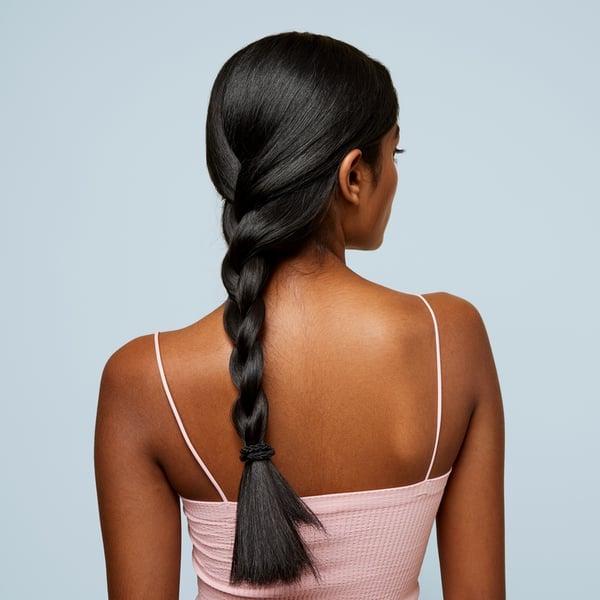
A single braid this long and thick is not a quick pull-back. It requires enough hair to fill the width, which usually means added extensions, and the tension has to be even from the middle parting to the secured end or the braid will sag. The result is a clean, smooth line that works for a workout, a wedding, or a Tuesday. Compared to multiple braids, this one is lower maintenance: there is less to detangle and the smooth texture means a serum keeps it glossy for days. Ask your stylist for mid-back long thick single braid. It is a salon task, because getting the thickness consistent along the whole length takes a practiced hand.
Final Thoughts
For a low-maintenance look, opt for classic box braids or cornrows with a consistent length and texture. If you want more visual interest, choose knotless braids with subtle highlights or add wavy ends.
- Moisturize scalp every 2-3 days for cornrows and stitch braids.
- Use a light sheen spray to control frizz on box and knotless braids.
- Sleep with a silk or satin bonnet to protect braids from moisture loss.
- Avoid over-brushing wavy or curly ends to keep texture intact.
- Re-braid or touch up every 4-8 weeks depending on growth.
Braids to the back offer enduring style and practicality.