Starter locs are the deliberate beginning of a textured journey, setting the foundation for how your hair will mature and hold over time. The shift away from heat-styled uniformity means more people are working with their natural texture from day one, letting coils and waves define the look rather than fighting them.
This collection of 15 starter locs covers the range from collarbone to mid-back, fine to thick, salon-started to DIY-friendly. If your texture tends to go fuzzy or your partings never stay put, these approaches give you a concrete starting point that actually holds its shape.
The 15 looksOpen list +
Collarbone Length Coily Starter Locs
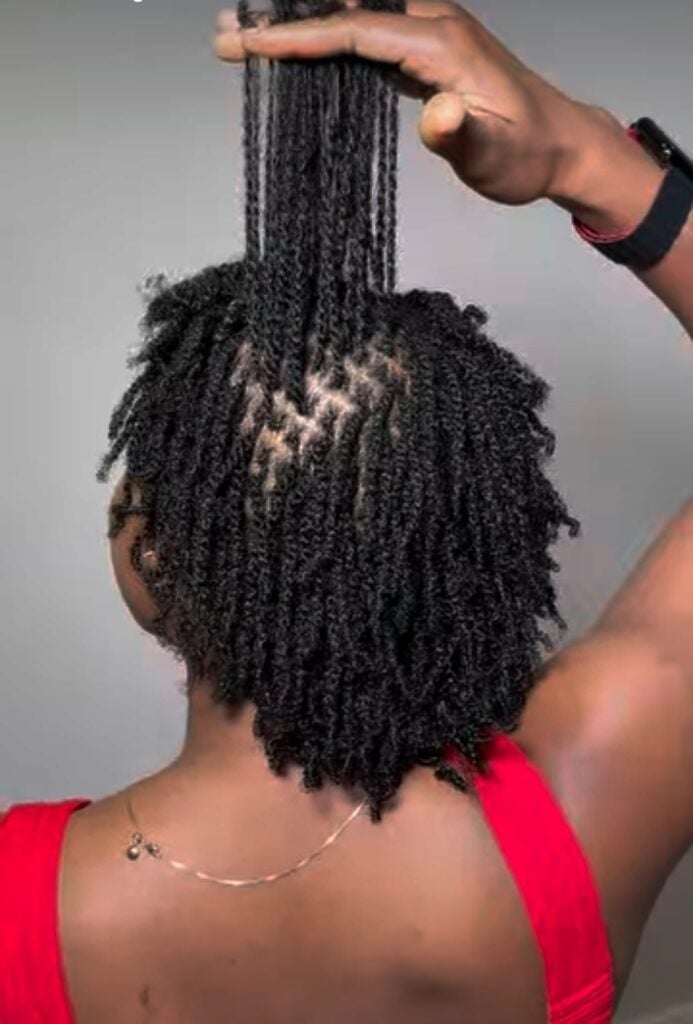
Coily hair holds a twist from day one, so the sections stay put while the locs bud and shrink up slightly before they lengthen. Ask your stylist for: starter locs, collarbone length, middle part. The parting matters more than it looks: a straight line down the center keeps the two sides balanced as the locs thicken and drop. Black hair shows every ridge and coil, which makes the early formation stage easy to track. Let the locs air dry completely after washing to hold the shape and keep mildew out of the dense new growth.
Collarbone Twisted Starter Locs
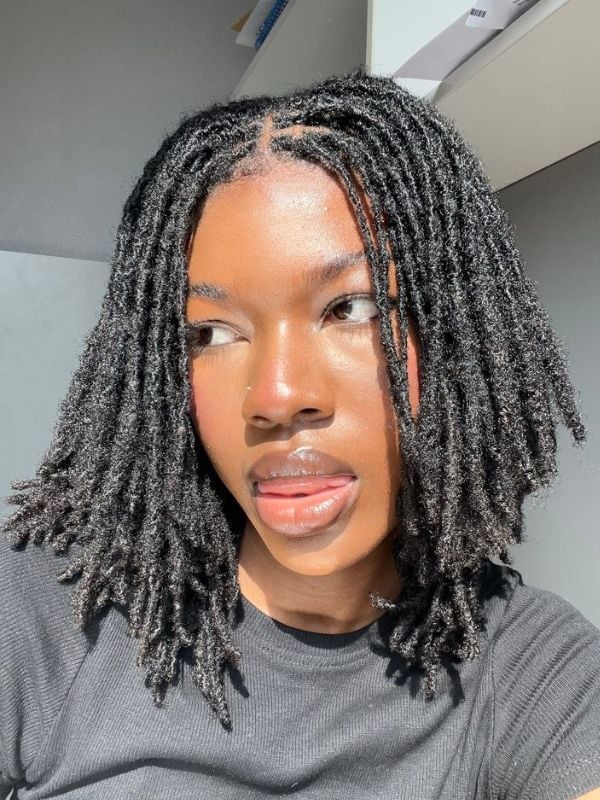
Wondering if twists will read as too soft before the locs mature? On coily hair of medium density, twisted starter locs at collarbone length hold a defined rope from the start, and the middle part gives the front a clean frame instead of a fuzzy edge. Medium density is the sweet spot here: enough hair per section to twist tightly, not so much that the roots bulk up and fight the pattern. Ask your stylist for: collarbone length twisted starter locs, middle part. If the sections start to fuse at the roots during the early weeks, separate them gently with your fingers before they marry. Black keeps the twist definition crisp, and the length sits right at the collarbone for a shape that still moves.
Chin Length Twisted Starter Locs
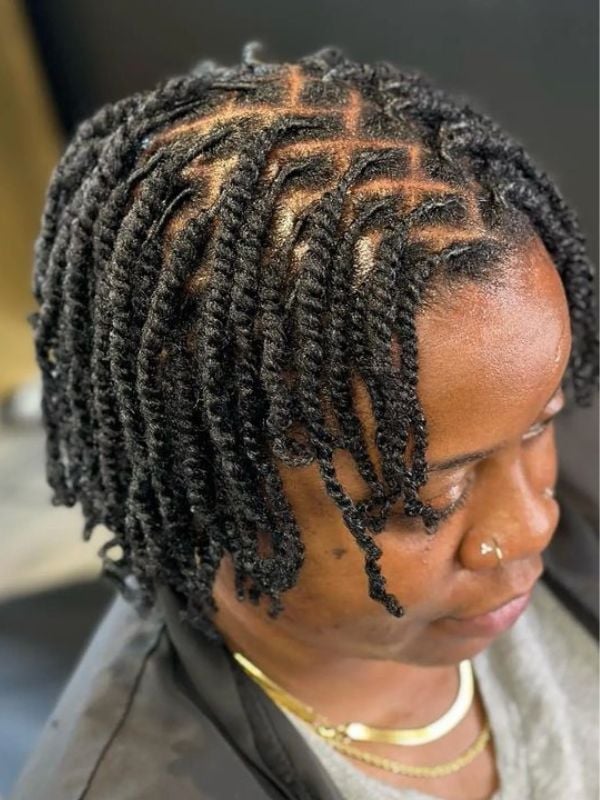
Neatly parted squares at the crown are the whole design at chin length, and the mistake is rushing the grid. Thick, coily hair at this length leaves no room to hide a crooked section: the squares sit at eye level and every line shows. Map the parting before a single twist goes in, and keep the rows even so the locs fall in a clean bob shape. Ask your stylist for: chin length twisted starter locs with square partings. Black hair and a tight coil make the grid read sharp, which is the point.
Chin Length Short Starter Locs
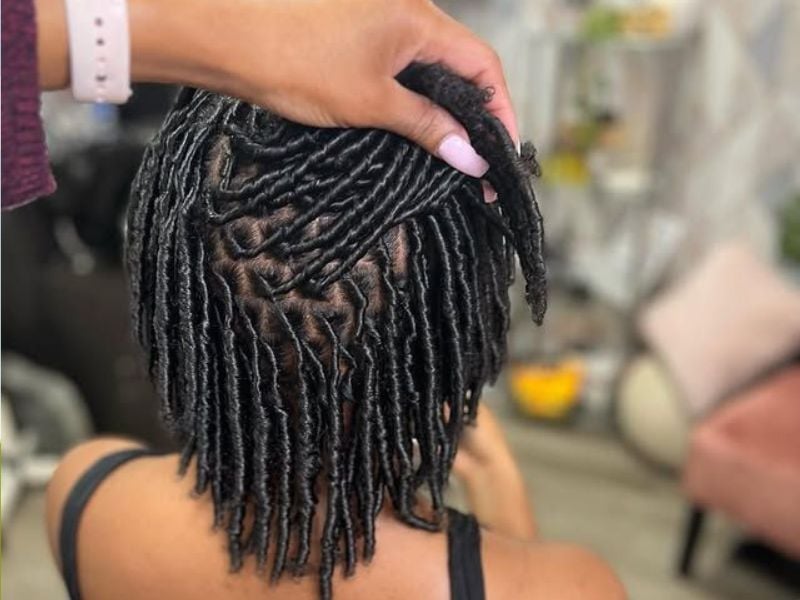
A middle parting through chin length short locs keeps the shape symmetrical from the back, where a stray section is easiest to spot. Short, thick coily starter locs wear close to the head, so the styling is simple: a light oil on the scalp, a spritz of water in the morning, and the locs sit where you leave them. The length means less weight pulling at the roots, which helps the sections stay upright as they form. Ask your stylist for: chin length short starter locs, middle part. Expect a retwist every four to six weeks to keep the parting crisp and the new growth in line.
Shoulder Length Fine Starter Locs
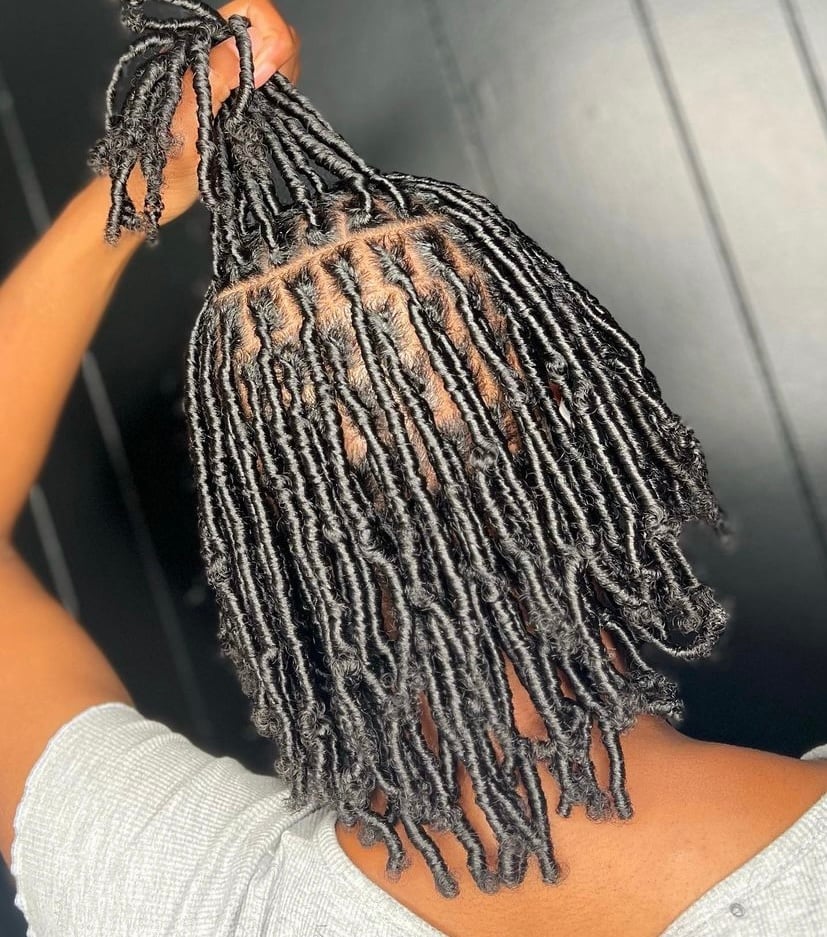
Fine coily hair and thick coily hair make two very different starter locs, and the difference shows up in the density of each section. On fine hair, individual locs come out slimmer and more uniform, so neatly parted small sections at shoulder length give you a fuller head of them without bulk. Thick textures get fewer, chunkier locs from the same grid. Ask your stylist for: shoulder length fine starter locs, neat small sections. Black keeps the parting lines legible against the scalp, which matters more when the sections are small.
Upkeep leans on moisture without weight. A lightweight leave-in keeps fine locs from drying out and frizzing at the edges, and a retwist every four to six weeks holds the neat sections in place as the hair grows. Fine hair can look sparse between retwists, so go easy on heavy oils that flatten the roots.
Shoulder Length Locs With Honey Blonde Ends
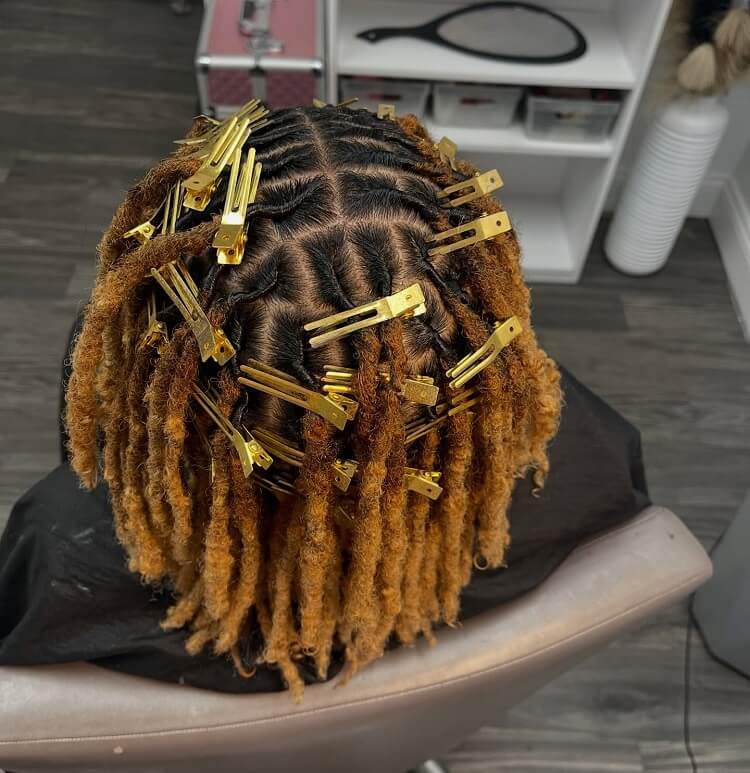
Wondering how to add some warmth to your starter locs? The honey blonde ends on this shoulder length, thick coily set are the answer, especially when summer rolls around and you want a bit of sun kissed dimension. The black base keeps the roots looking natural, while the golden tips offer a seasonal pop. Ask your stylist for: shoulder length starter locs with honey blonde tips. The golden clips you see are part of the retwisting process, a salon step that keeps the parting crisp as the color settles in.
Collarbone Starter Locs With Brown Highlights
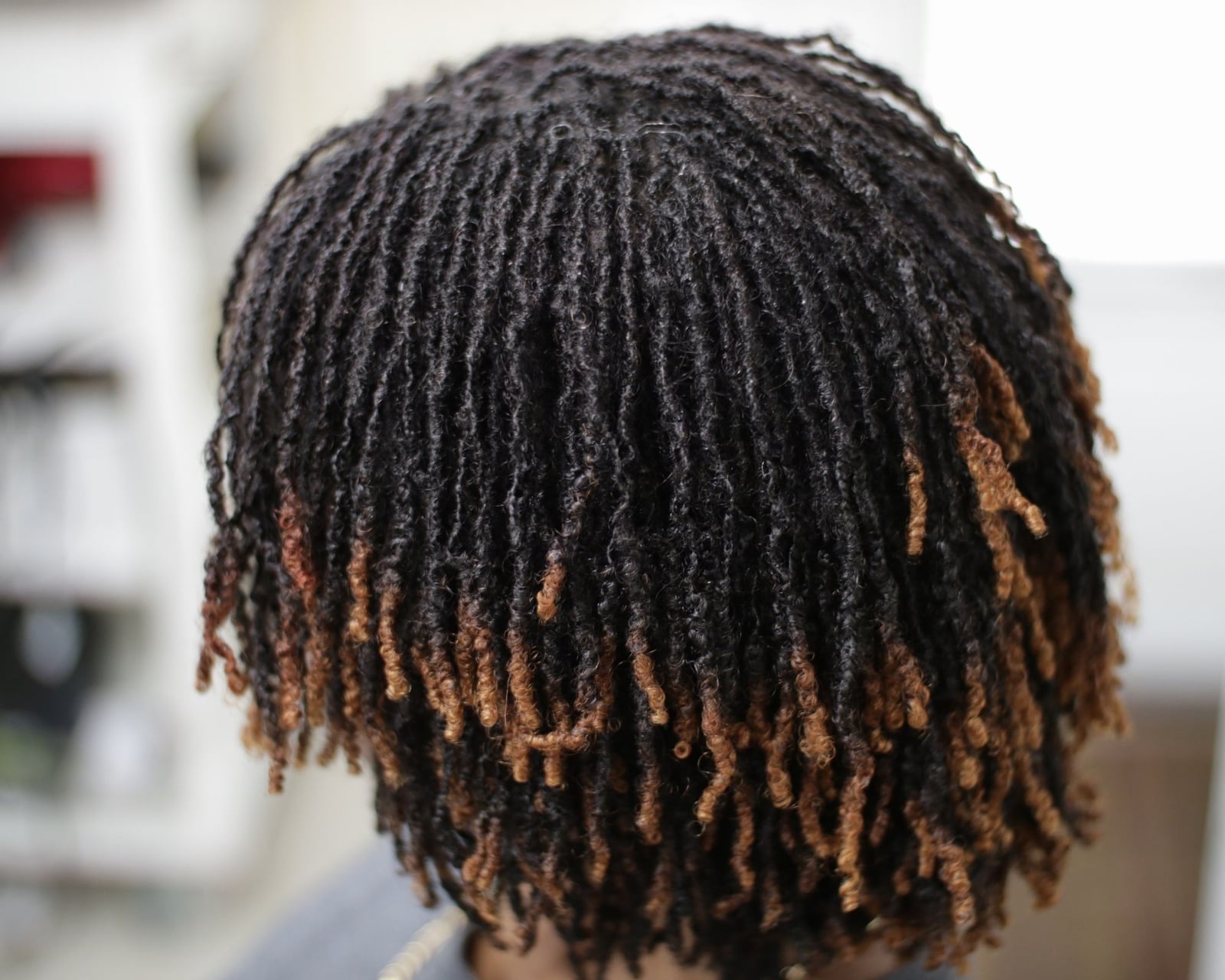
The two-tone effect here is subtle but deliberate: black roots that melt into brown highlights as the locs travel past the collarbone. That transition is what makes the color look lived-in, not painted on, and the coily texture holds the depth without needing constant touch-ups. A middle parting keeps the design symmetrical, so the eye follows the gradient from root to tip. Ask your colorist for: collarbone length starter locs with brown highlights. A moisturizing spray on the locs will keep any frizz in check and preserve the neatness of the style between salon visits.
Collarbone Wavy Fine Starter Locs
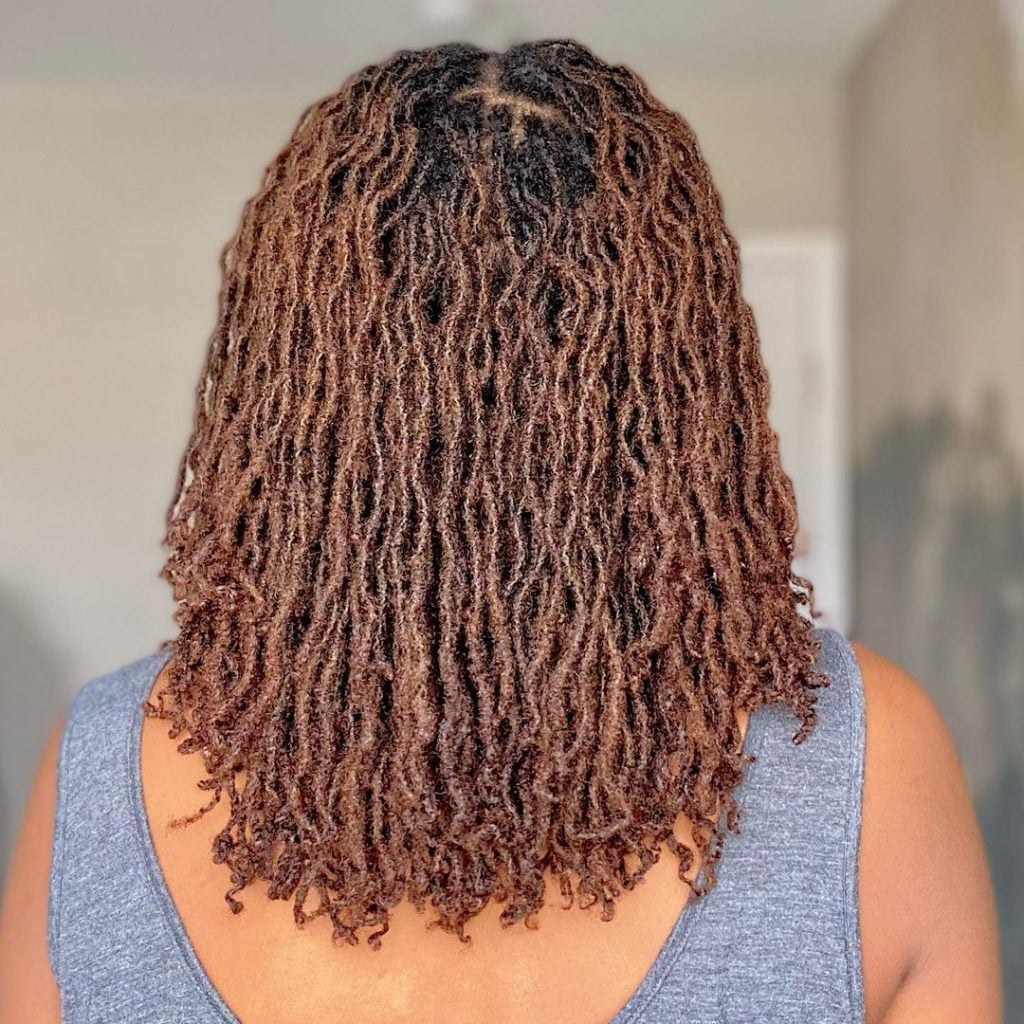
Fine, wavy hair can sometimes read as flat in locs, but the dimensional brown color here changes that. The rich base with lighter highlights gives each loc a sense of movement, even at collarbone length, so the texture has somewhere to go. This is a style that suits anyone with fine strands who wants the locs to look fuller without adding bulk.
The middle parting is a safe bet for this texture because it lets the waves fall evenly on both sides. Ask your colorist for: collarbone length wavy fine starter locs with highlights. To keep the brown depth from fading, use a color-safe shampoo and conditioner, and you will hold onto that contrast longer.
Collarbone Twisted Starter Locs With Blonde Tips
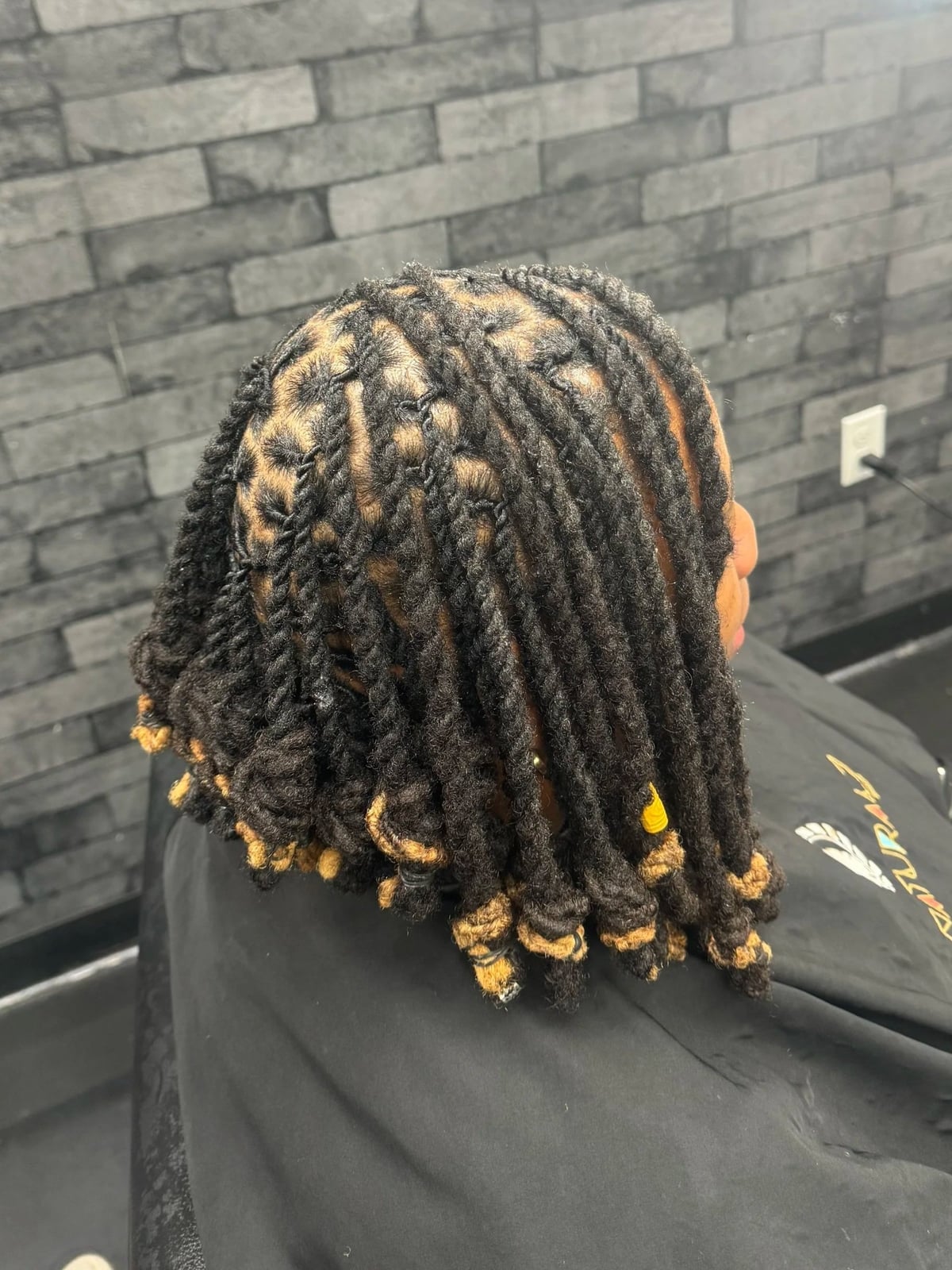
Ever seen blonde tips on a dark base and wondered how to ask for it without confusion? The key is to be specific about the length and the twist pattern. This collarbone-length set uses a box parting, which gives the twists a structured grid, and the black-to-blonde transition happens only at the tips, so the contrast is sharp but contained. Ask your stylist for: collarbone length twisted starter locs with blonde tips. The coily, thick texture holds the twist definition well, and the blonde ends are easy to maintain with a purple shampoo to keep them from turning brassy.
Short Fine Starter Locs With Finger Coils
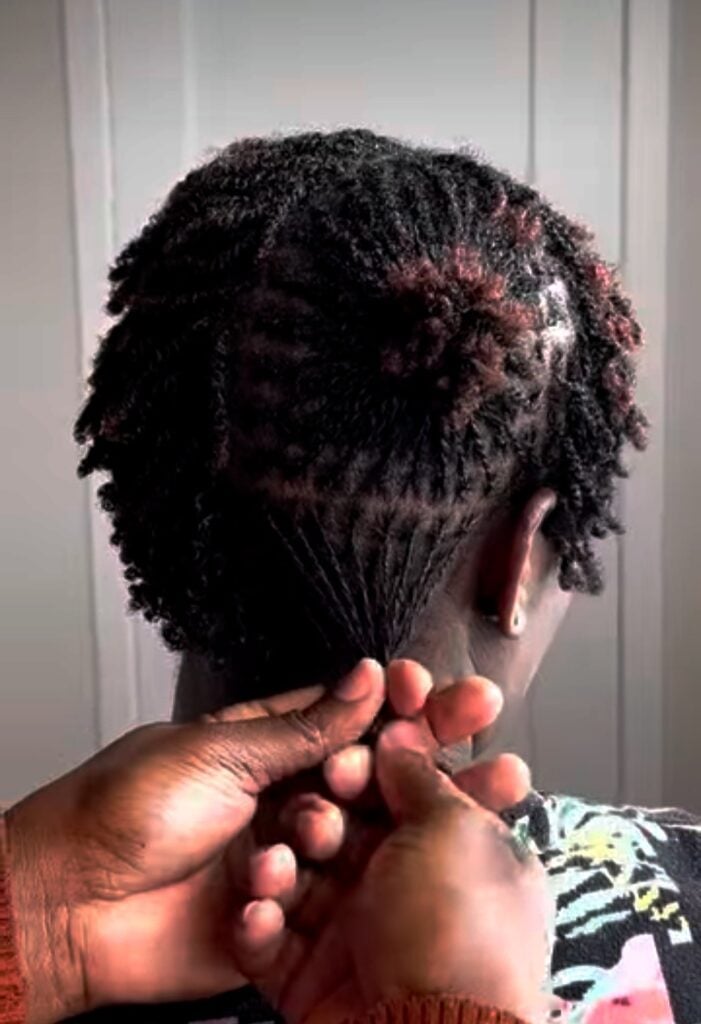
The grid parting on this short set is the first thing you notice, but the finger coils are what make it work. Each coil is formed by hand, which is a salon-level detail because it requires patience and precision to get the uniform size and shape. At home, you can try finger coils on fine, coily hair, but expect the process to take a while, and the grid parting is easier to achieve with a professional’s steady hand. Ask your stylist for: short starter locs with grid parting and finger coils. The black base with subtle red undertones adds depth, and the coils hold their shape best if you let them dry completely before touching them.
Short Thick Starter Locs With Geometric Parting
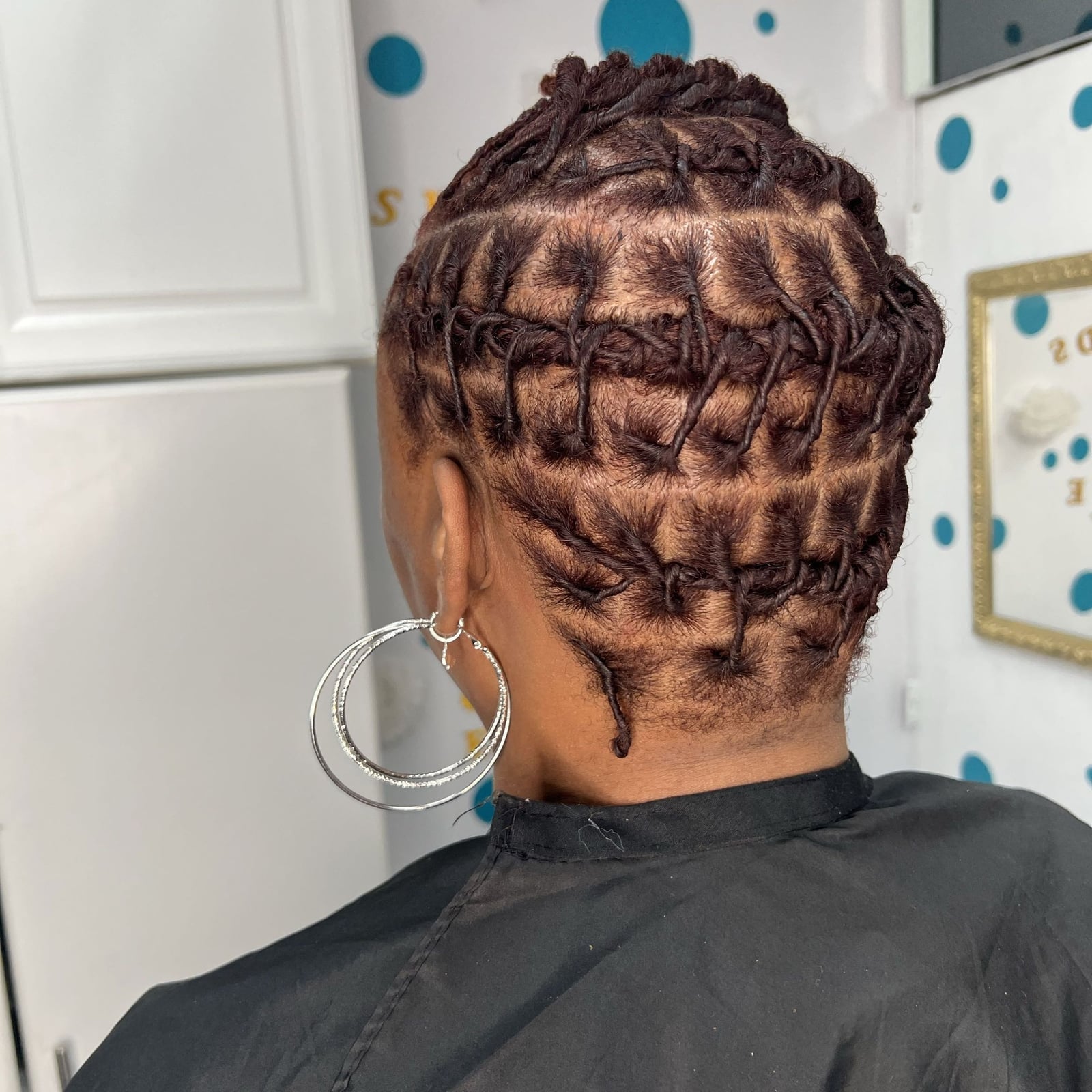
A geometric parting on short, thick starter locs is a precise design that asks for a steady hand and a patient stylist. The interlocking technique used to form these dark brown, coily locs creates a clean base for the pattern. The drawback? Those sharp lines blur faster than you think on thick hair, so you will need retwisting touch-ups every three to four weeks to keep the geometry crisp. Ask your stylist for short starter locs with geometric parting and interlocking.
Chin Length Starter Locs In Double Buns
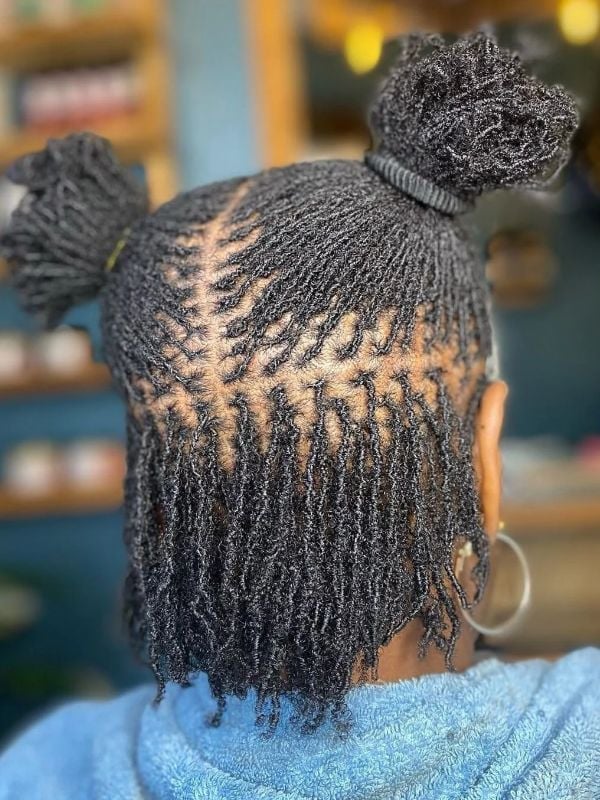
Can you put fine, chin-length starter locs into two buns without them unraveling? Yes, if you treat them gently. Start by parting the hair in a zig-zag down the center, then gather each side into a loose ponytail using a soft hair tie. Twist each section into a small bun and secure it with another soft tie or a silk scarf. The key is not pulling the locs tight, which can stress the roots. Ask your stylist for chin length starter locs styled in double buns.
Collarbone Starter Locs With Curtain Bangs
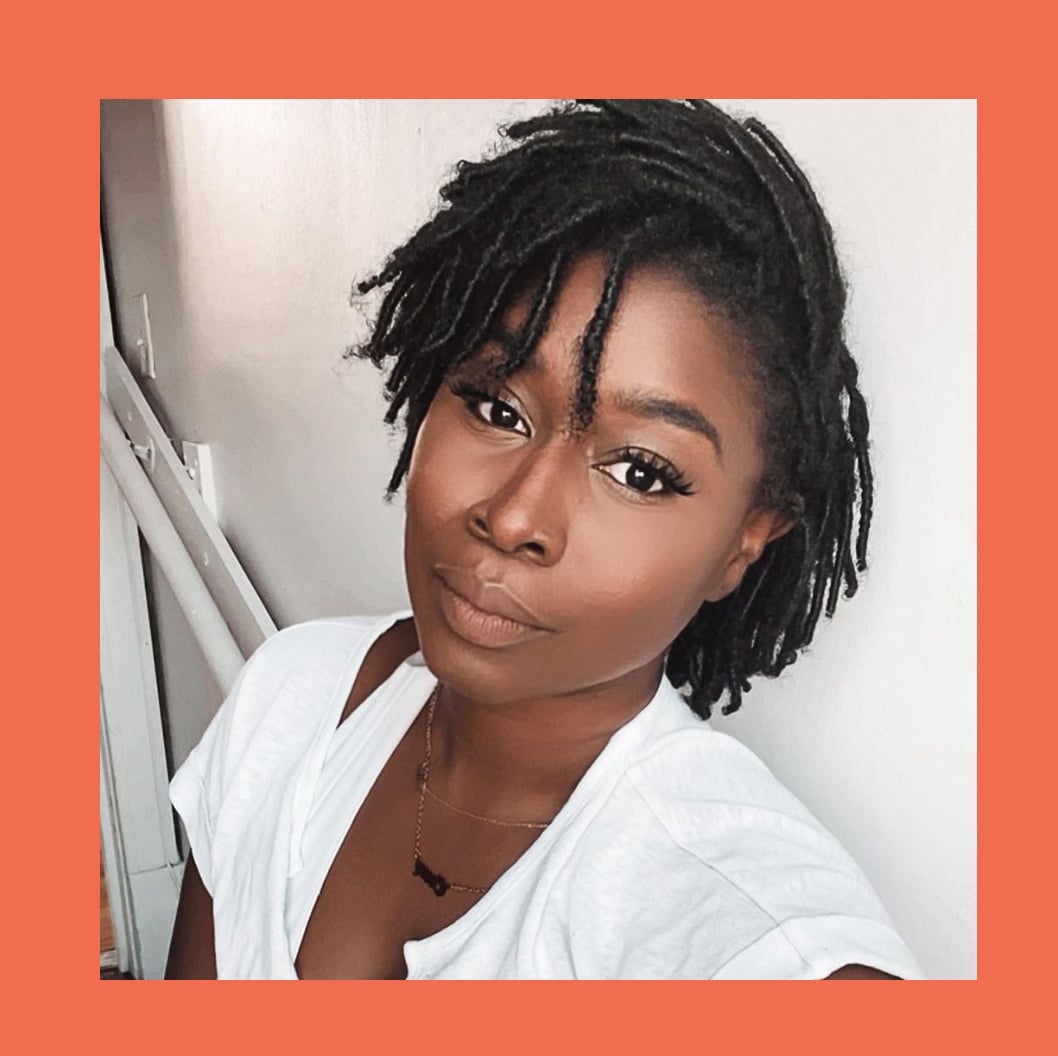
Curtain bangs on starter locs create a soft, face-framing effect that works best with a middle parting and enough wave to separate the pieces. This collarbone-length look uses thick, wavy texture to hold the bangs open without falling flat. The length of the bangs matters here: they should graze the cheekbones so they blend into the locs as they grow.
Ask your stylist for collarbone length starter locs with curtain bangs. To keep the shape, blow-dry the bangs forward with a round brush after each wash. A trim every six weeks prevents them from creeping past the collarbone and losing their purpose.
Shoulder Length Starter Locs Ponytail
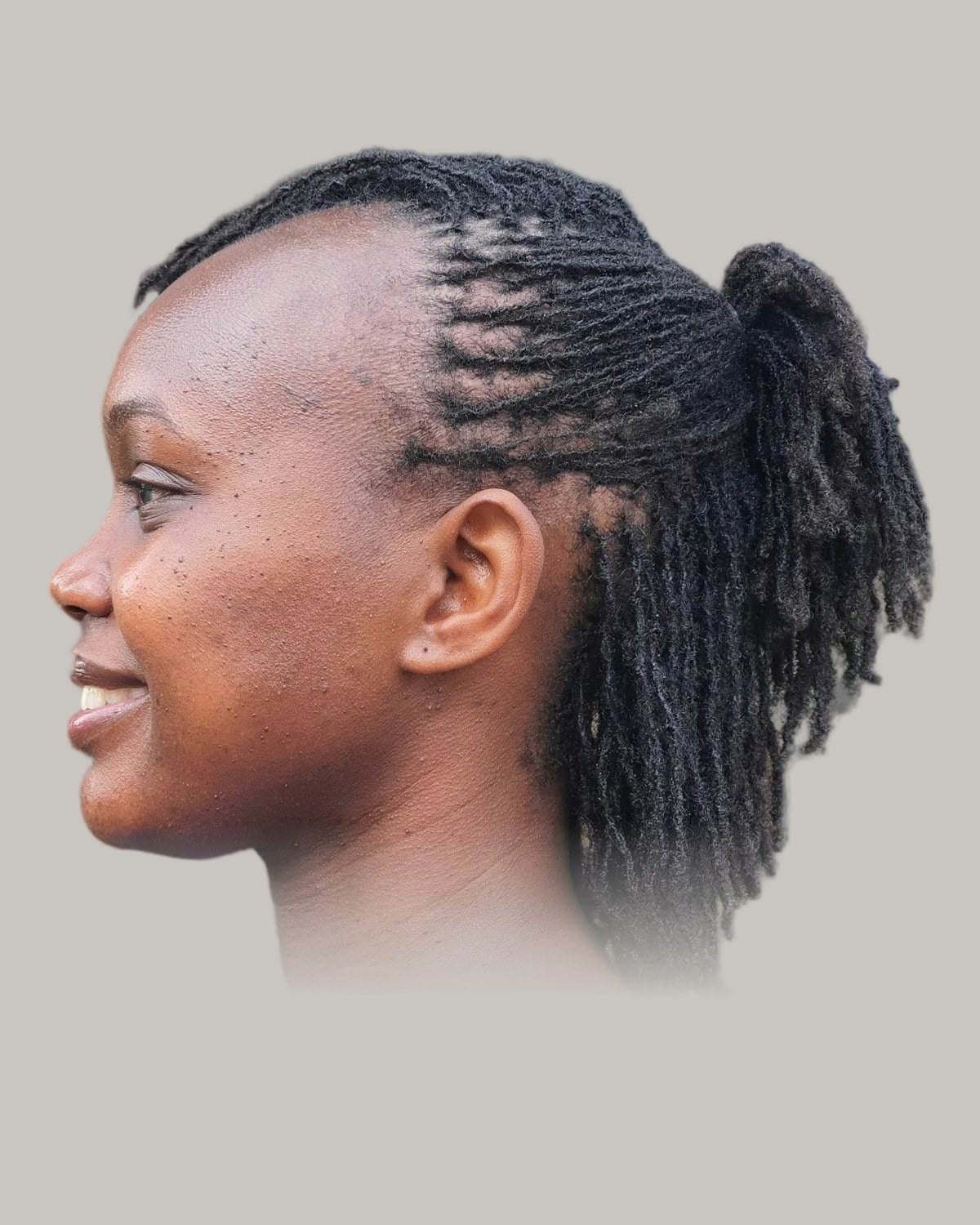
A neat ponytail on shoulder-length starter locs is the most low-effort way to keep thick, coily hair off your neck during warm weather. The middle parting keeps the style symmetrical, and the ponytail sits at the nape, clearing the shoulders entirely. This is the go-to for gym sessions, humid afternoons and any day you want the hair out of your face without thinking about it. Ask your stylist for shoulder length starter locs in a ponytail. A seamless hair tie prevents snagging the locs when you take it down.
Mid-Back Length Loose Starter Locs
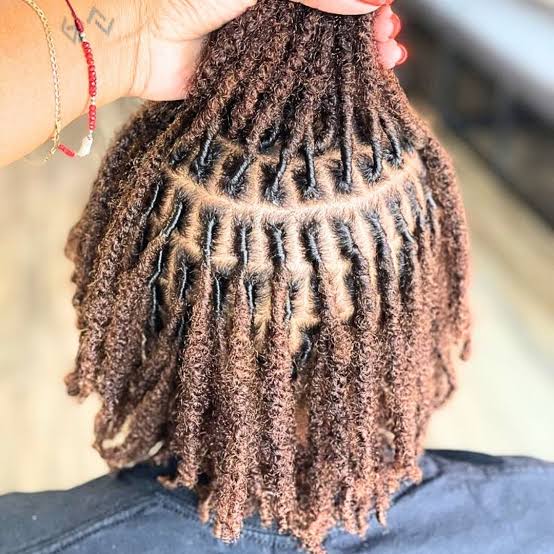
Mid-back length on thick, coily starter locs is a commitment measured in years, not months. The loose styling here lets the density and natural dark brown color speak for themselves, with a middle parting that keeps the weight balanced. At this length, the locs are heavy, and the scalp needs regular moisturizing to prevent dryness at the roots.
Maintenance is key: longer locs take longer to wash, dry and retwist, and you will spend more time in the salon chair for each session. Ask your stylist for mid-back length loose starter locs. If the idea of yearly commitment sounds like a lot, this is the one to skip until you are sure.
Final Thoughts
For fine textures, keep your sections small and consistent to maintain definition as the locs mature. Thick hair can handle larger, more sculptural partings and a wider range of styling options, from twists to buns to ponytails.
- Schedule retwisting or interlocking every 4-8 weeks as your locs settle.
- Clean the scalp with a residue-free shampoo and let locs air dry completely.
- Use a light oil sparingly on the ends, not the roots, to avoid buildup.
- Avoid heavy creams or waxes that can prevent the locs from tightening.
The starting phase is the foundation for your locs.