Face-framing bangs are a styling shortcut that softens a cut and adds instant dimension, no matter the base length. The current wave favors soft, lived-in layers and curtain bangs over heavy, blunt fringes, which means more movement and less daily fuss.
This collection of 17 Face Framing Bangs ideas spans the spectrum, from low-maintenance wispy styles to bold full fringes, and works for fine, thick, straight, or curly textures. Whether your struggle is fine hair that falls flat or a fringe that won’t sit still, there’s a cut here that fits your routine and your face shape.
The 17 looksOpen list +
Honey Blonde Mid-Back Cut With Face-Framing Layers
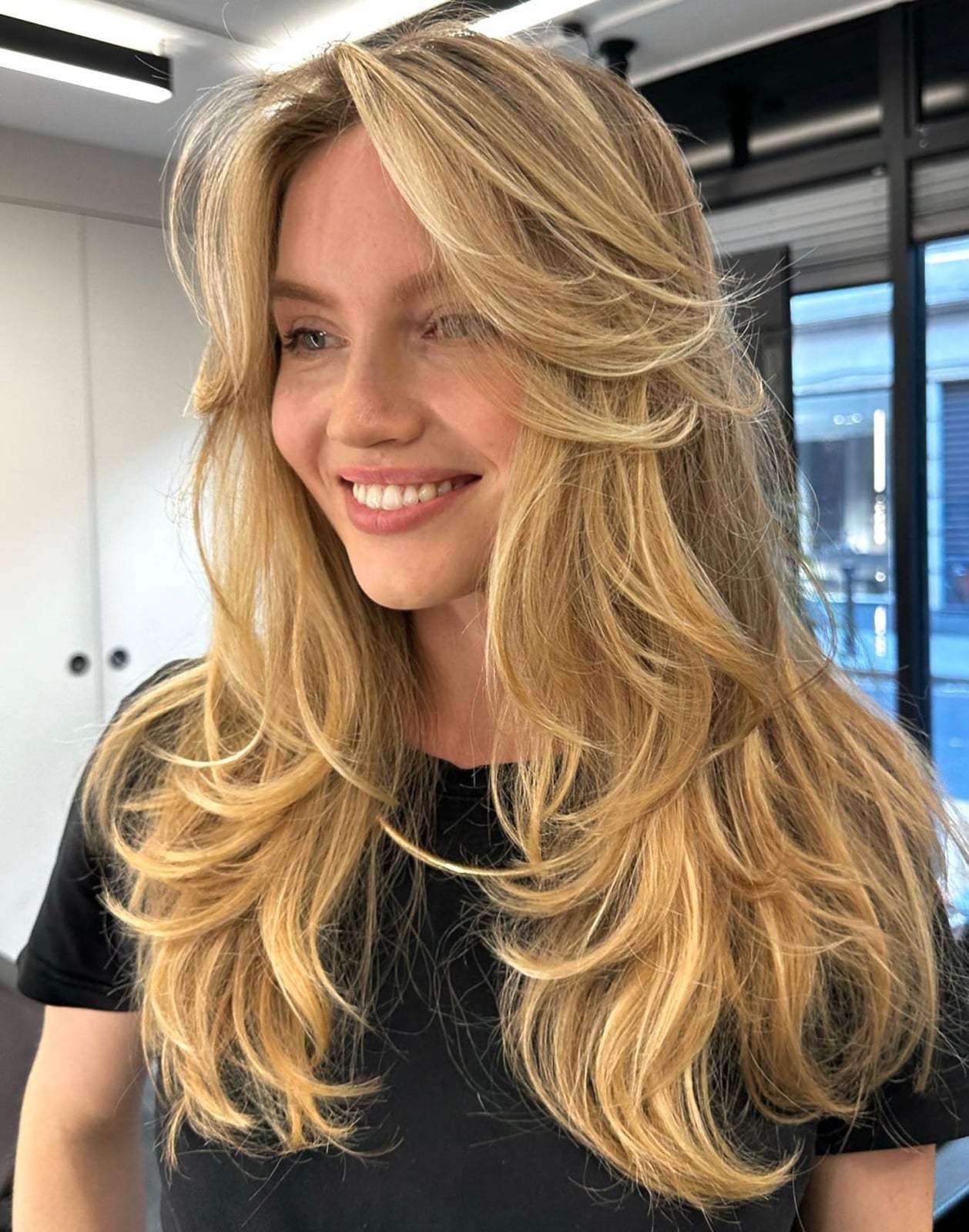
Face-framing layers do their best work when there is enough mid-back length and wave to support them, and this cut proves the point. The honey blonde with highlights gives those layers something to catch, so the soft waves move instead of hanging flat. Thick, wavy hair starting at least mid-back is the sweet spot; finer hair will struggle to hold the shape. Ask your stylist for mid-back length with face-framing layers and honey blonde with highlights. The side part lands well on oval and square faces, where the longer front pieces break up a straight line. A large round brush during a blowout keeps the volume, and layers need a trim every 8 to 10 weeks to stay sharp.
Long Blonde With Brown Lowlights and Wispy Bangs
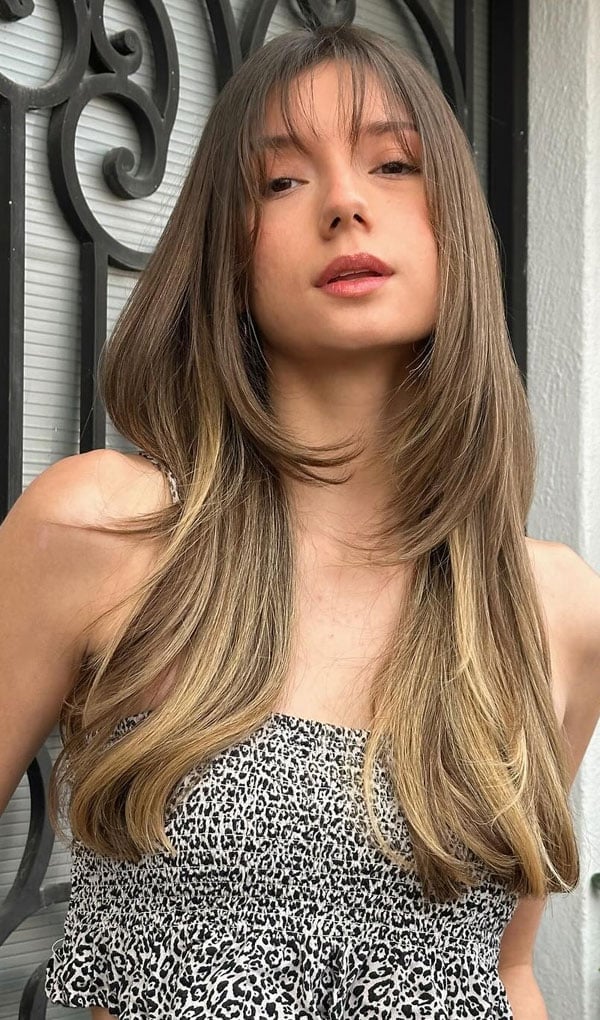
What do you say at the salon if you want bangs that look barely there? Wispy bangs are the answer for fine, straight hair, because they sit soft against the forehead and blend into the long layers instead of cutting a hard line. The blonde with brown lowlights adds depth so fine hair does not read as one flat sheet, and the middle part keeps the whole thing open. Ask your stylist for long layers, wispy bangs and subtle lowlights, and bring a photo so the fringe length is clear.
Fine hair needs the bangs cut dry or checked dry, since wet strands spring up shorter than expected. Wispy bangs also soften an angular face, where a blunt fringe would feel severe. A smoothing serum before styling keeps flyaways down, and those bangs want a trim every 4 to 6 weeks before they start poking into your eyes.
Dark Brown Mid-Back Cut With Full Fringe
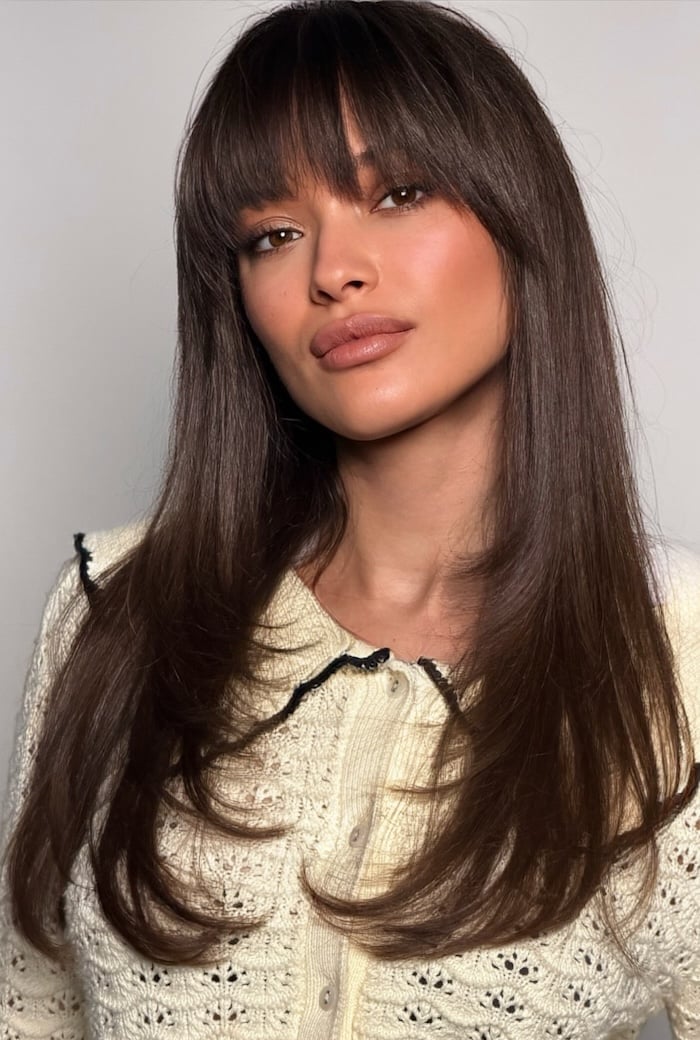
A full fringe sits at the opposite end of the spectrum from a curtain bang, and the choice comes down to how much forehead you want covered. This mid-back cut in dark brown with subtle highlights pairs long layers with a full fringe parted in the middle, so the fringe balances the face while the layers keep the length from going heavy. Medium-density, straight hair holds that clean line best; fine hair can look sparse across the forehead, and very curly hair fights the shape.
Ask your stylist for mid-back length with long layers and a full fringe. The styling is straightforward: a flat iron keeps the fringe sleek and the blowout smooth. The upkeep is the catch, since a full fringe needs a trim monthly to stay above the brows, while the long layers can stretch to eight weeks.
Shoulder-Length Bob With Blunt Bangs

A shoulder-length bob in dark brown with blunt bangs and a side part looks polished the second you walk out, and demanding every morning after. Fine, straight hair shows the blunt edge best, but that same fineness means the bangs flatten overnight and need a blow-dry to sit right. Ask your stylist for a shoulder-length bob, blunt bangs and a side part. Blunt bangs shorten a longer face, which is the trade for the daily styling. Budget a trim every 6 to 8 weeks, and expect the bangs to need their own tidy-up sooner.
Collarbone Shag With Textured Full Bangs
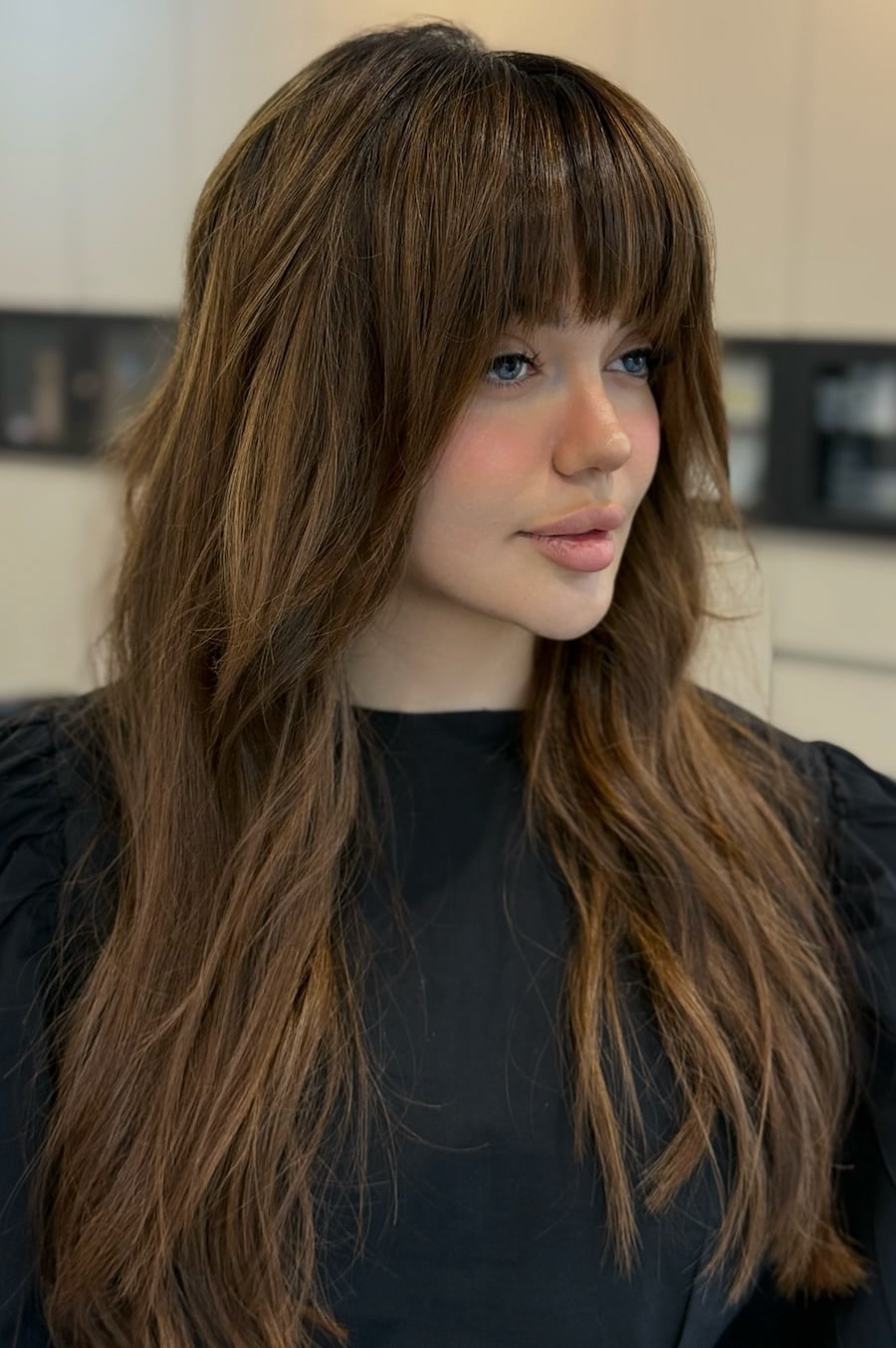
A shag is built from short layers stacked through the crown and blended down, which is why this collarbone cut in medium brown with subtle highlights looks tousled before anyone touches it. Full bangs parted in the middle finish the shape, and the thick, wavy texture supplies the lift the layers need. Finer hair can wear a shag, but it needs more product to hold the separation.
Ask your stylist for a collarbone length shag and full bangs. The technique matters more than the length here: the layers get point-cut to soften the ends so they move instead of sitting in a solid line. A texturizing spray through damp hair gives that piecey finish, and a quick scrunch as it dries does the rest. It suits casual weekends and everyday wear, with a trim every 6 to 8 weeks to keep the bangs and layers in shape.
Mid-Length Cut With Soft Face-Framing Layers

Ever wonder if you can get the softness of face-framing layers without a full fringe commitment? This mid-length cut answers that question with gentle bangs that sweep to the side, blending into the layers for a lived-in finish. The medium brown shade and air-dried wavy texture keep things low-key, a solid choice for warmer months when you want less heat styling. Ask your stylist for: mid-length with soft face-framing layers and gentle bangs. This is a salon-leaning cut: the soft bangs need precise placement to fall naturally, so skip the DIY scissors. A trim every eight to ten weeks keeps the shape from getting heavy.
Collarbone Shag With Micro Bangs

Micro bangs are honest about what they ask of you. On this collarbone-length shag, they sit above the brows with a middle part and air-dried wavy texture that keeps the whole thing from feeling too severe. The dark brown shade and subtle layers add depth without competing for attention. Ask your stylist for: collarbone length shag with micro bangs. The real drawback is the maintenance: micro bangs need a trim every three to four weeks to stay at that length. If you tend to skip salon appointments, this is one to reconsider.
Mid-Back Shag With Curtain Bangs
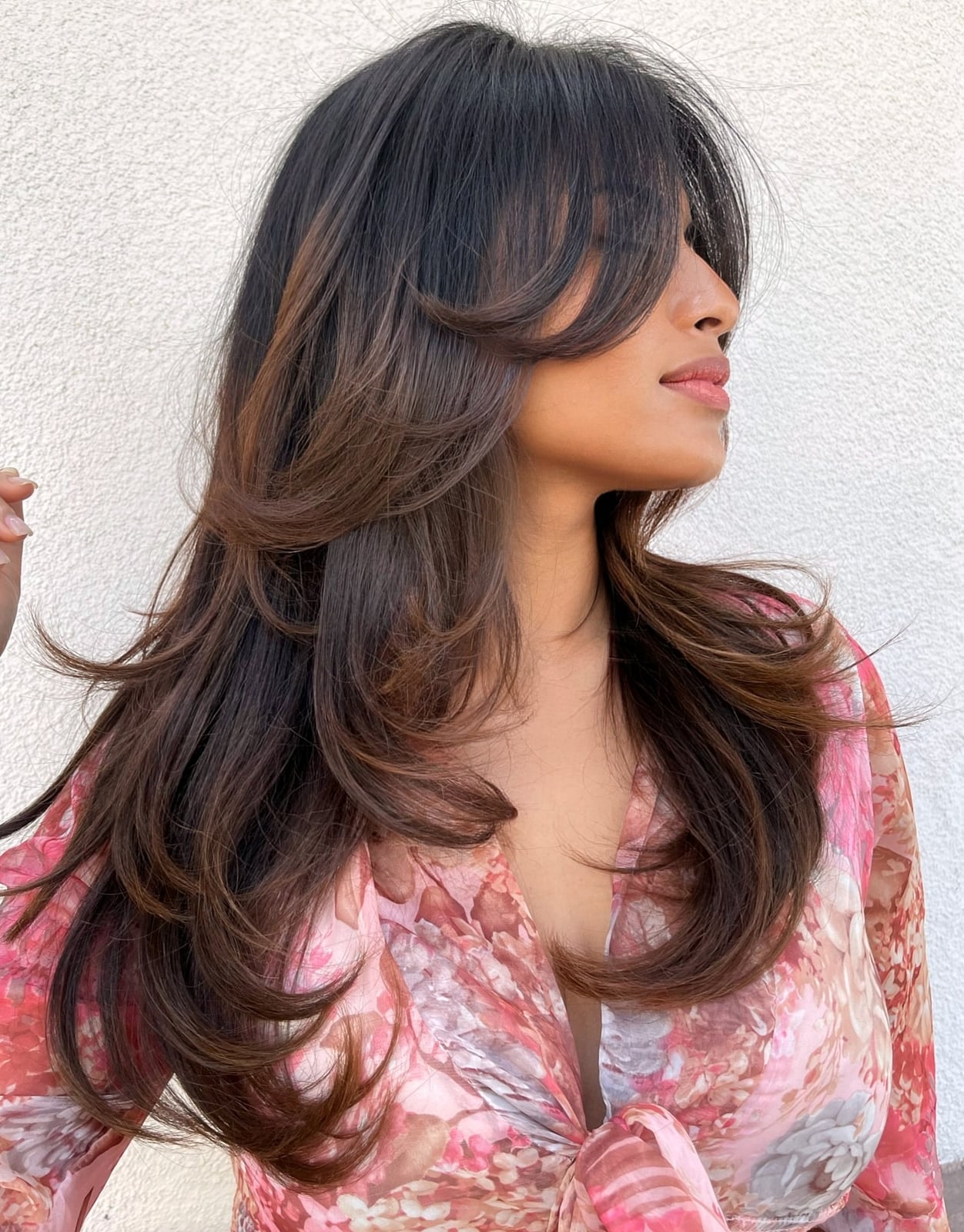
The rule with curtain bangs is that they need enough weight to sweep properly. This mid-back shag delivers that with a thick, wavy texture and a side part that lets the bangs fall away from the face naturally. Subtle lighter brown highlights keep the dark brown base from reading as flat, especially when styled in soft waves from a blowout.
Ask your stylist for: mid-back shag with curtain bangs. To maintain the sweep, blow-dry the bangs with a round brush while the rest air dries. Plan for a trim every six to eight weeks, because curtain bangs lose their shape faster than the rest of the cut.
Shoulder-Length Curly Shag With Face-Framing Bangs
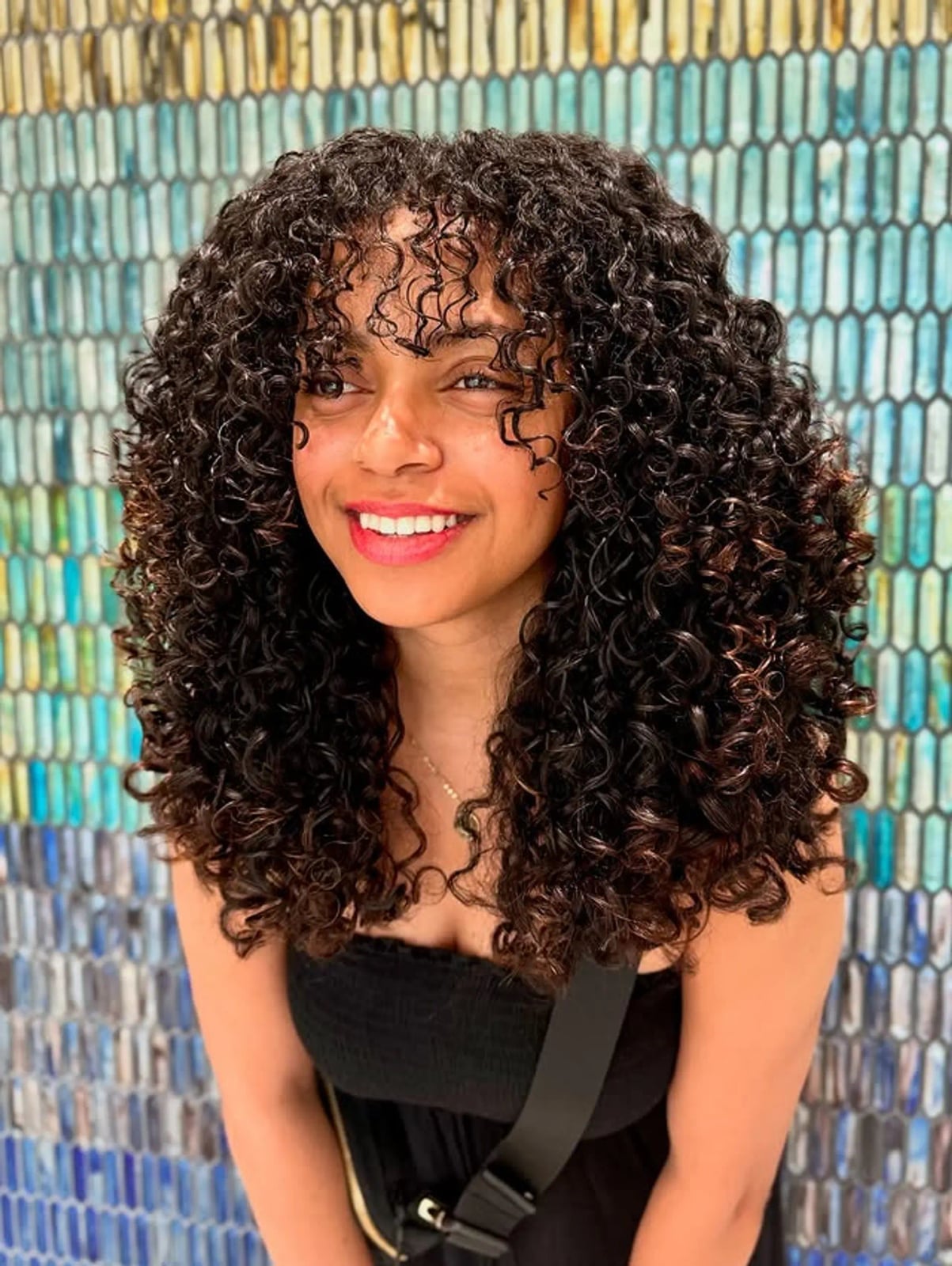
The design here is smart: face-framing bangs cut into a curly shag at shoulder length, so the curls have enough weight to bounce without the bangs disappearing. The dark brown base with subtle auburn highlights adds dimension that shows up best in natural light. Ask your stylist for: shoulder-length curly shag with face-framing bangs. This cut typically suits thick, curly textures because the layers remove bulk while the bangs frame without fighting the curl pattern. Skip this if your hair is fine or low density, since the shag can look sparse rather than full.
Chin-Length Blonde Bob With Face-Framing Layers

Not sure how to ask for layers that actually frame rather than just sit there? Start with the exact words. This chin-length blonde bob uses face-framing layers that begin at the jaw and graduate into the bob shape, with soft waves from a blowout adding movement. The side part keeps the layers from falling symmetrically, which works well for fine, wavy hair that needs a little visual lift. Ask your stylist for: chin-length bob with face-framing layers. When you sit down, specify that you want the shortest layer to hit at the cheekbone. That one detail makes the difference between generic layers and actual framing.
Mid-Back Blonde With Curtain Bangs, Wavy
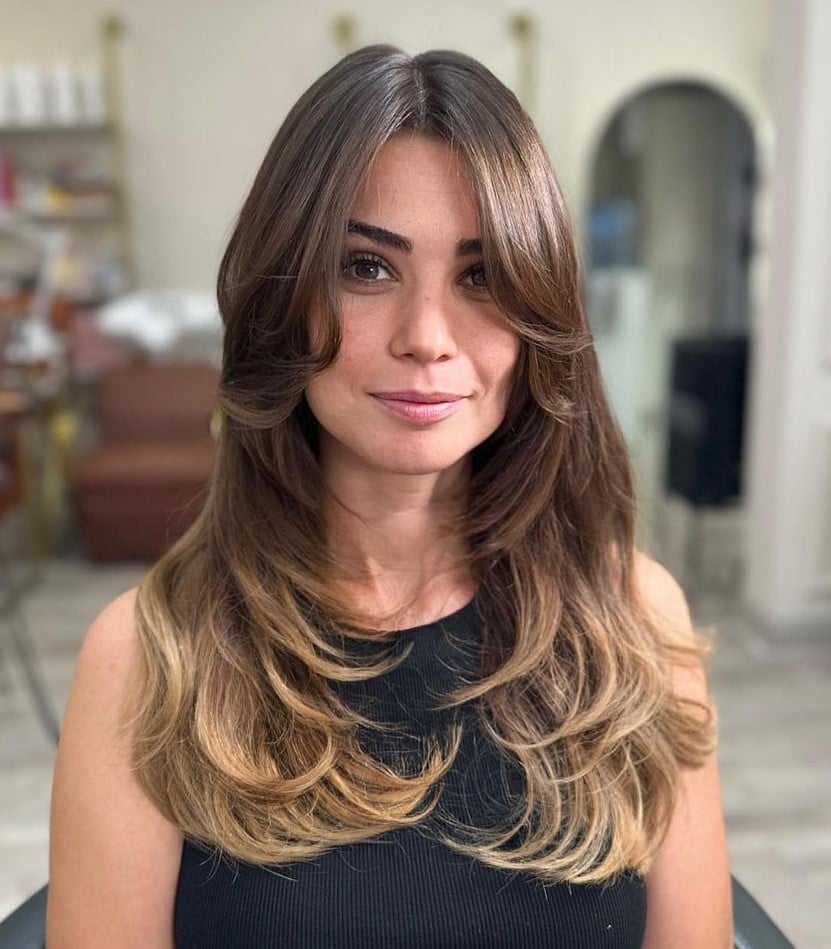
Curtain bangs on thick, wavy mid-back hair read differently than wispy ones. Where wispy bangs whisper, these announce, sweeping outward in two distinct panels from a middle part. The long layers underneath let the wave pattern move without getting tangled in the fringe. Ask your stylist for: mid-back length with long layers and curtain bangs. The result is a blowout that holds its shape for days, because thick texture gives the curtain pieces weight to stay put.
A large round brush is the tool here, directing each section away from the center while you dry. The payoff is a strong face-framing effect that softens round and oval faces without hiding them. Trims land every six to eight weeks to keep the curtain shape precise. Skip this if your hair is fine or your waves live mostly at the ends; the bangs need density to land as intended.
Mid-Back Dark Brown With Curtain Bangs
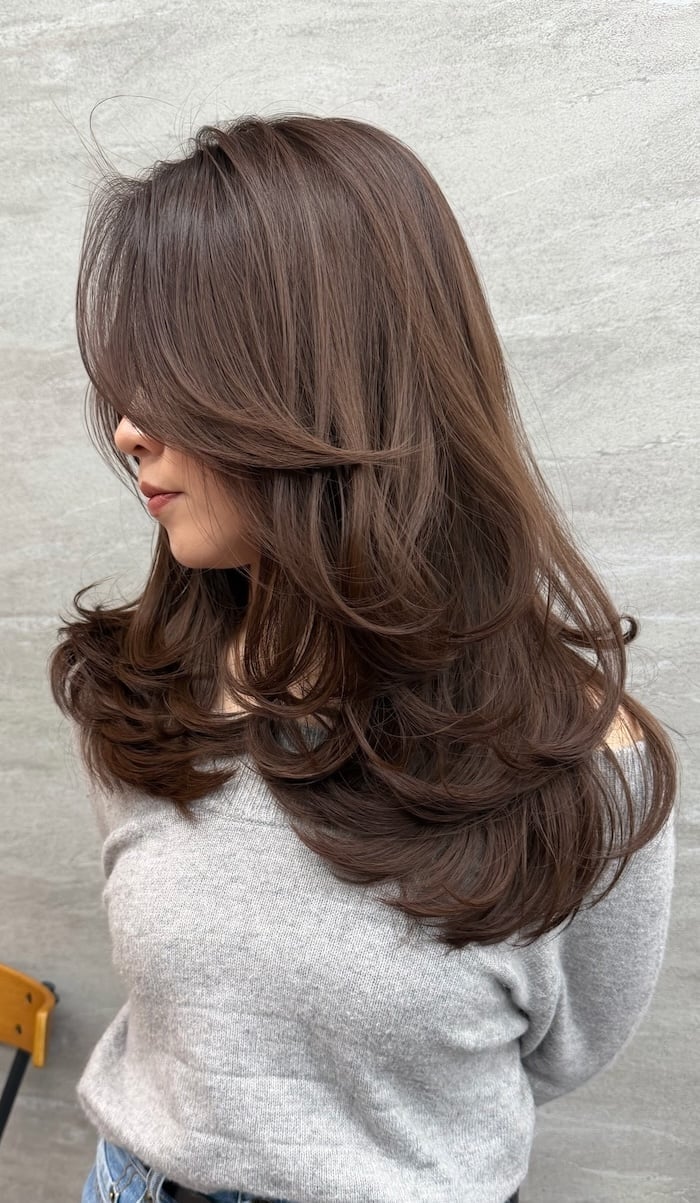
The design works because the curtain bangs graduate from short at the center to long where they meet the face-framing layers. On thick, wavy dark brown hair with subtle highlights, the graduation prevents that abrupt wall of hair that shorter bangs can create. Ask your stylist for: mid-back length with long layers and curtain bangs. A salon cut is the only way to get the blend right, and that is the drawback: you cannot reliably recreate the transition at home. The subtle lighter strands add dimension to the sweep, so the bangs read as part of the haircut, not an add-on.
Mid-Back Wavy Hair With Blonde Highlights and Wispy Bangs
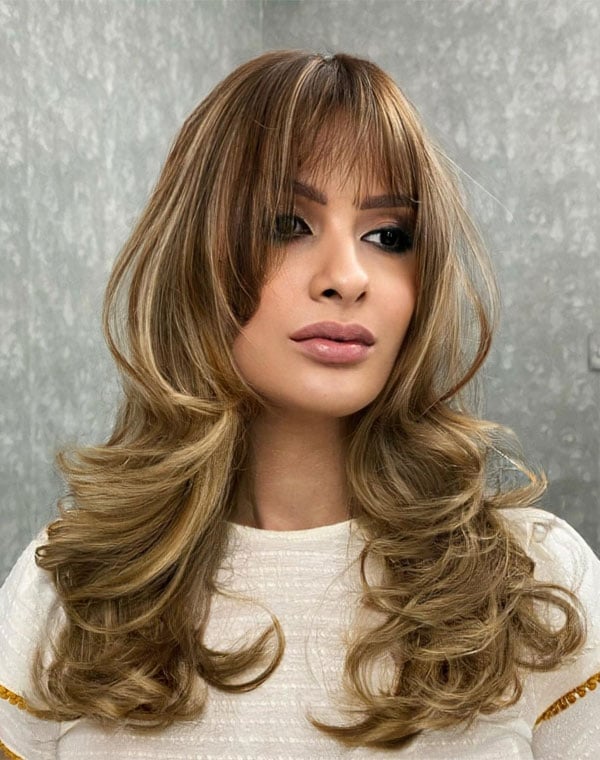
The construction here relies on the contrast between volume and airiness. Long layers are cut throughout mid-back length thick hair, then the top sections are curled to build a voluminous shape. The wispy bangs sit lighter, almost separate from the mass of curls below. Ask your stylist for: mid-back length with long layers, voluminous curls, and wispy bangs. The blonde highlights follow the curl movement, which makes the whole shape look deliberate.
Styling follows a short list of steps. Curl mid-lengths and ends with a barrel iron, leaving the roots straight to avoid a helmet effect. Diffuse the bangs on low heat to keep them soft. This is a special occasion shape that also works for casual events, because the wispy bangs prevent it from feeling too formal.
Mid-Back Dark Brown With Wispy Bangs, Wavy
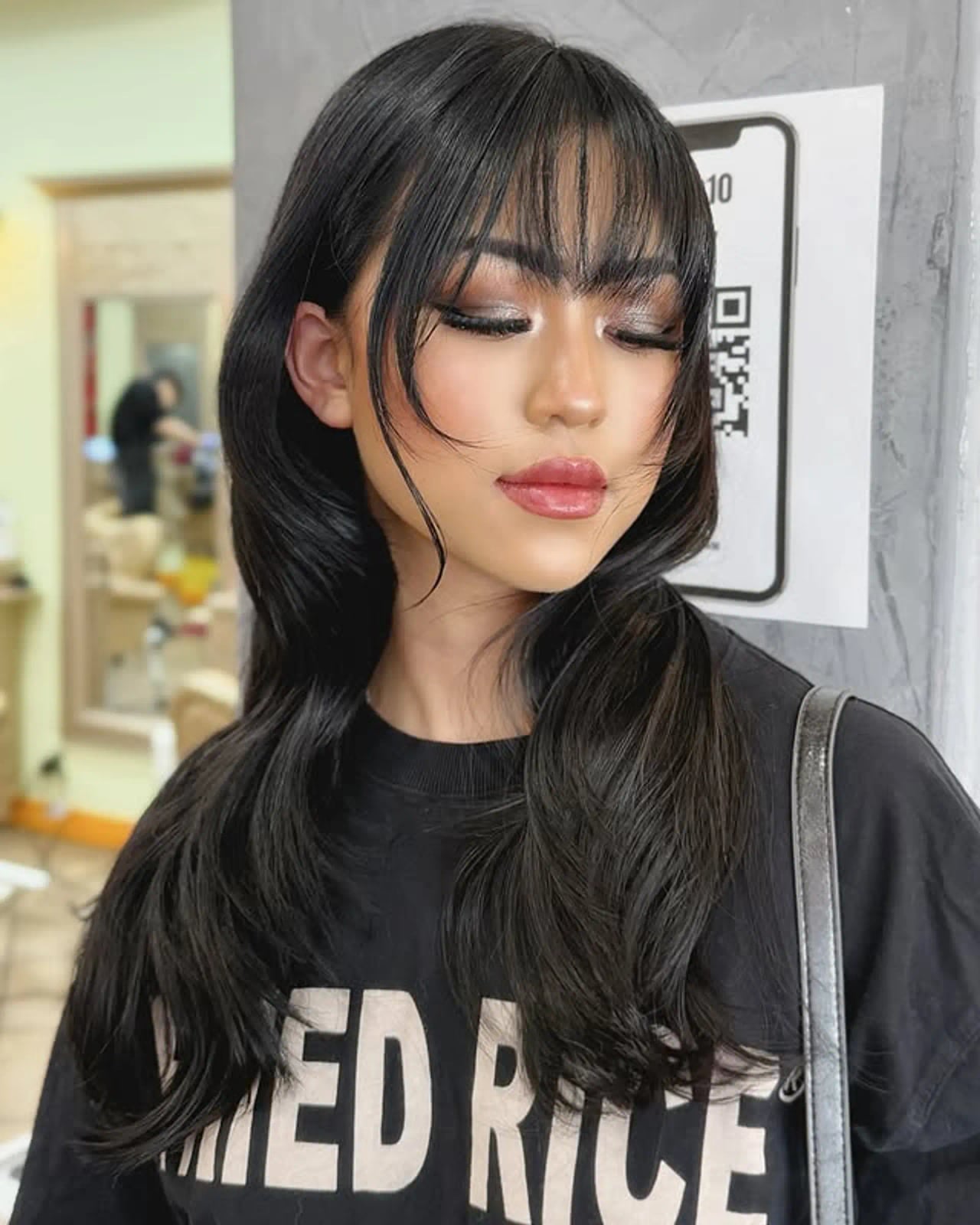
Does air-dried texture work with any bang shape? For wispy bangs on thick, wavy dark brown hair, yes. The long layers throughout the mid-back length let the waves form naturally so the bangs stand out against the surrounding hair. The side part feeds the wispy pieces forward so they land where they need to. Ask your stylist for: mid-back length with long layers and wispy bangs. The wispy cut is thin enough that it dries at the same speed as the surrounding hair, which is the trick for a lived-in look that does not require a round brush or a diffuser.
Mid-Back Dark Brown With Long Face-Framing Bangs, Side
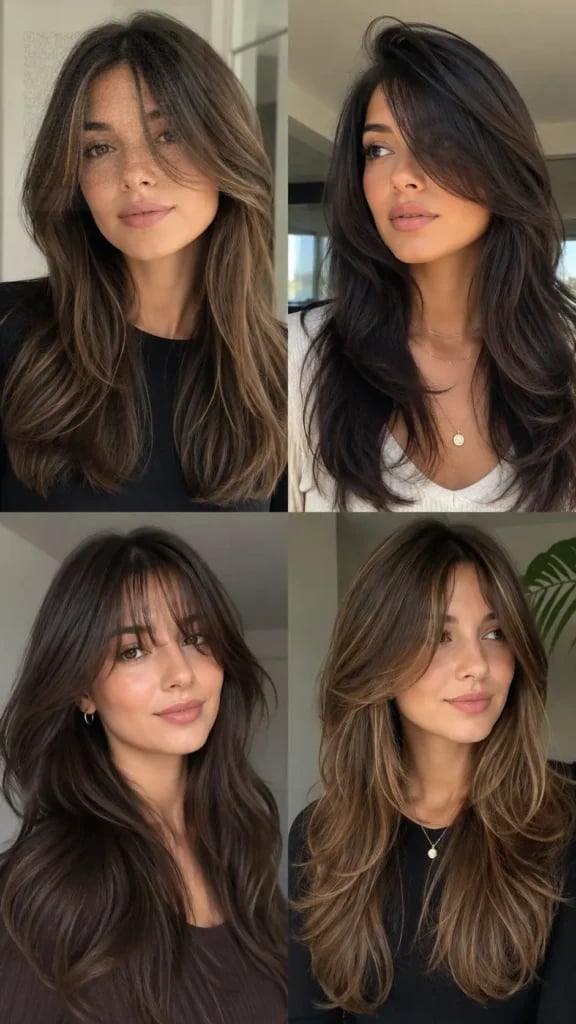
Long face-framing bangs are a lower-commitment entry point than you think. The honest trade-off: they require daily styling to look deliberate, but they also take only two minutes once you have the technique down. The cut uses long layers through thick, dark brown mid-back hair with subtle highlights, with the bangs cut to sweep outward from a side part. Ask your stylist for: mid-back length with long face-framing bangs.
A salon cut is necessary because the angle of the sweep must be precise. At home you hold a large round brush under the bangs and blow them over and away from your face. The payoff is a soft frame that works on oval and heart shapes. Skip this if you prefer a wash-and-wear routine with no tool involvement. Trims every six to eight weeks keep the sweep from turning into a general layer.
Mid-Back Dark Brown With Face-Framing Layers and Loose Waves
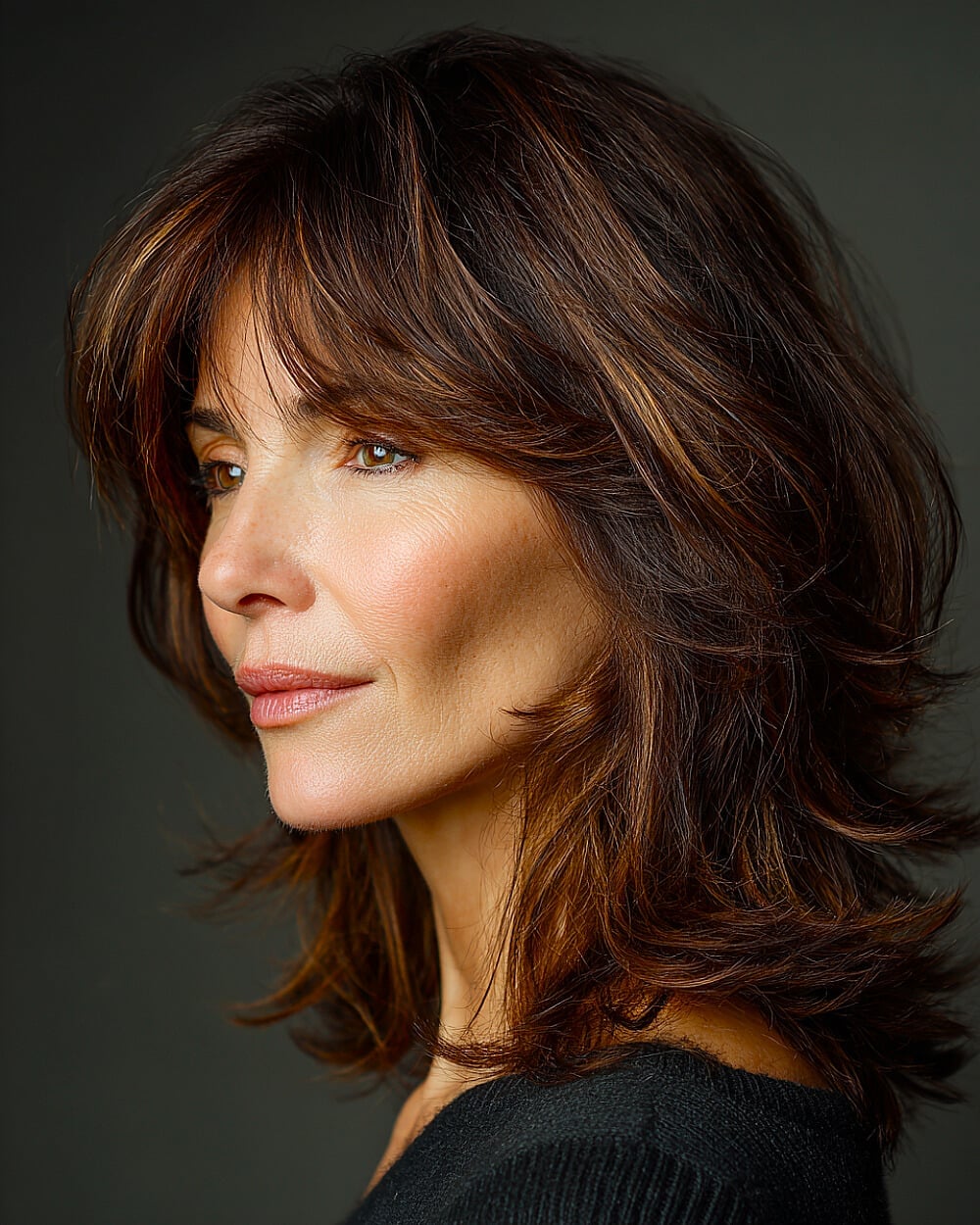
Ask your stylist for: mid-back length with face-framing layers and bangs. The layers around the face will soften an angular jawline, and the side parting keeps the weight on one side for natural volume. A wave-enhancing spray and a scrunch get the texture going in under ten minutes. Plan for a trim every eight to ten weeks to keep the face-framing pieces from blending back into the length.
Long Dark Brown With Full Bangs

A full fringe on long hair is a precise design choice: it splits the visual weight of all that length, giving the eye a clear stopping point near the brows. Here, medium wavy dark brown hair with subtle highlights is cut with a middle part and full bangs that hit just above the lashes, styled in loose waves. The medium texture holds the wave pattern without collapsing, so the bangs stay readable and do not disappear into the surrounding hair.
Ask your stylist for: long length with full bangs. The full fringe can balance a longer face shape by shortening the vertical line, and the middle part keeps the look symmetrical. A texturizing spray adds grip to the waves without stiffness. The bangs themselves need a trim every four weeks to keep them from sliding past the brows and into the face-framing category they are not. The chair time is about an hour for the initial cut, then twenty minutes for the monthly bang trim.
Final Thoughts
When choosing your bangs, let your hair’s natural texture lead. Fine hair benefits from wispy or face-framing layers that add movement without weighing it down, while thick hair can lean into curtain bangs or shag layers to reduce bulk and create shape.
- Trim bangs every 2-4 weeks to keep them sharp.
- Always use a heat protectant before hot tools.
- Wash and condition regularly, focusing on the ends.
- Refresh with dry shampoo or texturizing spray as needed.
Face-framing bangs are a customizable way to refresh your look.