
Gray blending highlights weave lighter silver, ash blonde or beige pieces through a gray or dark base so regrowth reads as part of the design instead of a countdown. The technique has moved toward lived-in color and soft face-framing layers, which means fewer salon visits and a softer grow-out line between appointments.
These 21 ideas run from a sharp gray bob to mid-back waves, with upkeep levels from a quick gloss to a full highlight appointment. Fine hair, thick hair and a stubborn fringe all get a version here. Gray Blending Highlights solve the visible root line, the mid-length that falls flat and the tone that turns brassy by week three.
Lob With Medium Gray Base And Silver Highlights
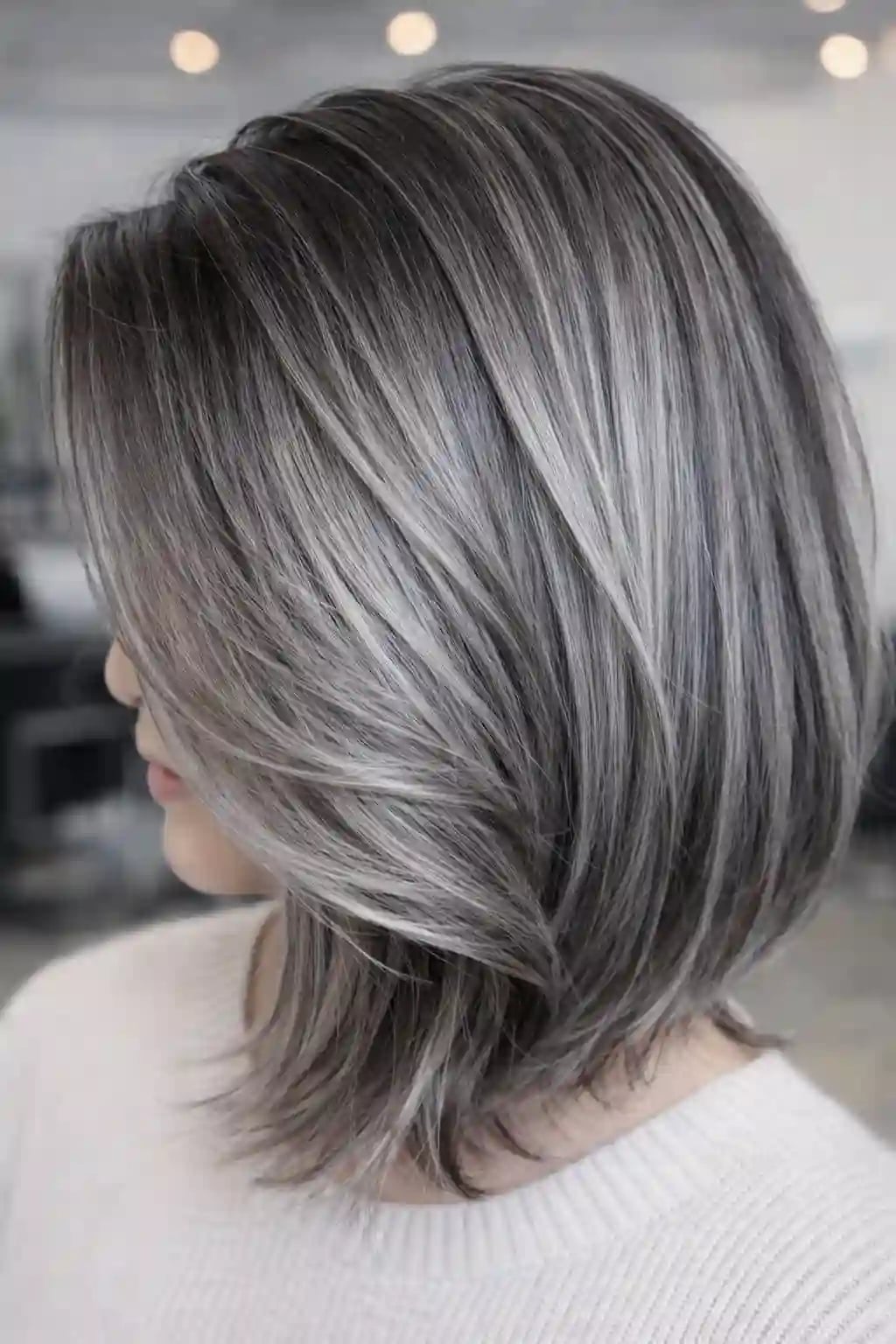
The clever part of this lob is the distance between the medium gray base and the silver highlights: far enough to notice, close enough that the grow-out line never looks like a stripe. Side-swept bangs do the framing work, and the thick, wavy texture carries the contrast without either shade shouting over the other. Thick, wavy hair that already reaches the collarbone is the starting point; anything shorter and the silver has nowhere to travel. Side-swept bangs soften a round or heart-shaped face, since the diagonal break stops the forehead reading as one wide band. Ask your colorist for: medium gray base with silver highlights, lob, side-swept bangs. A sea salt spray coaxes the waves into something with grip, and the baseline of the lob wants a trim every six to eight weeks to stay a lob.
Collarbone Layers With Gray Blending Highlights
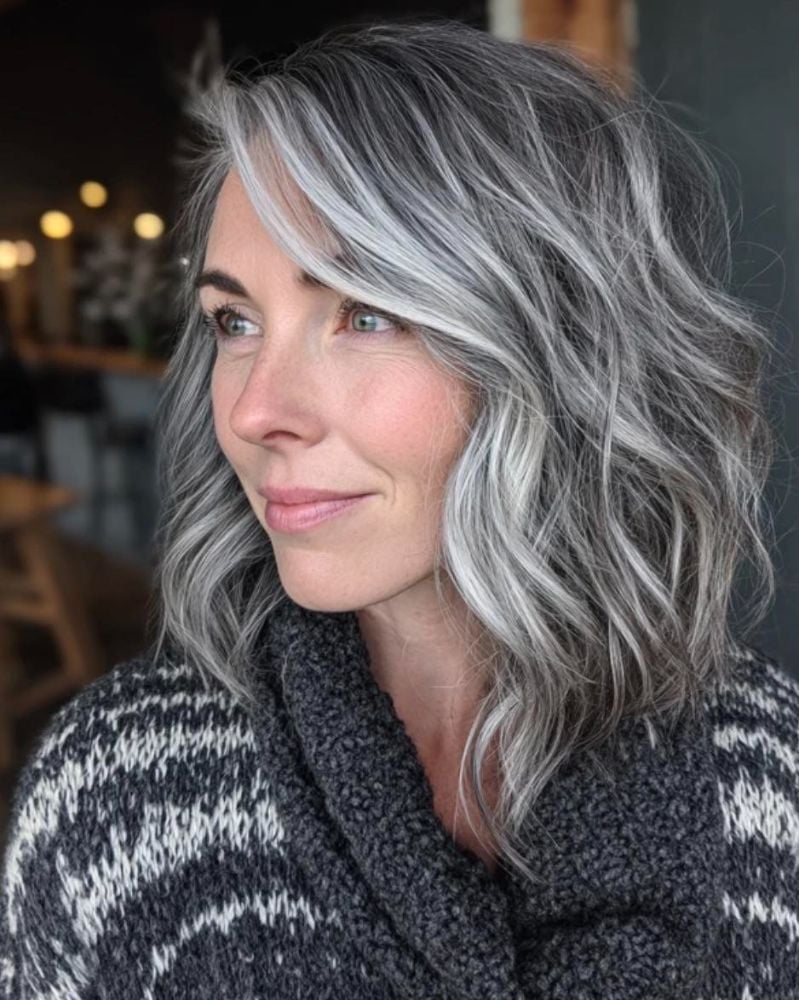
Gray blending highlights work by weaving lighter gray strands through a darker base, which is a different job from covering the gray up. The colorist leaves the natural gray in place as part of the pattern and adds lighter pieces around it, so the regrowth line dissolves instead of announcing itself. On a collarbone-length layered cut, that means the highlights sit where the layers move, catching light at the bend of each soft wave. Thick, wavy hair holds the pattern best, since fine hair can let the lighter strands disappear altogether. Ask your colorist for: collarbone length layers with gray blending highlights. A smoothing serum keeps the finish glossy rather than fuzzy, and layers stay sharp with a trim every eight to ten weeks.
Wavy Collarbone Layers Ash Blonde Gray Blend, Side
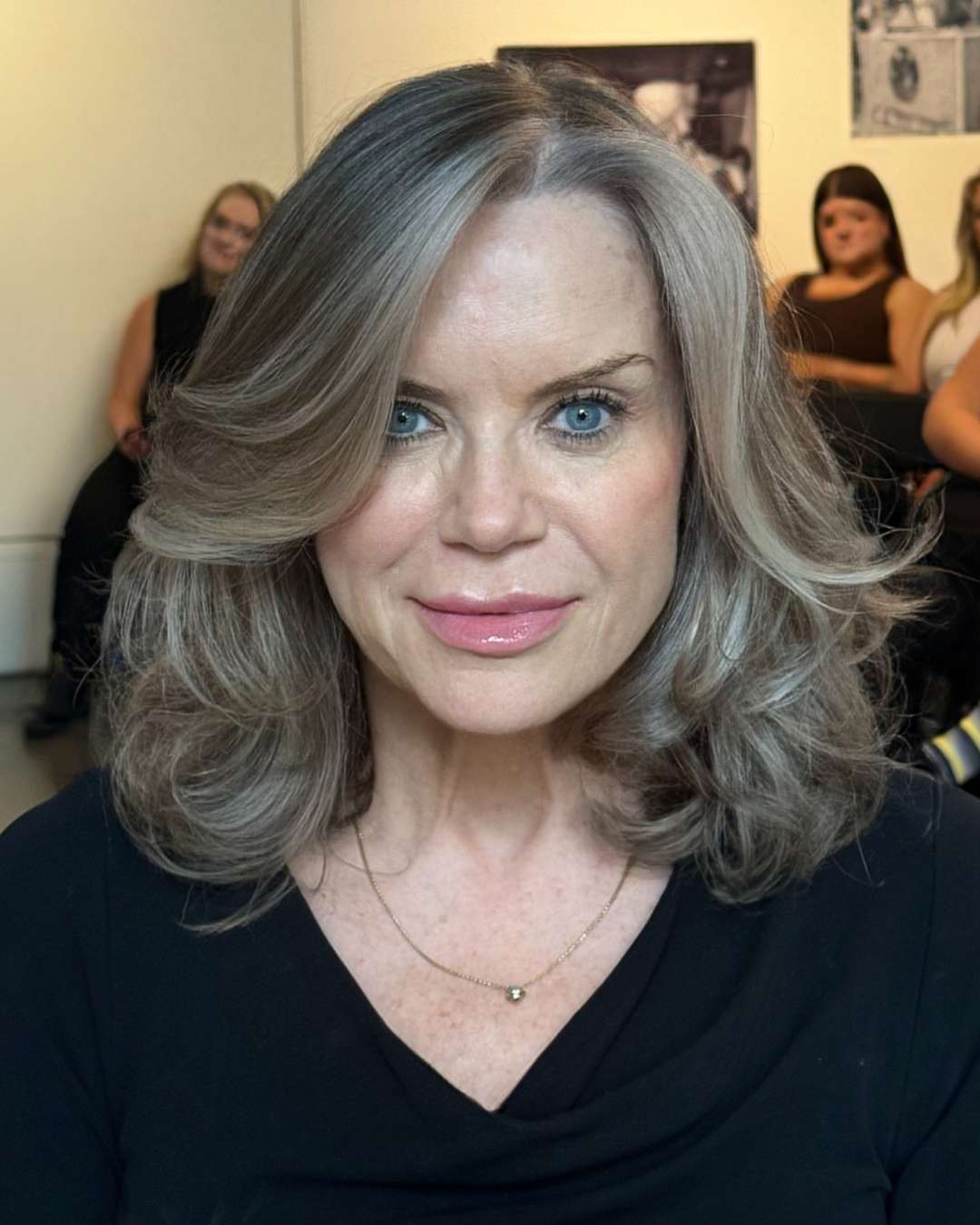
Warmer blonde highlights against gray tend to fight each other, and the ash route ends the argument. A gray base with ash blonde highlights keeps the whole head in one cool family, so the blend reads as dimension instead of two colors sharing a scalp. Medium, wavy hair at collarbone length is the sweet spot: enough texture to break up the highlight lines, not so much that the ash tone gets lost in the curl. Ask your colorist for: gray base with ash blonde highlights, collarbone layers. A root lift product supports the wavy blowout, and the highlights want toning every six weeks to stay on the cool side of blonde.
Shoulder Length Ash Gray With Silver Highlights
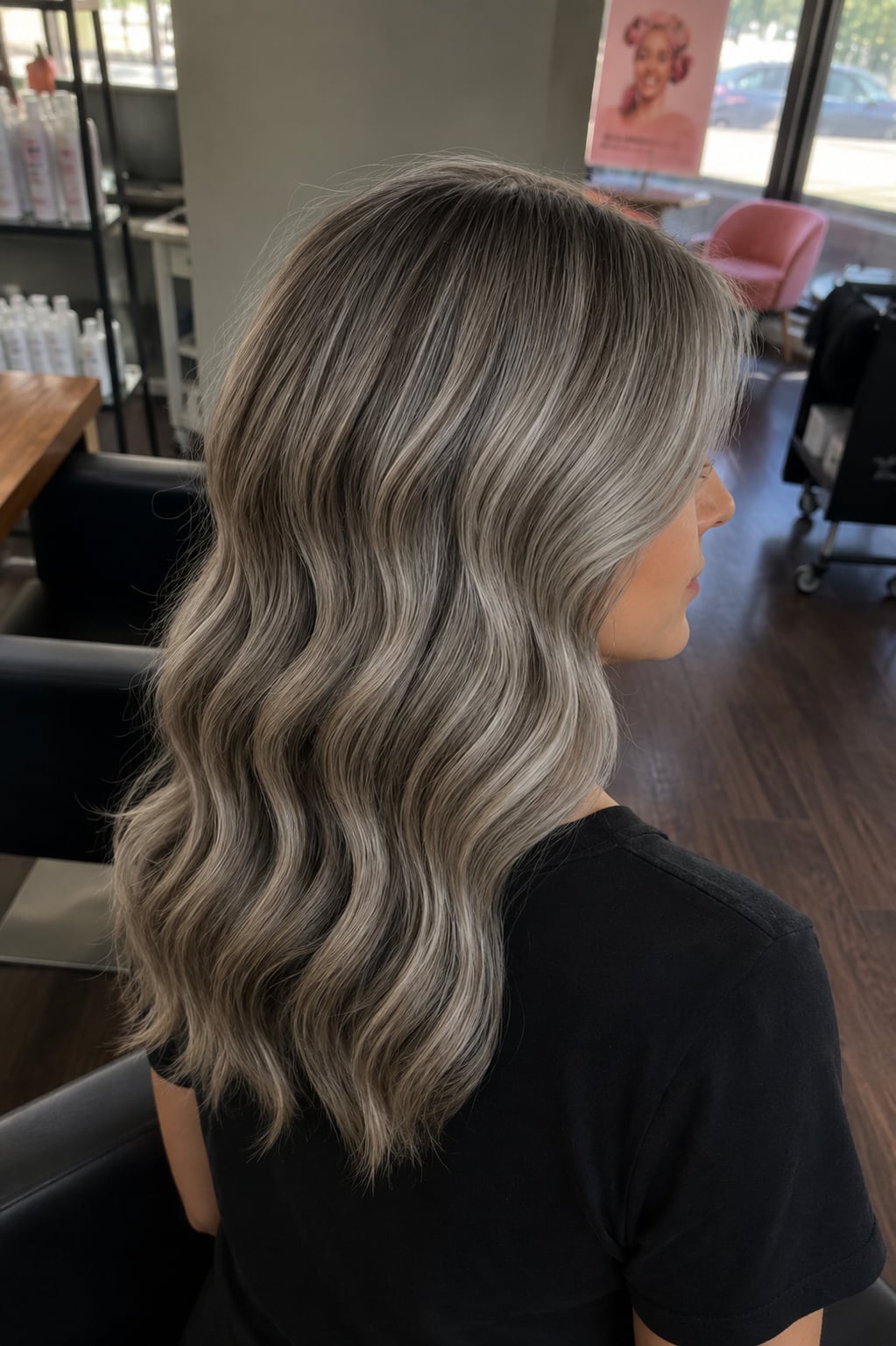
What do you actually say at the desk when you want this exact cool finish? Start with the base: ash gray, not silver, not pearl. Then ask for fine silver highlights woven throughout rather than placed in thick bands, because fine pieces are what keep the blend looking like light moving through the hair. Shoulder-length layers give those highlights somewhere to sit, and thick, wavy texture makes each one visible. Ask your colorist for: ash gray base with fine silver highlights, shoulder length layers. A shine serum pressed through the mid-lengths keeps the gloss, and the layers need a trim every six to eight weeks to hold their shape.
Mid-Back Straight Hair Beige Blonde Gray Blend
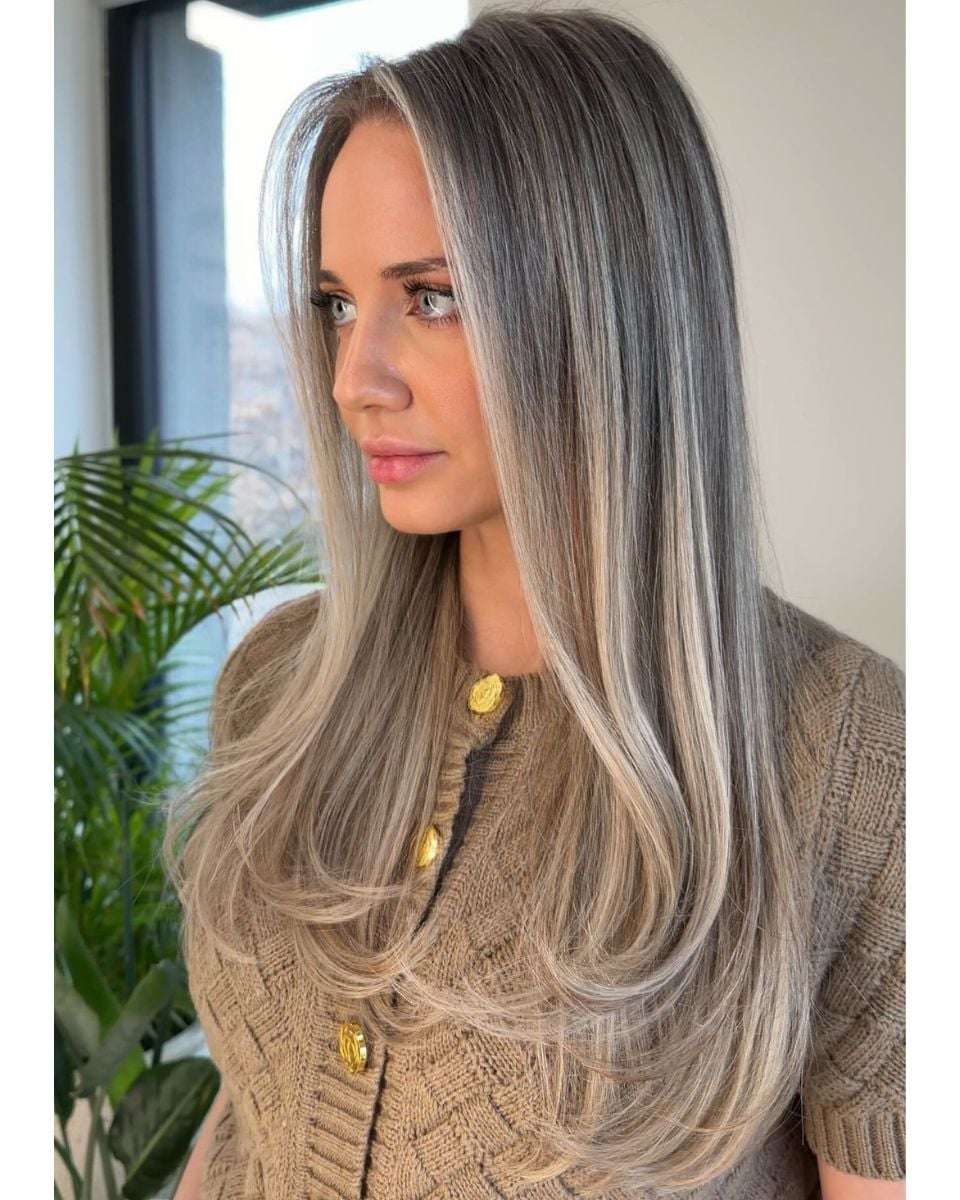
Straight, thick hair at mid-back length shows every highlight line, which makes the blend on this cut a commitment that goes beyond a quick appointment. Beige blonde and gray highlights sit next to each other in a smooth blowout, and straight bangs cut across the forehead to keep the front from going flat. The beige is the part that needs watching: warm blonde tones drift toward brass faster than ash does, and on straight hair there is no wave to hide the shift. A purple shampoo once a week holds the beige in line between toning appointments.
Upkeep splits into two rhythms. The color wants a toning appointment every six to eight weeks, since beige blonde goes yellow before it goes anywhere interesting. The cut is the quieter job: straight bangs need a trim every four to six weeks or they start catching on the brow, and the mid-back length itself only needs a dusting every ten to twelve weeks. A flat iron on the lengths keeps the blowout smooth, though the bangs are better finished with a round brush so they keep a little bend. Expect roughly three hours in the chair for the initial color and cut.
Long Wavy Hair Gray Ash Blonde Blend
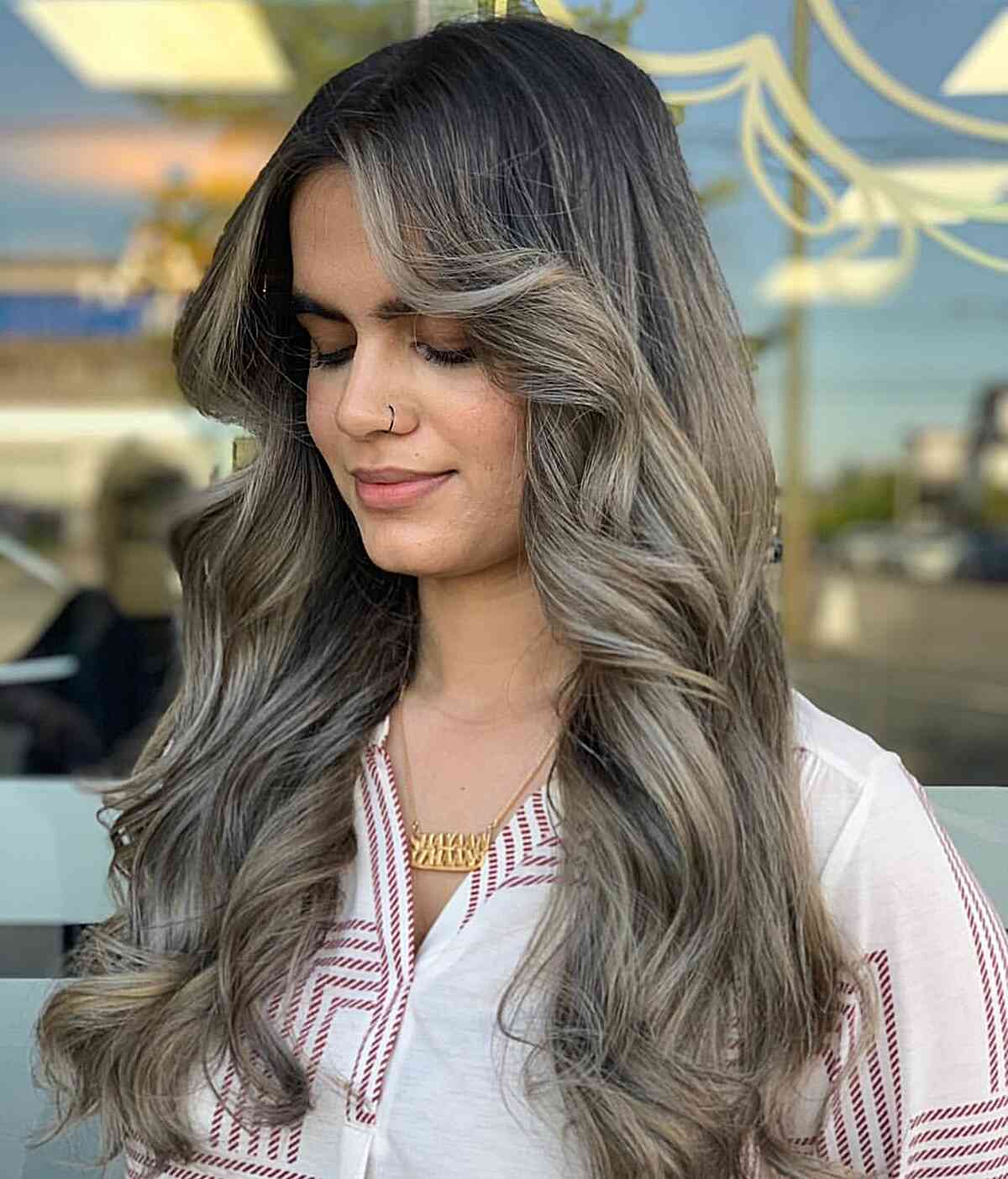
Loose curls on long hair show a gray base with lighter ash blonde highlights, and the curtain bangs carry that same mix right down to the cheekbone. The middle parting splits the tone evenly, so the lighter pieces read on both sides. In spring and summer this finish earns its keep: the ash blonde lifts the whole color without turning it warm, and the waves keep the length from looking heavy.
Thick, wavy hair at long length carries this easily, and curtain bangs soften square and round faces. Ask your colorist for: gray and ash blonde highlights, long wavy hair, curtain bangs. A long gray ash blonde blend like this typically takes a few hours in the salon, and low heat with a diffuser helps keep the curl pattern intact. Trim every ten to twelve weeks so the ends stay full enough to hold the shape.
Collarbone Lob Gray Base Blonde Highlights
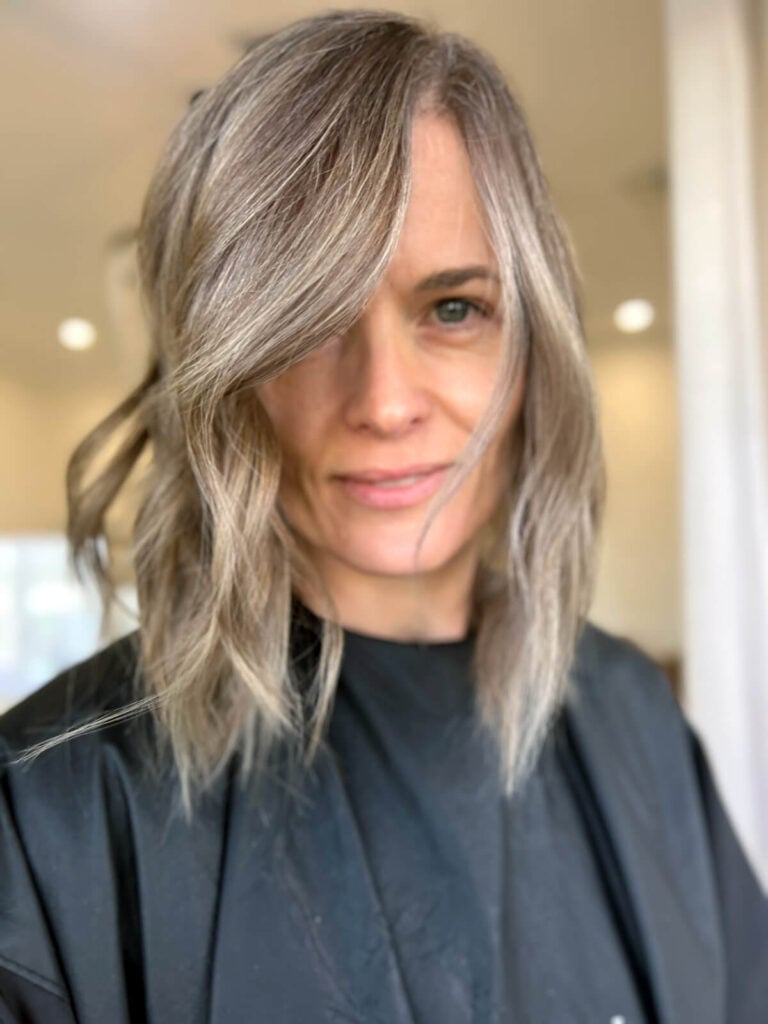
The gray base with blonde highlights does the volume work, and the curtain bangs and face-framing layers keep the front from sitting flat. Fine hair can wear it too, though the waves will need more help from a texturizing spray. Ask your colorist for: gray base with blonde highlights, collarbone lob with layers and curtain bangs. Curtain bangs suit square and round faces, and the side parting here breaks up the width. Book a trim every eight weeks to keep the lob baseline and layers from growing out of proportion.
Lob With Side Swept Bangs Gray Blonde Blend
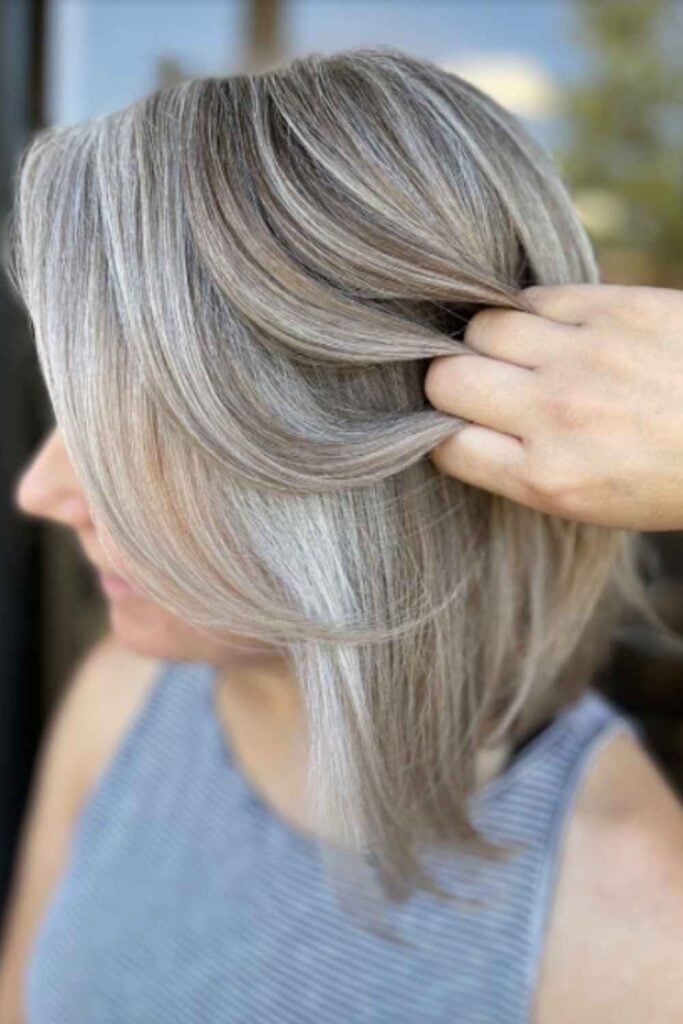
Set this against the curtain-bang lob and the difference is direction: side-swept bangs pull the eye across the forehead instead of down the middle, and that sweep softens angular faces. The gray base with blonde highlights stays soft through the collarbone-length layers, and the middle parting keeps the wavy blowout from looking lopsided.
The trade-off is the blowout itself. Soft waves on a lob take a round brush and some time, or a texturizing spray and a scrunch on rushed mornings; the salon color is the easy part. Ask your colorist for: gray base with blonde highlights, lob with layers and side swept bangs. A trim every eight weeks keeps the baseline sharp while the bangs grow out on their own schedule.
Mid-Back Layered Hair Gray Blending Highlights
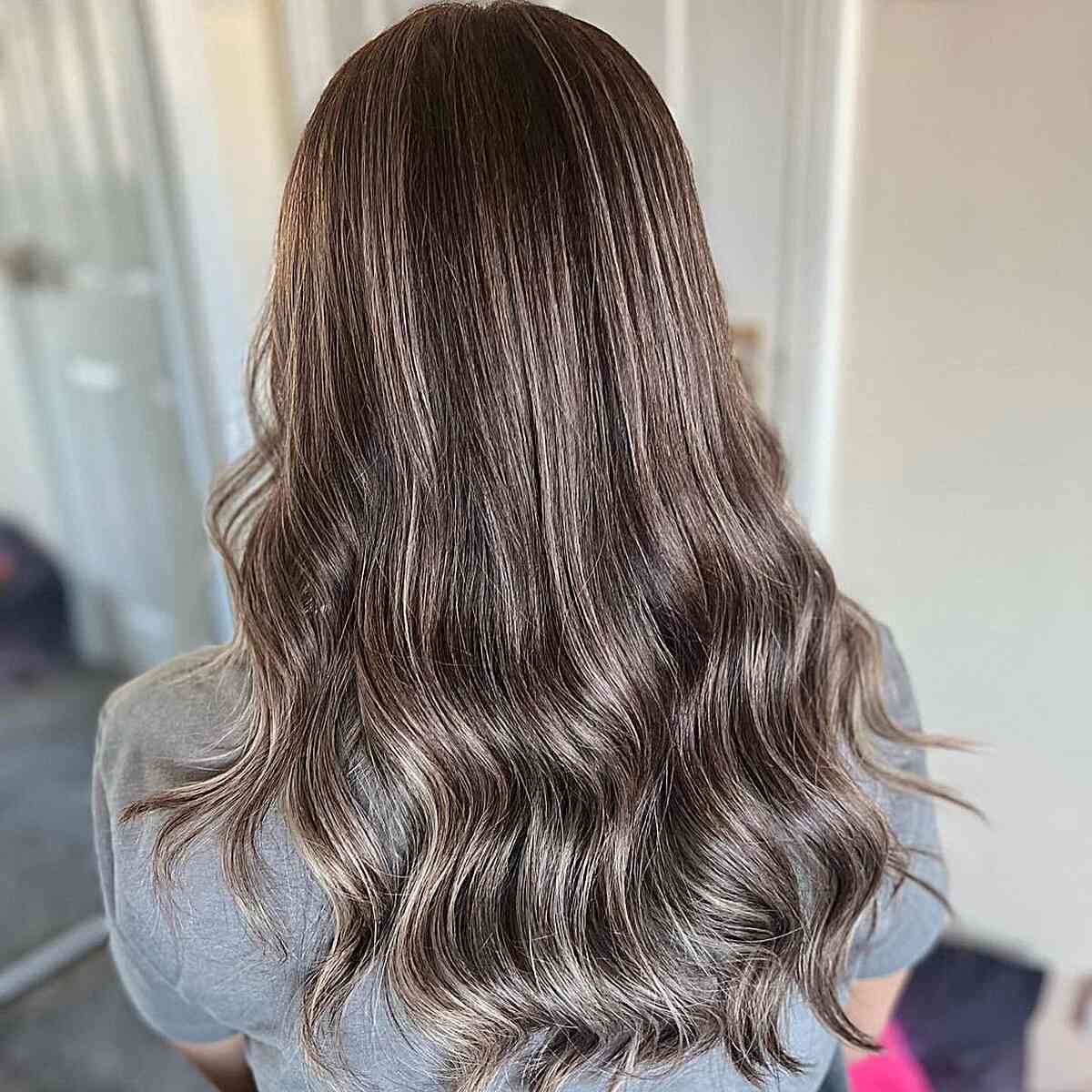
Gray blending highlights work by placing lighter pieces through the gray rather than over it, so from the back the color reads as one dimensional surface with lift, not stripes. On mid-back length with layers, the blowout does the rest: the layers break up the width of thick, wavy hair and let the highlight pattern move as the hair does.
From behind, the effect is a soft gradient rather than a root line, which is why the grow-out stays quiet for weeks. Thick, wavy hair at mid-back length is the right starting point; finer hair needs fewer, wider pieces to avoid a stringy finish. Ask your colorist for: mid-back length layered hair with gray blending highlights. A volumizing mousse at the roots keeps the blowout from collapsing, and a trim every ten to twelve weeks maintains the layer structure the color depends on.
Mid-Back Wavy Hair Blended Gray Blonde
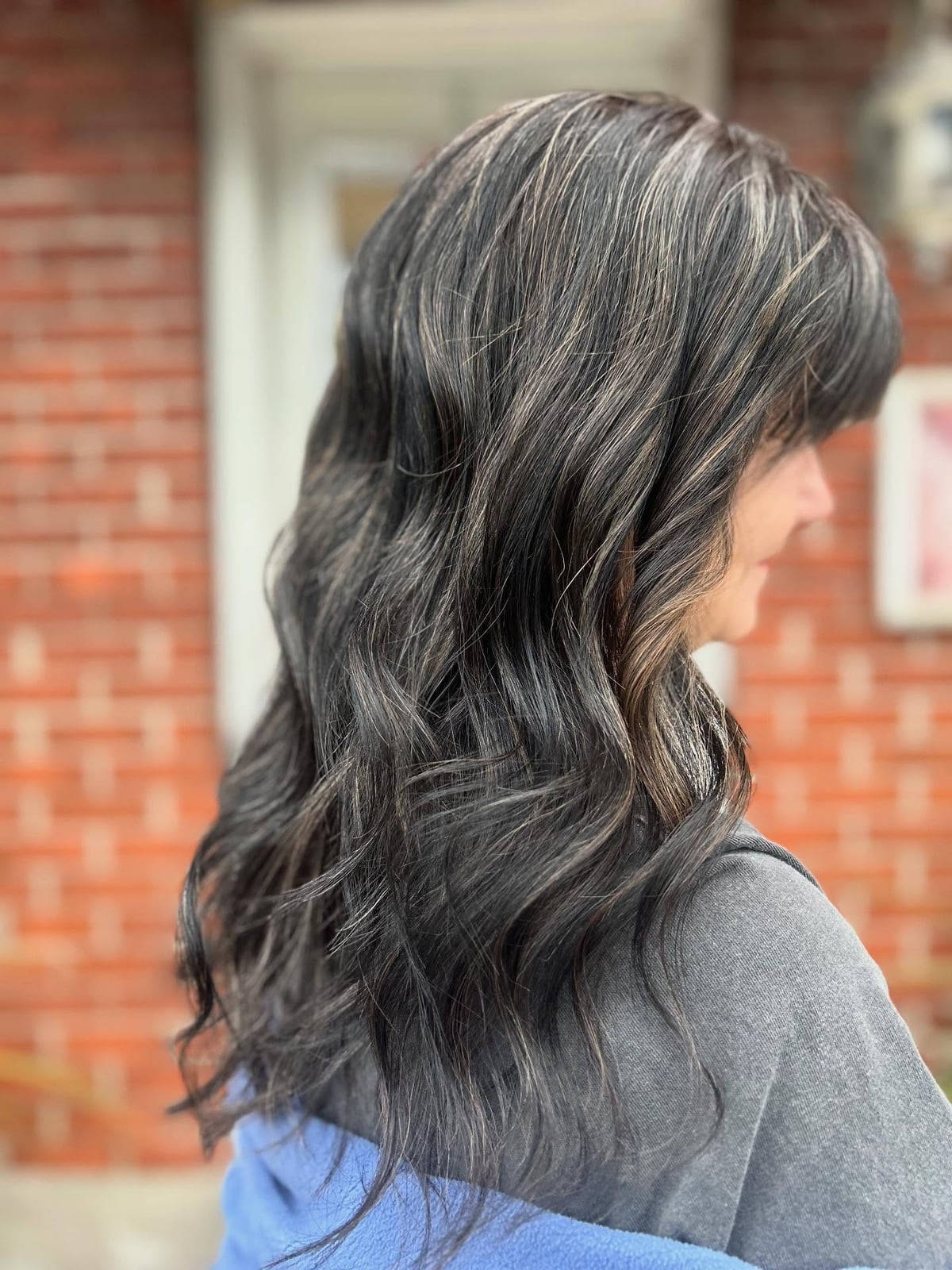
The blend here is the point: gray and lighter blonde highlights are woven so close that no single streak announces itself, and the middle parting gives the soft blowout a clean spine. On thick, wavy mid-back hair, that closeness is what keeps the color from reading as chunky as it grows.
Upkeep is where this earns its reputation. Because the highlights sit close to the base tone, the root line stays soft for six to eight weeks before a toning appointment is needed, and the gray never turns brassy the way a full blonde does. Ask your colorist for: blended gray and blonde highlights, mid-back wavy hair. A heat protectant before blow-drying protects the tone as much as the texture, and a trim every ten to twelve weeks keeps the ends from dulling the overall finish.
Mid-Back Wavy Fine Hair Gray Blonde Silver, Layers
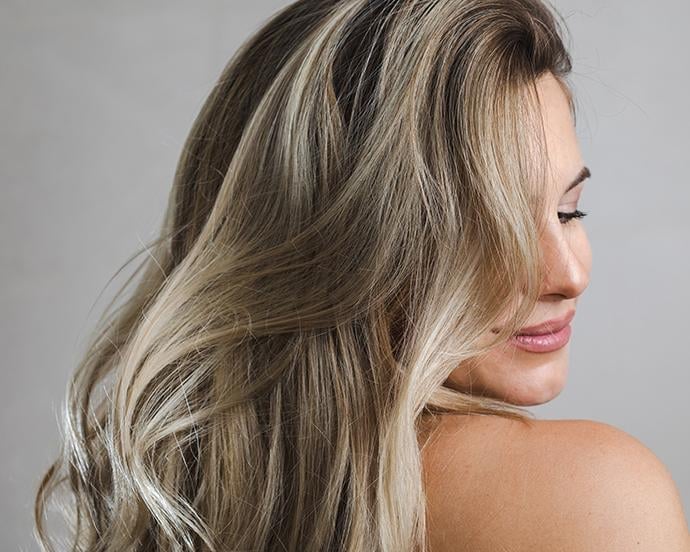
Can fine hair carry off gray blending highlights without looking weighed down? It can, as long as the technique stays light. This mid-back length cut with layers, a blowout and middle parting keeps the wavy texture airy, and the gray base with blonde and silver highlights adds dimension that looks natural, not painted on. Fine strands need soft, widely spaced highlights, so the color breathes. Ask your colorist for: gray base with blonde and silver highlights, mid-back fine wavy hair. A volumizing mousse at the roots and a trim every eight to ten weeks keep the ends from dragging the whole shape down.
Mid-Back Dark Base Ash Blonde Highlights
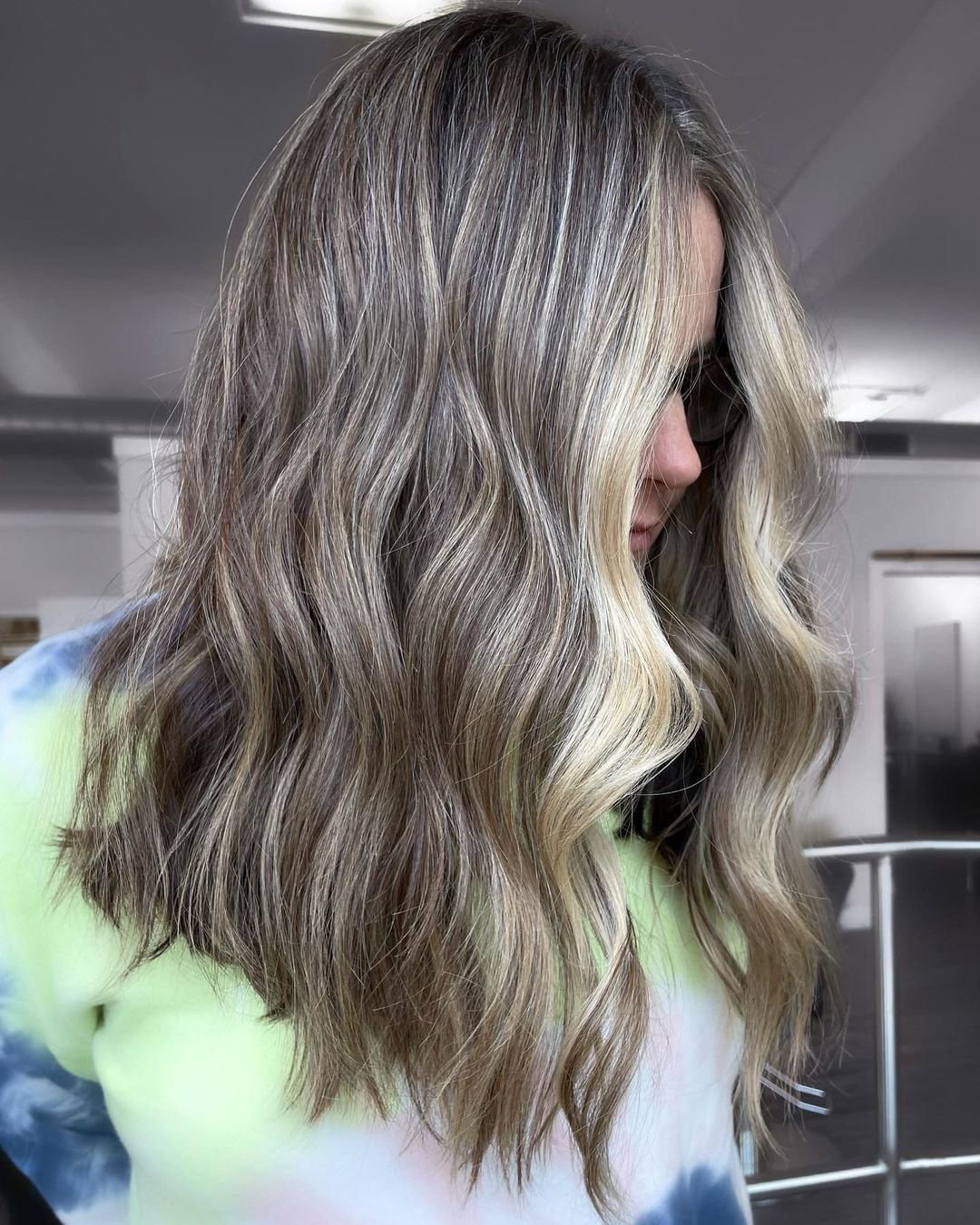
This is a contrast play, and it works because the ash blonde highlights sit on a dark base instead of fighting it. The mid-back length hair falls in long layers with a middle parting, and the side-swept bangs break up the vertical line so the color has somewhere to move. The wavy blowout gives the highlights a blended finish that avoids the stripe effect. Ask your colorist for: dark base with ash blonde highlights, mid-back long layers, side swept bangs. Specify that you want the ash tone to stay cool, not silver, and that the highlights should start a few inches from the root for a softer grow-out. A trim every ten to twelve weeks keeps the layers sharp.
Collarbone Layered Cut Lighter Gray Highlights
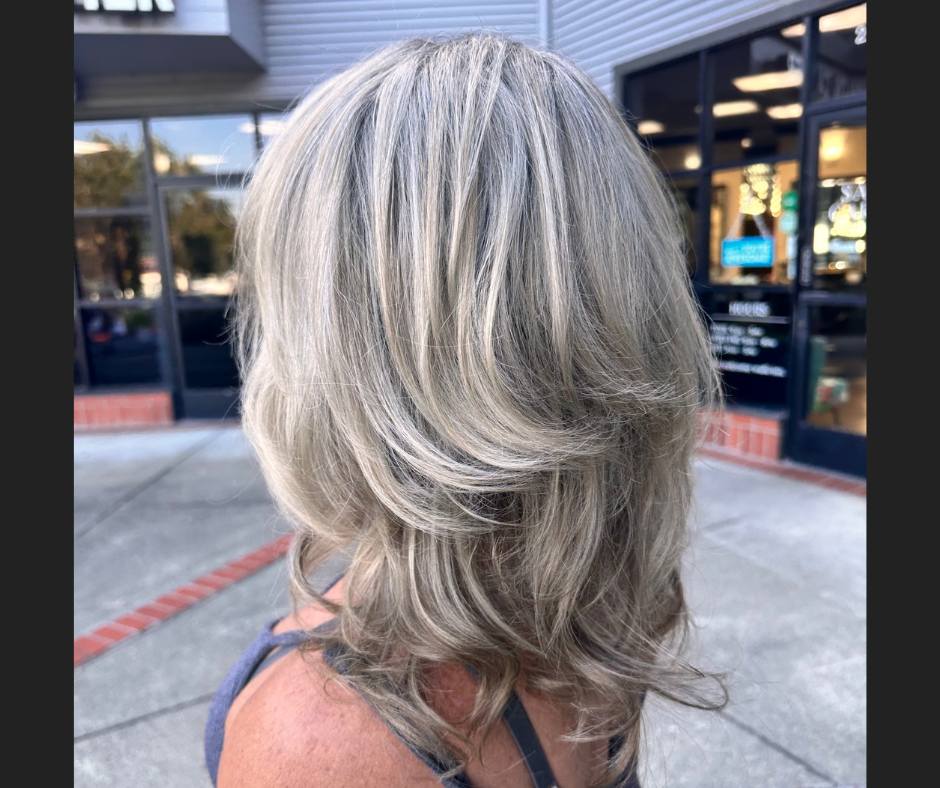
It’s not silver, it’s lighter gray, and the difference matters. This collarbone-length layered cut uses a gray base with lighter gray highlights for a blended effect. The mistake people make is skipping the undertone conversation, so the lighter pieces pull brassy within a few washes. Ask your colorist for: gray base with lighter gray highlights, collarbone layered cut. Specify a cool, almost blue-gray undertone, not a warm pearl. The wavy, medium density texture benefits from layers that stack around the collarbone, and a root booster at the crown keeps the shape from falling flat. Plan on a trim every six to eight weeks to preserve the layered movement.
Mid-Back Natural Gray With Subtle Tone Variations
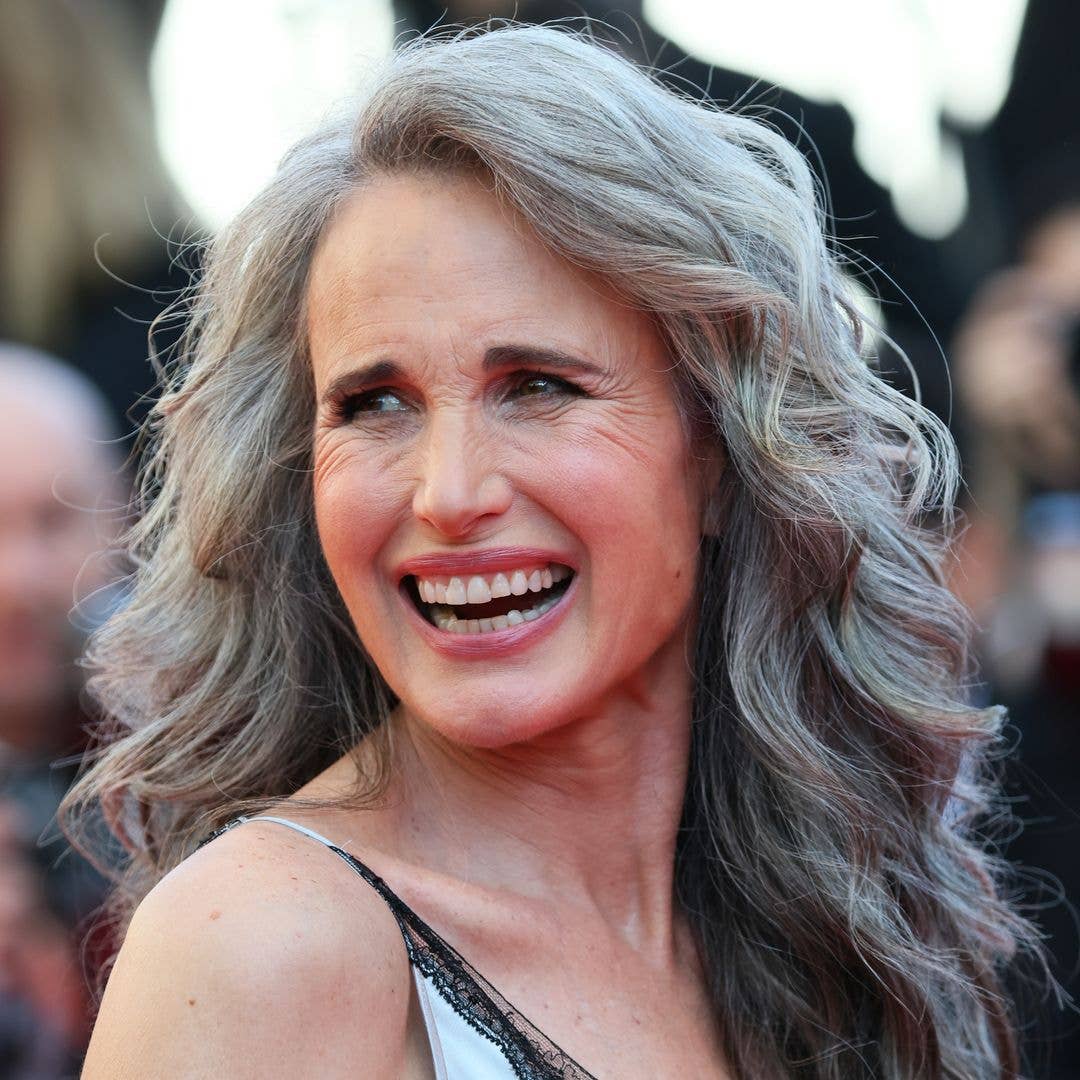
Loose waves and a side part show off subtle variations in tone, which is what makes the color look alive rather than flat. You can maintain this at home with a purple shampoo once a week to keep yellow at bay and a gloss treatment every month to keep the shine. Ask your colorist for: natural rich gray with subtle tone variations, mid-back length. A wide-tooth comb on damp hair keeps the wave pattern intact, and a trim every ten to twelve weeks stops the ends from splitting. This is the low-maintenance end of the gray spectrum, and it suits anyone ready to let the natural color do the talking.
Collarbone Layers Gray Blending Highlights Side Swept Bangs
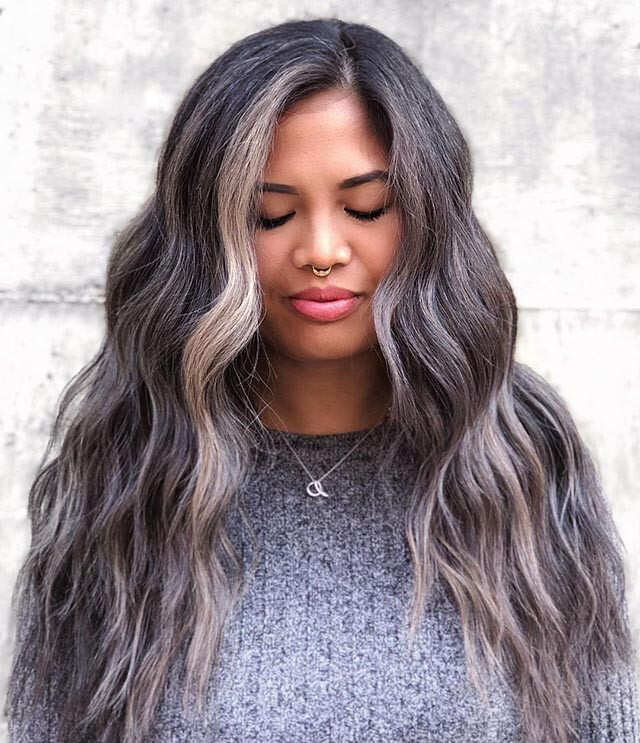
Gray blending highlights earn their keep when the seasons shift, because the cool tone works as well with a winter coat as it does with a spring blouse. This collarbone-length cut layers thick, wavy hair and integrates lighter gray strands into a darker base, with side-swept bangs that soften the face without hiding it. The blend is what makes it versatile: the lighter pieces catch light differently depending on the weather, so it never looks stuck in one season. Ask your colorist for: gray blending highlights, collarbone layers, side-swept bangs. A texturizing spray on the waves gives the style a lived-in finish, and trimming the baseline and bangs every six to eight weeks keeps both the shape and the color transition looking deliberate.
Collarbone Layers Gray Base Blonde Highlights Curtain Bangs
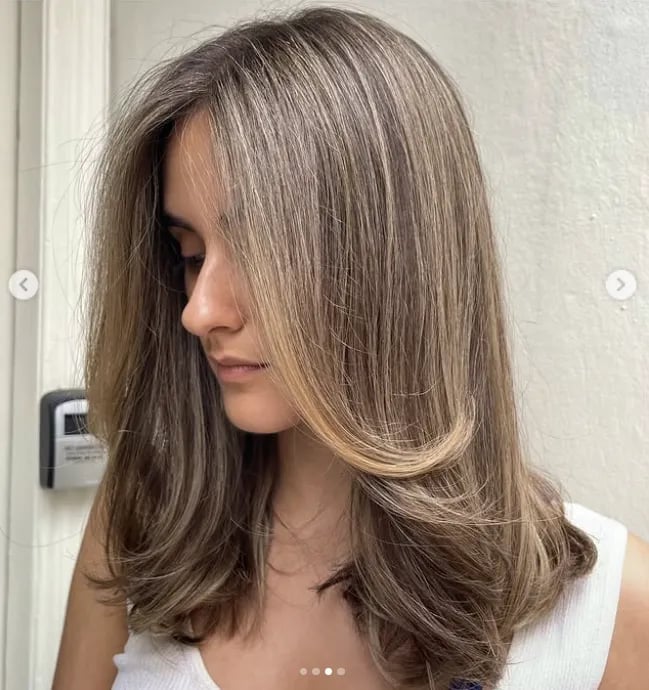
Will fine hair hold a style, or will it collapse by lunch? A blowout on fine, wavy hair can go flat fast, especially with layers that need volume to show. What helps is a cut with a job to do: soft layers and curtain bangs at collarbone length, a gray base with blonde highlights, and a middle parting that carries the fringe. Ask your stylist for: gray base with blonde highlights, collarbone layers, curtain bangs. Curtain bangs suit square and heart faces, and the layers give fine hair movement without weight. Blow-dry the fringe around a small round brush so it curves away from the face, and add a light volume spray at the roots. A trim every 6-8 weeks keeps the curtain shape from growing into a heavy block.
Collarbone Ash Blonde Base Gray Blending, Wavy
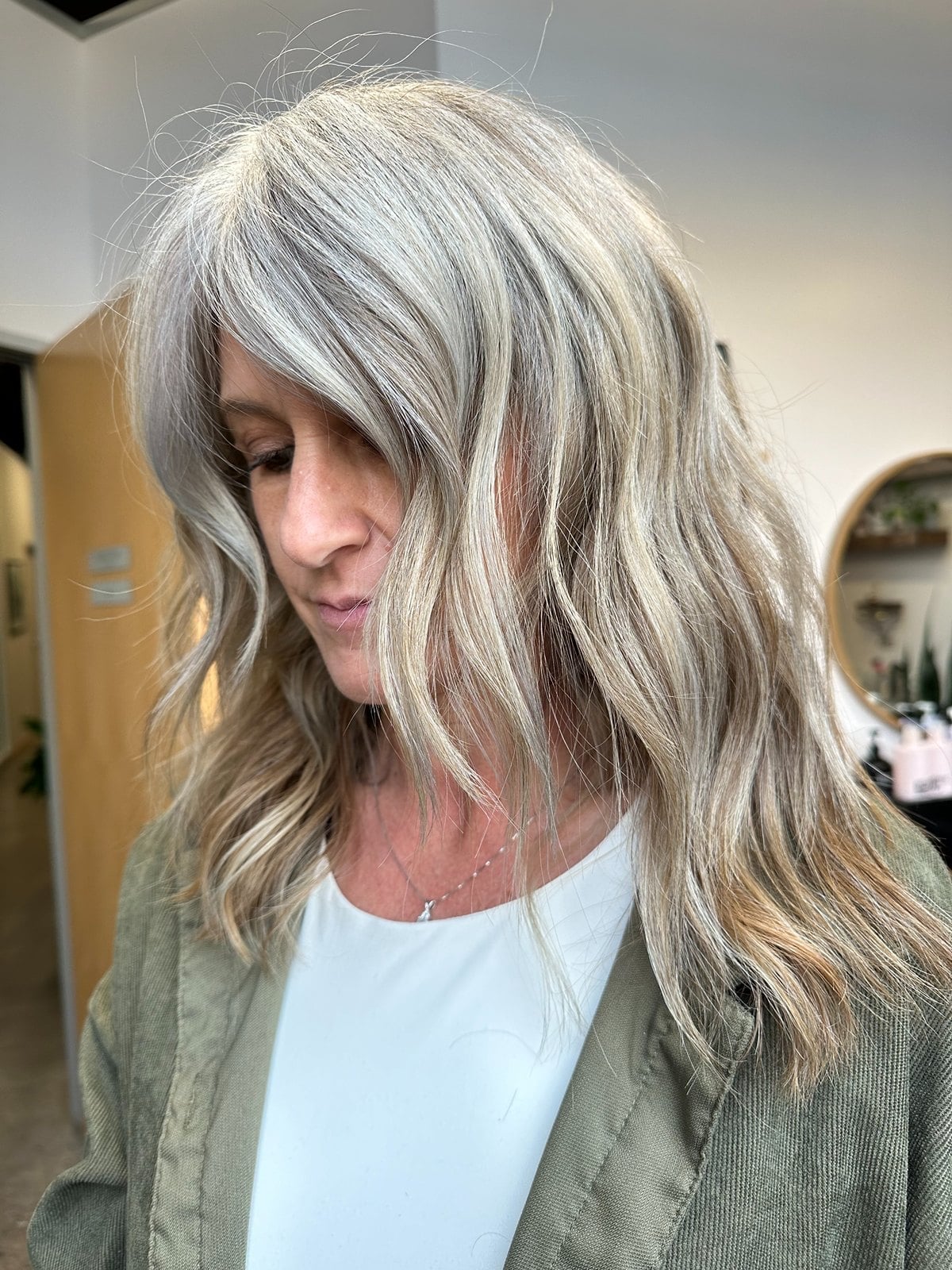
The ash tone does the work here, and it is the hardest part to keep. This is a collarbone cut with layers and curtain bangs, built on an ash blonde base with gray blending and subtle blonde highlights, styled into loose waves with a middle parting. The technique is a low-contrast one: fine blonde pieces are woven through a cool base so the gray looks like depth, not roots. Ash blonde and gray both sit on the cool side, which is why the finish looks lived-in instead of striped.
Ask your colorist for: ash blonde base with gray blending and blonde highlights, collarbone layers. Cool tones drift warm over time, so plan a toning appointment every 6-8 weeks and use a purple shampoo once a week to hold the ash. Medium, wavy texture carries the curtain bangs well, and a texturizing spray on damp hair gives the loose waves something to grip. A trim every 8-10 weeks keeps the layers from dragging the length down.
Collarbone Lob Gray Base Full Head Baby Highlights
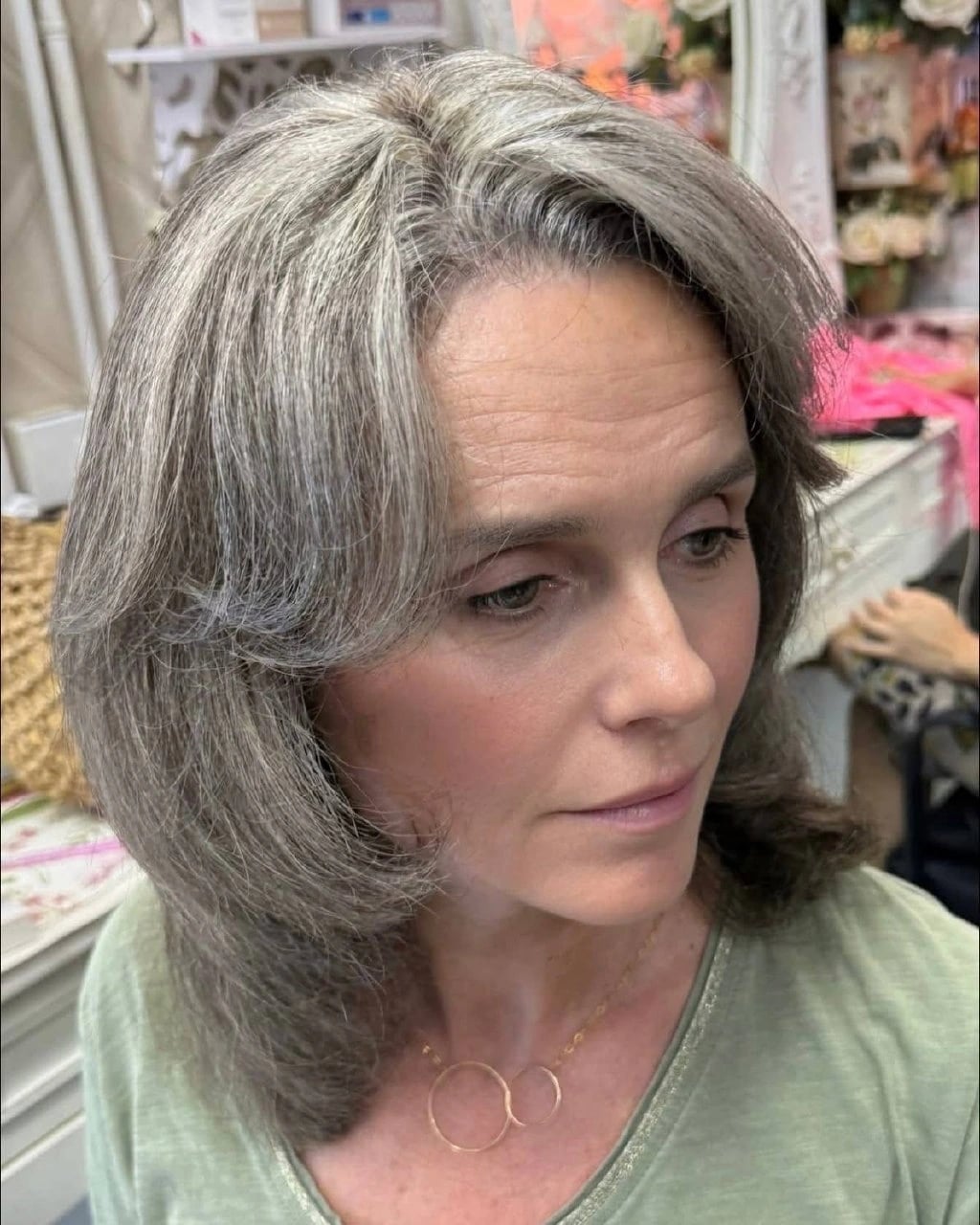
Full-head baby highlights are a fine-strand technique, and on a gray base they show as light through the hair. This collarbone lob has a middle parting and a straight blowout, with subtle baby highlights woven through the whole head. It suits fine, straight hair best: the pieces are thin enough to add dimension without the weight that wider highlights put on low-density hair. If your hair is thick or coily, the same effect needs fewer, larger pieces to show at all. Ask your colorist for: gray base with full head baby highlights, collarbone lob. Run a smoothing serum through damp mid-lengths before blow-drying flat, and trim the baseline every 6-8 weeks so the lob edge stays blunt.
Sharp Gray Bob With Subtle Highlights
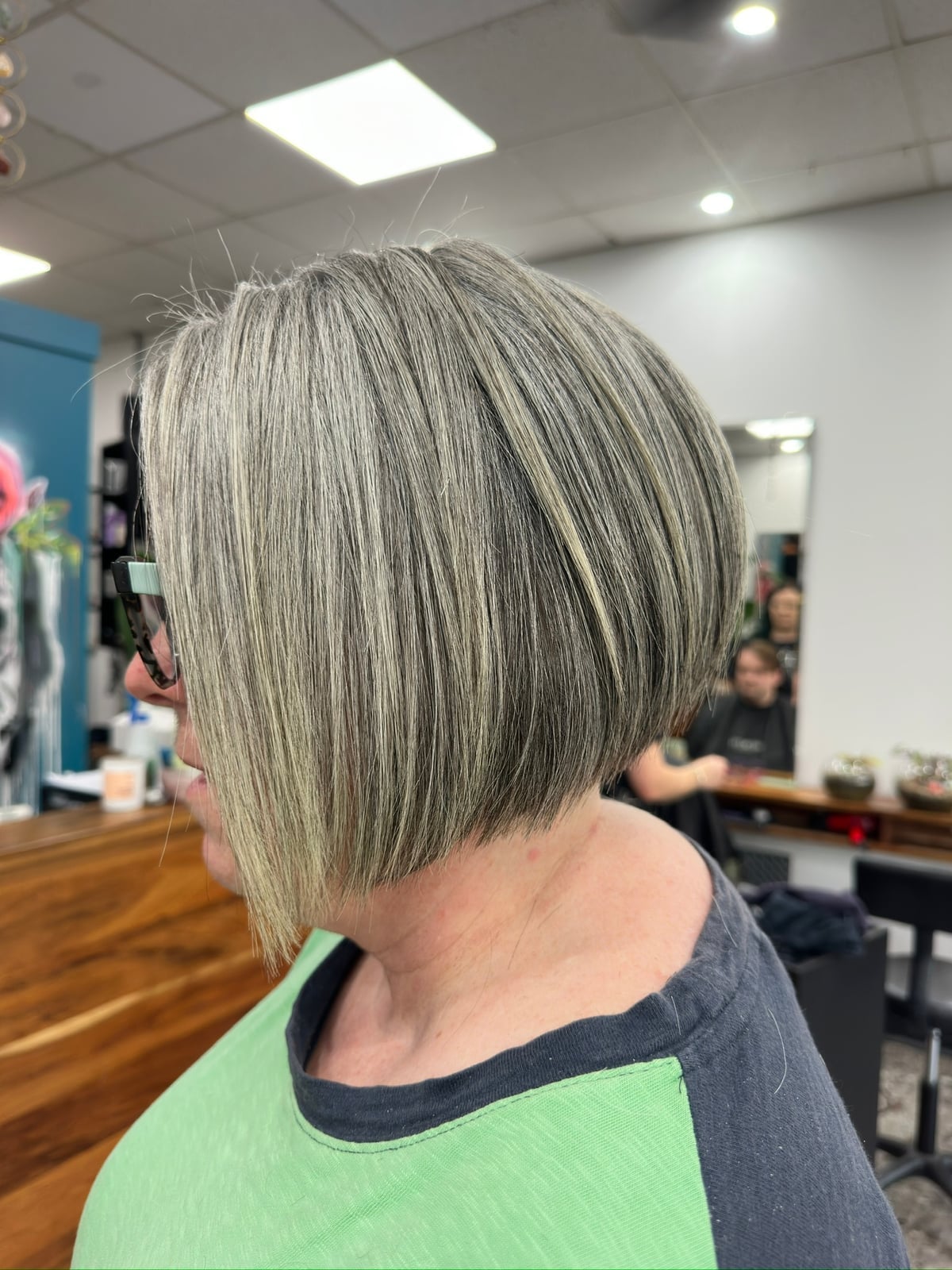
An ear-length bob with a side parting and a straight finish leaves nowhere for a bad line to hide, and that is the trade-off. The cut is precise, the gray carries subtle lighter highlights through fine, straight hair, and the shape reads clean from the side. Maintaining it is the cost: a sharp bob needs a trim every 4-6 weeks, or the baseline softens and the corners round off. Subtle highlights need a toner top-up every 6-8 weeks to stay cool. Skip it if you want to stretch appointments; a longer layered cut forgives a late trim, this one does not. Ask your stylist for: sharp gray bob with subtle lighter highlights, ear length.
Short Pixie Gray With Silver Highlights

A collarbone lob asks for a blowout; this pixie asks for four minutes and a texturizing paste. The cut is short and layered with a side-swept bang, cool-toned gray with silver highlights woven through fine, wavy hair, and the whole shape sits at ear length. Styling is quick, upkeep is not: a pixie needs a trim every 4-6 weeks to keep the layers sharp, where the lob stretches to eight. Choose the pixie if you want a bold line and do not mind the calendar. Choose the lob if you would rather book less often. Side-swept bangs soften round faces. Ask your stylist for: cool gray pixie with silver highlights, side-swept bang.
Shoulder Length Gray Blending Highlights
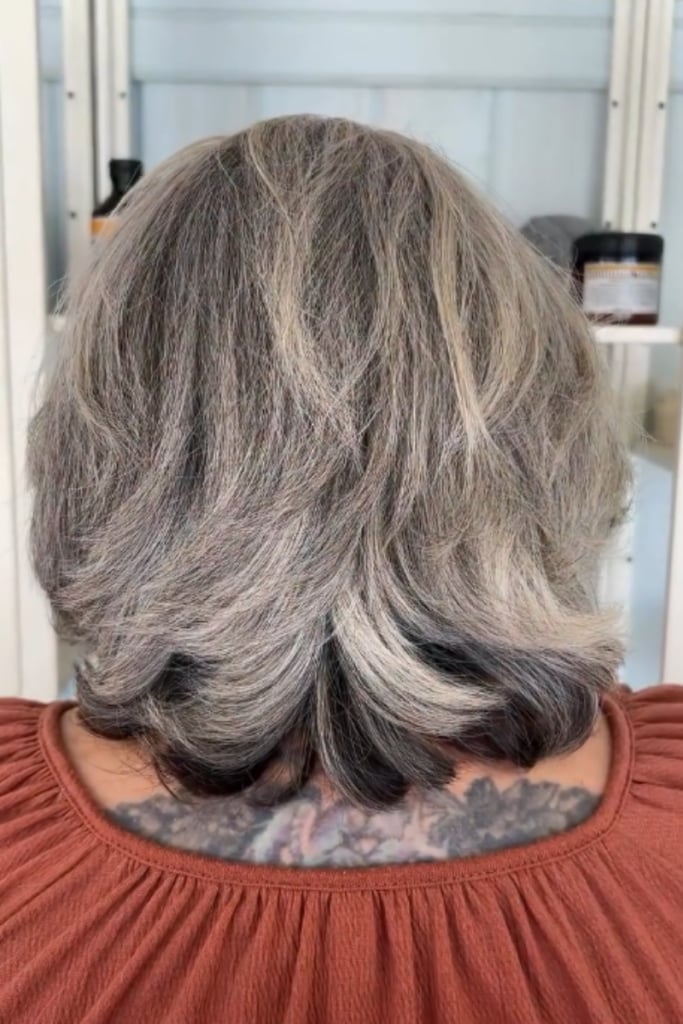
Can a color technique actually make grow-out easier? Gray blending highlights at shoulder length do exactly that. The base shade stays your natural gray or a cool-toned neutral, with lighter silver or white pieces woven through to blur the line between pigmented hair and incoming new growth. On thick, wavy hair, the layered blowout catches those lighter strands and gives the whole shape a gloss that looks intentional, not transitional. Ask your colorist for: shoulder length layered hair with gray blending highlights. A volumizing spray at the roots keeps the bounce alive, and a trim every six to eight weeks keeps the shape from turning into a triangle. The best part: as the highlights grow out, they just look like more gray, not like you skipped an appointment.
Final Thoughts
For a softer blend, ask for babylights or fine, all-over highlights. For more contrast, ask for distinct, chunkier weaves of silver or ash blonde into your gray base. Match the technique to your patience: fine highlights need less toning, heavier weaves need more.
- Use a purple or blue toning shampoo every one to two weeks.
- Book highlight touch-ups every eight to twelve weeks.
- Apply heat protectant before any hot tool.
- Rinse with cool water to slow color fade.
Sophisticated gray blending highlights offer endless possibilities.

