Gray highlights are no longer just a sign of aging; they’re a deliberate color choice that adds cool, metallic dimension to almost any base. The current wave favors soft, face-framing placement and lived-in blends over stark, chunky streaks, which means the grow-out is part of the look, not a mistake.
This collection of 19 Gray Highlights ideas spans the spectrum from barely-there ash shimmer to full silver statement, and from collarbone bobs to mid-back waves. Whether your hair is fine and falls flat by noon or you’re fighting a stubborn root line, there’s a placement and tone here that works with your texture and your schedule, not against it.
The 19 looksOpen list +
Collarbone Layers With Prominent Gray Highlights
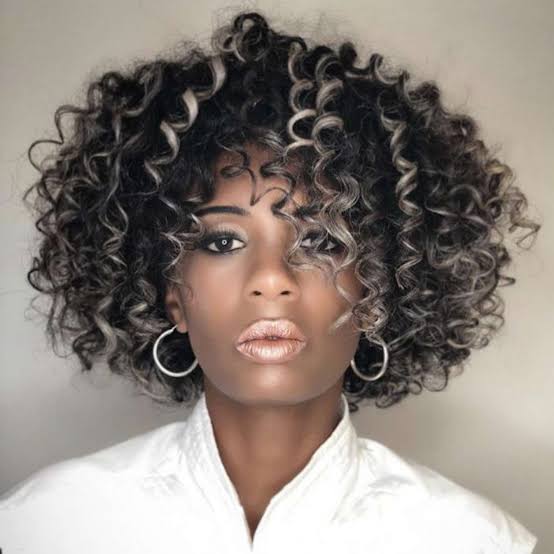
Wondering how to make gray highlights look deliberate? This collarbone cut pairs a dark base with prominent gray streaks that stand out, and the curtain bangs soften the contrast around the face. It suits thick, wavy hair that already reaches the collarbone, since the layers need weight to hold their shape. Ask your colorist for: collarbone layers with curtain bangs, dark base with prominent gray highlights. To get the volume, use a round brush during blow drying and finish with a texturizing spray on the waves.
Mid-Back Layers With Dimensional Gray
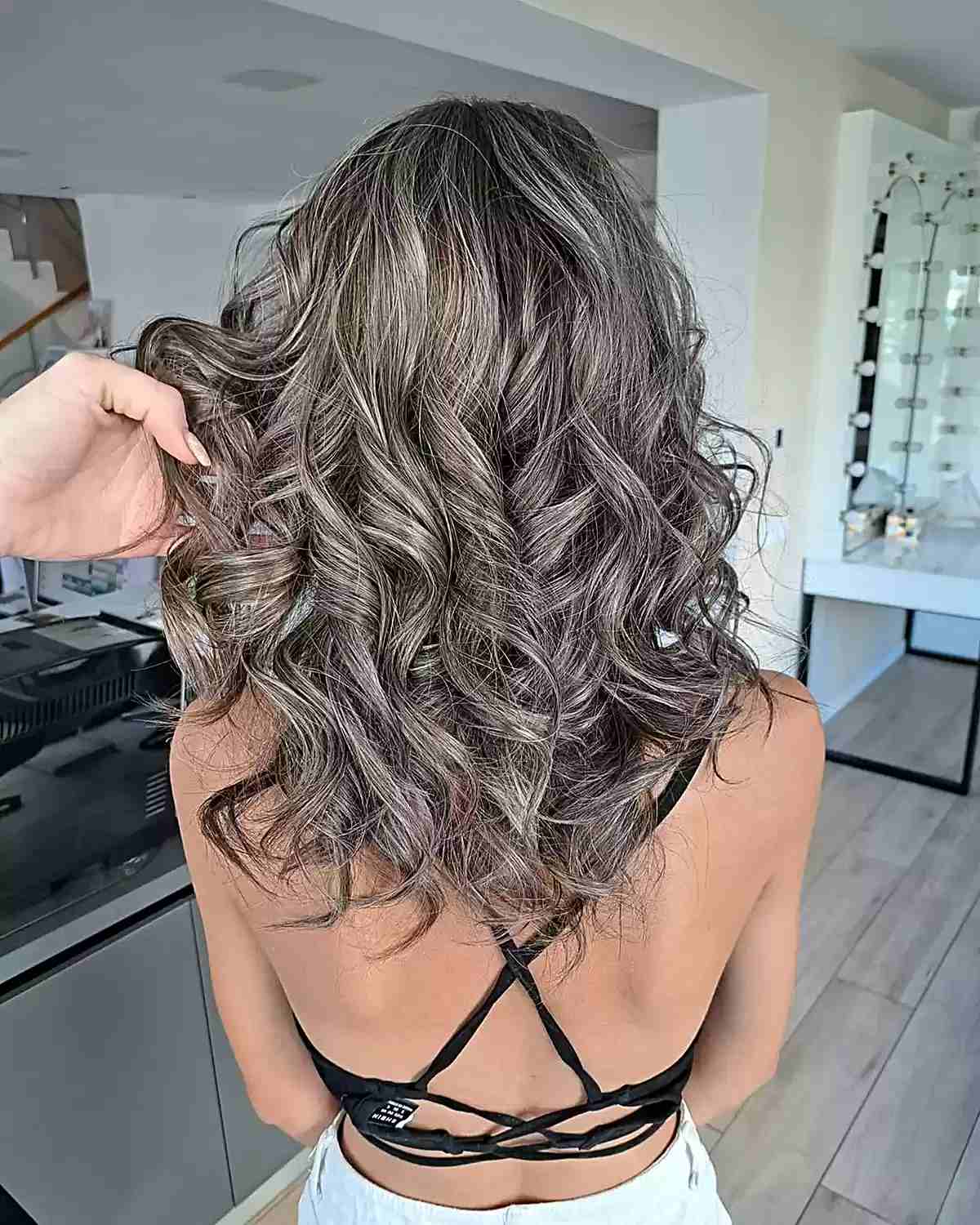
The trick to this gray on gray color is that it doesn’t flatten into a single shade. Lighter gray highlights are woven through a gray base in loose curls, so the mid-back length picks up light and shifts as you move. That dimensional effect is why it works so well on thick, wavy hair: the layers give dense strands somewhere to go.
Ask your colorist for: mid-back layered cut, gray base with lighter gray highlights. For styling, wrap sections around a large barrel iron for loose waves and refresh the curl pattern with a light styling cream. To keep the tones cool and the dimension sharp, plan a toning appointment every four to six weeks.
Long Layers With Bold Silver and White
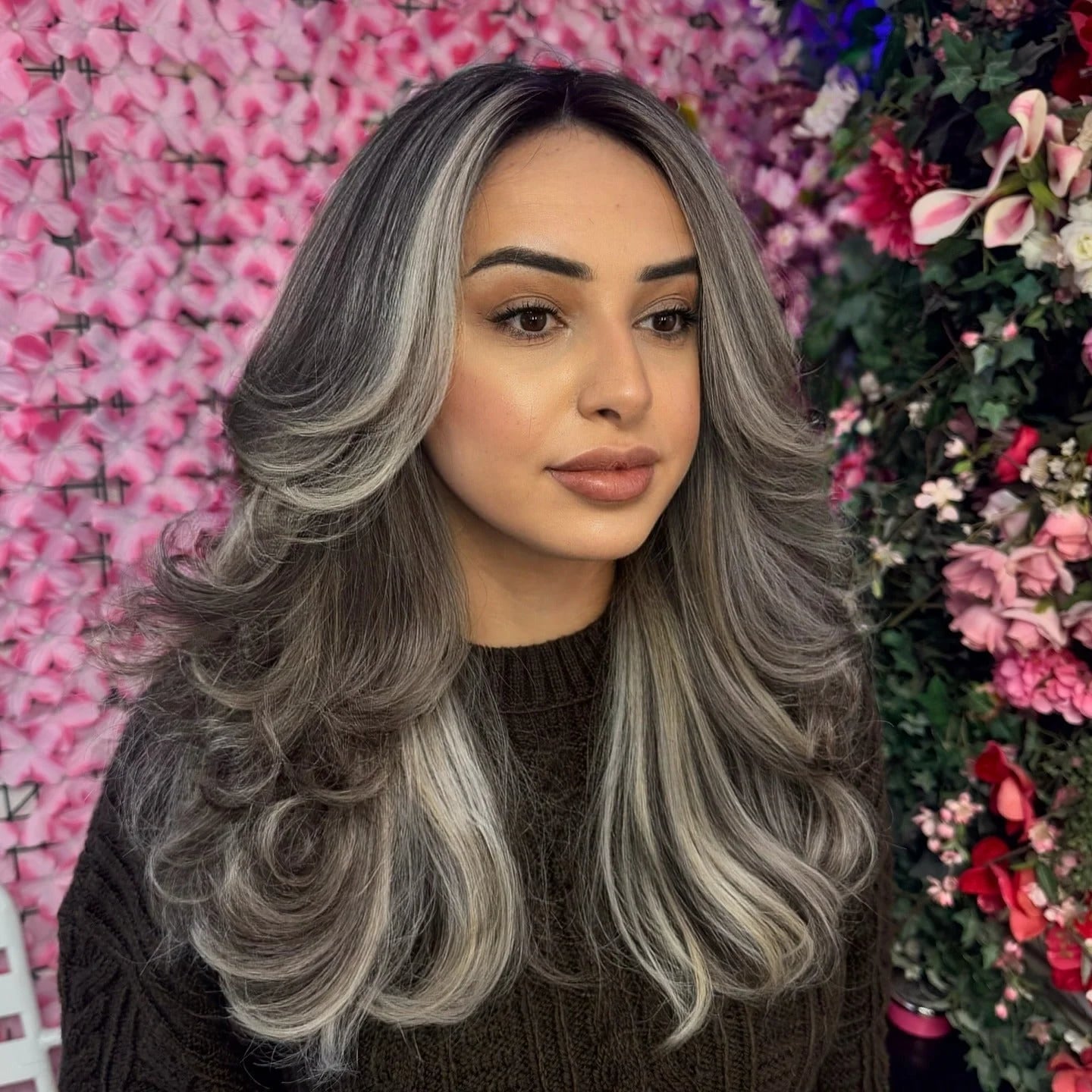
If you’re torn between silver and white highlights, this look skips the subtlety and goes for both, set against a dark ash base. The long layers keep the mid-back length moving, and the wavy blowout pushes the contrast forward so the bright pieces read as the point. It suits thick, wavy hair, where the long layers hold shape without sacrificing length.
Ask your colorist for: long layers, dark ash base with silver and white highlights. The honest drawback is upkeep: blending those bold highlights takes a salon-leaning hand, and the silver and white tones will need a toner every four to six weeks to stay icy rather than brassy.
Mid-Back Layers With Gray and Blonde, Face-Framing
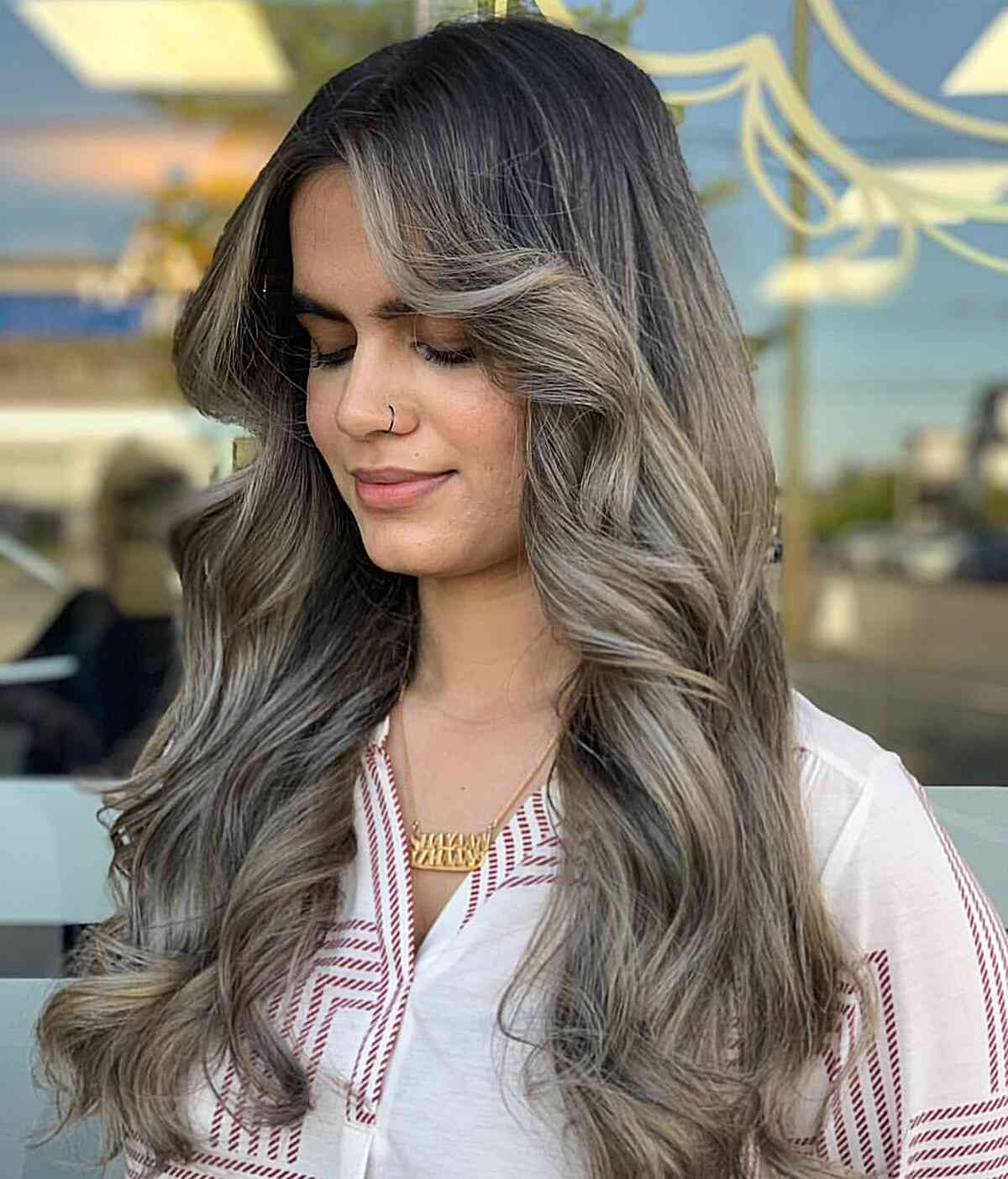
Face-framing layers pull gray and blonde highlights forward around the face while the dark base keeps the mid-back length grounded. The loose, glossy waves give the blend a polished finish that works for most face shapes, since the layers can be cut to soften angles or add width where needed. It suits thick, wavy hair that can carry the layers.
Ask your colorist for: mid-back layers, dark base with gray and blonde highlights. On thick hair, a smoothing serum on damp strands keeps the waves glossy, and trimming the layers every eight to ten weeks stops the shape from becoming a triangle.
Collarbone Layers With Blended Gray, Wavy
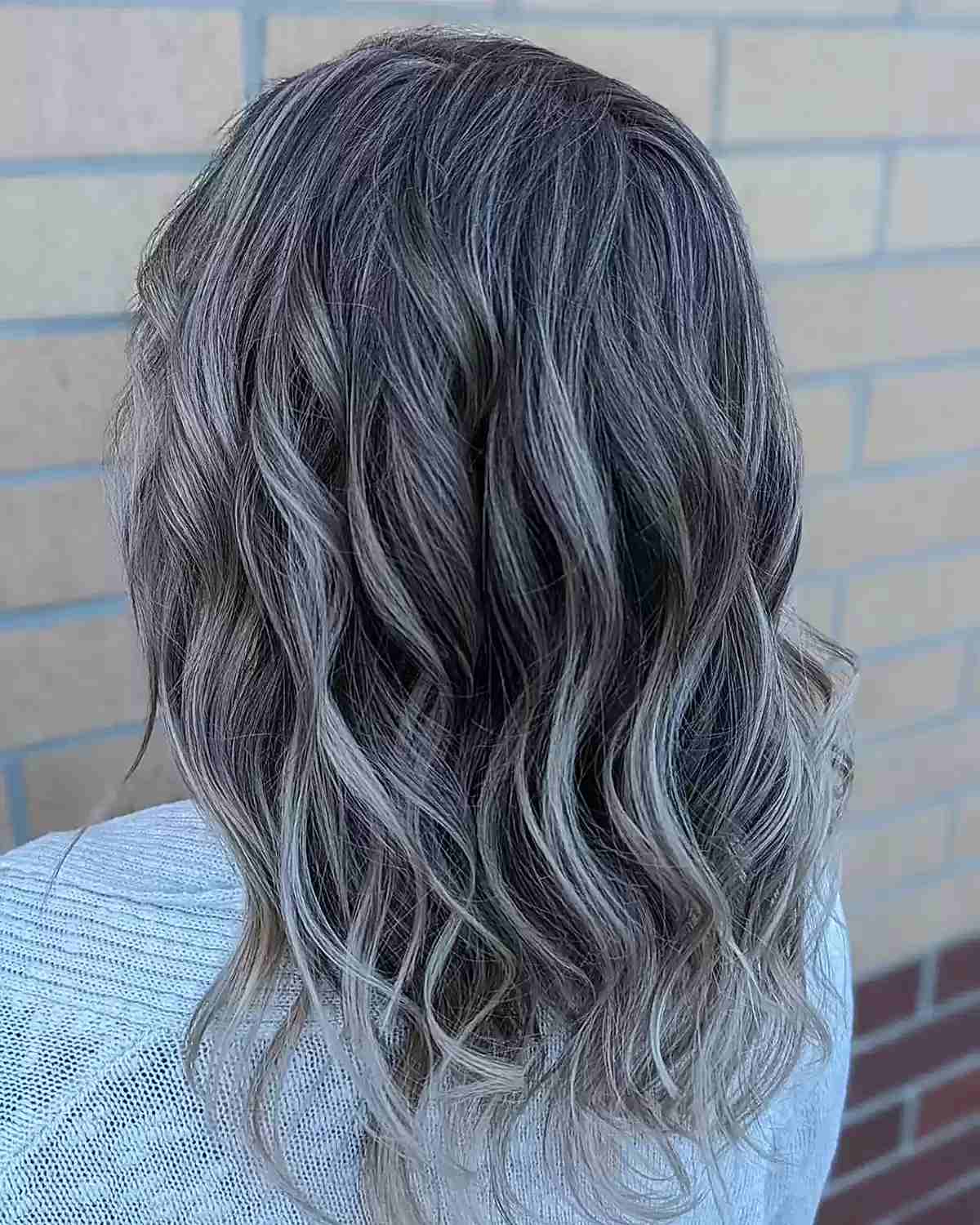
Blended gray highlights on a collarbone cut are the low-key version of the trend: the lighter gray pieces melt into the gray base so the dimension reads as texture rather than streaks. It suits wavy hair of medium density, where the layers add movement without overwhelming the cut. Ask your colorist for: collarbone layers, gray base with blended lighter gray highlights. A medium round brush gives the blowout a smooth finish, and the baseline needs a trim every six to eight weeks to keep the collarbone length from losing its shape.
Mid-Back With Face-Framing Gray Highlights, Close-Up Take
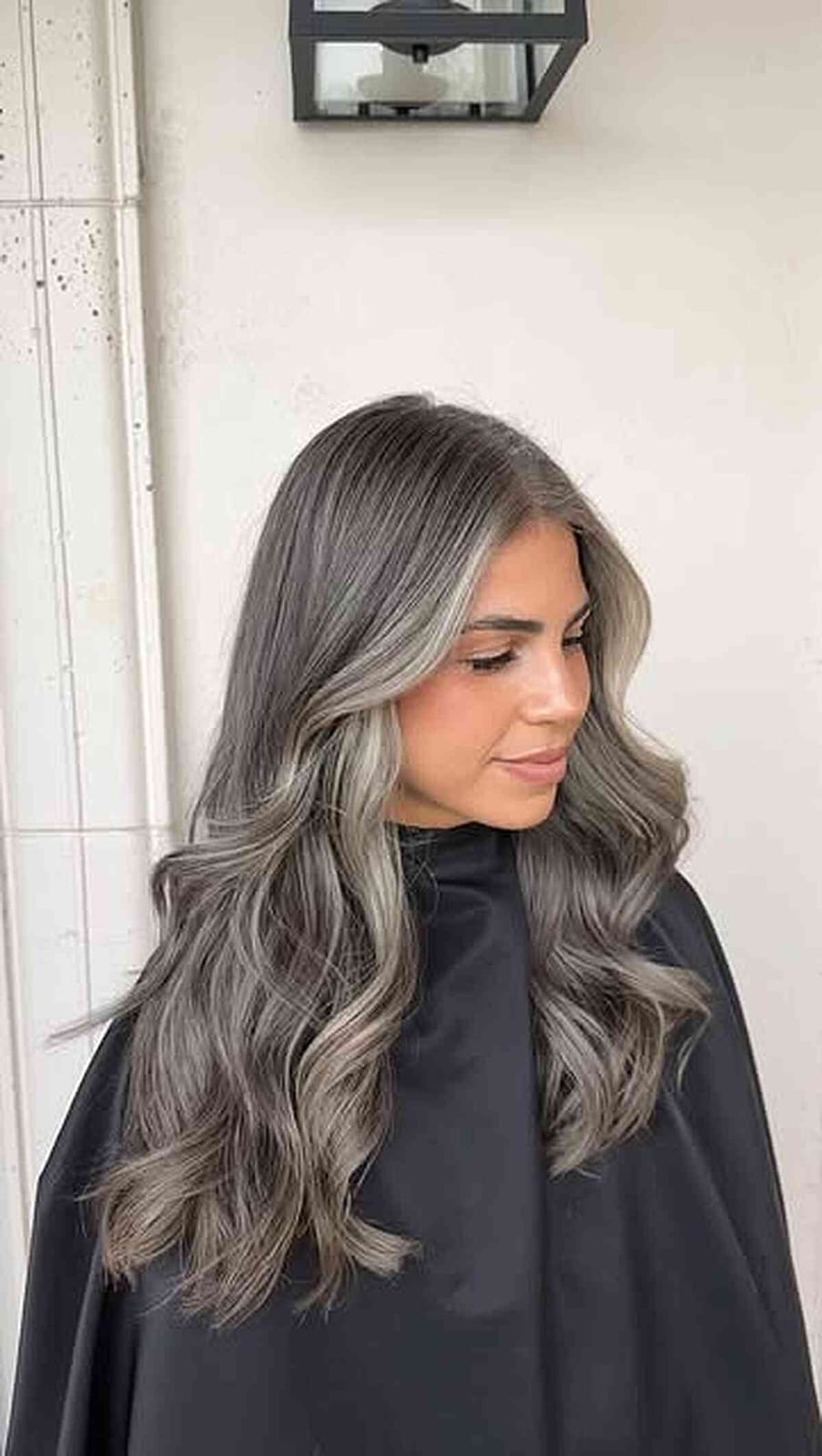
Gray highlights can brighten your face when the placement is right. This mid-back style shows how: the gray base gets lighter gray highlights woven through the layers and around the front, so the dimension lands where you look. Thick, wavy hair carries the blowout well, and the curtain bangs open up the front without committing you to a fringe that needs daily attention.
Ask your colorist for: mid-back layers with curtain bangs, gray base with face-framing highlights. To make the effect look deliberate, ask them to keep the lightest pieces within an inch or two of your cheekbones. A round brush blowout with the bangs directed forward keeps the shape soft, and a texturizing spray at the mid-lengths stops the waves from going flat.
Collarbone Lob With Gray and Silver Blend
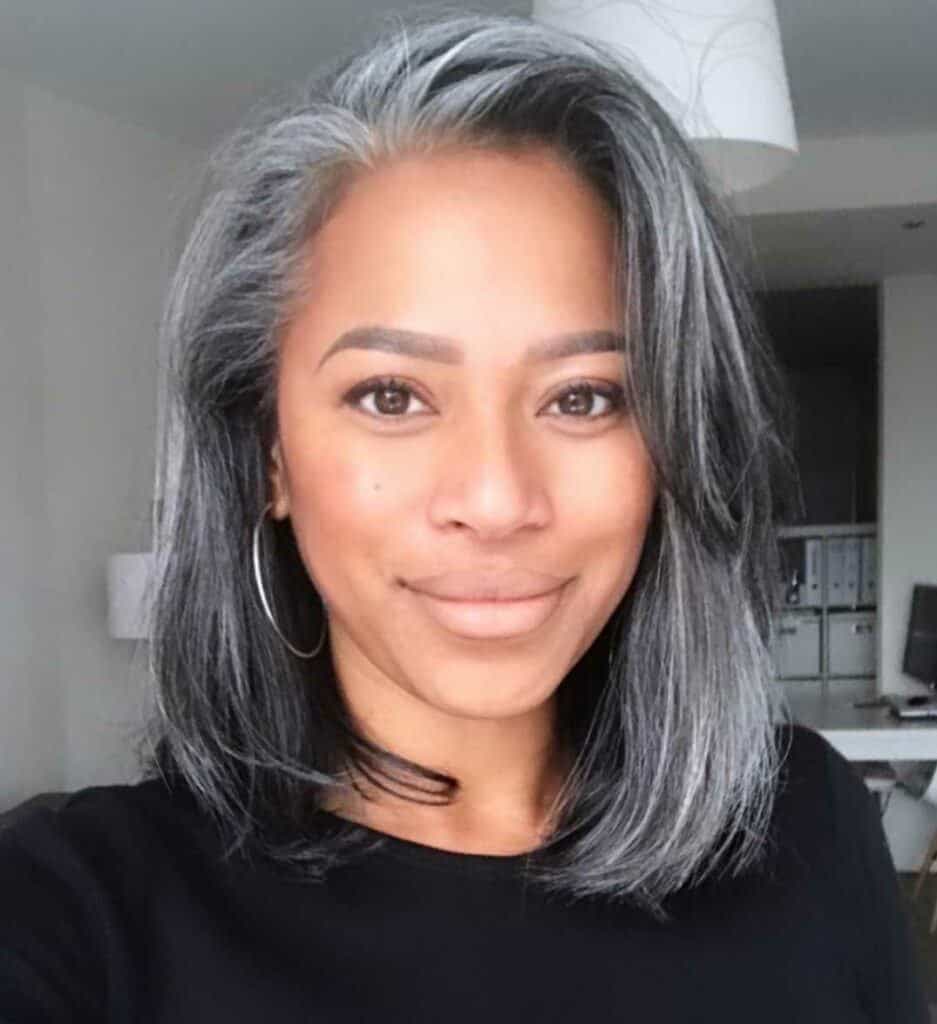
The collarbone lob works because the gray and silver highlights are blended into a darker base, not painted on as separate streaks. That contrast gives the wavy, thick texture a metallic depth that a single flat shade can’t manage, and the middle part lets the color fall evenly on both sides. The technique is a mix of balayage and fine foils, so the silver appears as a sheen instead of a stripe.
Ask your colorist for: collarbone lob, dark base with gray and silver highlights. The lob itself suits most face shapes since the length sits at a neutral point, and the soft blowout keeps the ends moving. A volumizing spray at the roots lifts the crown, and a trim every six to eight weeks keeps the line clean.
Collarbone Layers With Ash Blonde and Gray
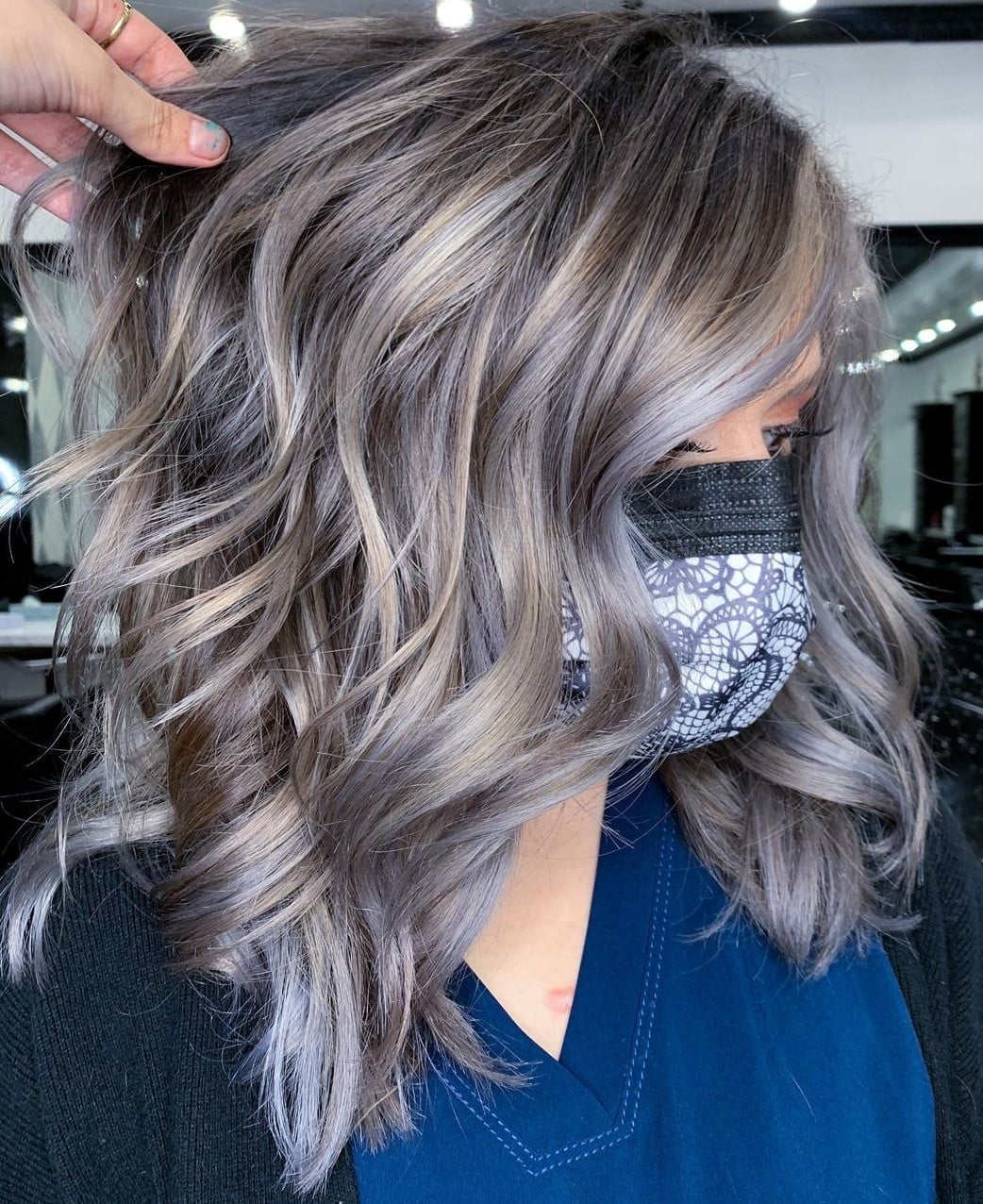
This collarbone cut with layers is a practical choice for medium-density wavy hair, because the layering removes bulk without sacrificing length. The gray base with ash blonde highlights woven through adds cool dimension, and the loose waves give the color room to shift as the hair moves. The side view shows how the highlights sit throughout, not just on top.
Ask your colorist for: collarbone layers, gray base with ash blonde highlights. The ash blonde needs a cool toner to keep it from warming up, so expect a toning appointment every four to six weeks. A smoothing serum on the ends keeps the waves defined, and the baseline trim lands every six to eight weeks.
Mid-Back Air-Dried Waves With Natural Gray
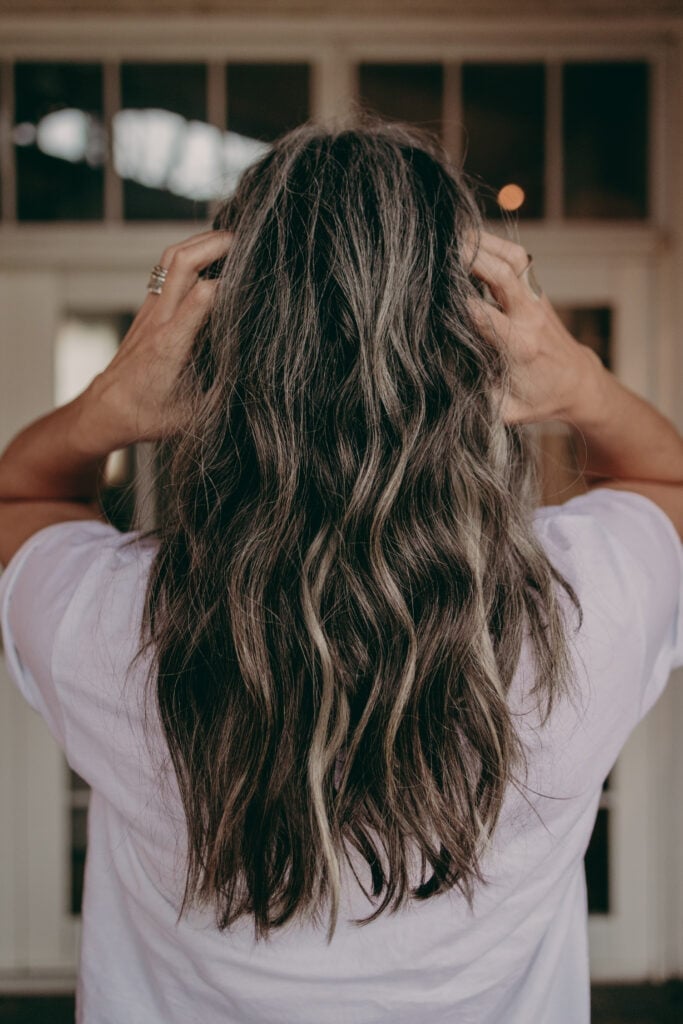
Can you get gray highlights without a blowout and a round brush? This mid-back style says yes, and it is the lowest-maintenance version of the trend. The natural gray with blonde highlights blends into a soft, lived-in effect on thick, wavy hair, and the air-dried finish keeps the texture honest. Heat is not required, which helps on a busy morning.
Ask your colorist for: mid-back layers, natural gray with blonde highlights, air-dried finish. At home, apply a leave-in conditioner to damp hair, then scrunch and let it dry. The salon work is the color, but the styling is DIY: about ten minutes of product and zero tools. The layers do the shaping while the waves do the rest.
Chin Bob With Ash Blonde and Gray
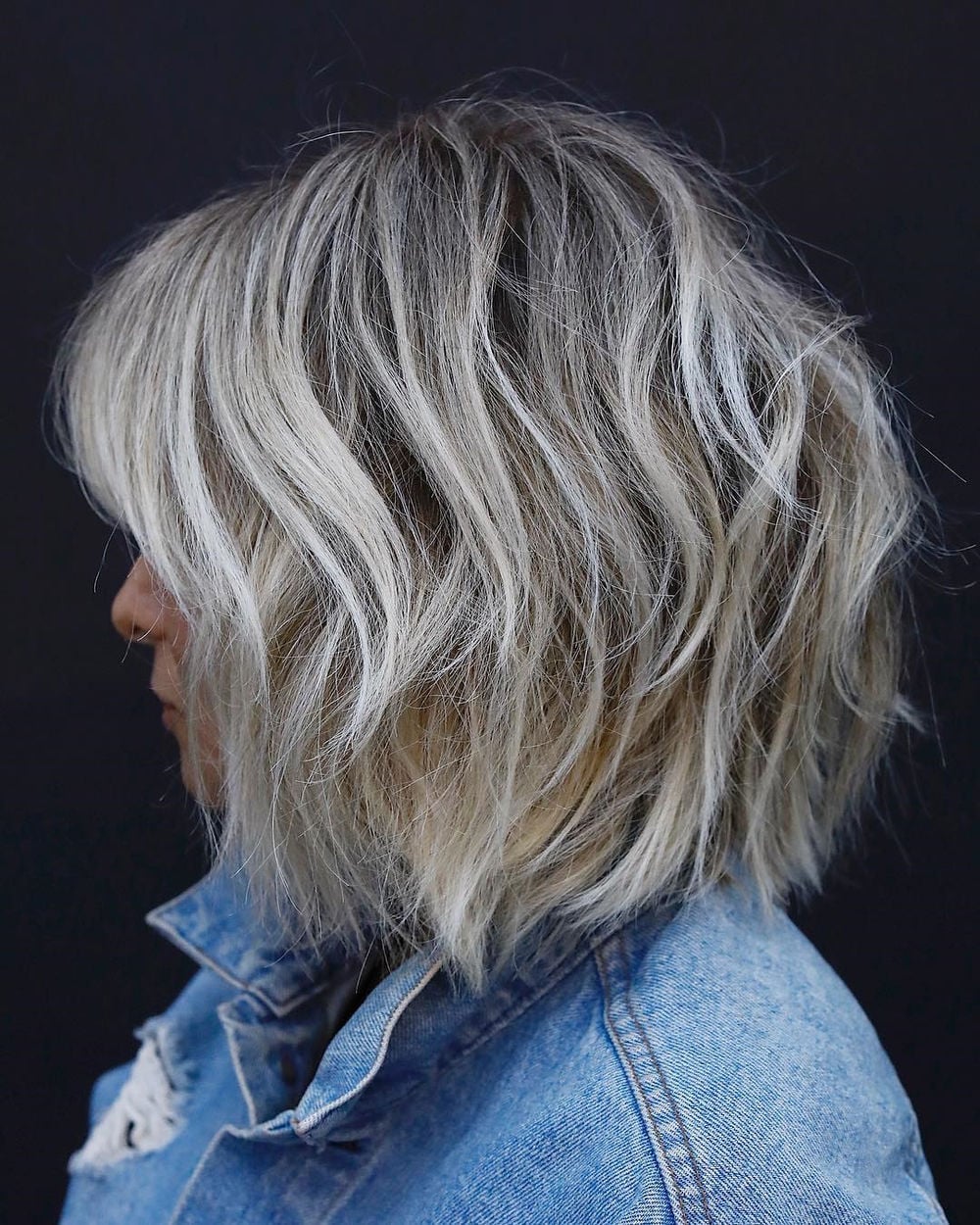
A chin bob with ash blonde and gray highlights is a sharp look, but it’s not the easiest to live with. The fine, wavy texture means the subtle gray highlights can get lost if they’re too sparse, and the ash blonde base needs regular toning to avoid a yellow cast. The curtain bangs soften the front, which helps if your face is round or heart-shaped, but the short length means every grow-out is visible.
Ask your colorist for: chin length bob, curtain bangs, ash blonde base with subtle gray highlights. The trade-off is upkeep: a toning appointment every three to four weeks and a trim every six weeks to keep the bob’s line sharp. A small round brush gives the wavy ends their bend, and a texturizing paste adds grip without weighing the fine hair down.
Shoulder Length Natural Gray
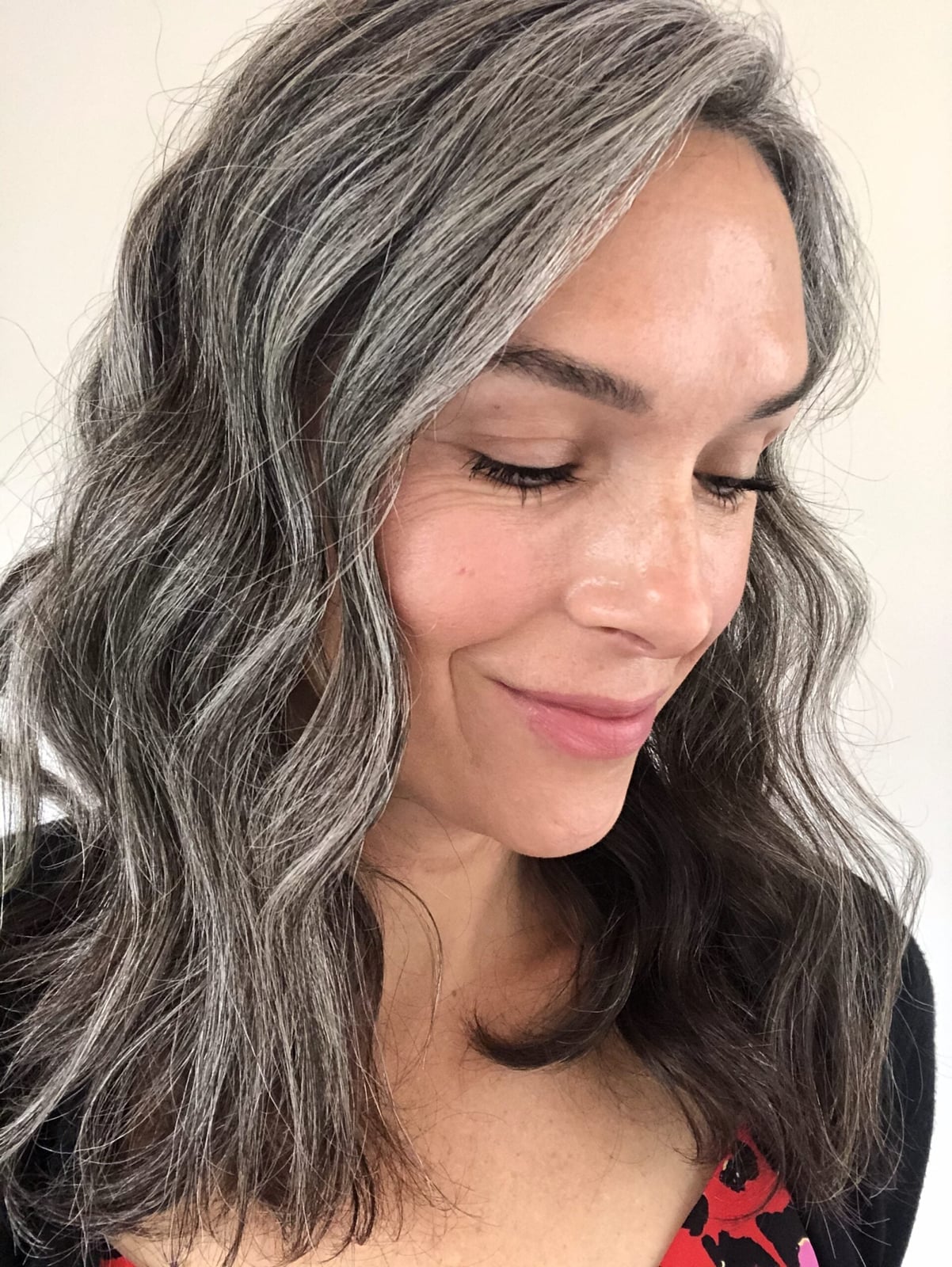
Natural gray with lighter streaks gives this shoulder length cut a layered look. This style works best on medium density wavy hair, where the texture allows the streaks to show. Ask your colorist for: shoulder length, natural gray with lighter gray streaks. Air drying with a wide tooth comb prevents disrupting the pattern. A trim every eight weeks keeps the shape clean without fighting the color.
Mid-Back With Dark Brown and Ash Blonde
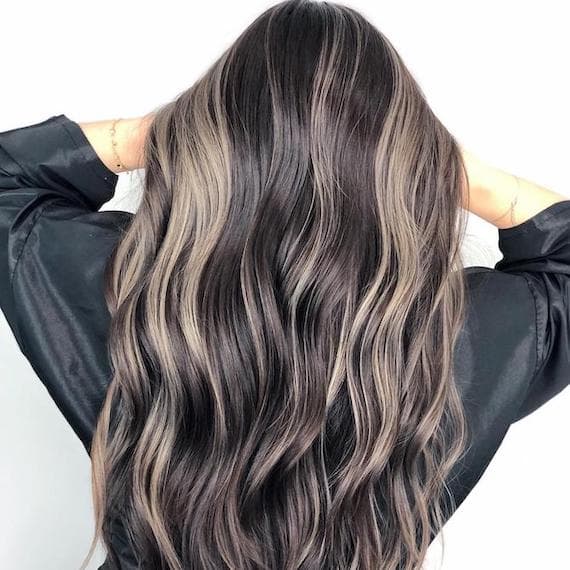
A dark brown base with ash blonde highlights relies on the contrast between the two tones to create depth. The colorist weaves the ash blonde through the mid-lengths and ends, leaving the root area darker so the grow-out line stays soft. This combination suits thick, wavy hair of mid-back length, where the density carries the lighter pieces without them looking sparse. Ask your colorist for: mid-back layers, dark brown base with ash blonde highlights.
A large barrel curling iron builds the loose waves; a shine spray keeps the ash tone from reading as flat. The technique requires a full day in the salon to lift dark brown to ash blonde without brassiness.
Shoulder Length With Gray and Silver Blend
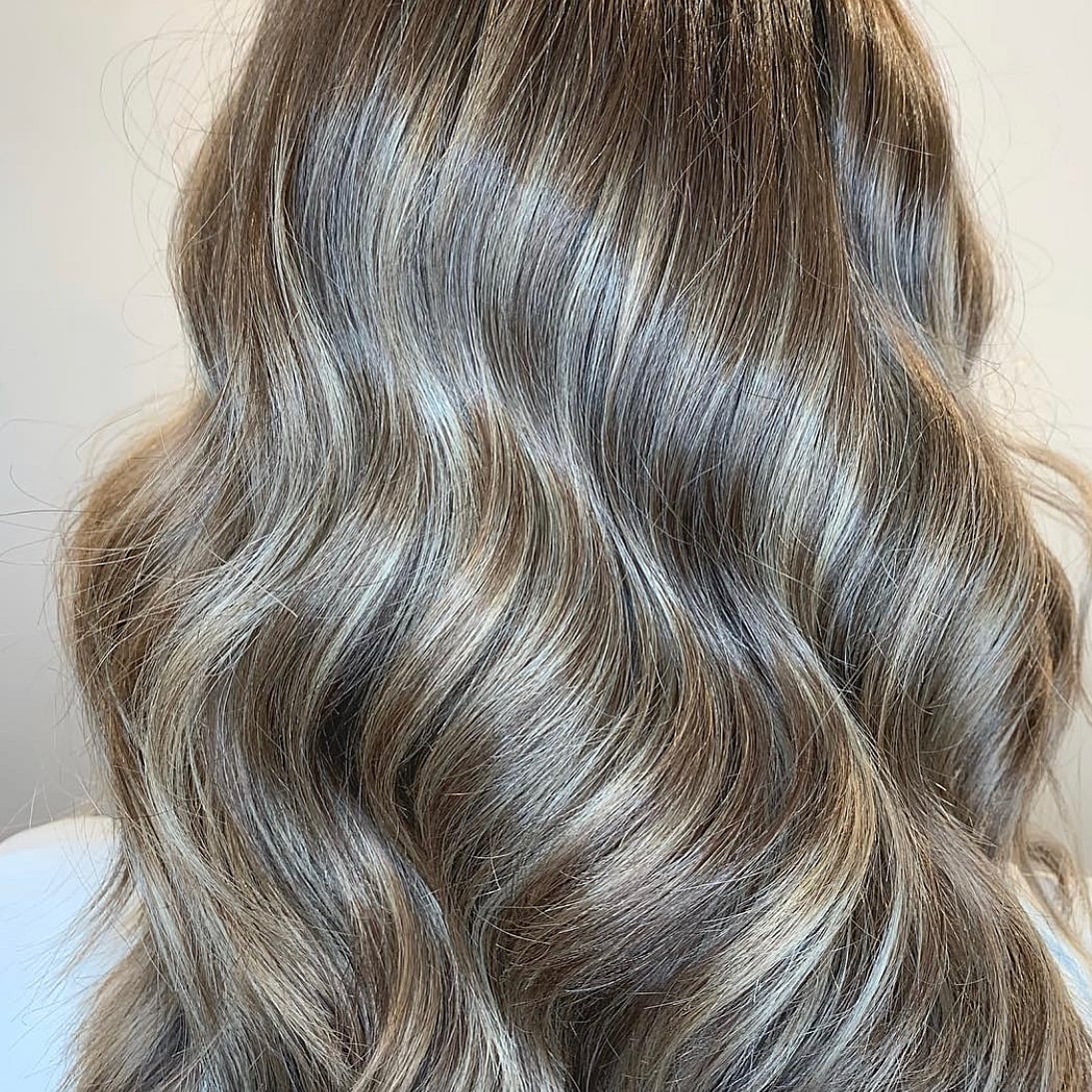
What creates that blended effect where gray and silver merge into one seamless color? The colorist applies the silver as a fine weave through the mid-lengths and ends, then tones the whole thing with a cool gloss that knits the two shades together. This works on thick, wavy hair of shoulder length, where the density keeps the blend from looking too busy. Ask your colorist for: shoulder length layers, natural blend of gray and silver highlights. A round brush and a medium heat setting create the smooth blowout; a silk serum adds shine without weighing down the silver.
Mid-Back Smoky Ash Gray With Waves
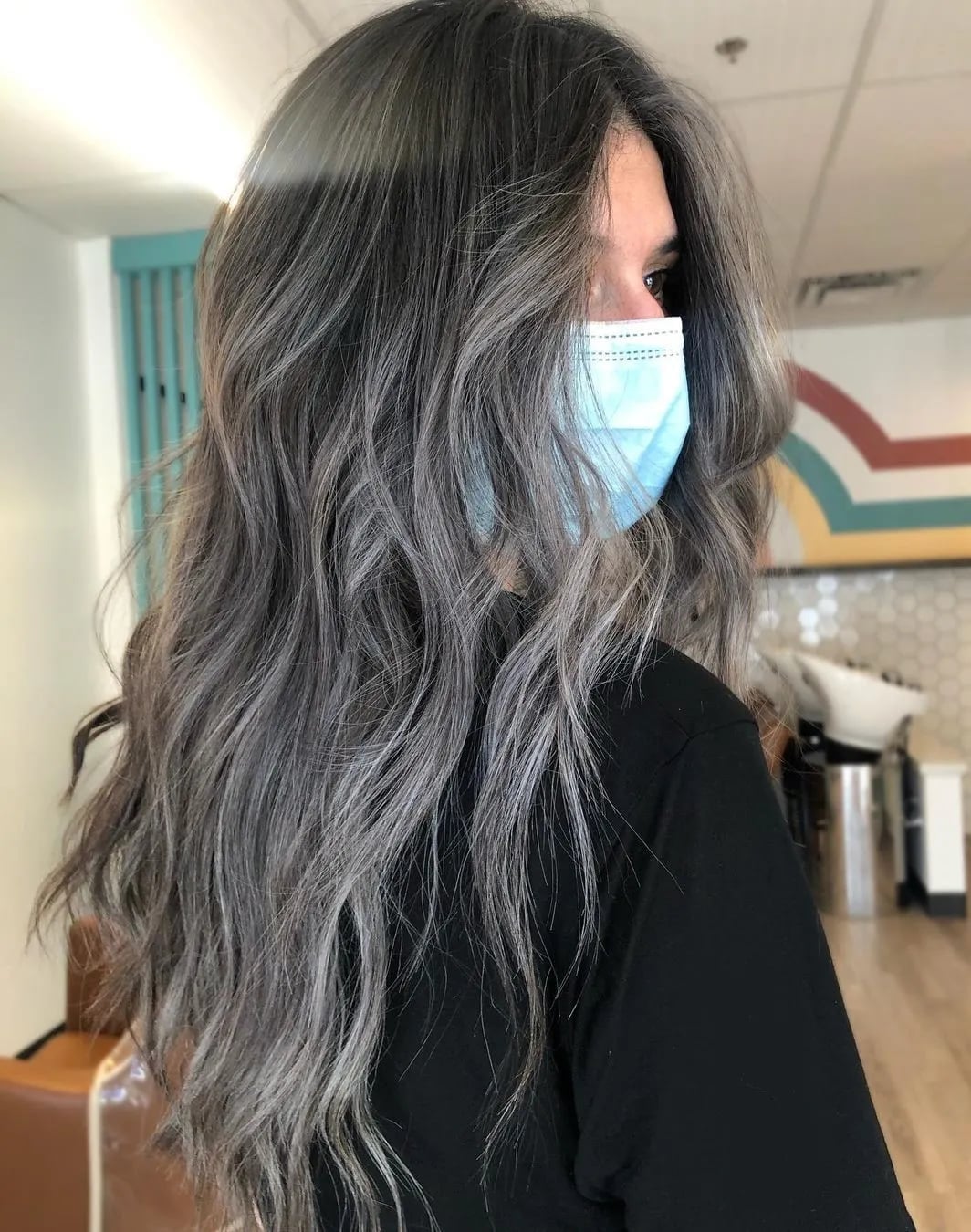
Smoky ash gray is a commitment. The base color has to be lifted evenly to a pale canvas before the gray tone is deposited, and any residual warmth will look muddy and cool. This mid-back length with long layers works best on wavy hair of medium density, where the texture diffuses the color so small uneven patches are less noticeable. Ask your colorist for: mid-back layers, smoky ash gray base with lighter gray highlights. A wave cream and air drying preserve the tone because heat styling can shift ash colors warmer. The real drawback is the grow-out: dark roots against a smoky gray base show fast, so plan for a root touch-up every four to five weeks.
Collarbone Ash Blonde With Cool Gray, Wavy
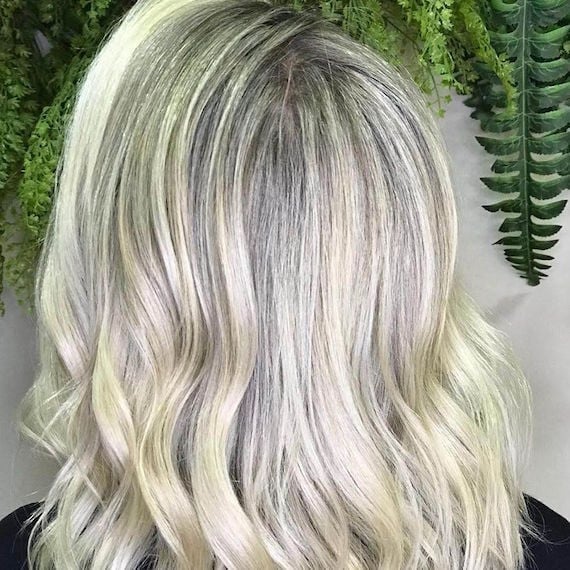
Collarbone length with a wavy blowout and a middle parting gives the color room to read clearly. The ash blonde base keeps the overall tone cool, while the gray highlights add dimension without the yellow or gold that can creep into warmer blonde blends. This combination suits medium-density wavy hair, where the layers prevent the highlights from clumping together. Ask your colorist for: collarbone layers, ash blonde base with cool-toned gray highlights. A round brush for volume at the roots and a trim every six to eight weeks keep the shape from feeling heavy.
Mid-Back With Natural Gray Blend
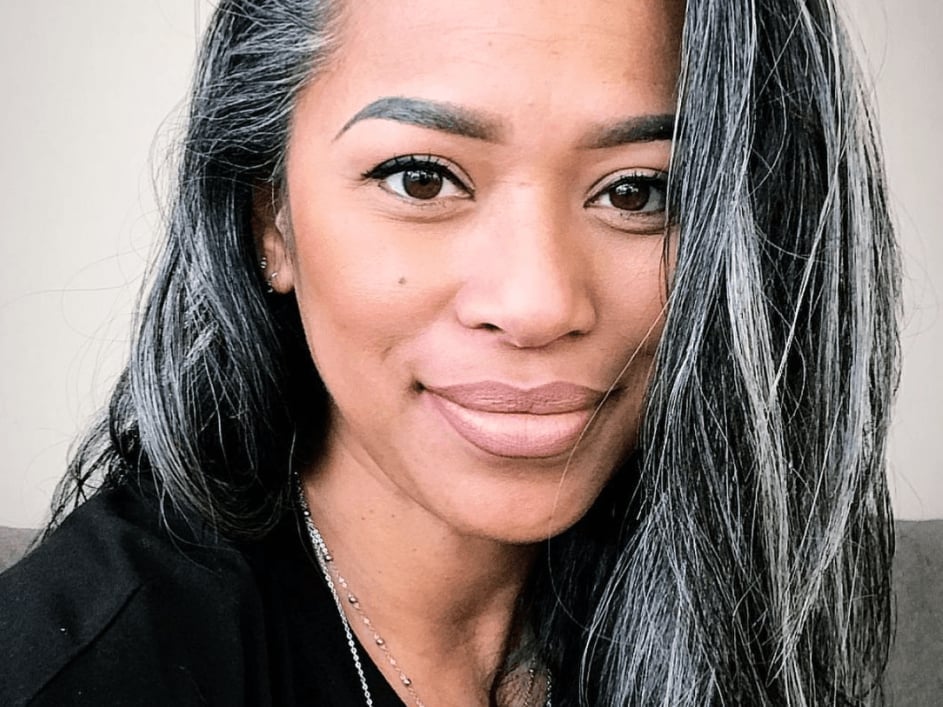
A natural gray blend on mid-back length hair is a low-commitment way to test the trend: gray and dark gray highlights weave through thick, wavy strands with a side parting and an air-dried finish. The transition between your base and the lighter pieces stays soft, so regrowth reads as texture, not neglect. This suits wavy hair that already has some body, since the blend depends on movement to show its depth. Ask your colorist for: mid-back layers, natural blend of gray and dark gray highlights.
Upkeep is gentler than you’d expect. A smoothing cream and air drying keeps the wave pattern defined, and a texture spray adds grip where the highlights need to catch light. Because the gray tones are close to your natural shade, you can stretch toning appointments to every eight to ten weeks. A trim every ten to twelve weeks keeps the mid-back length from tangling at the ends.
Mid-Back Dark Base With Subtle Gray
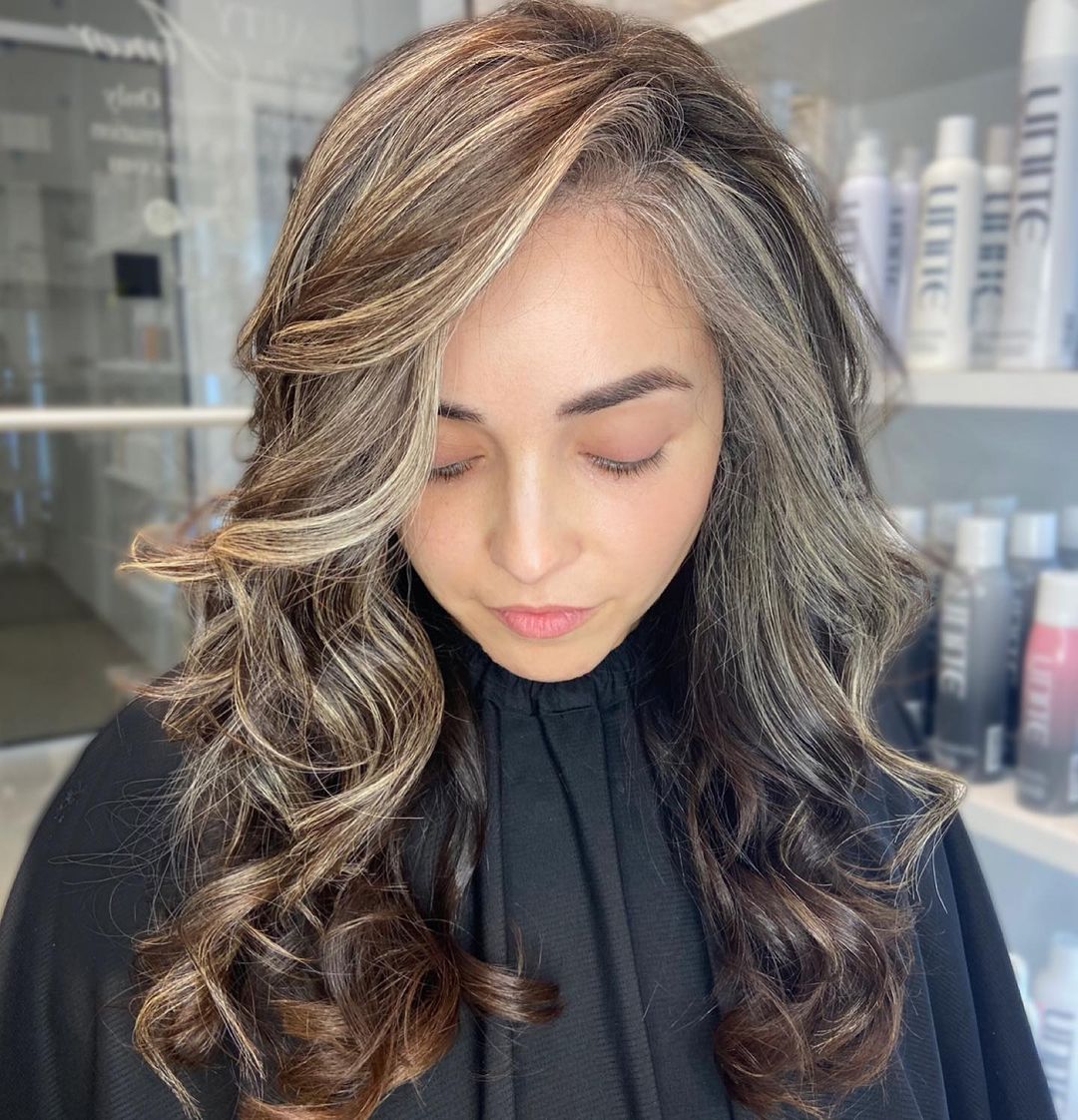
The technique here is restraint. On a mid-back length with layers, the dark base stays dominant while gray highlights appear as fine, spaced strands rather than bold streaks. The middle parting and loose waves let those lighter pieces peek through at different angles, so the color shifts as you move. It’s a good pick for thick, wavy hair that wants dimension without a full commitment to silver. Ask your colorist for: mid-back layers, dark base with subtle gray highlights.
Building this look takes precision: your colorist places each highlight close to the root but keeps the spacing irregular to mimic natural graying. The payoff is a grow-out that blends into the dark base, so you can wait four to six months between full color appointments. Between visits, a large barrel iron creates the loose waves that make the gray strands visible, and a shine serum on the ends keeps the dark base from looking flat.
Mid-Back Face-Framing Gray and Silver With Wavy And Thick
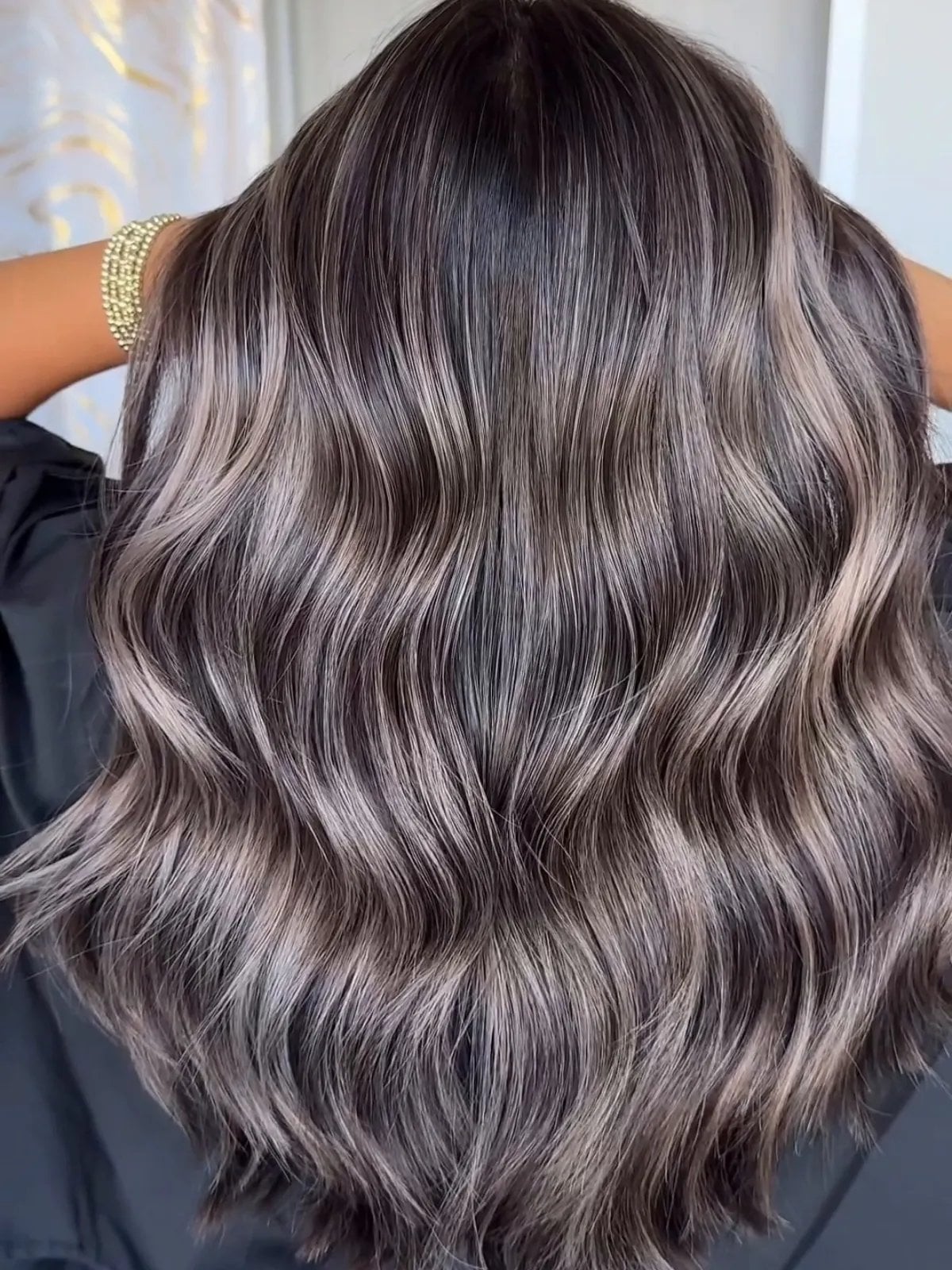
Thick, wavy mid-back hair carries the weight of this look best, since the loose waves and middle parting let the silver pieces catch light from both sides. Ask your colorist for: mid-back layers with face-framing, dark base with gray and silver highlights. It works for a workday when you want polish, and it holds up for an evening event without a restyle. A texturizing spray enhances the waves, while a heat protectant keeps the silver strands from dulling under hot tools.
Collarbone Lob With Blonde and Gray
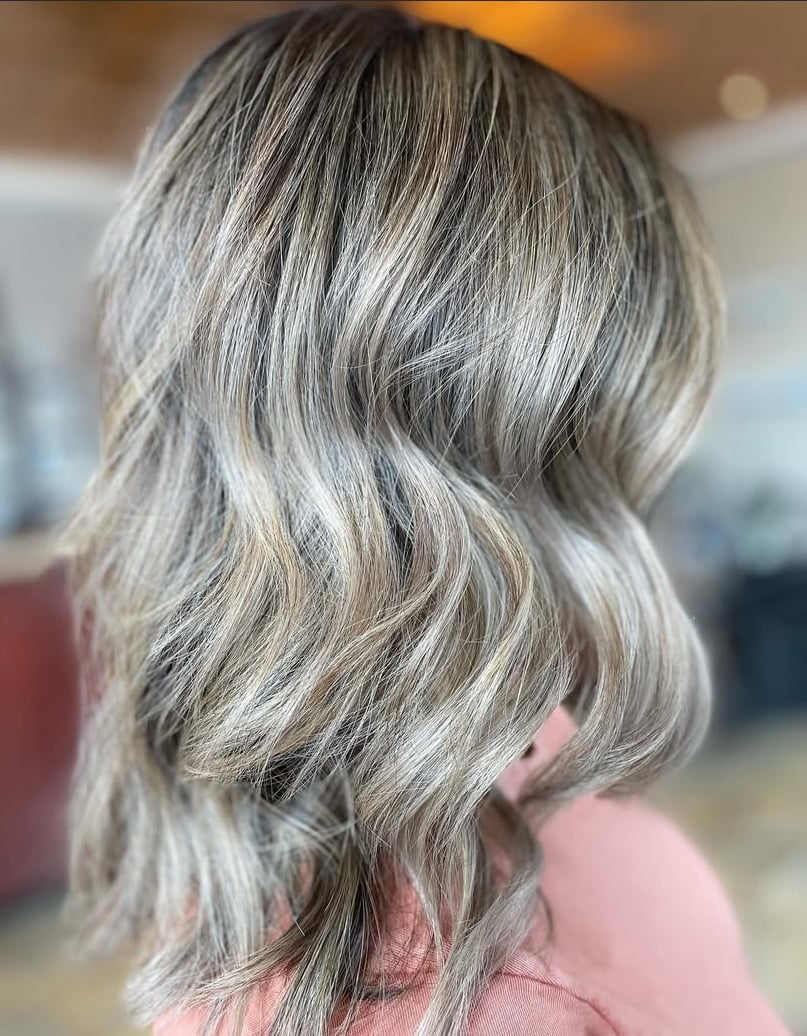
Wondering whether to DIY gray highlights on a blonde base? The lob’s collarbone length and side-parted loose waves make the technique forgiving, but the color is not. Gray on blonde requires lifting the base to a pale enough level, which is easy to overdo at home and end up with brassy patches. A salon can place prominent gray highlights so they integrate with the blonde rather than sit on top of it. Ask your colorist for: collarbone lob, blonde base with prominent gray highlights. If you do go home, use a purple shampoo once a week to keep the gray cool, and expect to touch up the roots every six to eight weeks; the lob needs a trim on the same schedule to hold its shape.
Final Thoughts
If you want gray highlights with minimal upkeep, choose a blended effect on a natural gray or ash base rather than stark contrasts on dark hair. That way, the regrowth softens instead of announcing itself.
- Maintain cool tones with purple shampoo weekly, toning every 6-8 weeks.
- Trim layered cuts every 8-10 weeks to preserve shape.
- Use heat protectant spray before blowouts and wave styling.
- Allow hair to air dry occasionally to reduce heat damage.
Gray highlights offer a versatile way to update your look with modern dimension.