A middle part bob is a blunt or layered cut that falls somewhere between the jaw and the collarbone, split cleanly down the center. The current version leans into soft face-framing layers and lived-in color, with curtain bangs replacing the heavy side fringe of a few years back.
These 19 middle part bob styles run from chin-length and sleek to collarbone and wavy, with enough range for fine hair that falls flat and thick hair that needs weight removed. Middle Part Bob Styles here cover blunt ends, curtain bangs and air-dried texture, so there is a starting point for a round or square face and a low-maintenance routine.
The 19 looksOpen list +
Chin Length Bob With Soft Natural Waves
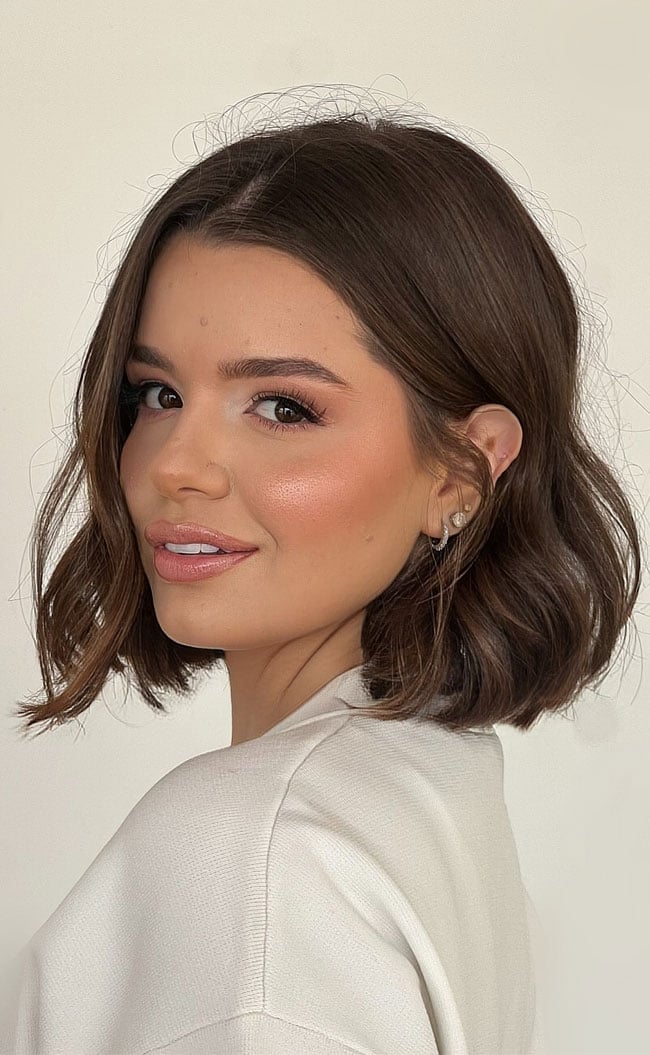
A middle part and a chin-length cut make a clean frame, and the soft waves do the loosening. Medium texture holds a bend without much help. On square or round face shapes, those subtle waves around the jaw soften the angles. Fine hair tends to lose its bend by mid-afternoon, and very coily hair needs a longer starting length to show the wave pattern. Ask your stylist for: chin length bob, soft natural waves. Air dry or use a diffuser on low heat, and book a trim every six to eight weeks.
Sleek Chin Length Bob With Blunt Ends
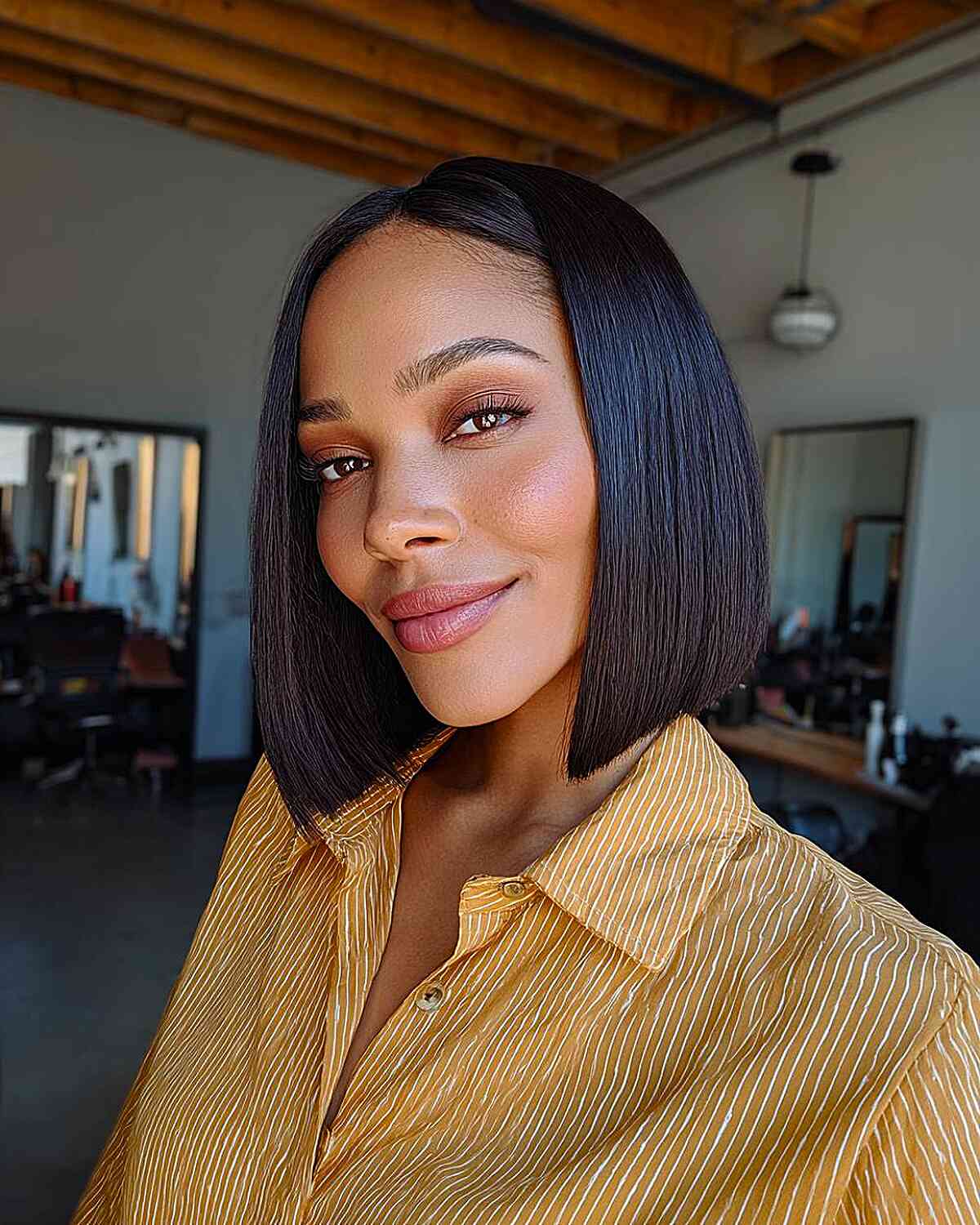
- One length all around, no hidden layers
- Ends cut level, not point-cut
- A middle part that sits centered on the crown
Fine hair starting at the chin suits this best; the sharp lines flatter oval and long face shapes. A flat iron for the finish, and a trim every six weeks to keep the edges crisp.
Vibrant Copper Chin Length Bob
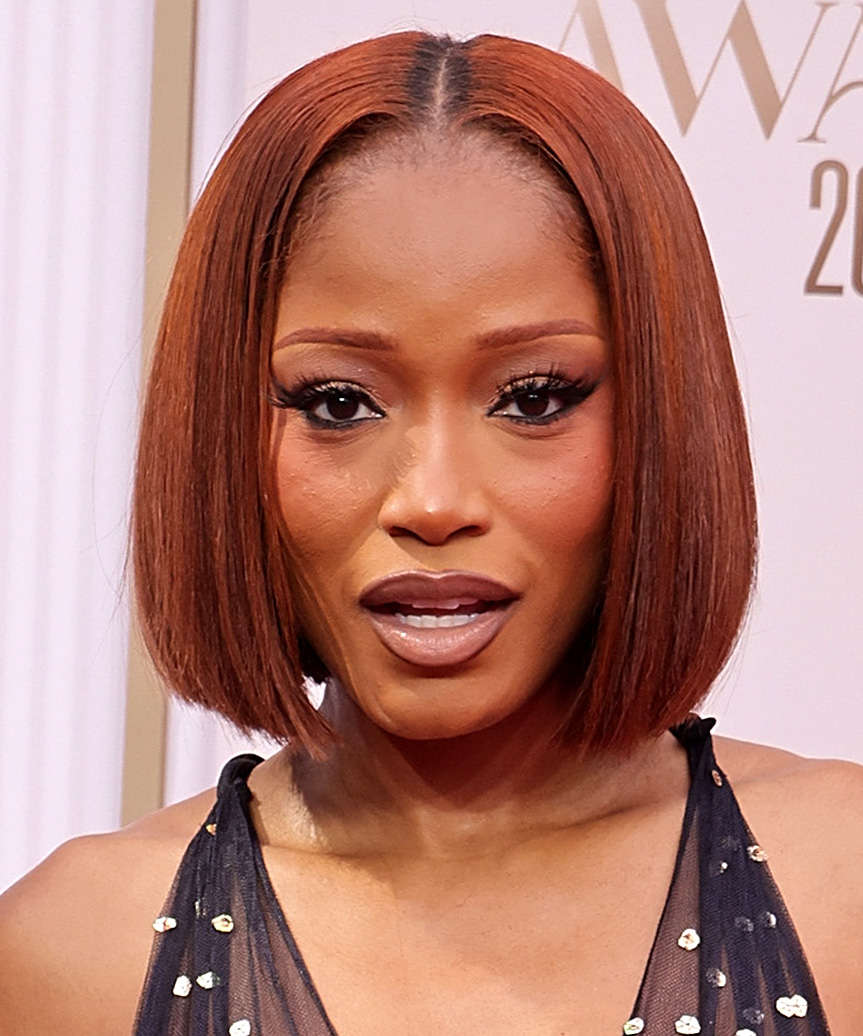
Copper is the louder cousin of a soft auburn, and on a chin-length bob it does the talking. Fine, straight hair carries the shade cleanly because there is less bulk to break up the color. This is a fall and winter move, when the light goes gray and a warm tone earns its keep. Ask your colorist for: vibrant copper, chin length bob, middle part. The blowout finish keeps the lines smooth, so plan on a root touch-up every six to eight weeks and a trim on the same schedule.
Sleek Dark Brown Blunt Bob
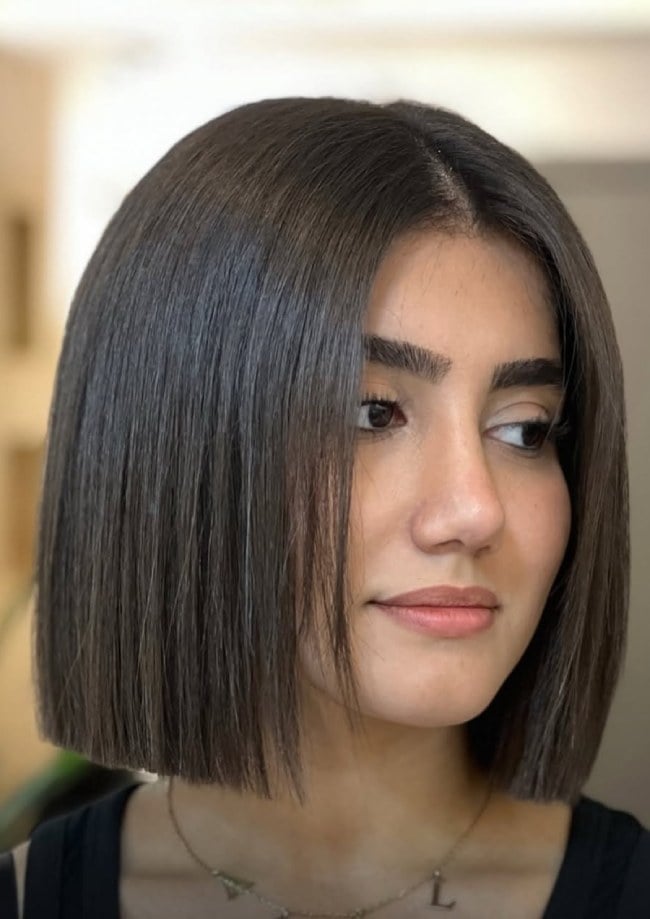
A blunt line around the jaw leaves nowhere to hide, so the cut has to be exact. On fine, straight hair, a sleek dark brown bob with a middle part wears best when the blowout is smooth from root to end. Day to day, that means a round brush and a smoothing serum, and a flat iron on the ends if the humidity is up. Fine hair can go limp at the crown by afternoon, so a little volume at the root helps hold the shape. Ask your stylist for: chin length sleek blunt bob, middle part. The upkeep is real: a trim every six weeks keeps the line sharp, and a gloss every four to six weeks keeps the brown from going dull.
Jet Black Chin Length Blunt Bob
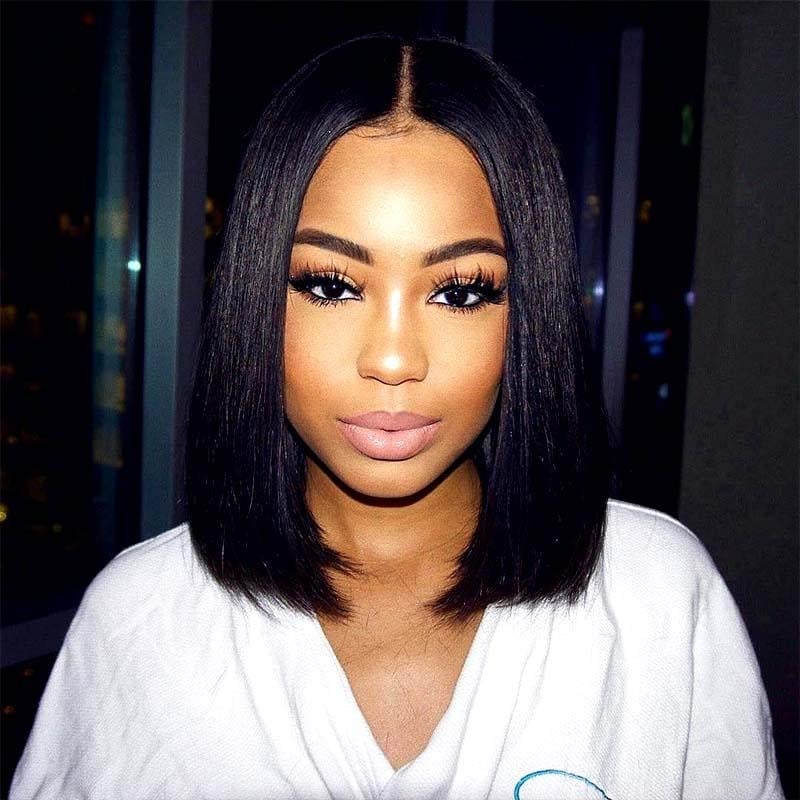
A jet black blunt bob lives or dies on the edge of the cut, and that edge is where home attempts go wrong. Fine hair shows every wobble in a blunt line, and kitchen scissors cannot hold the level. Book the salon for the initial cut and the reshaping trims, because a sharp blunt cut on fine hair needs a steady hand and a clear line around the jaw. Ask your stylist for: chin length blunt bob, jet black, middle part. A shine spray finishes the straight blowout, and a trim every six to eight weeks keeps the precision.
Ash Blonde Bob With Soft Waves

A chin-length bob with a middle part and no bangs, styled in soft waves, gives fine wavy hair the volume it lacks at the root. Ask your stylist for: chin length ash blonde bob, soft waves, middle part. The waves need a trim every six to eight weeks to hold their shape. Angular faces get a softer line from the movement; round faces get length below the chin.
Chin Length Bob With Curtain Bangs

Curtain bangs are cut on a diagonal, shortest at the middle part and longest at the cheekbone, then blended into the face-framing layers so no hard line separates fringe from bob. On fine straight hair that blend matters: a blunt fringe would sit flat against the forehead, while a soft sweep keeps the volume moving outward. The chin-length cut stays sharp at the baseline, and the ash blonde with root shadow gives the whole shape dimension without a heavy highlight.
Ask your stylist for: chin length bob, curtain bangs, middle part. The bangs need a round brush and a blow-dry to sit right, and the baseline gets a trim every six to eight weeks. Round and square faces benefit most: the sweep softens the jaw and the middle part keeps the length below the chin working.
Dark Brown Bob With Curtain Bangs
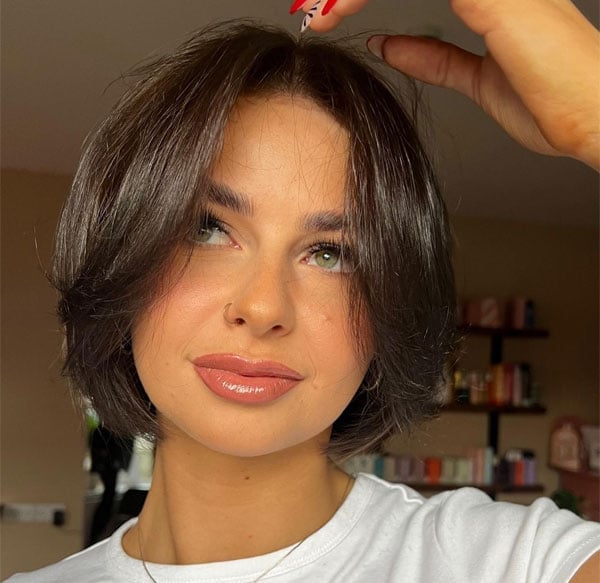
A chin-length bob in dark brown, parted down the middle with soft curtain bangs, reads glossy and precise because the cut does the work: fine straight hair holds the shape without much product. The bangs sweep away from the face and soften a square jaw or a round cheekbone. Ask your stylist for: chin length dark brown bob, curtain bangs, middle part. Skip it if your hair is very thick and coarse: the chin length plus a fringe can turn into a helmet. Fine hair gets shine from a smoothing serum, and the bangs need a trim every four to six weeks.
Collarbone Bob With Choppy Bangs

Wondering what to say at the salon so the choppy finish actually happens? Start with the length and the part, then get specific about the texture. Ask your stylist for: collarbone bob, choppy bangs, middle part. Add these three requests to the list: point-cut the ends so the collarbone length keeps its movement, keep the layers piecey through the crown for thick wavy hair, and cut the bangs in uneven pieces rather than a straight line. The light brown with blonde highlights shows the texture better than a solid shade, since each cut section reflects light differently. A wavy, thick texture holds the messy finish without much styling.
Wavy Collarbone Shag Bob

A shag bob is built on layers that start higher than a standard bob, so the collarbone length keeps movement instead of collapsing into a triangle. Curtain bangs and a middle part finish the shape, and the blonde with highlights emphasizes every wave. Medium wavy hair provides enough texture to hold the lived-in finish without causing the layers to frizz.
Ask your stylist for: collarbone shag bob, curtain bangs, middle part. Styling involves a scrunch with sea salt spray and a walk out the door; the cut does the rest. Expect a trim every eight to ten weeks to keep the layers from growing out into a solid block. The upkeep is low, and the grow-out is graceful.
Collarbone Bob With Rounded Layers

The side view reveals how rounded layers wrap the head, creating a smooth, polished silhouette that looks almost sculpted. Fine straight hair starting at the collarbone is the ideal canvas for this technique because the layers add softness and face-framing without removing density. Ask your stylist for: collarbone bob, soft rounded layers, middle part. A round brush and a blow-dryer are the only tools needed for the sleek finish. Plan for a trim every six to eight weeks to keep the shape precise.
Beige blonde with subtle highlights adds dimension to the surface without breaking the clean line. The layers are cut so the hair curves inward at the jaw, a detail that gives the style a deliberate shape. This is a salon-only cut; the rounded graduation is difficult to replicate at home.
Layered Collarbone Bob
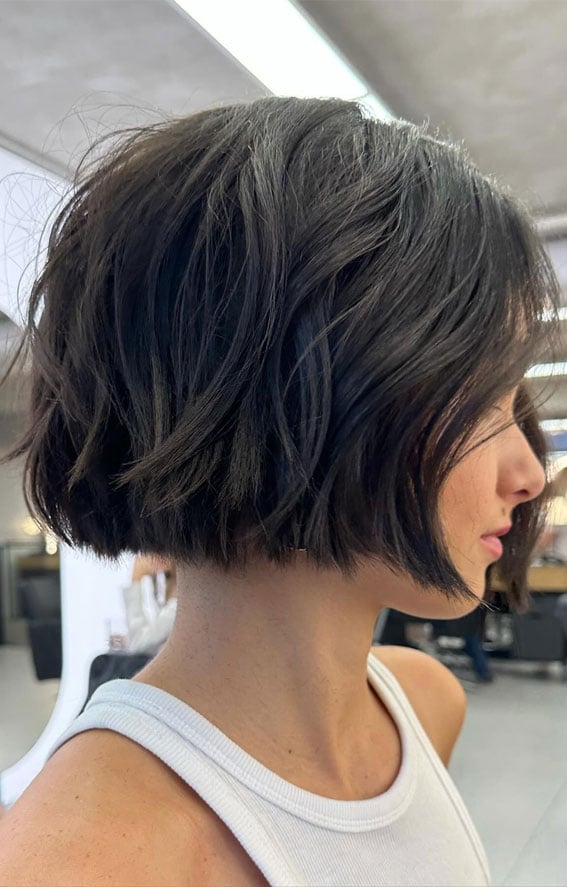
Can fine hair hold a bob without looking flat? Yes, when soft layers are cut into the interior. This dark brown collarbone bob uses subtle layering to add movement and shape while the middle part keeps the silhouette grounded. Ask your stylist for: collarbone layered bob, middle part. The layers are distributed evenly through the ends, which means you get swing without sacrificing the weight that fine hair needs to look substantial. A large round brush during blow-drying smooths the cuticle and emphasizes the gentle movement. A trim every six to eight weeks prevents the layers from growing into a shapeless triangle.
Sleek Black Collarbone Bob
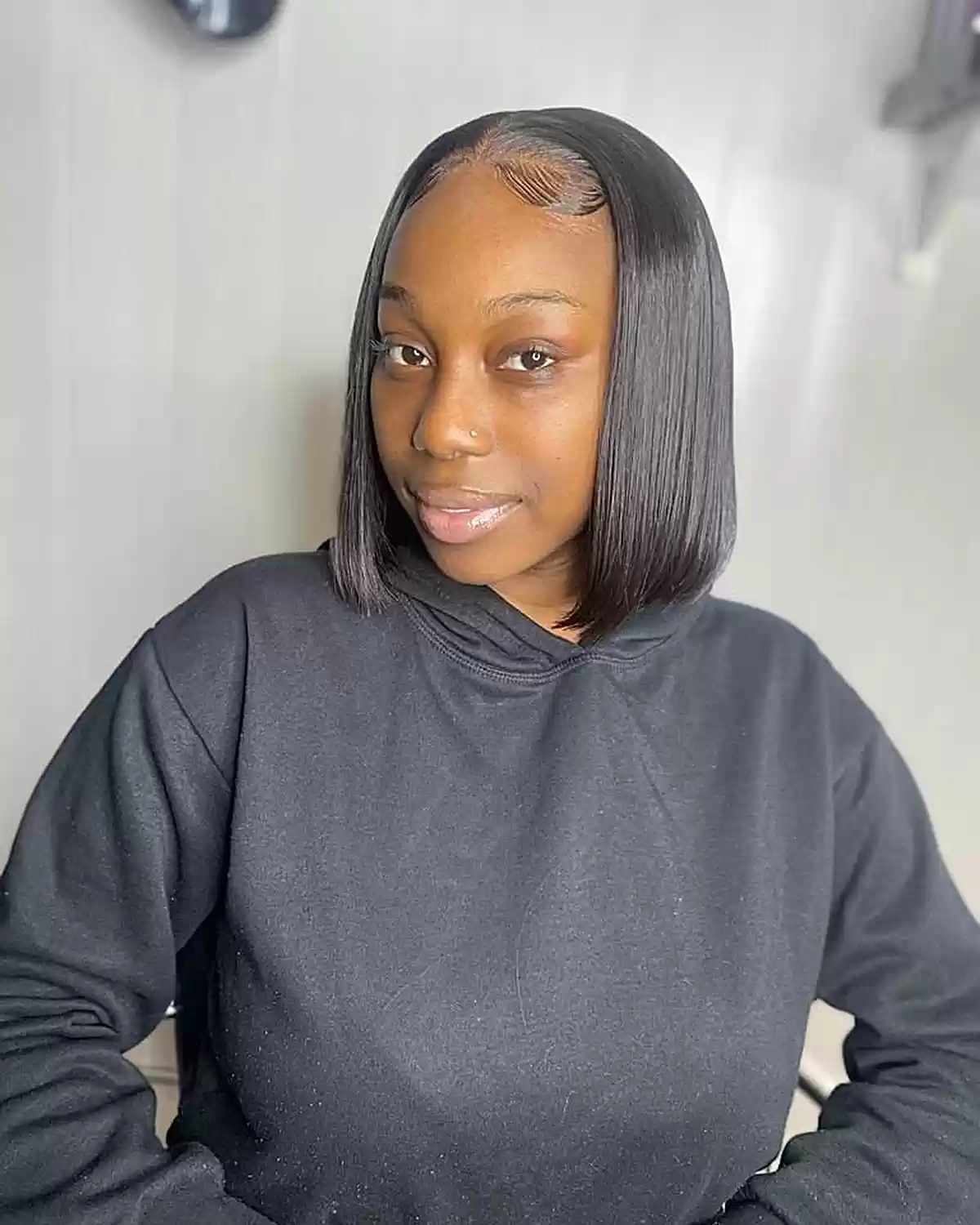
This sharp, blunt cut and polished black color make it a deliberate choice for evening events or a formal workplace. A flat iron seals fine straight strands into a glassy finish. Ask your stylist for: collarbone length sleek black bob, middle part. The clean line suits oval and long face shapes, as the horizontal weight at the collarbone adds width. To preserve the razor-sharp edge, schedule a trim every six to eight weeks. Any split end immediately disrupts the silhouette, so upkeep is essential.
Polished Collarbone Bob With Blunt Ends

The blunt ends are the headline here, and they demand a precise scissor cut that most people cannot replicate at home. This dark brown collarbone bob relies on a single clean line at the perimeter, with no layering to disguise an uneven snip. Ask your stylist for: collarbone length bob, blunt ends, middle part. The common mistake is letting the ends grow past the collarbone, which turns the blunt edge into a flippy mess. Keep the length exactly at the collarbone and use a paddle brush and blow-dryer for a sleek finish. This is a salon-only cut: a DIY attempt with shears usually results in a jagged line that requires a professional correction. Plan for a trim every six to eight weeks.
Short Textured Bob With Wispy Bangs

Wispy bangs that barely graze the forehead add a playful softness to an otherwise short, textured bob. The cut ends around the ear, with fine wavy layers that create a tousled finish without heat styling. Ask your stylist for: short textured bob, wispy bangs, middle part. Wispy bangs grow out fast and look straggly by week three, so they need a trim every four to six weeks. Brown hair with subtle highlights keeps the texture visible and prevents a single flat shade. A texturizing spray or pomade helps define the waves without weighing them down.
Short Ear Length Blonde Bob

Can a fine, straight bob hold a sharp line without looking like you lost a bet with your kitchen scissors? The short ear length bob relies on a clean, blunt edge and a precise middle part, so the margin for error at home is slim. The blonde color reads as uniform and modern, but the real work is in the cut. Ask your stylist for: short ear length bob, sharp line, middle part. A flat iron gives the sleek finish, and a trim every four to six weeks keeps that edge honest. Skip the DIY attempt; uneven lines on fine hair are harder to hide than you think.
Air Dried Dark Brown Bob

The air dried bob depends on what you skip. This chin length cut relies on natural, slightly wavy texture and subtle face framing layers, so the blunt shape keeps its line. To get close at home, start with damp hair and a light leave in conditioner, then let it dry without touching it. Fingers break up the wave pattern and add frizz. If your hair is fine, skip heavy creams and use a mist of water to reactivate the curve the next morning. Ask your stylist for: chin length bob, natural texture, middle part. The cut is clean enough that a trim every six to eight weeks keeps the shape from widening at the ends.
The salon sets the shape once, but the daily routine is yours. Air drying takes about twenty minutes of waiting, not styling, which is the trade-off: you trade control for texture. For fine hair, the layers decide whether the finish looks undone or unkempt.
Shoulder Length Wavy Lob

This shoulder length wavy lob lands just at the shoulders, which means it behaves more like a long bob than a true bob, and that extra inch changes everything. The brown color and natural wavy texture make it look air-dried, but a lob this length tends to fall flat at the ends if you skip product. A texturizing spray at the roots gives the waves grip without weighing them down. Ask your stylist for: shoulder length wavy lob, middle part. The upkeep is forgiving: a trim every eight to ten weeks keeps the ends from fraying, and the shape works with medium density hair that needs a little more length to move.
Thick Wavy Black Bob With Curls
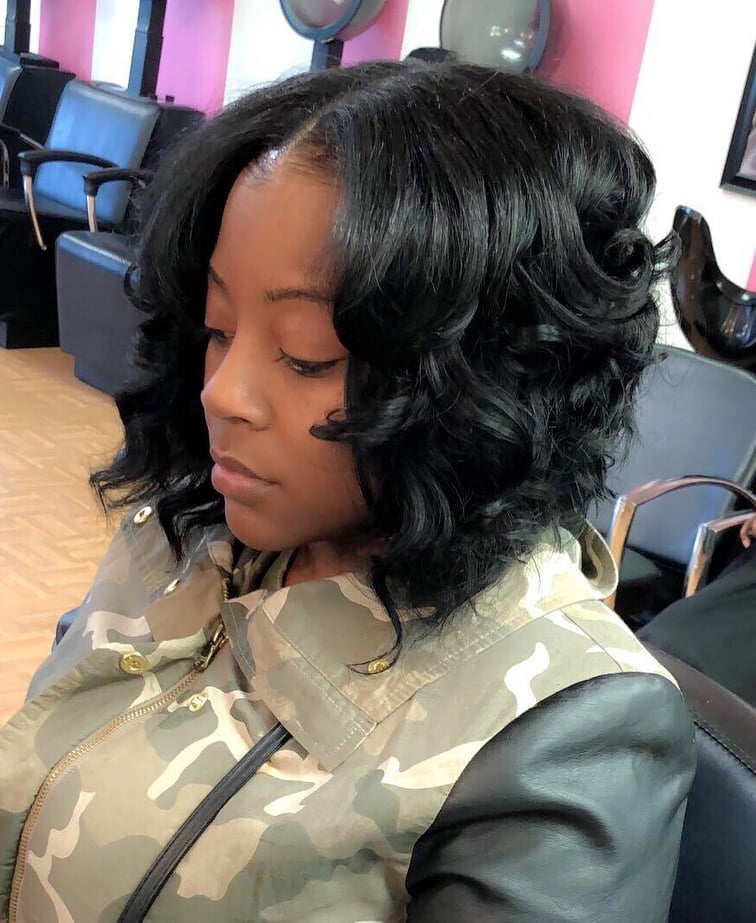
How do you get voluminous curls on a thick, wavy bob without looking like you stuck your finger in a socket? The trick is in the blowout, not the cut. This shoulder length bob uses the natural density of black, thick wavy hair to hold shape, with the middle part keeping the volume balanced on both sides. A curl-defining cream on damp hair, then a diffuser at low heat, lifts the roots and sets the wave pattern. Ask your stylist for: shoulder length thick wavy bob, voluminous curls, middle part. The result is a polished blowout that lasts a couple of days, and a trim every eight to ten weeks keeps the weight from pulling the curls straight.
Final Thoughts
Fine hair: keep one blunt baseline and skip heavy layers, since a solid perimeter holds density better than stacked texture. Thick hair: ask for strategic layers through the sides to shed weight and add movement.
- Trim the baseline every six to eight weeks to hold the shape.
- Apply a heat protectant before any hot tool.
- Mist texturizing spray on damp hair for wavy finishes.
- Tone blonde shades every four to six weeks.
Find the middle part bob that speaks to your style.