Face-framing highlights are the defining 2027 hair color technique, placing light exactly where it makes the most impact. The shift from all-over highlights to this targeted approach means the cut matters as much as the color, with curtain bangs and soft layers doing the framing work alongside the tone.
This collection of 19 ideas covers the full spectrum, from low-upkeep lived-in balayage to bolder contrast pieces that demand a regular toning rhythm. It solves the real struggle of keeping fine hair from looking weighed down or a visible grow-out line from ruining the shape. Trendy Face Framing Highlights work for any density or texture, as long as the placement matches your cut.
The 19 looksOpen list +
Long Layered Hair With Bright Curtain Bangs
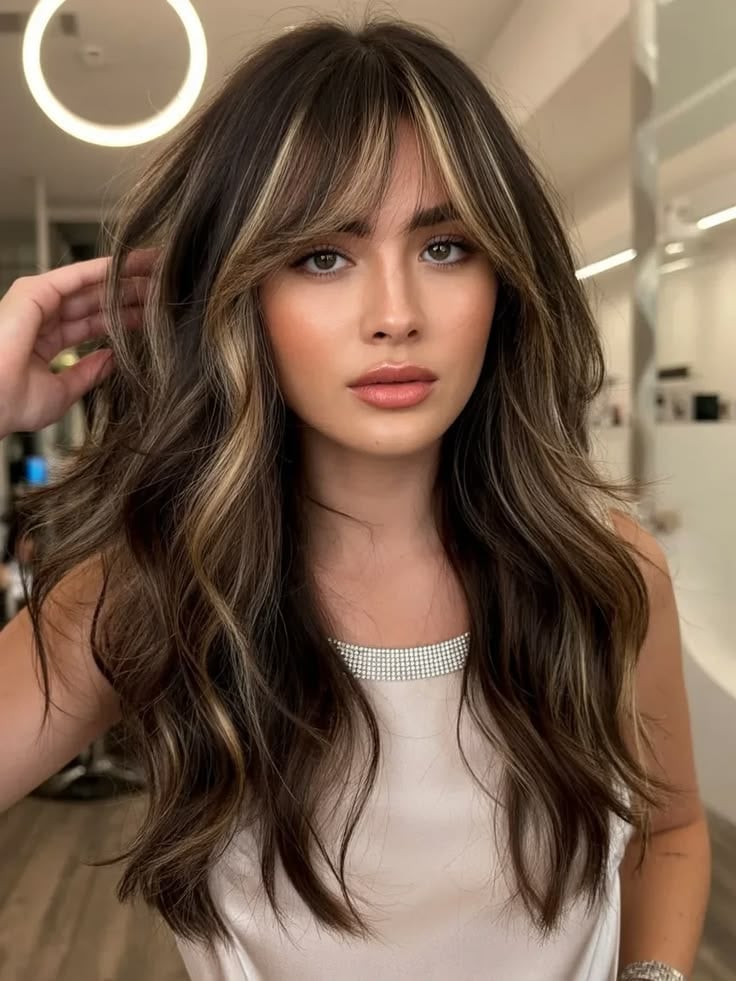
The brightest pieces sit exactly where the curtain bangs split, so the color does the styling work before you touch a tool. Long layers run from mid-back down through thick, wavy hair, and the dark brown base makes those blonde face-framing highlights read as a deliberate line around the face. This is the version of long hair curtain bangs highlights that earns the name: bright at the front, lived-in everywhere else.
Thick, wavy hair carries this cut well because the layers have weight to work with, and curtain bangs suit most face shapes, oval and heart included. Fine hair can wear it too, though the bangs need more coaxing. Ask your stylist for: mid-back long layers, curtain bangs, bright face-framing highlights. A texturizing spray on dry hair pulls the waves together, and the baseline wants a trim every eight to ten weeks.
Icy Toffee Blonde With Lighter Face Framing
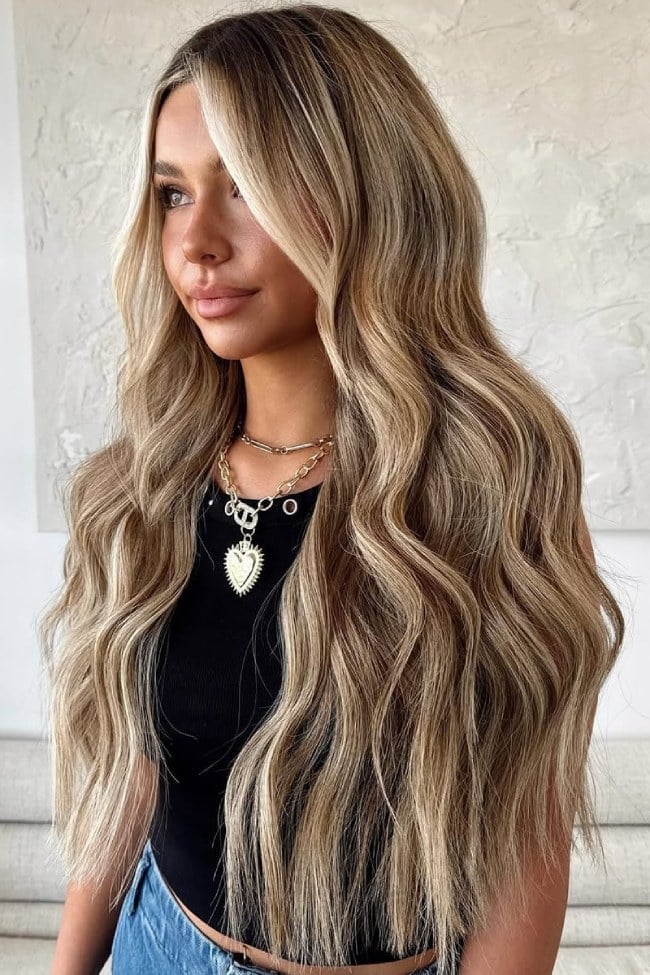
Icy toffee blonde is built in two passes: a cool base through mid-back, then lighter blonde pieces painted only along the face-framing sections. The side parting decides where those pieces land, so the brighter strands fall on one side and catch the light from the side view. Thick, wavy hair holds the cool tone without going flat, and long layers keep the whole thing from reading as one solid block of blonde.
Ask your colorist for: icy toffee blonde, lighter blonde face framing, loose waves. There are no bangs here, which puts the emphasis squarely on the color transition at the hairline. The cool base needs toning every six to eight weeks to keep brassiness out, and a trim every six to eight weeks keeps the ends sharp. Smoothing serum on damp hair before a blow-dry gives the glossy finish the shade is asking for.
Espresso Brown With Cool Beige Blonde Highlights
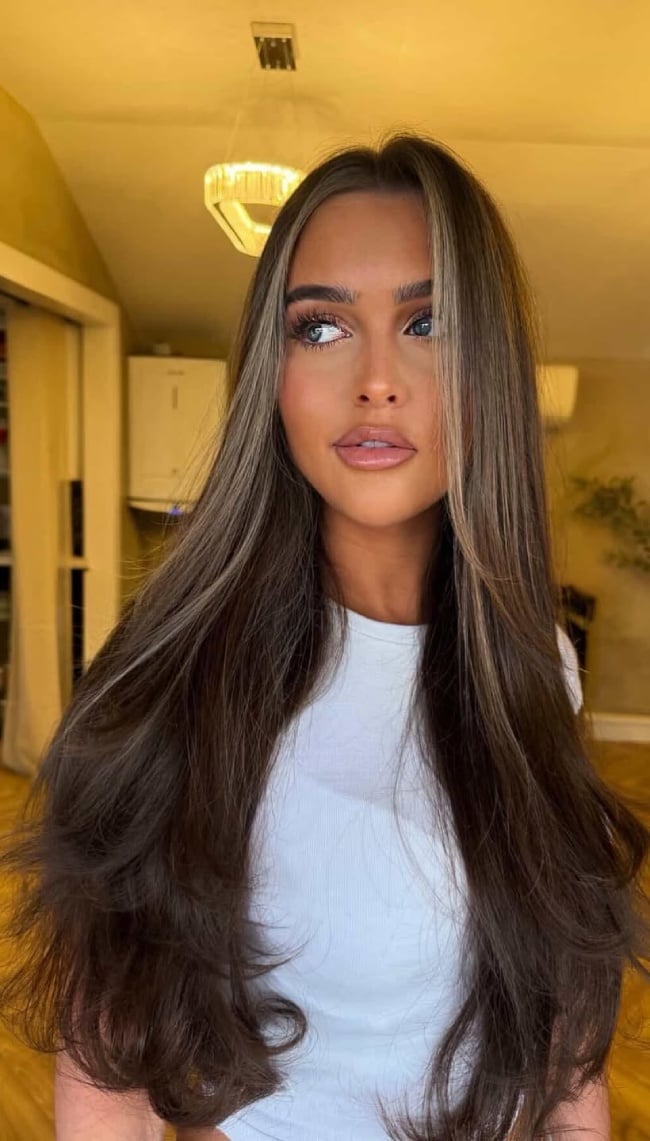
Wondering how to get that dark base without the highlights turning warm? The answer is in the words you use at the consultation. Espresso brown reads deep and neutral, and cool beige blonde pieces sit against it without going gold. Thick, straight hair takes a smooth blowout well, and the middle parting lets the curtain bangs fall into two clean halves.
Ask your stylist for:
- espresso brown base
- cool beige blonde face-framing highlights
- mid-back long layers
- curtain bangs, middle part
Shoulder Length Layers With Bold Blonde Pieces
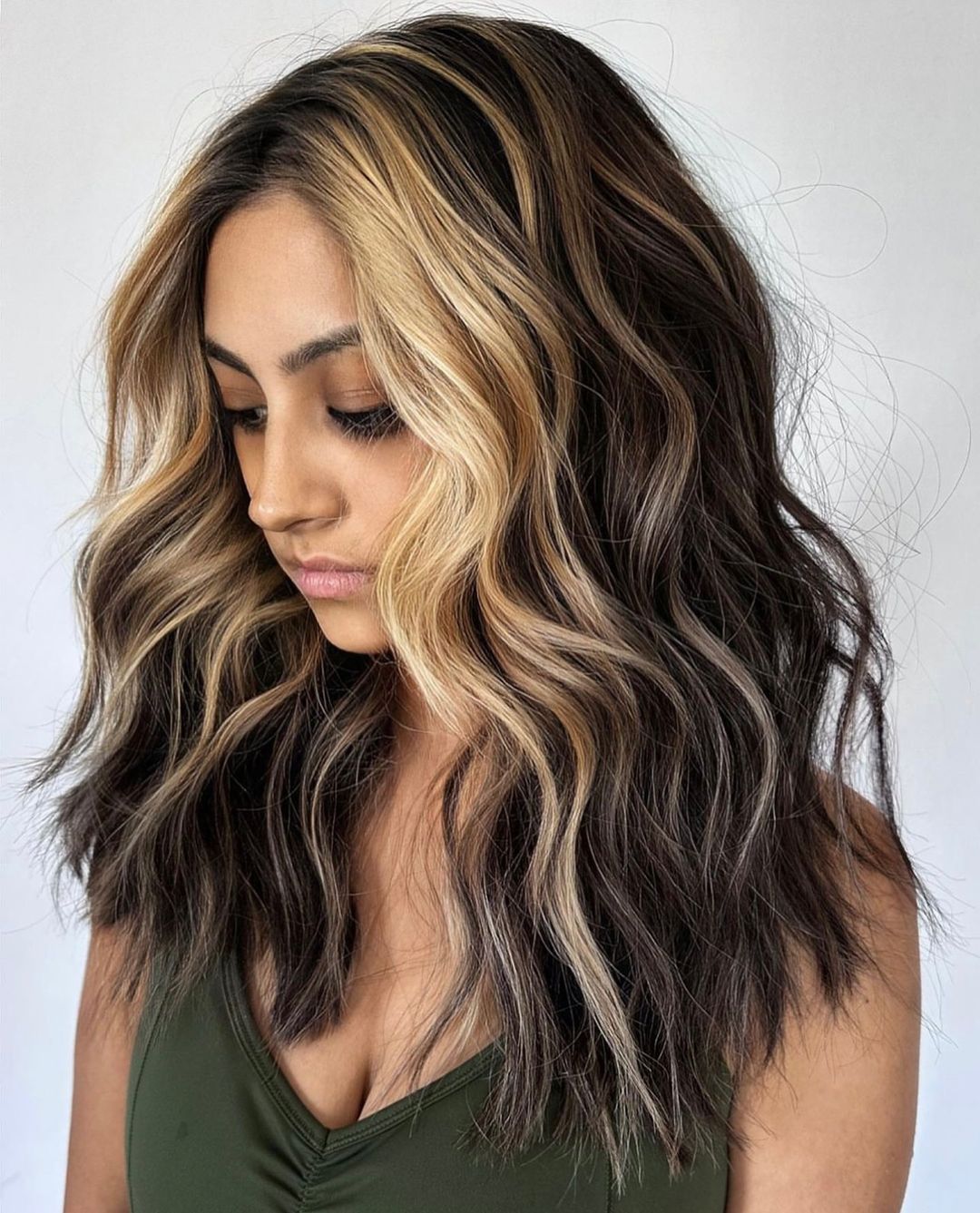
Long hair gets the drama, but collarbone length gets the versatility. Soft layers at shoulder length with curtain bangs move more freely than mid-back layers, and bold blonde face-framing pieces stand out harder against a dark brown base because there is less hair diluting them. Medium density wavy hair suits this cut well, and the curtain bangs soften a round face without hiding it.
Ask your stylist for: shoulder length layers, curtain bangs, bold blonde face-framing pieces. A wavy blowout is the default finish, and a diffuser attachment on your blow dryer coaxes out the texture without flattening it. The bold pieces need toning every six to eight weeks to stay crisp, and the layers want a trim on the same rhythm.
Chin Length Blunt Bob With Curtain Bangs
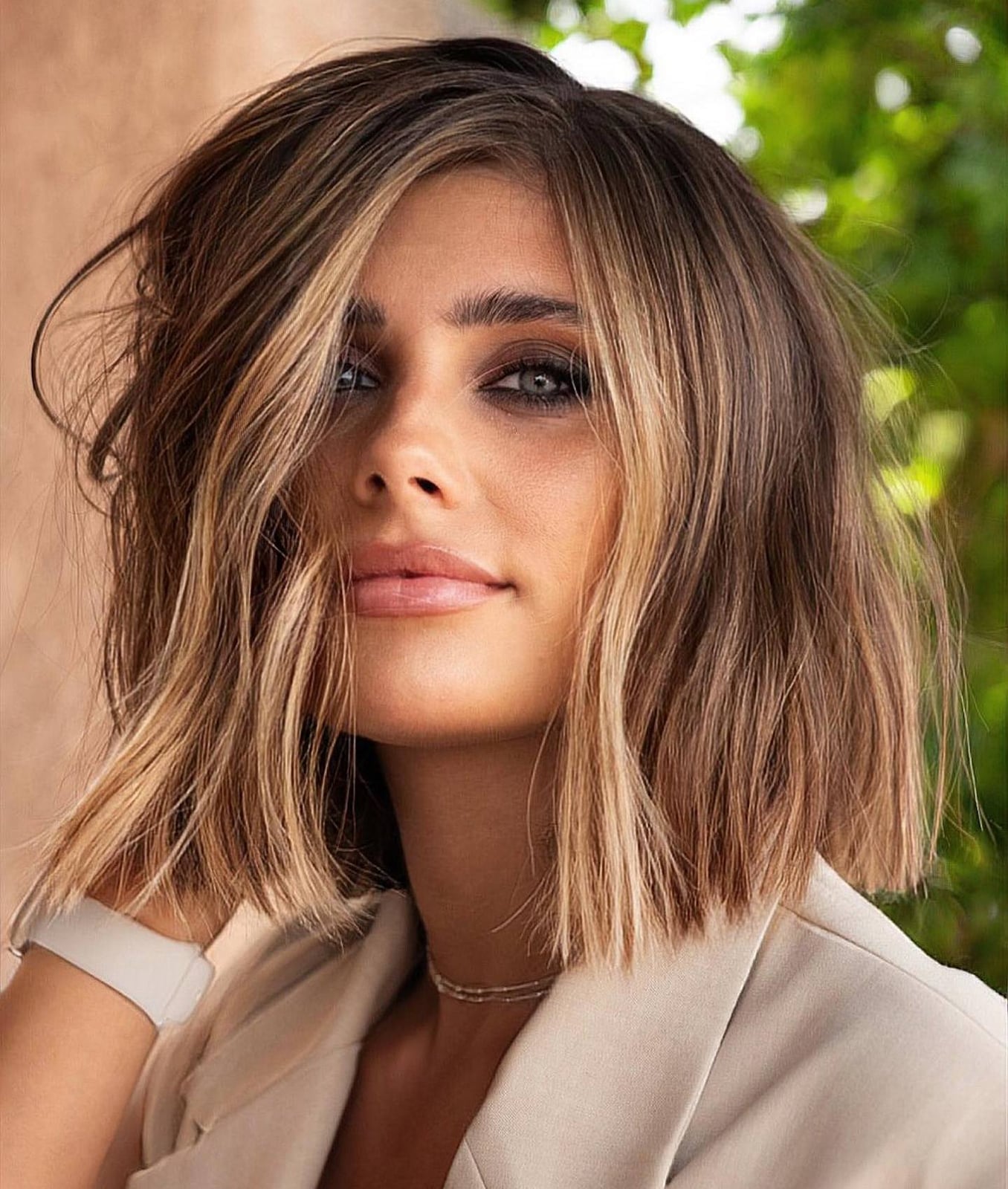
A blunt line at the chin leaves nowhere to hide, which is exactly why the bold face-framing highlights work here. The blunt bob with subtle layers sits at chin length on medium density wavy hair, and the side parting pushes the curtain bangs to one side so the blonde pieces read as a single sweep. Texture is the daily reality: wavy hair at this length needs a texturizing product and a scrunch, or it collapses into a triangle. Ask your stylist for: chin length blunt bob, subtle layers, curtain bangs, bold face-framing highlights. The blunt line needs a trim every six to eight weeks, and this cut requires a salon appointment.
Collarbone Bob With Face Framing Balayage

A collarbone bob with layers and a side parting lives or dies by the blend, and dark brown with blonde balayage has the least room for error. The mistake is asking for bright pieces right at the cheekbone: on a medium-density wavy blowout, the line where the blonde meets the brown shows up first at the front, exactly where a side part pushes the hair. Ask for a softer transition that starts lower and lets the face-framing layers carry the color forward. Ask your stylist for: collarbone bob, face-framing layers, blended blonde balayage. Wavy texture helps hide a lazy blend; straight hair exposes it. The real drawback is upkeep: trim every six to eight weeks to keep the bob shape, and expect a tone refresh around the same interval as the blonde warms.
Collarbone Layers With Blonde Money Piece
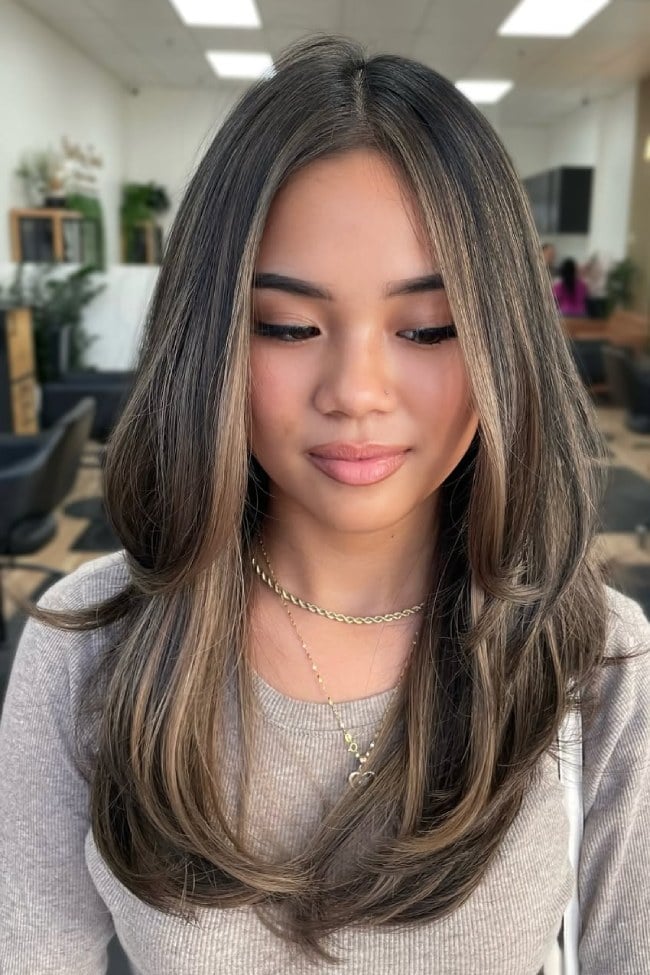
What makes a money piece work at collarbone length? Contrast, placed close enough to the middle parting that it reads as a deliberate stripe rather than a stray highlight. Mushroom brown with a blonde money piece does exactly that, and the long layers keep the soft waves from collapsing into a triangle. This is a transitional-season cut: light enough for warm afternoons, dark enough to carry into fall without a full color change. Medium-density wavy hair holds the shape well; fine hair gets movement from the layers. Ask your stylist for: collarbone length layers, mushroom brown, blonde money piece. Style with a large barrel curling iron for soft waves, and book a trim every six to eight weeks to keep the ends from dragging the shape down.
Mid-Back Brunette With Soft Face Framing
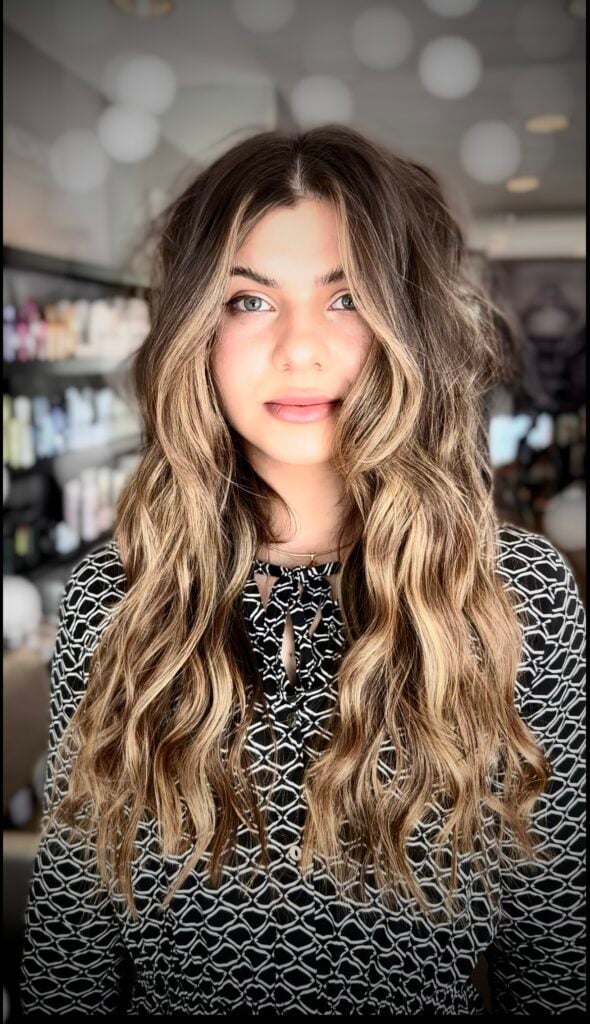
A middle parting with curtain bangs splits the blonde highlights into two soft columns that follow the cheekbones. Mid-back length with long layers gives thick, wavy hair room to move, and a wavy blowout keeps the volume from forming a triangle. This cut suits thick, wavy hair that already starts at mid-back; fine hair at this length needs more layering to avoid looking flat.
Upkeep takes patience. Thick wavy hair takes longer to dry, so apply a heat protectant before blow-drying to keep the highlights soft. Curtain bangs need a round brush and a few minutes every morning, and they grow out faster than the rest of the cut. Trim every eight to ten weeks to keep the layers from collapsing into one weight. Ask your stylist for: mid-back length, soft blonde face-framing highlights, curtain bangs.
Mid-Back Waves With Blonde Balayage Face Framing
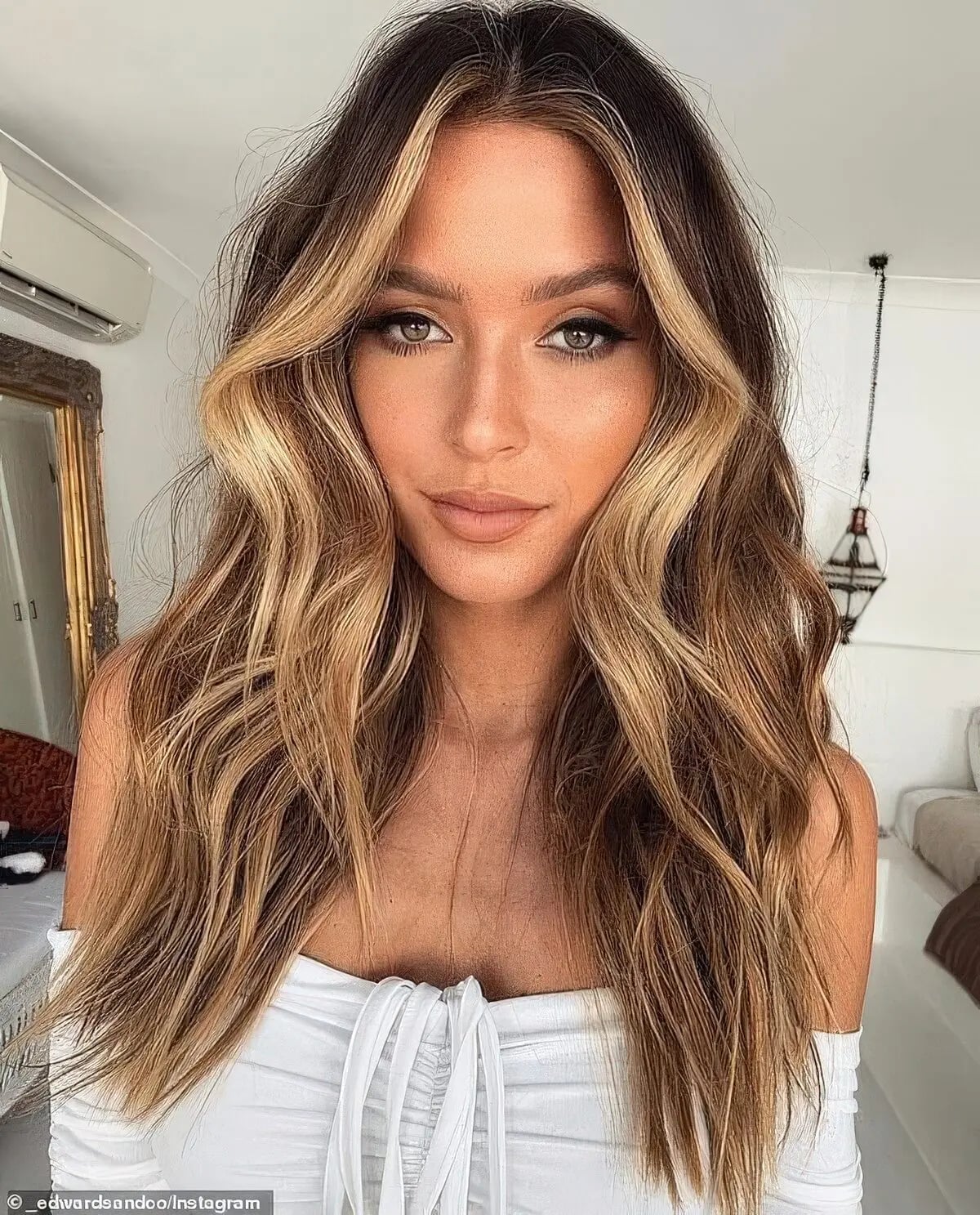
Balayage that runs from dark brown into blonde around the face is a placement decision, not a color decision, and that is why it suits so many people. On medium-density wavy hair at mid-back, the face-framing pieces are blonde while the base stays dark, so the grow-out line is softer than a foil highlight. A middle parting keeps the effect symmetrical, and loose waves do the rest.
Who should pass: hair that is very fine and straight at this length will show every tonal shift, and the blend needs more frequent toning to stay clean. Wavy texture hides the transition; straight texture exposes it. Round faces get elongation from the mid-back length and middle parting, while square jawlines are softened by the face-framing pieces. Ask your stylist for: mid-back length waves, dark brown to blonde balayage, face-framing pieces. Trim every eight to ten weeks, and scrunch damp hair with a mousse to bring the waves forward.
Lived-In Waves With Blended Blonde Balayage
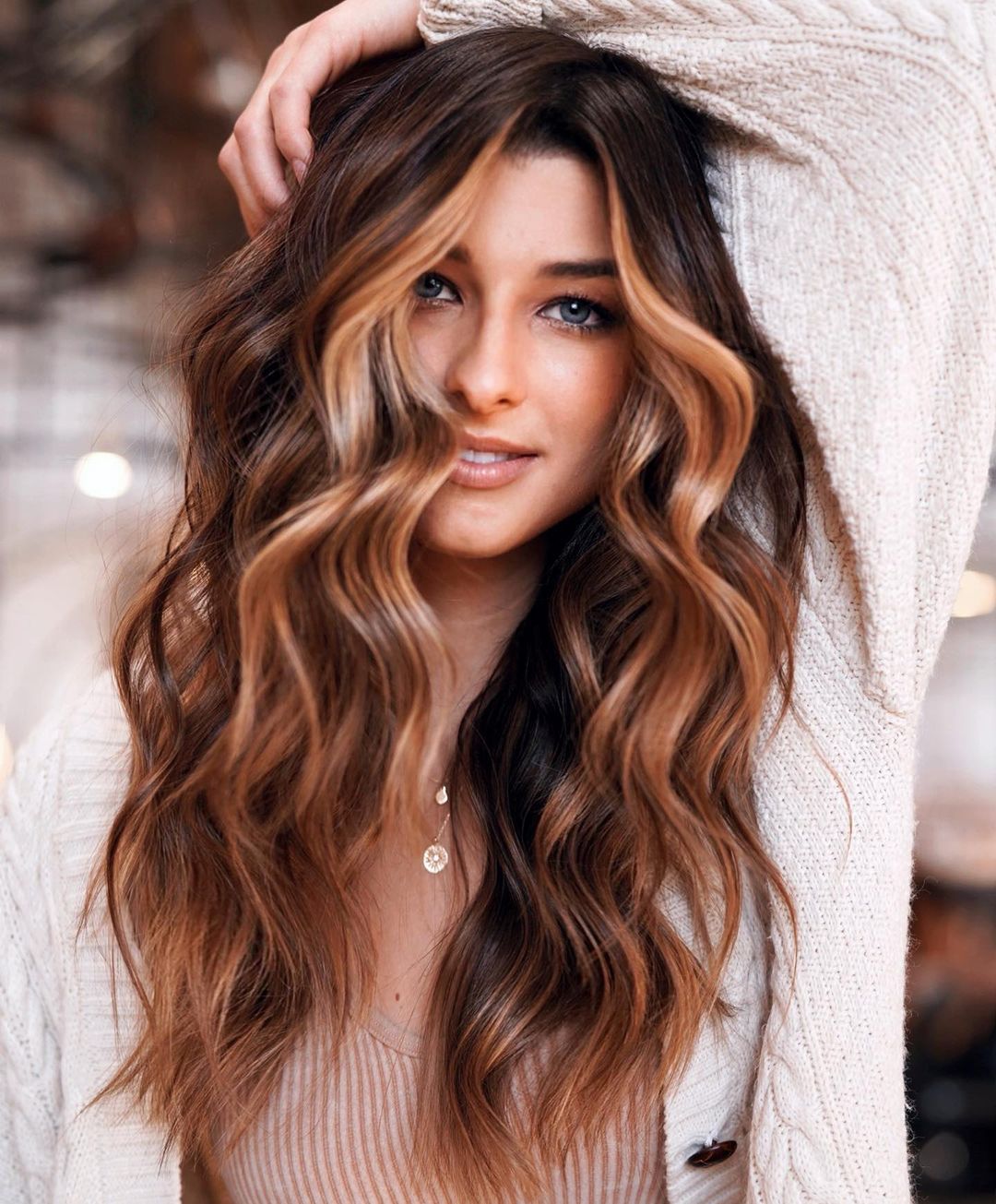
How much styling does a lived-in wave actually take? Less than the name suggests, but more than nothing. The blended blonde balayage on a dark brown base is forgiving: as the face-framing pieces grow out, the transition stays soft, so you can stretch toning to eight or ten weeks. The catch is texture. Medium-density wavy hair at mid-back will air dry into something closer to a shrug than a wave, and the long layers need a curl cream and a scrunch to show up. Ask your stylist for: mid-back length, natural waves, blended blonde balayage face framing. Trim every eight to ten weeks to keep the ends from weighing the wave down. Skip the flat iron on day two and the blend does the rest.
Dark Brown With Soft Blonde Balayage Face Framing
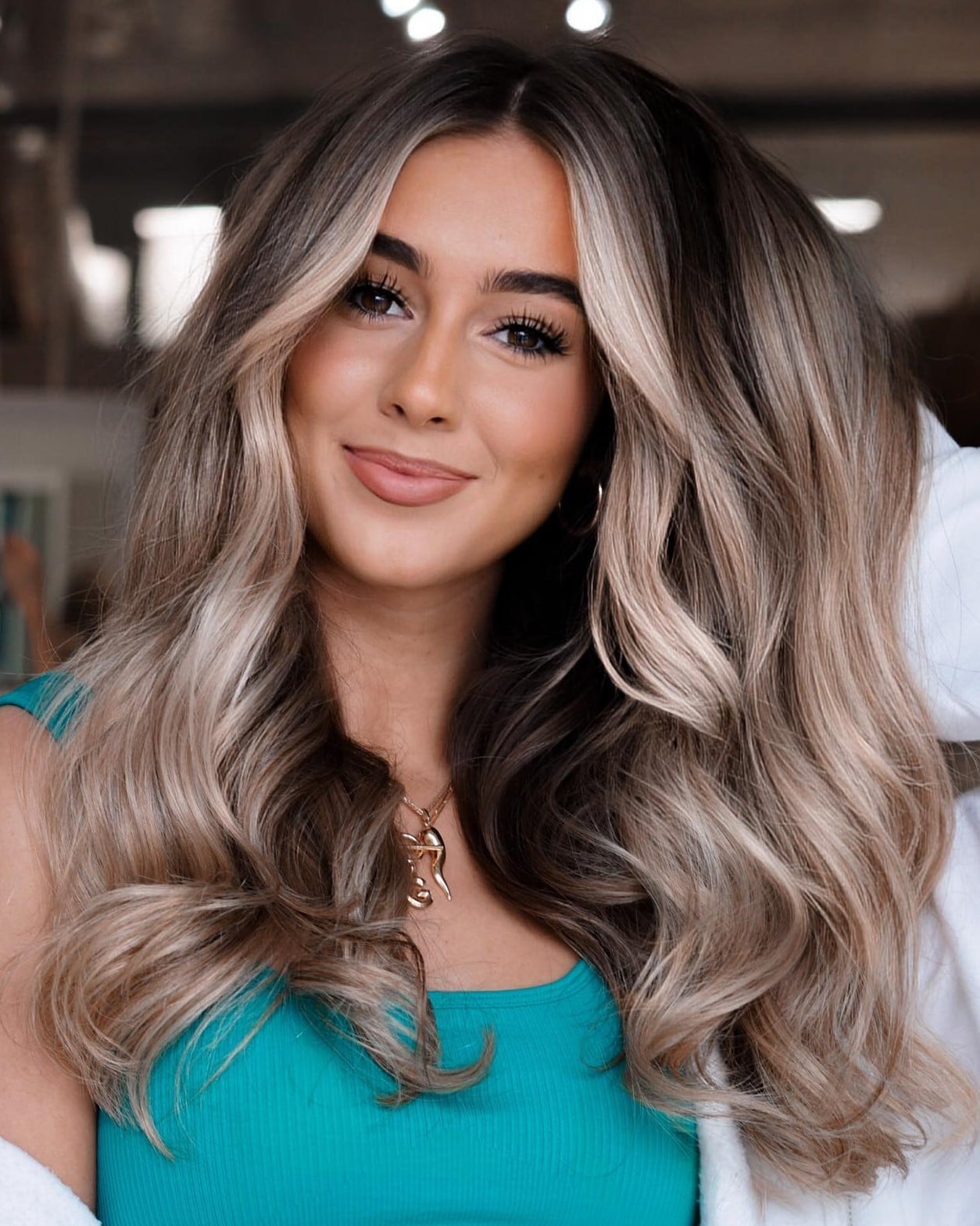
The balayage here starts close to the root line and opens into a softer blonde through the face-framing pieces, which is what keeps the contrast from looking painted on. On a dark brown base, that gradient does most of the work: the eye reads brightness near the jaw and cheekbone, then follows the fade back into depth. The cut is long layers reaching mid-back, parted in the middle, with loose waves through the lengths. Face-framing pieces sit forward of the hair, so they catch light the back of the head never will.
Ask your colorist for: dark brown base, soft blonde balayage, face-framing pieces. Medium density wavy hair at mid-back length carries this well, since the wave gives the balayage somewhere to break up. Fine hair can take the same placement, but the blend needs to stay tight or the lighter pieces turn stripey. Book a toning appointment every six to eight weeks to keep the blonde from drifting warm, and plan on a trim every eight to ten weeks to keep the long layers from collapsing into one weight.
Brunette Balayage With Lighter Face Framing Layers
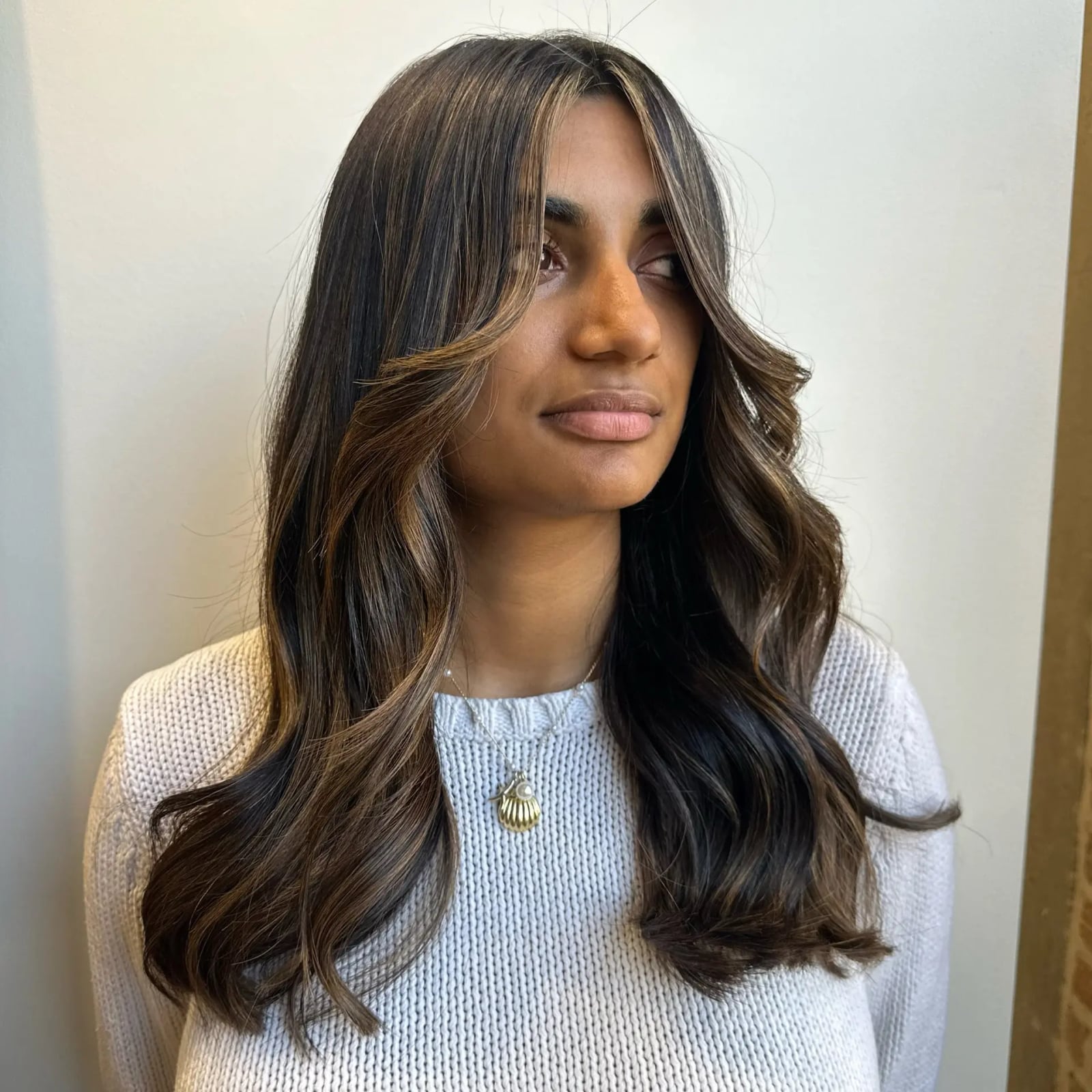
Brunette balayage with lighter brown highlights works because the lift stays within a shade or two of the base, so the grow-out line never announces itself. The layers here are cut to fall around the face at mid-back length, parted in the middle, with a loose wave through the lengths. Face-framing pieces sit in front, which means the lighter brown is the first thing you notice, and the depth behind it does the grounding.
Ask your stylist for: mid-back length, brunette balayage, lighter brown face framing layers. Wavy, medium density hair holds the shape without much coaxing. The exact words matter more than the reference photo, so spell out what you want:
- Lighter brown pieces that start around the jaw, not at the root
- Face-framing layers that connect to the cut
- Balayage blend, no hard horizontal line
- Middle parting kept intact
Medium density waves at mid-back length give the color room to move. Finer hair should ask for fewer, wider pieces so the highlights look like light, not gaps.
Mid-Back Layers With Striking Face Framing
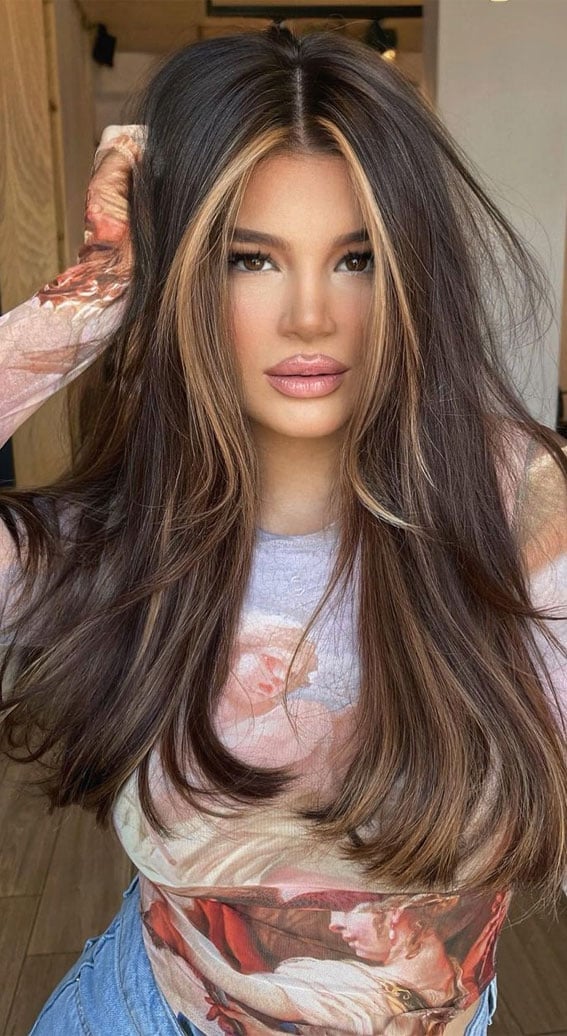
A subtle face frame whispers; this one talks. Against a rich dark brown base, the blonde highlights at the front are placed to register from across a room, and the long layers through mid-back give them a wavy, moving backdrop rather than a flat curtain. Medium density wavy hair is the right starting point, because the wave keeps the bright pieces from sitting in a solid block. Soft, blended balayage suits anyone who wants dimension they can forget about between appointments; striking placement like this suits the person who wants the color to be the point. Both need the same trim rhythm, roughly every eight to ten weeks, to keep the layers from growing out into a single length. Ask your stylist for: mid-back length, soft wavy layers, striking blonde face framing.
Mid-Back Dark Blonde With Face Framing
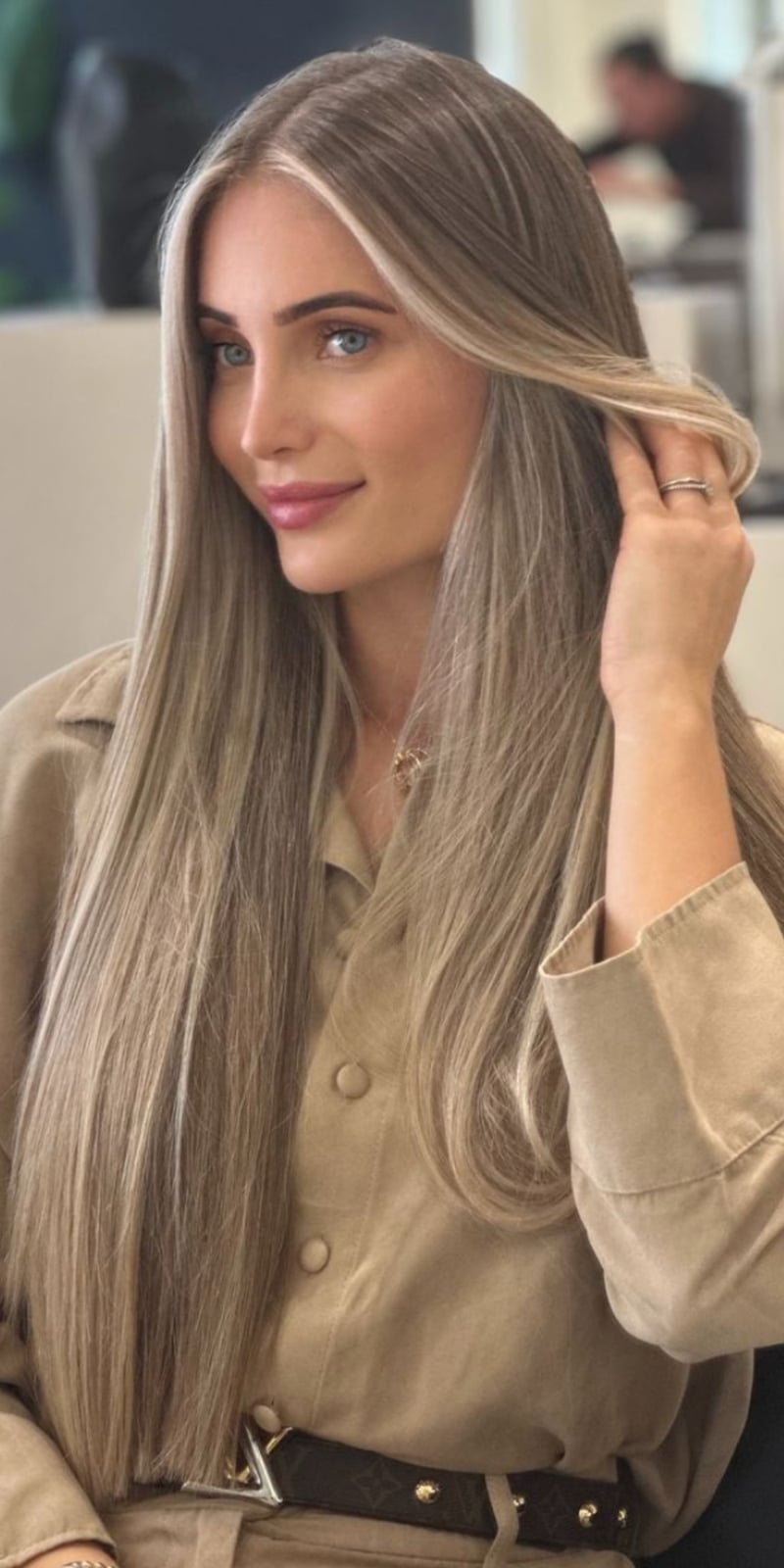
The lift on this dark blonde base is modest, a few shades brighter through the front, and that restraint is the whole design. Blonde highlights sit around the face while the lengths stay closer to the base, so the color appears as light hitting the hair rather than as a distinct panel. The cut is layers at mid-back with a middle parting, no bangs, styled into a wavy blowout. Subtle layers keep the silhouette from going pyramid-shaped.
Ask your colorist for: mid-back length, dark blonde, subtle face-framing highlights. This is a good fit for medium density wavy hair, which has enough body to carry the blowout and enough natural movement that the highlights blend on their own. It also suits anyone who wants brightness near the face without committing to a full head of blonde, and anyone growing out a darker color, since the starting point is already close. Skip it if the goal is a dramatic shift; the contrast here is deliberately low. Toning every six to eight weeks keeps the blonde from going brassy, and a trim every eight to ten weeks holds the layers in shape.
Medium Length Mushroom Brown With Subtle Highlights
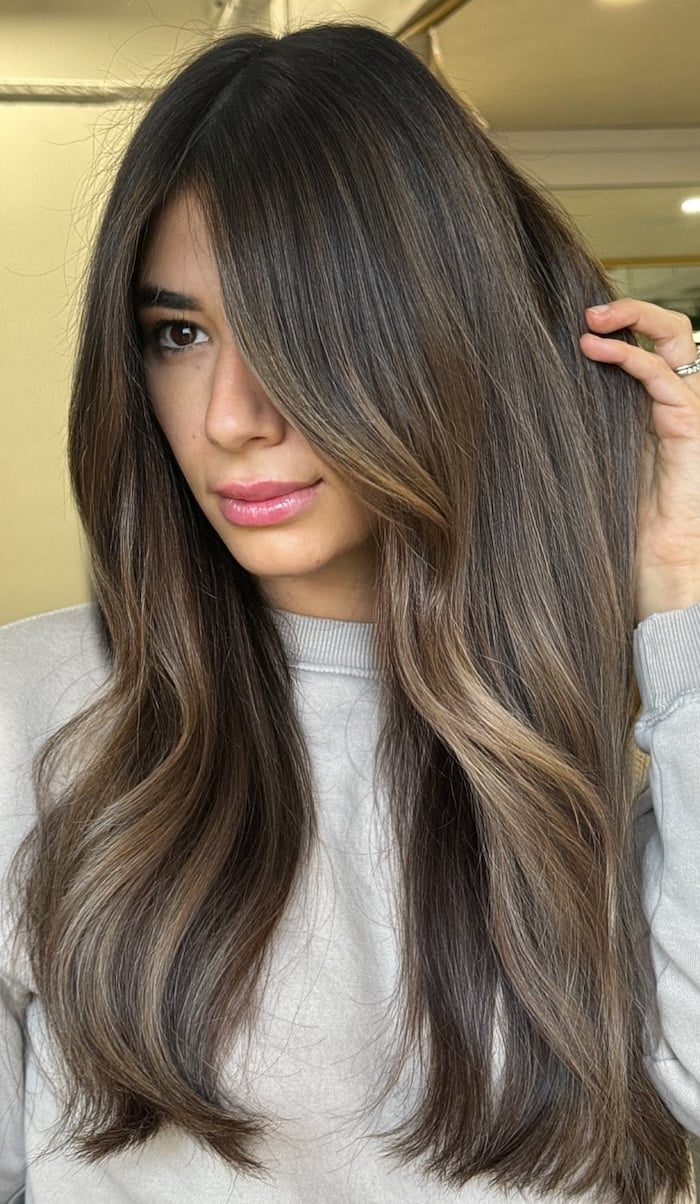
Mushroom brown is a cool, muted brown, and the subtle blonde highlights here are placed to lift the front without breaking that muted quality. The cut is long layers at mid-back, no bangs, air dried into soft waves. On fine, wavy hair, that combination is where the upkeep conversation starts.
Ask your colorist for: medium length, mushroom brown, subtle face-framing highlights. Fine hair shows every tone shift, so the highlights need to stay close to the base or they look like stripes within a week or two of the appointment. The color itself fades quietly, but the cool tone is the first thing to go, which means a toning appointment every six to eight weeks to keep the mushroom cast instead of a warm brown. Air drying with a curl-enhancing product protects the wave, and a trim every eight to ten weeks stops fine ends from thinning out. The drawback: fine hair holds a soft wave only until the next wash, and the subtle highlights lose their definition fastest of all.
Collarbone Layers With Curtain Bangs
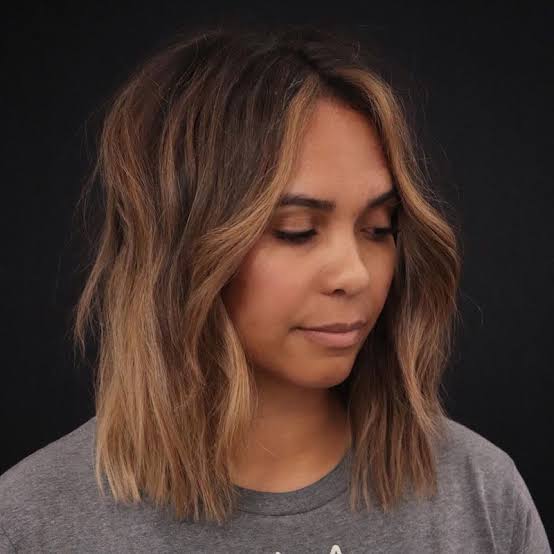
What’s the one haircut that survives a heat wave and a holiday party without a full redo? Collarbone layers with curtain bangs and face-framing highlights come close. The medium brown base keeps the blonde pieces from looking harsh, and the wavy blowout gives the whole thing a lived-in texture that works for the office and the weekend alike. Ask your stylist for: collarbone length layers, curtain bangs, blonde face-framing highlights. The side parting lets those lighter pieces sit exactly where you want them, while the bangs soften the whole arrangement. A round brush on the bangs during blow-drying keeps them moving the right way, and a trim every six to eight weeks holds the shape.
Collarbone Waves In Smoky Silver Ash

The smoky silver ash shade here is doing two jobs at once. It has a cool, almost metallic base while the subtle blue undertones keep it from washing out into plain gray. That makes the face-framing layers the star, since the color shifts as the waves move.
On a collarbone length cut, the color needs some texture to show off its range. Ask your colorist for: collarbone length, smoky silver ash, face-framing layers. Wavy, medium density hair holds this shade best, and the layering stops the color from sitting in one flat block. The tone fades fast, so a color-depositing conditioner every couple of washes keeps the blue from turning muddy, with a trim every six to eight weeks.
Long Straight Ash Blonde With Lighter Highlights
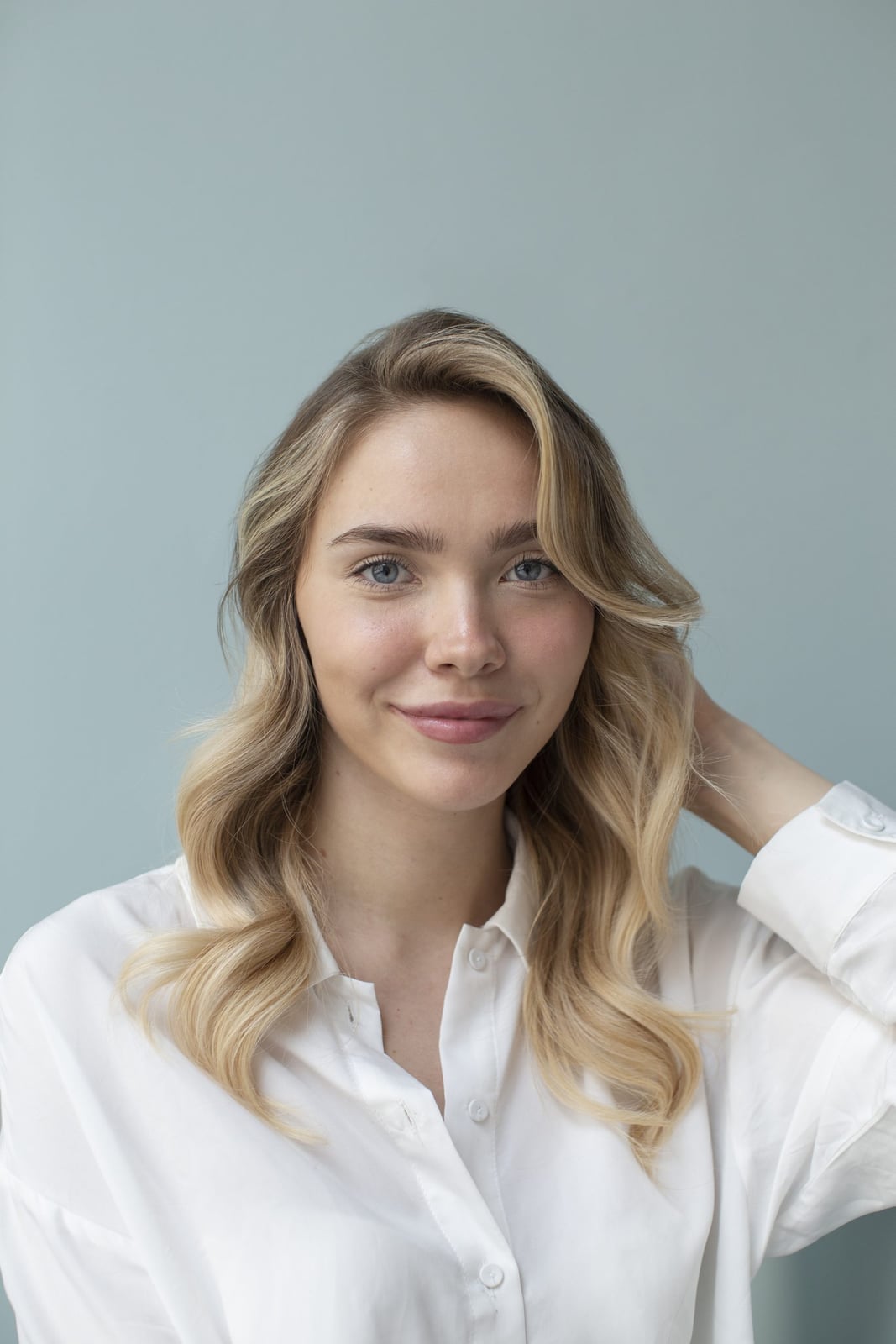
A long, straight ash blonde cut has one job: staying sleek. The lighter blonde highlights around the face add dimension to fine, straight hair that would otherwise look like a single flat sheet of color. With a side part and no layers, the effect is clean and polished, though upkeep matters.
Ask your colorist for: long length, straight cut, ash blonde, lighter face-framing highlights. Getting those face-framing pieces light enough to register against the ash base is a salon job, and touching them up at home risks a brassy stripe. Fine hair also shows every bit of damage, so a heat protectant before any straight blowout is not optional. The payoff is a low-effort daily style, but a silk pillowcase and a trim every eight to ten weeks are part of the deal.
Short Bob With Textured Bangs and Contrast Highlights
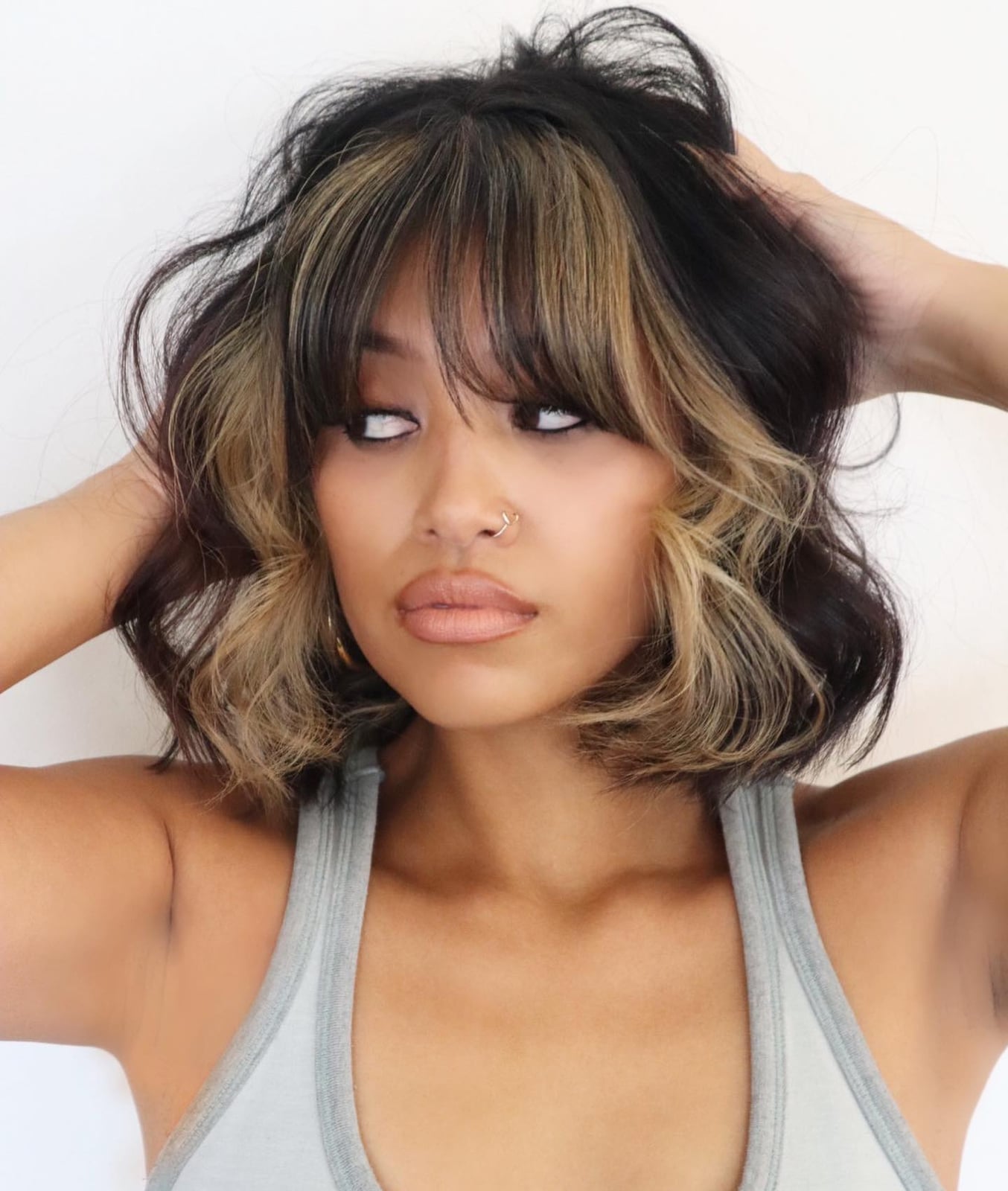
Can a short bob still make a case for itself when the trend leans long and lived-in? When it has textured, wavy styling and short bangs, yes. The ear length cut on thick, wavy hair keeps its shape without constant fuss, and the dark brown base lets the blonde highlights around the face do the talking. Ask your stylist for: short bob, textured short bangs, contrast face-framing highlights. The middle parting and textured finish give it an edge that a sleek bob lacks, while the short bangs suit oval and heart faces. A texturizing paste defines the waves without weighing them down, and the cut needs a trim every four to six weeks to stay sharp.
Final Thoughts
For fine hair, opt for blended balayage face-framing pieces rather than chunky highlights to avoid a weighed-down look. For thicker hair, bolder contrast pieces can add definition.
- Refresh face-framing highlights every 8-12 weeks to maintain brightness.
- Use a color-safe shampoo and conditioner to preserve vibrancy.
- Incorporate a purple toning shampoo or mask every 2-3 weeks to combat brassiness.
- Protect hair from heat styling with a thermal protectant spray.
Frame your face with confidence in 2027.