Fulani twists are a protective style built on intricate scalp patterns, with decorative beads, shells, or metallic accents woven into the braids. Soft face-framing layers and lived-in color keep the style feeling current rather than rigid.
This collection of 20 Fulani twist variations covers lengths from collarbone to mid-back, with options for high-contrast blonde tips, subtle copper highlights, and half-up silhouettes. The styles suit medium to thick hair and range from low-maintenance bobs to detailed geometric partings. If you have ever wrestled with a style that looks flat by midday or a part that refuses to cooperate, these twists solve both without a second thought.
The 20 looksOpen list +
Mid-Back Fulani Braids With Beads and Shells
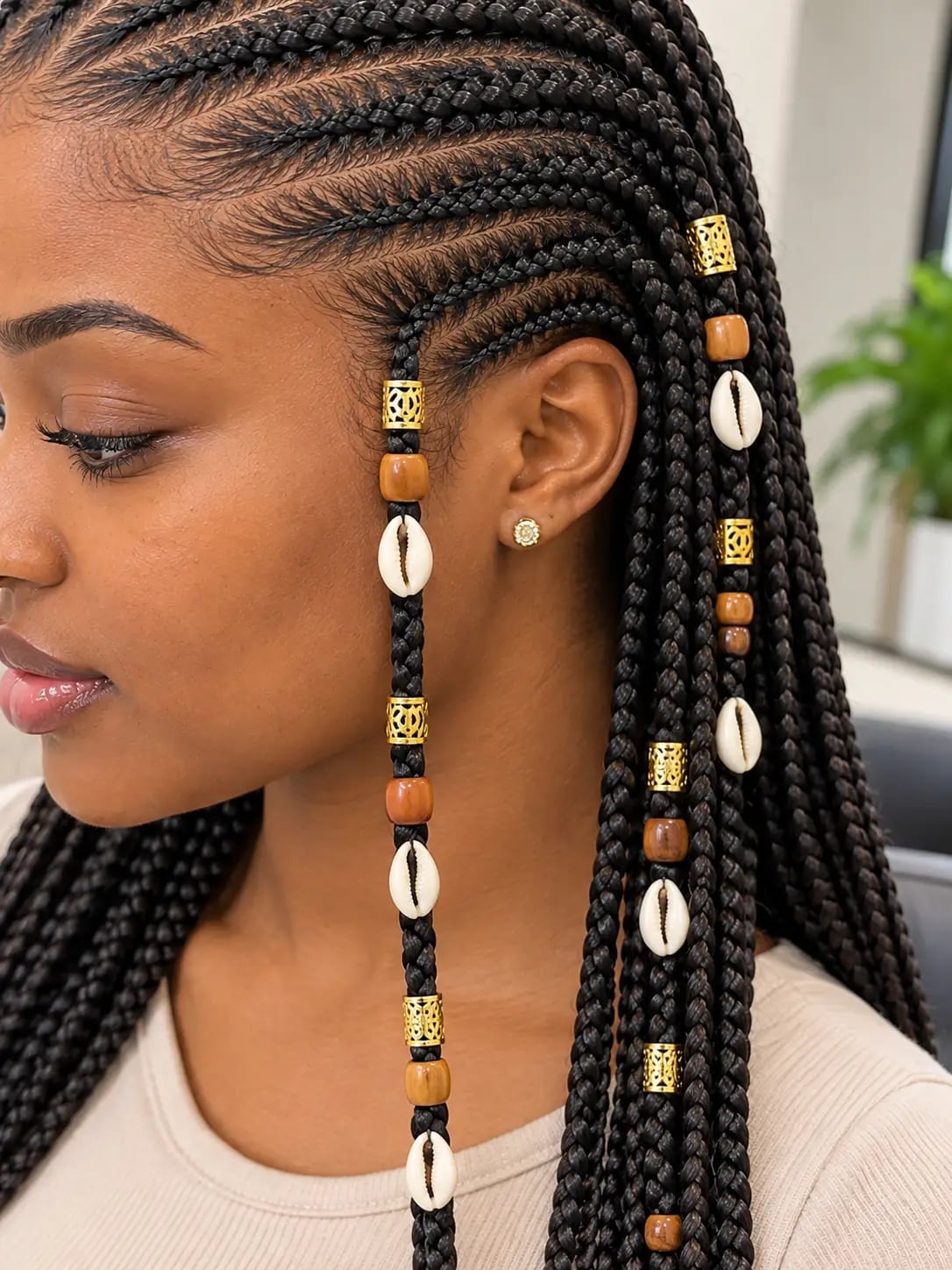
What separates a good set of Fulani braids from a great one? The answer usually comes down to the details you choose before the first braid is laid. This style runs thick, straight braids to the mid-back with a clean middle parting, then finishes with decorative beads and shells in natural wood and white tones plus gold accents. Ask your stylist for: mid-back Fulani braids, wood and shell beads. Bring the exact bead mix you want, because the difference between a scattered handful and a considered pattern is the whole point. Dense hair that reaches at least the shoulders gives the braids enough weight to hang straight, and an oval or long face shape carries the middle parting well. From there it is a salon appointment of several hours, so plan the day around it.
Mid-Back Fulani Braids With Twists and Side Part
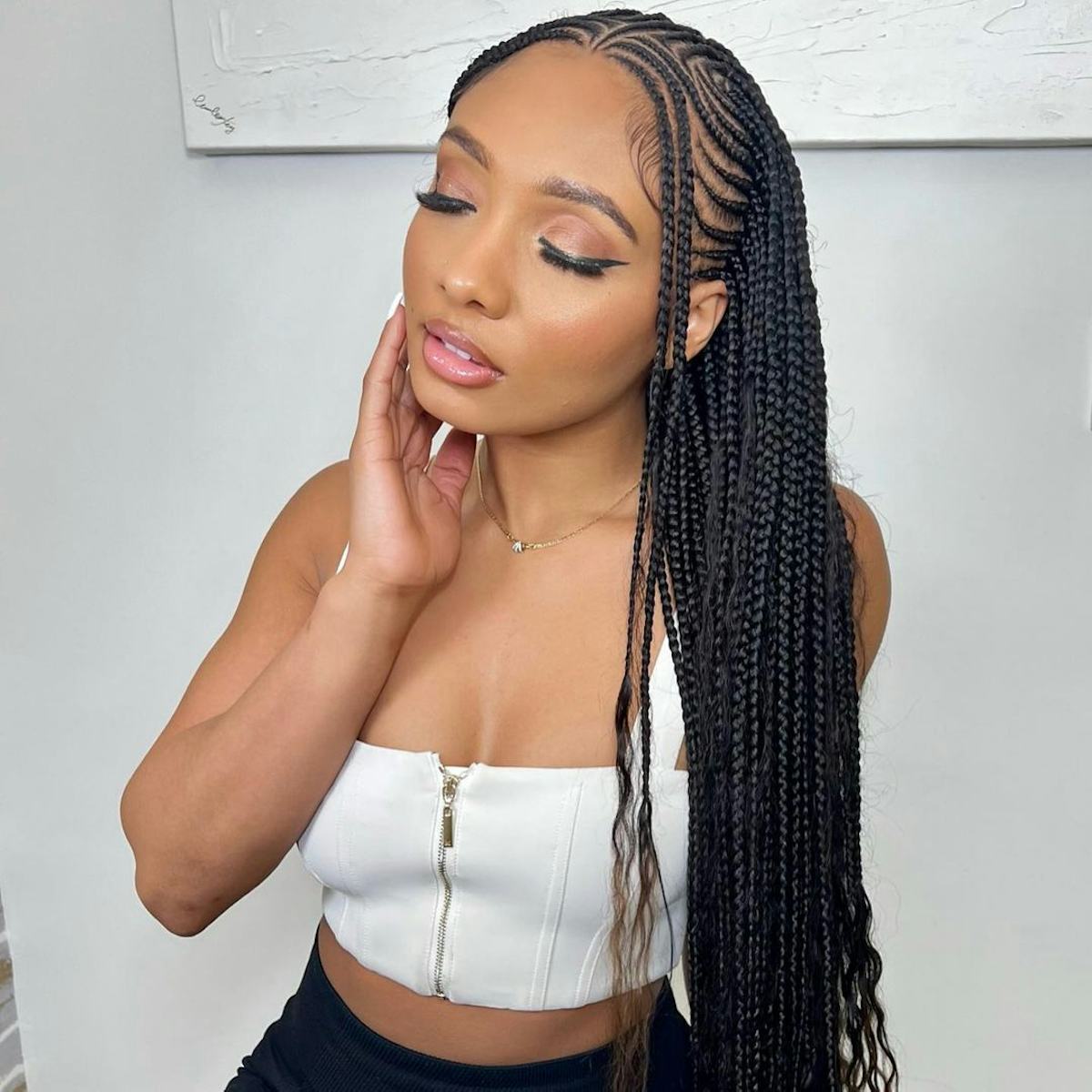
A middle parting gets all the attention, but a side part changes how Fulani braids sit on the head. Shift the line and the scalp braids read sharper on one side, with wavy twists falling to the mid-back in black. Ask your stylist for: mid-back Fulani braids, wavy twists, side part. The side parting suits round and square faces, where the asymmetry breaks up the width across the forehead; a middle parting is the safer call for oval and long faces. Dense hair of any texture works here as long as the starting length hits the shoulder or lower. Twists need a little more handling than plain braids: a curl-defining cream on the ends keeps the wave pattern from collapsing between washes. Book this one in the salon rather than attempting the scalp section at home.
Long Fulani Twists With Wavy, Blonde-Tipped Ends
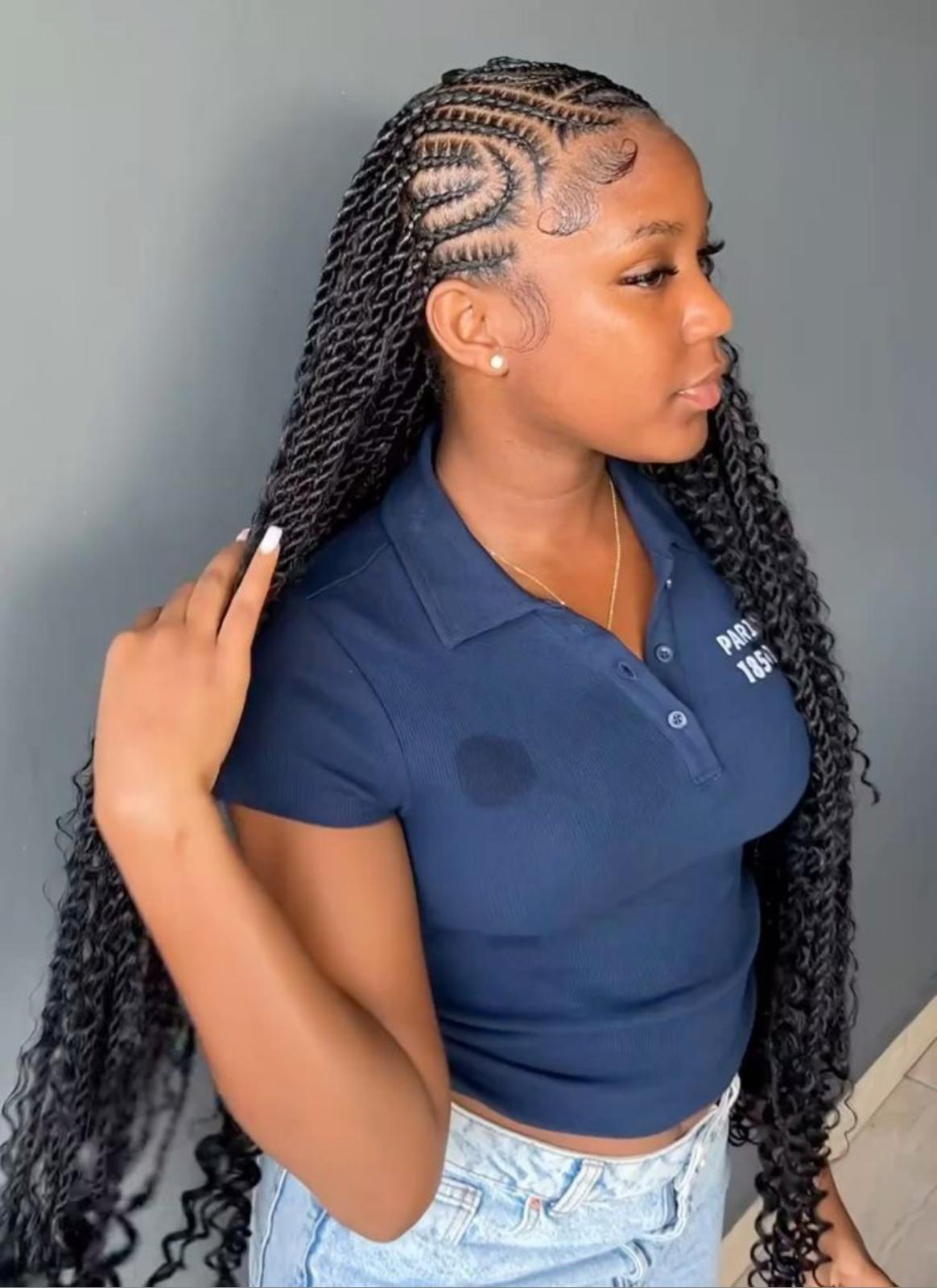
The blonde sits only at the very tips, which is the smartest place to put it. Long, thick Fulani twists fall from a middle parting with wavy, curly ends, and those ends carry the blonde against the black base. Ask your stylist for: long Fulani twists, wavy blonde-tipped ends. Dense hair of any texture starting at shoulder length or longer gives the twists enough body to hold the wave, and oval and heart face shapes take the middle parting without trouble.
Wavy, thick twists ask for a bit of management. Scrunch the ends with a light curl cream after washing and let them dry loose so the curl pattern stays defined instead of frizzing out. If you reach for heat on the blonde tips, a heat protectant first, and keep the iron off the black length. Trim split curly ends every six to eight weeks; blonde sections dry out faster than the rest, so a moisture-focused conditioner earns its place in the rotation. Expect a long salon session to install twists at this length.
Mid-Back Fulani Braids In Fiery Copper With Blonde Highlights
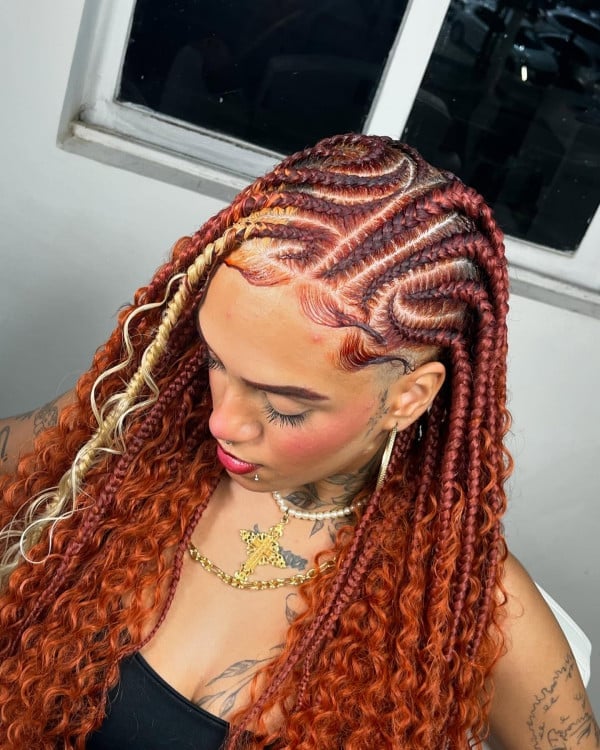
Copper is the color that makes a braided style look lit from within, and this set pairs a fiery copper base with blonde highlights through wavy, loose curly ends. The scalp braids stay intricate and close to the head, then release into mid-back length with front framing. Ask your stylist for: mid-back Fulani braids, copper with blonde highlights. It lands hardest in autumn and winter, when the warm copper reads rich against darker months and holds up at festivals and statement occasions. Dense hair of any texture, shoulder length or longer, gives the braids the density they need, and oval and diamond face shapes wear the middle parting well. Color-safe shampoo and conditioner keep both tones from fading into each other between salon visits.
Half-Up Top Knot Fulani Braids With Blonde Highlights
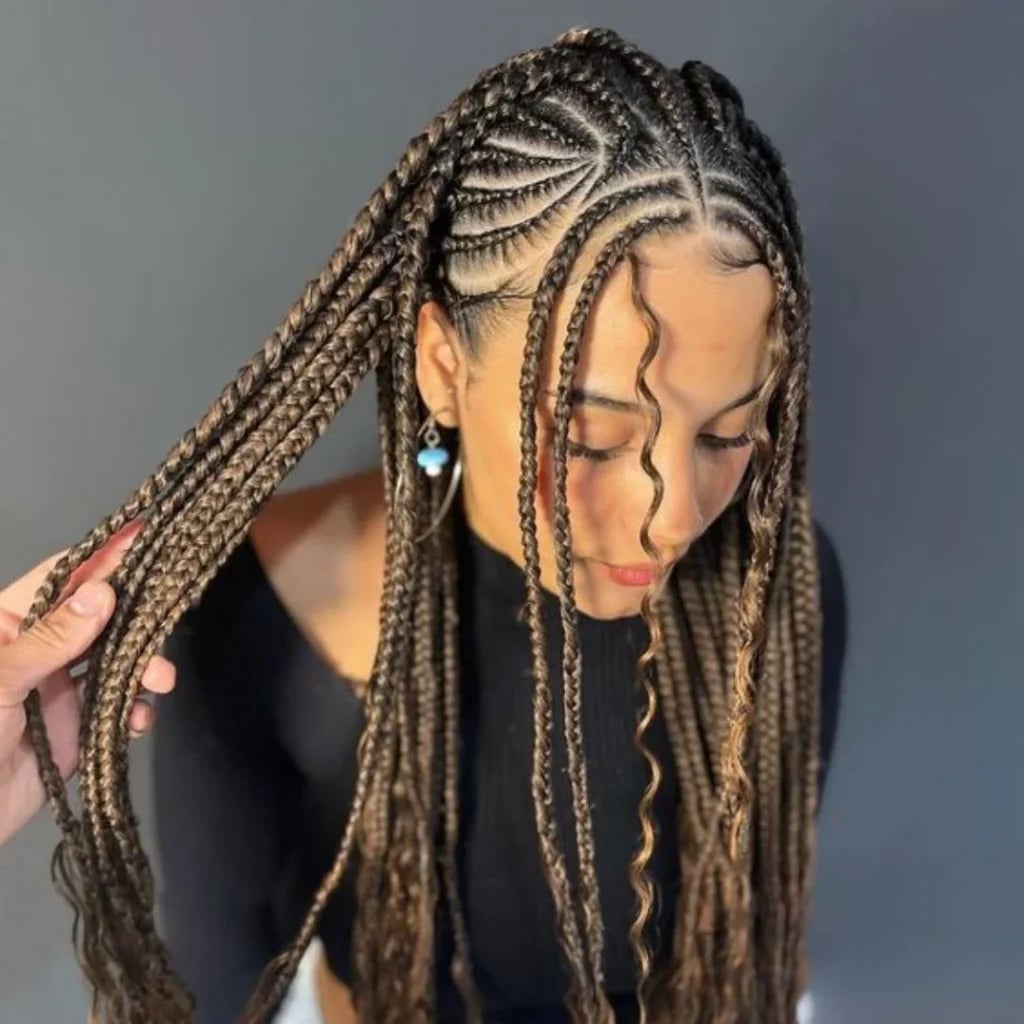
The top knot here is built from braided hair, not loose strands, which is why it sits firm instead of sagging by evening. Intricate scalp braids in black with blonde highlights feed into a half-up knot, while long curly extensions fall to the mid-back and add softness around it. Ask your stylist for: half-up top knot, Fulani braids, blonde highlights. Dense hair starting at shoulder length or longer supports the weight, and a middle parting keeps the front clean across most face shapes.
Building the knot is a two-step job: gather the crown section, wrap it into a bun, then pin the base before loosening the loop for shape. An elastic alone will slide; crisscrossed pins hold it through a long day. Refresh the curly extensions with a light spray and reshape with your fingers. This one is a salon install for the braids, though the knot itself is easy enough to redo at home once the base is set.
Blonde Highlighted Fulani Braids Half-Up Top Knot, Mid-Back
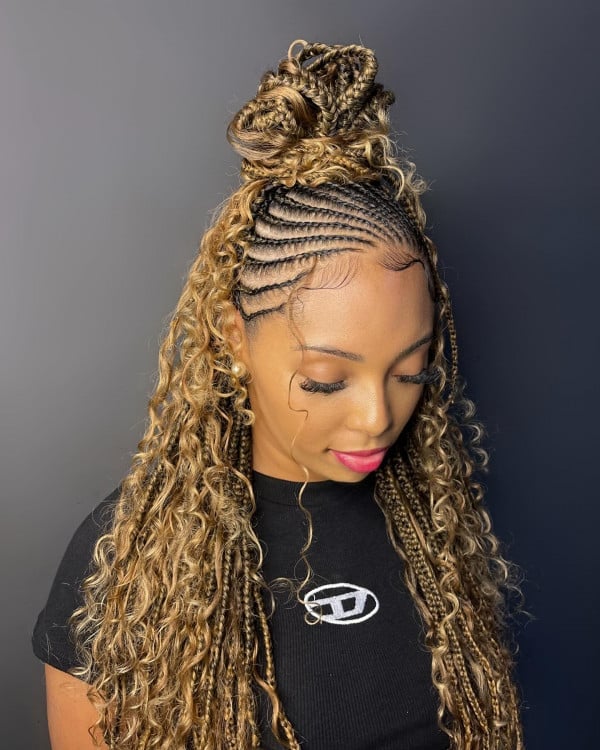
If darker Fulani braids feel a little too serious, take the same intricate scalp pattern and swap the base for blonde highlights woven through the braids and curls. Dense hair starting at shoulder length or longer handles the volume best, and a middle part keeps the shape balanced. Ask your stylist for: half-up top knot Fulani braids with blonde highlights. A silk scarf over the top knot at night prevents frizz at the crown, so the knot stays clean for a full week between refreshes.
Half-Up Half-Down Fulani Braids With Curls
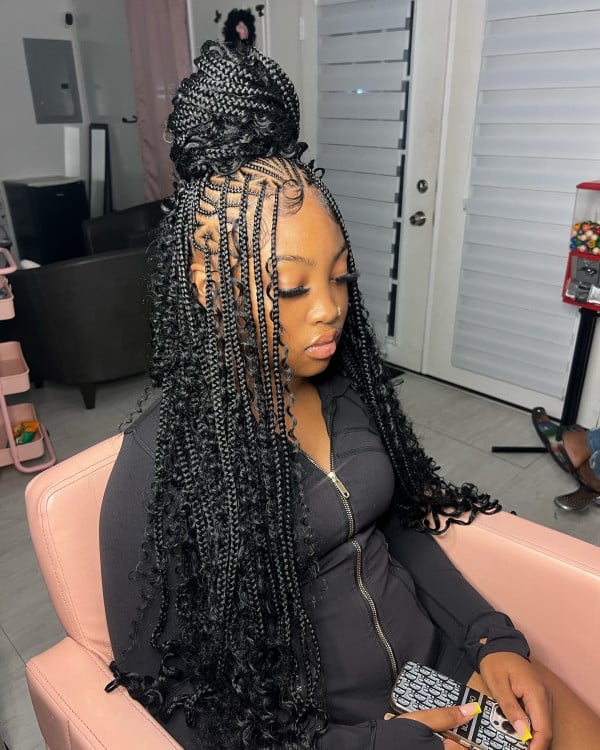
Can half-up styles actually read as polished rather than thrown together? When the scalp pattern is intricate and the curls are defined, yes. The black base with brown undertones adds depth without a full color commitment.
Dense hair starting at shoulder length or longer suits this look best; oval and heart face shapes get the most balance from the middle parting. Ask your colorist for: half-up half-down Fulani braids with curls. Separate the curly sections gently to keep definition, then run a small amount of serum through them for shine. A trim on the ends every eight weeks prevents fraying at the curl tips.
Mid-Back Fulani Braids With Loose Curls and Flower
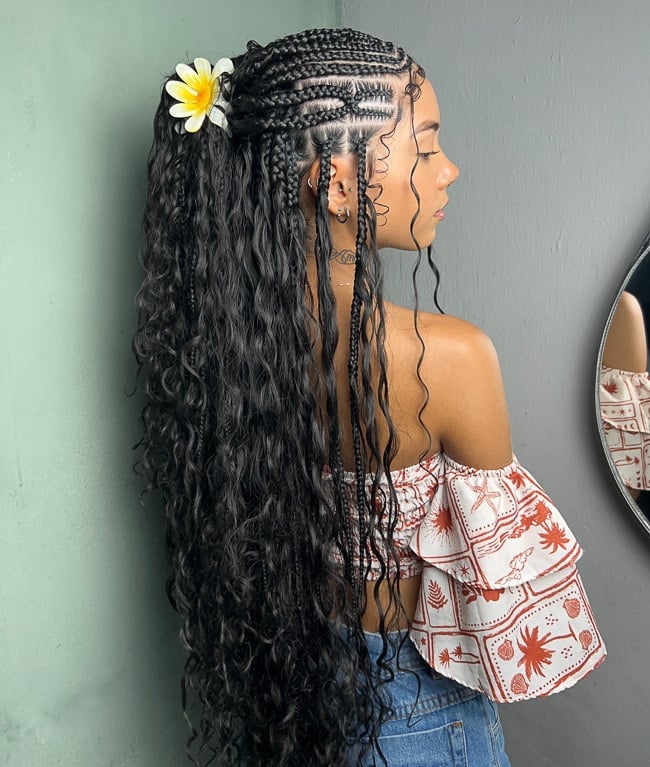
The loose curls here are not an afterthought: they frame the face and shoulders intentionally, while the single yellow flower does the work of an entire accessory drawer. Ask your stylist for: mid-back Fulani braids with loose curls and a flower. The flower should be pinned behind the ear on the side where the braid pattern is most visible. This style is built for a summer wedding or an outdoor event where you want the hair to move without losing its structure. The loose curls last longest when set with a light-hold mousse before the flower goes in.
Mid-Back Fulani Twists With Defined Curly Ends
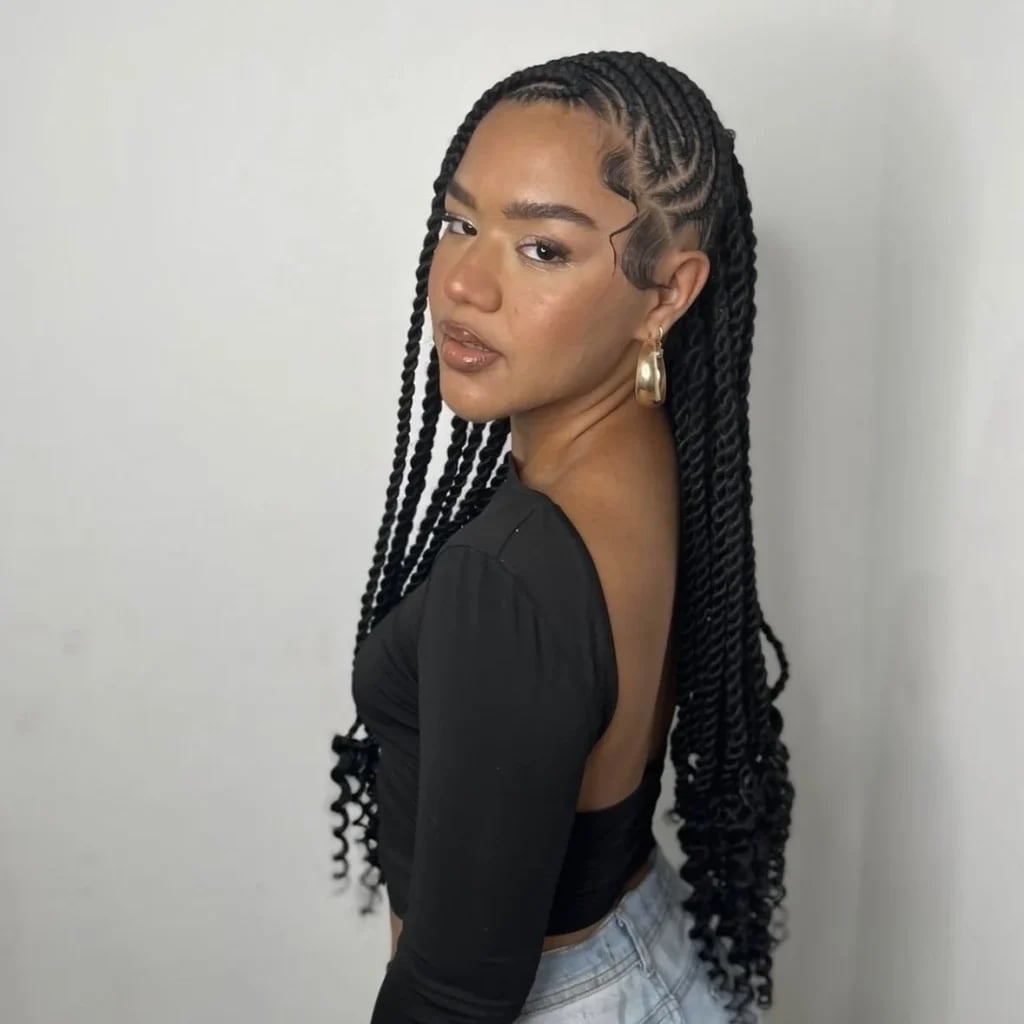
Thick twists with defined curly ends wear like a low-maintenance investment: they look intentional from day one and get better as the week goes on. Dense hair starting at shoulder length or longer holds the twist pattern without loosening, and oval or heart face shapes benefit from the middle parting. Ask your stylist for: mid-back Fulani twists with defined curly ends. A leave-in conditioner on the curly ends every two days keeps them hydrated and prevents the curl from stretching out before your next appointment.
Mid-Back Fulani Braids With Curly Ends and Blonde Streaks
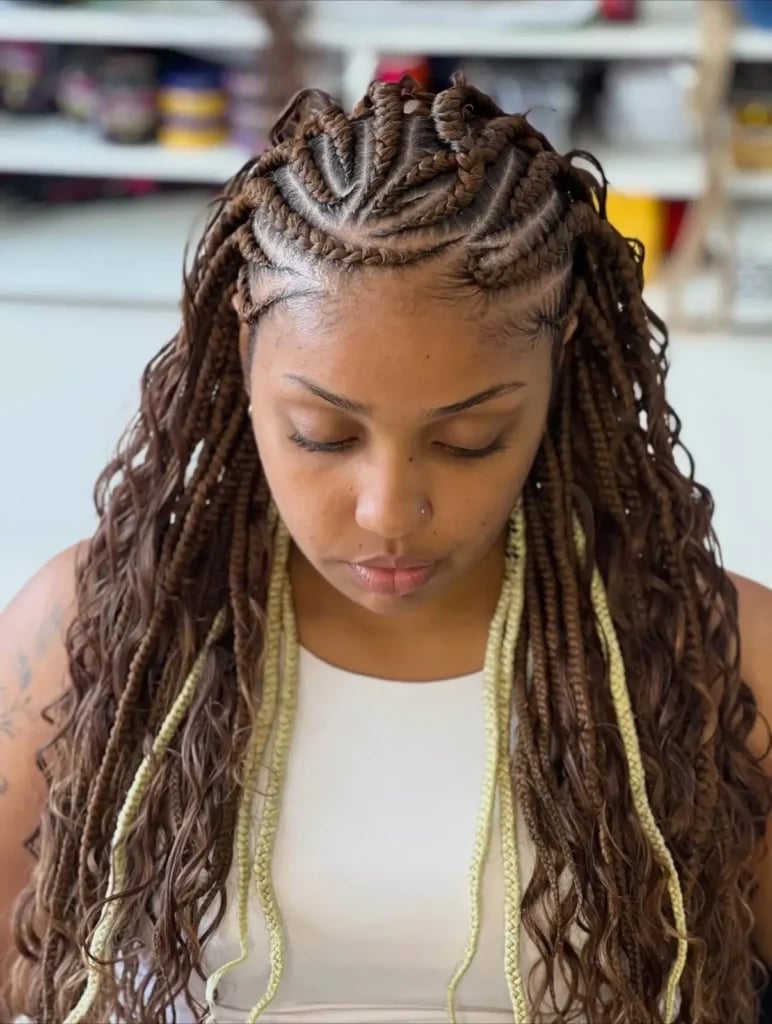
The detailed cornrow pattern at the front requires a stylist who works in clean, even sections. That precision keeps the braids lying flat against the scalp for up to two weeks. Dense hair starting at shoulder length or longer carries the thick braids well; oval and square face shapes suit the structured front. Ask your colorist for: mid-back Fulani braids with curly ends and blonde streaks. This is a salon-only style: the cornrow base takes about three hours, and the streak placement adds another thirty minutes.
The blonde streaks add dimension against the dark brown base, so the color contrasts clearly with the natural tone. A purple shampoo every third wash keeps the blonde from pulling warm.
Brown Fulani Braids With Blonde Highlights and Top Knot, Mid-Back
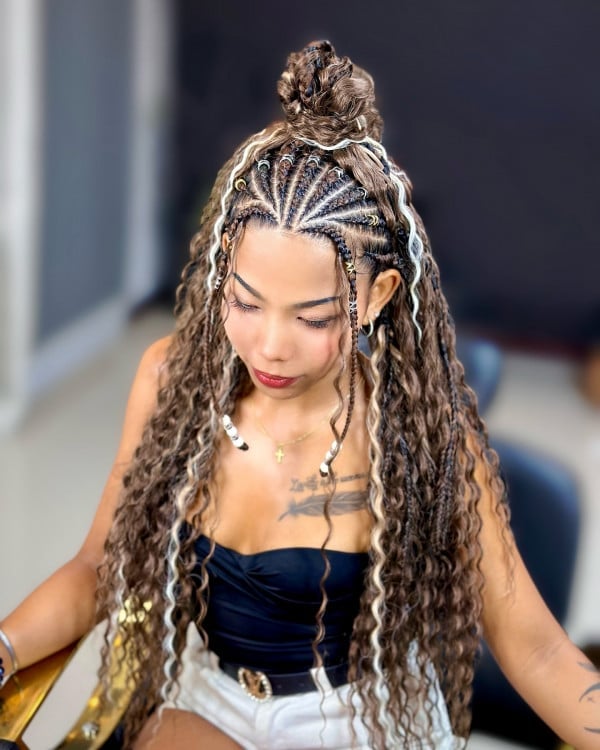
Can a half-up top knot still show off the scalp braiding that makes this style recognizable? Yes, when the front section is woven tight against the head and the rest is gathered loosely above the crown. The brown base with blonde highlights gives the wavy twists varied color from root to end. Dense hair starting at shoulder length or longer holds the knot best, and a center part suits most face shapes. Ask your stylist for: Fulani braids with blonde highlights and a half-up top knot. Secure the knot with pins so it stays put through a full day, and leave a few tendrils loose to soften the hairline.
The blonde pieces reflect light differently than the brown, so the style holds visual interest even when the knot starts to sag around hour six. That is the trade-off of a half-up style: the top stays neat while the bottom swings free.
Mid-Back Fulani Braids With Wavy Twists
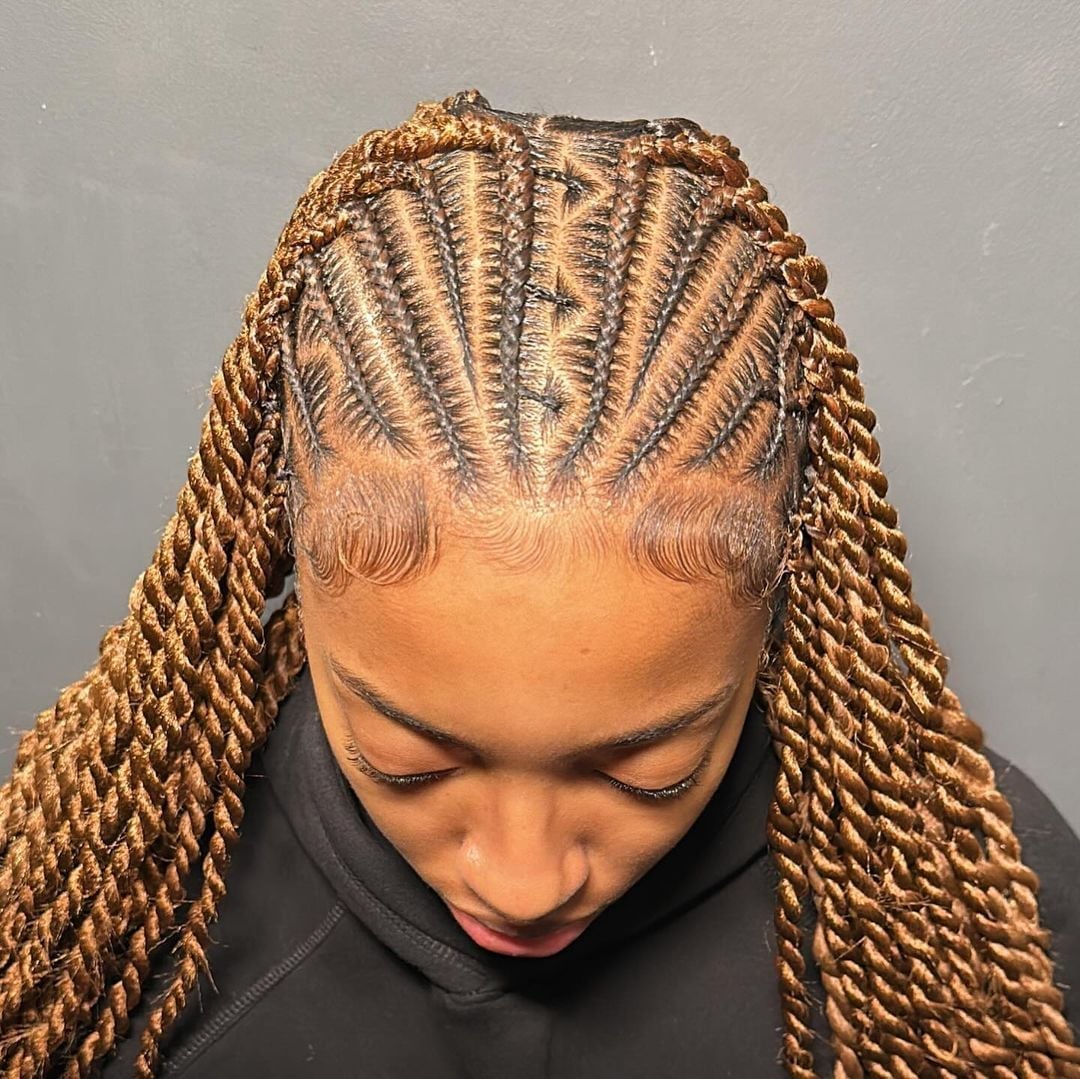
The scalp pattern here is the quiet star, with fine braids radiating from a middle parting before the hair drops into loose, wavy twists that reach mid-back. A uniform light brown color keeps the design cohesive, so the eye travels from the intricate roots to the movement at the ends without a hard stop. The wavy texture gives the twists a softer finish than a pin-straight braid, and it hides new growth at the roots for a few extra weeks. Ask your stylist for: mid-back Fulani braids with wavy twists in light brown. To keep those waves defined, refresh them with a curl-defining spray every few days and skip the brush, which will frizz the twists faster than you can say regret.
Mid-Back Fulani Braids With Twists, Curls, and Silver Beads
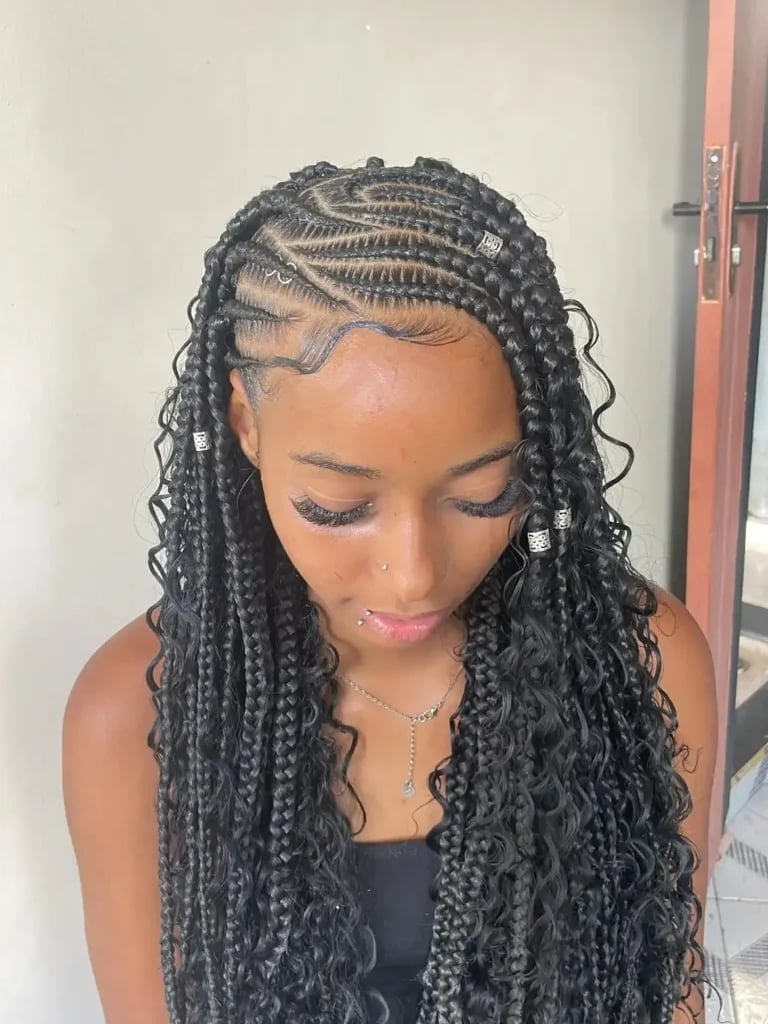
What do you say to get a scalp pattern this detailed without ending up in the chair for nine hours? Ask for the braids to be small and close to the parting, then let the hair transition into looser twists and curly ends. The black base color keeps the focus on the silver beads and metal cuffs threaded through the mid-back length, and the side parting breaks up the symmetry so it does not feel like a uniform. Ask your stylist for: mid-back Fulani braids with twists, curls, and silver adornments. Specify the bead placement: spaced along a few strands, not every braid, which keeps the weight down and the look deliberate. The metal pieces need a wipe with a soft cloth now and then to stay shiny.
Mid-Back Fulani Braids With Geometric Scalp Patterns
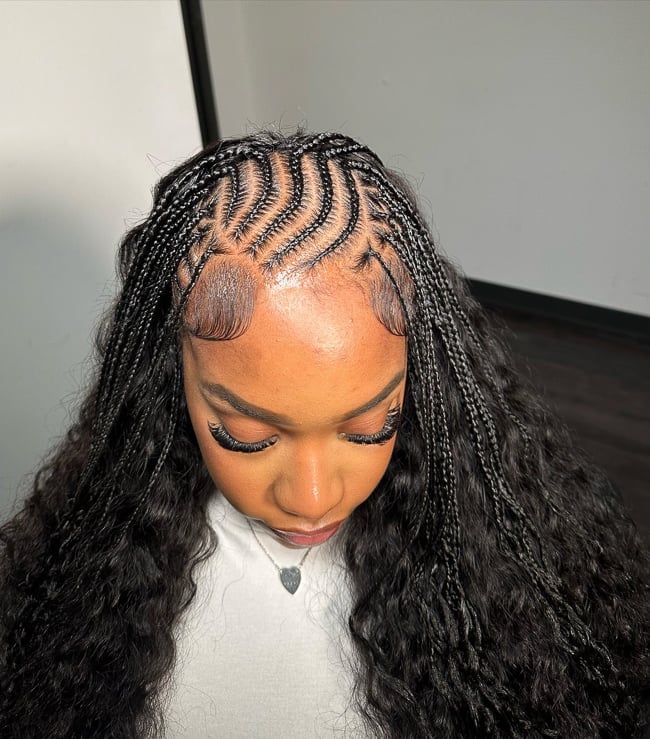
The geometric scalp braids are built first, with fine black braids mapped out in a precise pattern along the crown before the hair falls into loose, wavy ends at mid-back. Getting those angles clean requires a stylist who can visualize the grid before the first braid goes in, because there is no erasing a line once it is woven. This is a salon-only style, and a skilled hand needs a few hours to map and execute the pattern without the parts drifting. Ask your stylist for: mid-back Fulani braids with geometric scalp patterns. The middle parting anchors the symmetry, and fine to medium density hair works best since the pattern reads clearly without bulk. Loose wavy ends keep the overall feel softer than the structured roots.
Mid-Back Fulani Braids With Neat Middle Parting
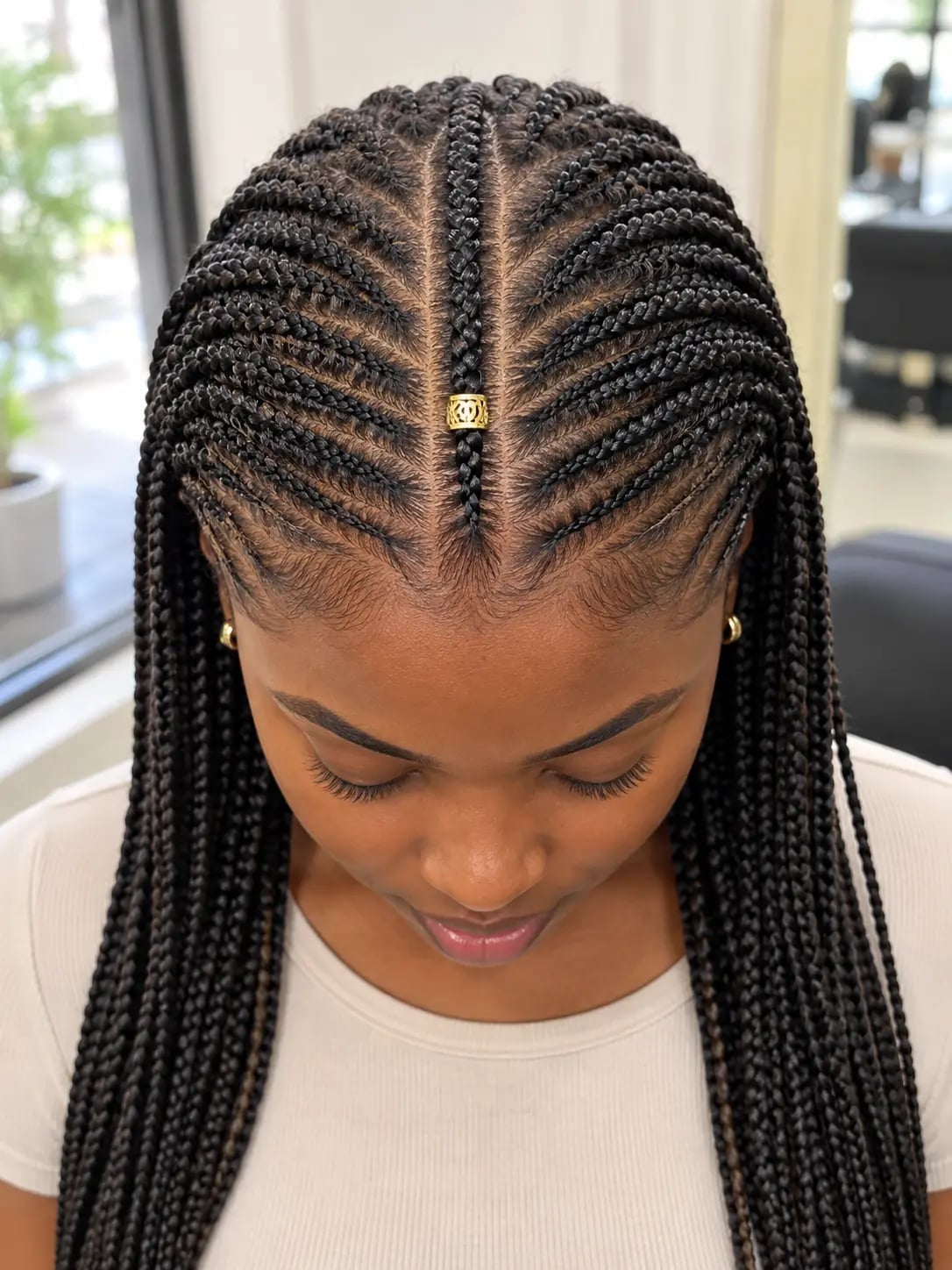
A precise middle parting is the whole game here, with thick black braids falling straight to mid-back and a symmetrical scalp pattern radiating from the center line. The single gold bead at the front of the parting is the only ornament, which makes the neatness the focal point. The catch is that a parting this clean takes meticulous salon work to install, and it will not survive rough sleeping or aggressive styling. Ask your stylist for: mid-back Fulani braids with a neat middle parting. Dense, straight hair holds the uniform thickness best, and oval or long faces suit the centered symmetry. A light gel along the hairline keeps the part crisp, but this style demands more maintenance than its relaxed cousins.
Mid-Back Box Braids With Cowrie Shells and Metal Beads
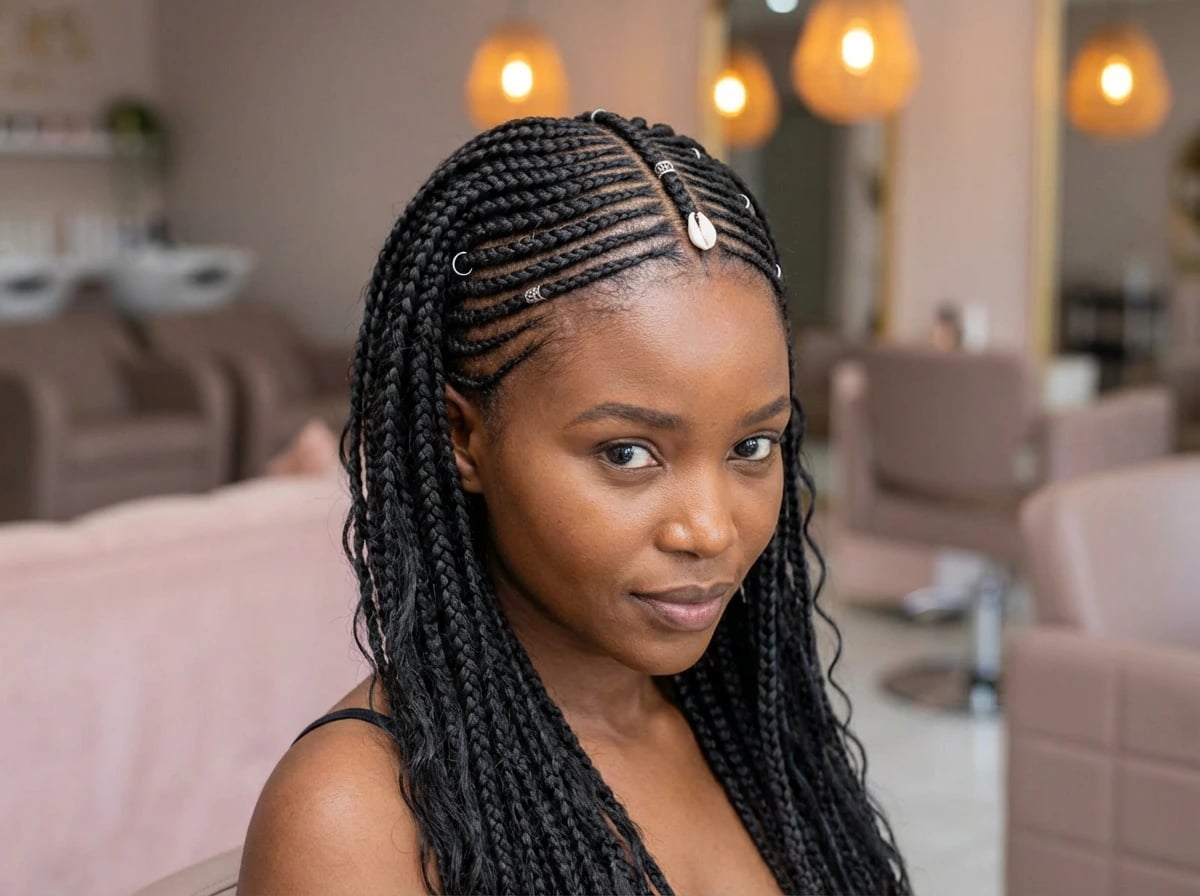
Can your braids do double duty as jewelry? These mid-back individual box braids come in a natural black shade with a coily, thick texture and a neat middle parting. The real draw is the adornments: cowrie shells and metal beads threaded onto the ends. Ask your stylist for: mid-back box braids with cowrie shells and metal beads. Dense, coily hair starting at shoulder length or longer works best here, and the look suits oval and heart faces. For security, have the shells and beads fastened tightly to the braid ends to prevent them from slipping off over time.
Shoulder Length Fulani Braids With Ponytail and Curls
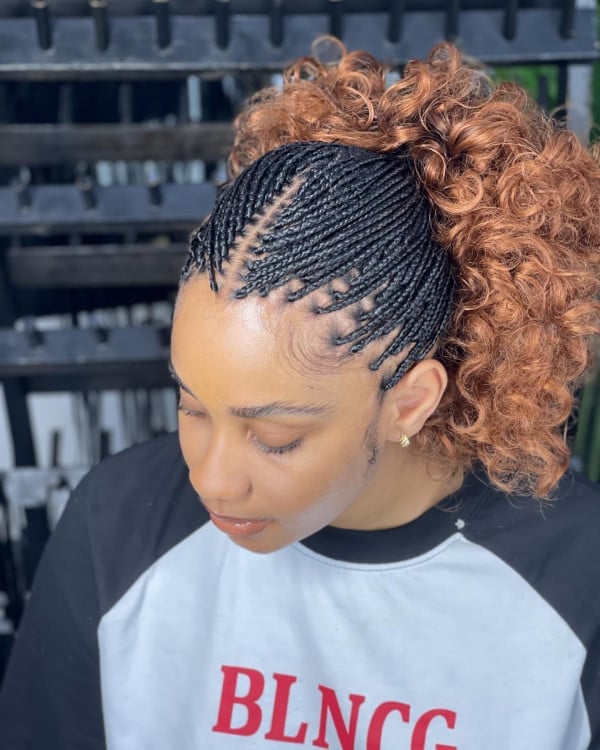
Fulani braids usually hang loose, but this version pulls the scalp braids into a high ponytail with reddish-brown curly extensions. The braids themselves are black, and the middle parting keeps the geometric scalp pattern front and center. Ask your stylist for: shoulder length Fulani braids with a ponytail and curls. Dense hair starting at shoulder length can handle the ponytail, and the style suits all face shapes. A strong hair tie keeps the ponytail secure, and a light mousse on the curls maintains their definition.
Shoulder Length Fulani Braids With Afro Puff
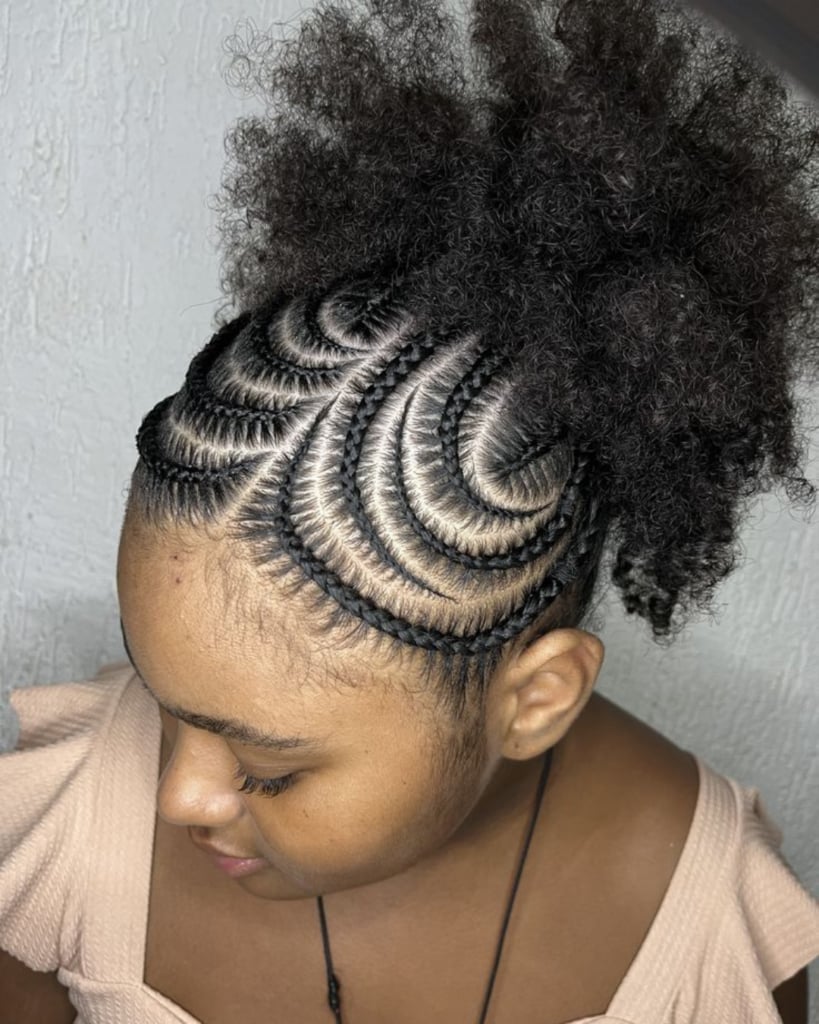
Geometric scalp braids meet a coily afro puff at the front, creating a contrast in texture. The black color keeps the focus on the shape, and the side view shows how the neat cornrows transition into volume. Ask your stylist for: shoulder length Fulani braids with an afro puff. This look suits dense, coily hair and works well on round and oval faces. The afro puff needs regular moisture from a leave-in conditioner and a light oil to stay defined and frizz free.
Collarbone Bob With Fulani Braids on One Side
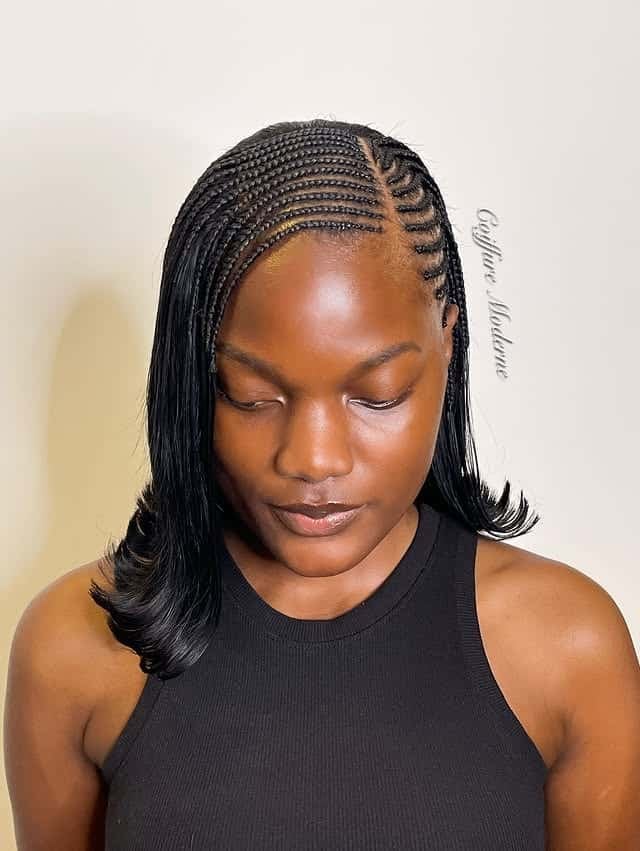
This is not a full head of Fulani braids; it is a bob that borrows the technique on one side. A straight, glossy black bob ends at the collarbone, while the opposite side features neat cornrow-style braids that stop at the middle parting. Ask your stylist for: collarbone bob with Fulani braids on one side. Hair of any density starting at collarbone length can wear this, and it suits square and heart faces. The asymmetrical design gives you styling options, but the bob ends need regular trims to keep the line sharp.
Collarbone Bob With Asymmetrical Fulani Braids
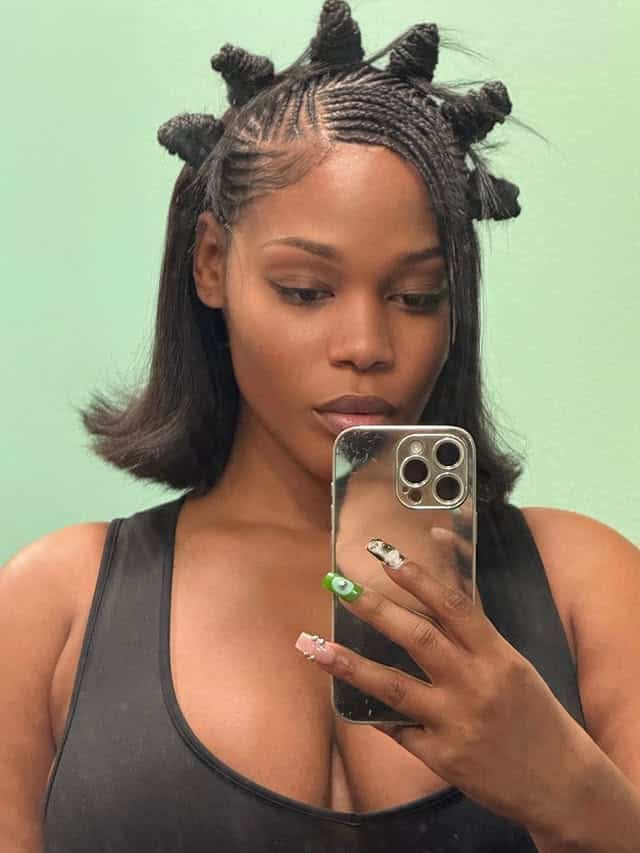
From a technical standpoint, this collarbone bob requires two distinct techniques in one head. The stylist braids Fulani cornrows on one side and leaves the other side as a straight, glossy black bob. Ask your stylist for: collarbone bob with asymmetrical Fulani braids. This style requires a salon visit, as the braid tension and bob length must match precisely. Hair of any density starting at collarbone length works, and the style suits round and oval faces. A smoothing serum on the bob section maintains the gloss without weighing down the braids.
Final Thoughts
For a lower-maintenance Fulani twist, skip the elaborate scalp patterns and focus on the twist texture itself. Minimal adornments keep install time shorter and take-down easier. A solid middle part and uniform braid size give you the look without the hours.
- Keep scalp braids moisturized with a light oil or spray daily.
- Wrap hair in a silk or satin bonnet at night to preserve twists.
- Avoid excessive pulling or tension on the hairline to prevent breakage.
- Gently cleanse the scalp with a diluted shampoo or dry shampoo between washes.
- Plan for a professional take-down and deep conditioning treatment after 6-8 weeks.
Fulani twists offer a rich tapestry of style and adornment.