
Honey balayage is the color technique that paints warmth into your base shade by hand. This season sees a shift toward richer, deeper honey tones that blur the line between highlight and base, giving hair a lived-in glow that grows out softer than foils.
This collection of 18 Trendy Honey Balayage looks spans collarbone layers to mid-back lengths, with options for dark bases, caramel notes, and ash undertones. Whether your hair is fine and needs a root shadow to add depth or coarse and wants a lighter tone around the face, each idea includes a specific formula to ask your colorist for, plus the upkeep schedule that keeps the tone from turning brassy.
Long Wavy Hair With Honey Brown Balayage
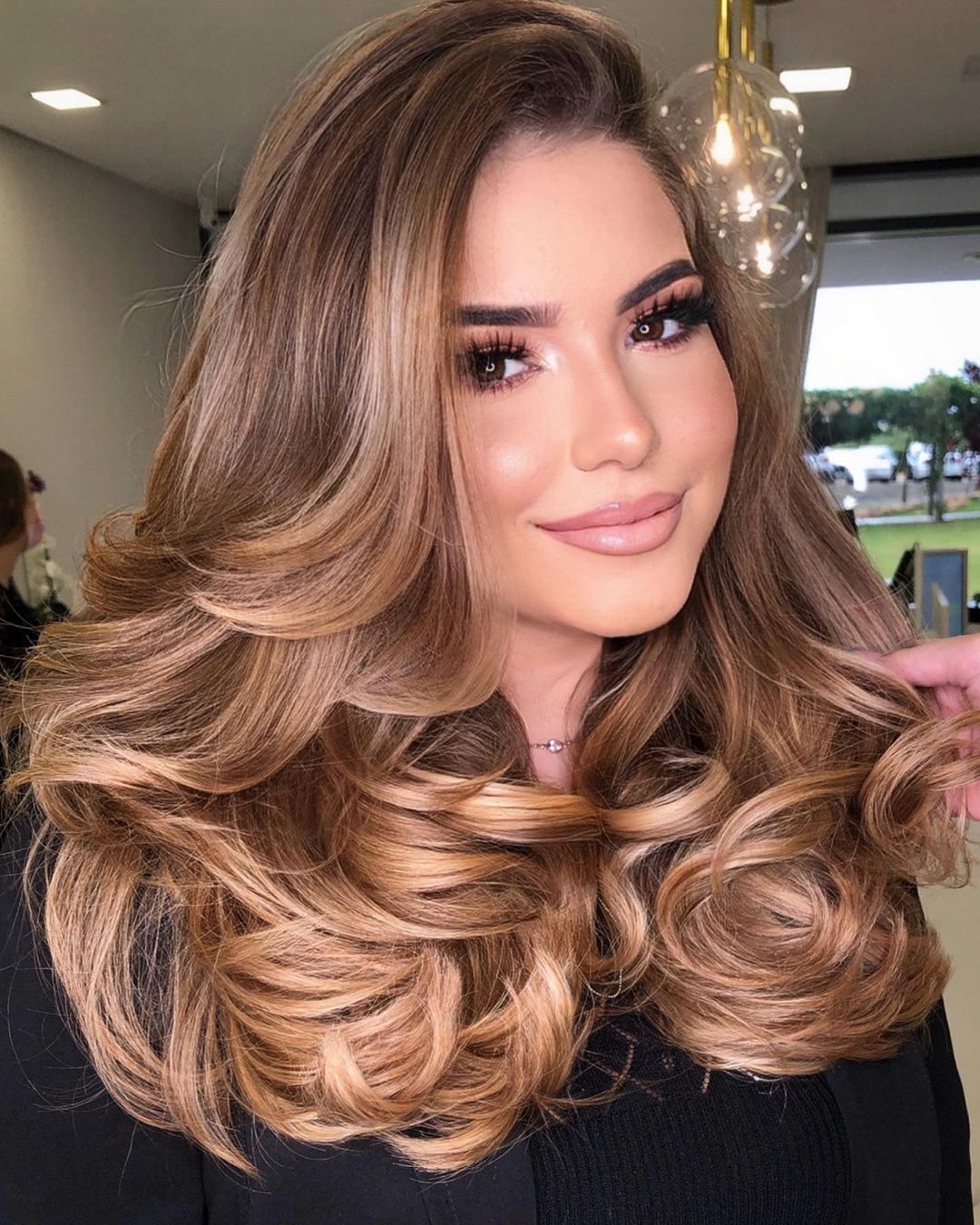
A honey brown base with lighter honey balayage, painted through long layers, turns voluminous curls into a dimensional landscape. The curtain bangs and middle part soften the overall shape rather than cutting it off at the chin. Thick, wavy hair at a long length is the natural candidate here; the layers prevent the weight from pulling the curl out. Ask your colorist for: long balayage, honey brown base, lighter honey highlights, curtain bangs. A large barrel curling iron builds the curls in about twenty minutes, and a trim every eight to ten weeks keeps the ends from dragging the bounce down.
This style works for both a dinner reservation and a casual day. The balayage placement hits the mid-lengths and ends, so the root line stays low-maintenance for about three months. If your hair is fine, skip the heavy layers and ask for a more gradual transition instead.
Mid-Back Balayage With Hot Honey Tones
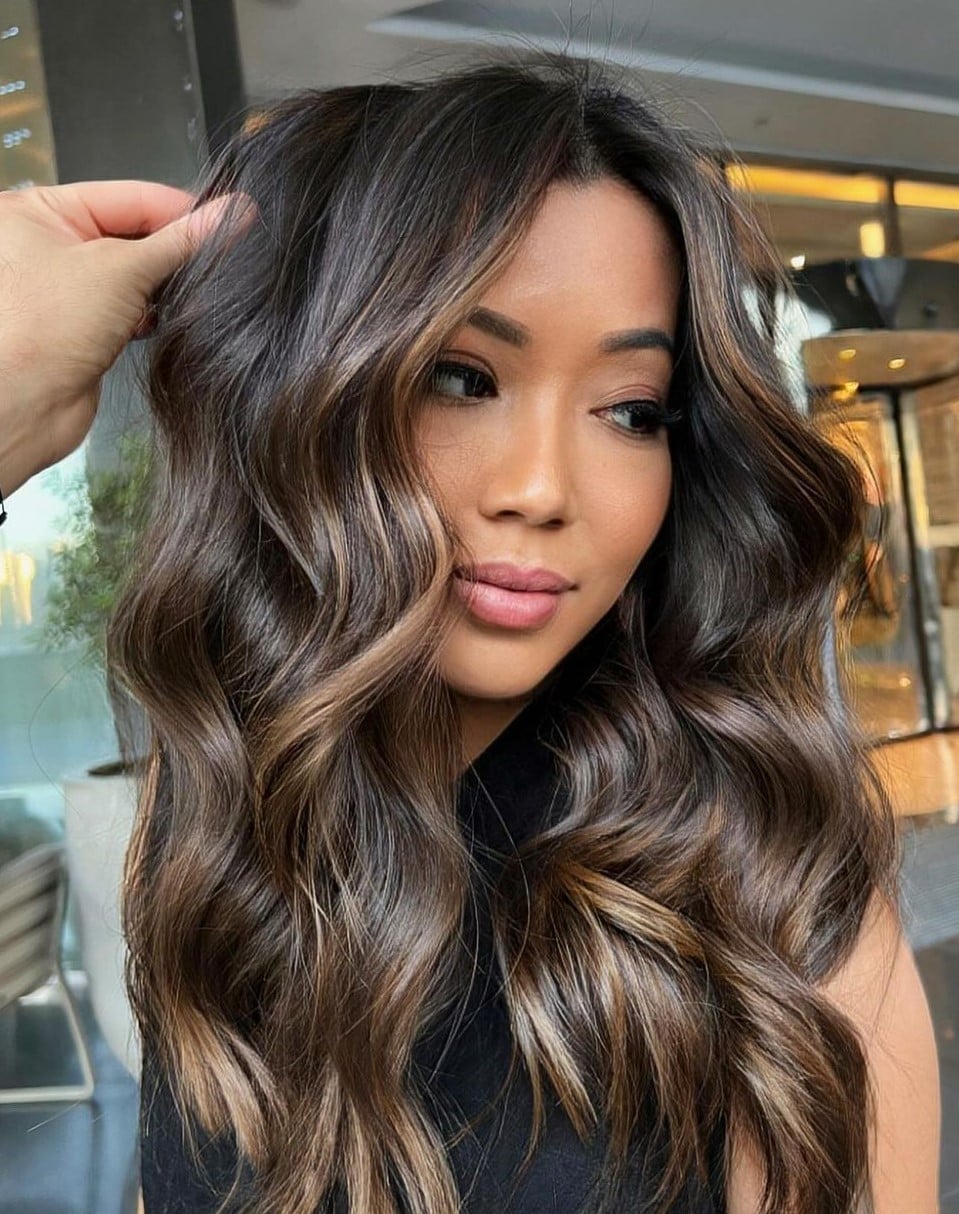
Hot honey brown balayage on a darker base creates a warmth that leans more amber than golden. The mid-back length and soft blowout waves let the color travel from the mid-lengths down, leaving the root area deeper for a lived-in effect. Ask your colorist for: hot honey brown balayage, soft waves, layered cut. The tone works year-round, but it is especially useful in fall and winter when cooler weather calls for richer shine. A blowout with a round brush gives the waves volume without extra product, and a touch-up every ten to twelve weeks keeps the tone from cooling off.
Mid-Back Dark Brown With Honey Blonde Balayage
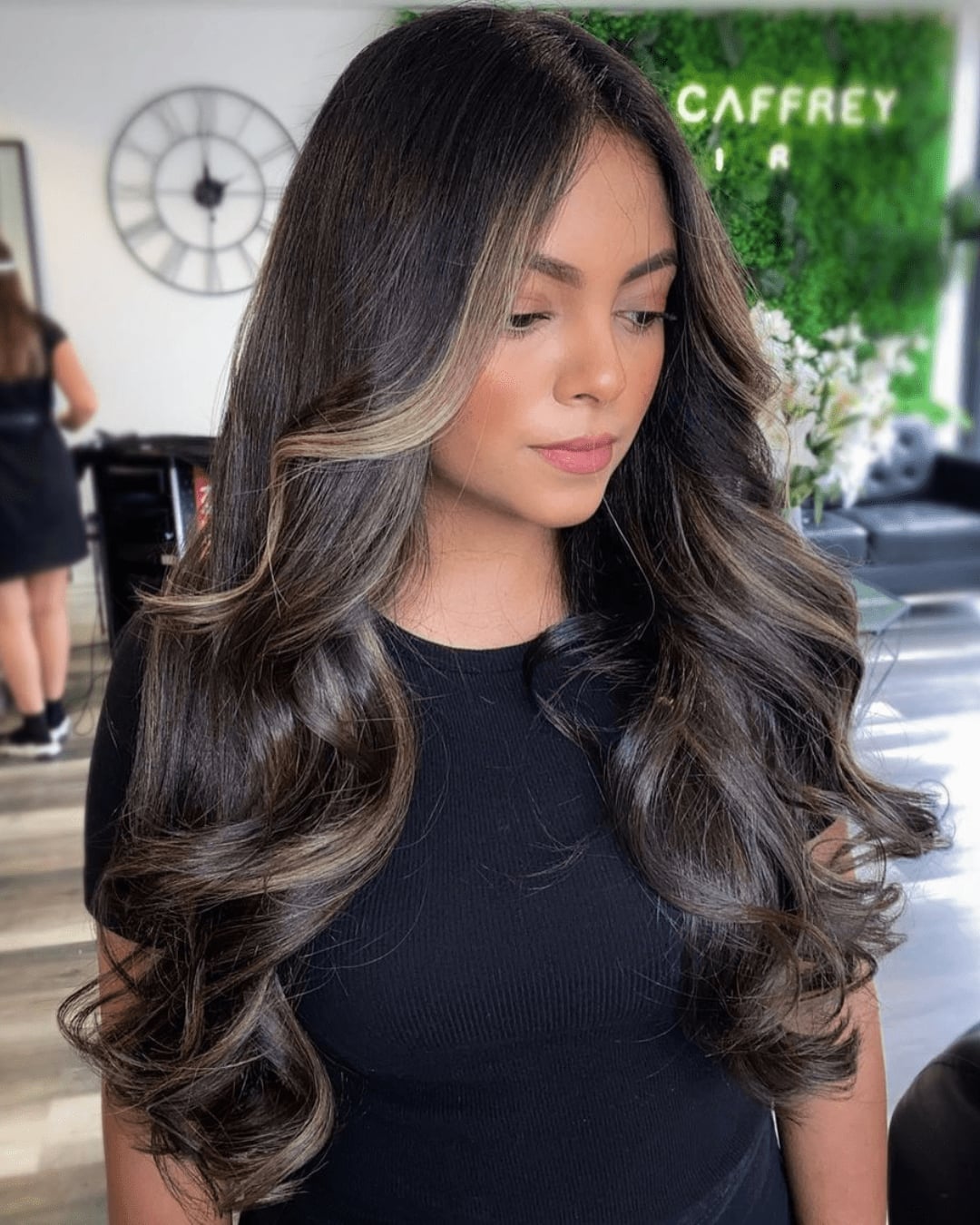
Contrast starts with placement. A dark brown base with honey blonde balayage, concentrated at the front and through the mid-lengths, creates that contrast. The curtain bangs catch the lighter pieces first, so the color frames the face before it reaches the ends. Ask your colorist for: dark brown base, honey blonde balayage, face-framing pieces, curtain bangs. Keep the base deep enough that the honey contrasts clearly with the brown. A blow-dry with a round brush and a trim every eight to ten weeks keep the shape and the color separation sharp.
Long Dark Base With Caramel Honey Balayage
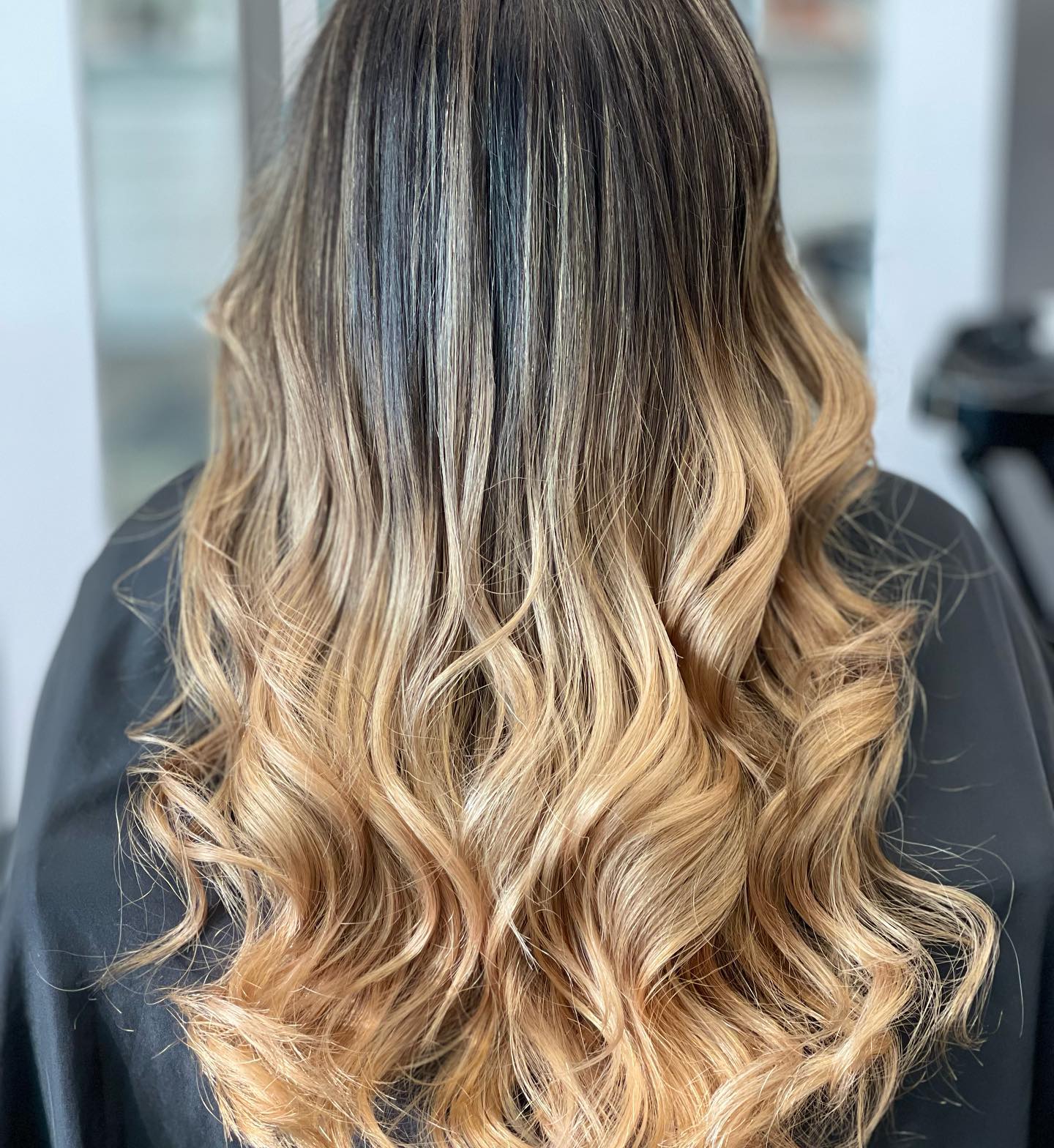
A straight caramel balayage can look one-note. A dark brown base with both caramel and honey tones layered through long, loose waves gives the color depth that shifts as the hair moves. The back view here shows warmer pieces sitting lower, with a darker top for a more natural grow-out. Ask your colorist for: dark brown base, caramel and honey balayage, long layers. A texture spray on damp hair, scrunched and air-dried, creates the loose wave without heat. A trim every eight to ten weeks maintains the shape, and a gloss treatment every six to eight weeks keeps the caramel from turning brassy.
Mid-Back Honey Balayage With Curtain Bangs
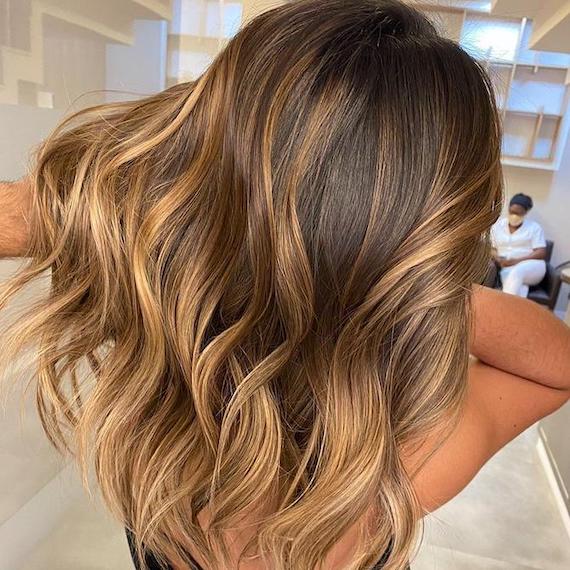
A honey balayage on a brown base with curtain bangs is a practical choice for anyone who wants color without constant root maintenance. The curtain bangs hit just past the cheekbones, catching the lighter honey pieces and pulling the warmth forward. The mid-back length and blowout waves give the color room to spread without overwhelming the face. Ask your colorist for: honey balayage on brown base, curtain bangs, blowout style. This works well for a work week or a weekend brunch because the blowout holds for two days with dry shampoo at the roots. A baseline trim every six to eight weeks keeps the bangs from falling into your eyes.
Collarbone Layers With Honey Caramel Balayage
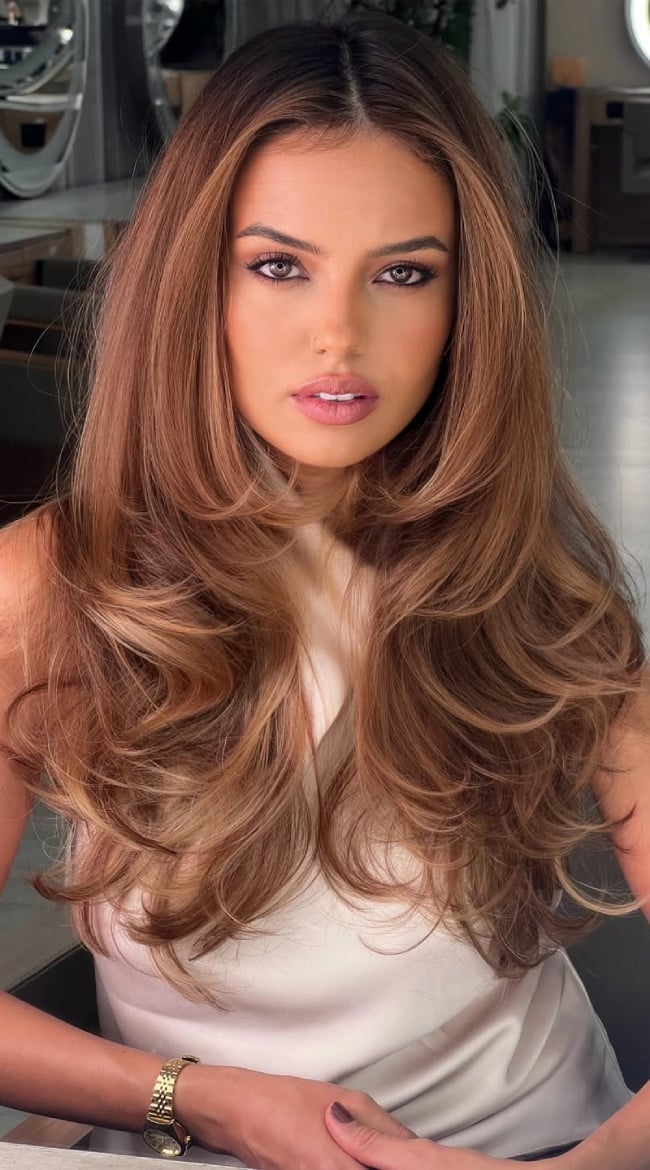
Face-framing layers draw attention outward, which makes a collarbone cut feel lighter around the jaw without losing its weight. The honey caramel balayage here lands warm enough to suggest sun exposure, not a box dye mishap. Thick, wavy texture holds the shape best, and the middle part keeps the balance symmetrical. Ask your colorist for: collarbone length, honey caramel balayage, face-framing layers. A blowout and a round brush get you the glossy finish in about twenty minutes; the layers need a trim every six to eight weeks. This one is strictly salon work, the balayage placement demands a practiced hand.
Collarbone Waves With Bright Honey Blonde Balayage
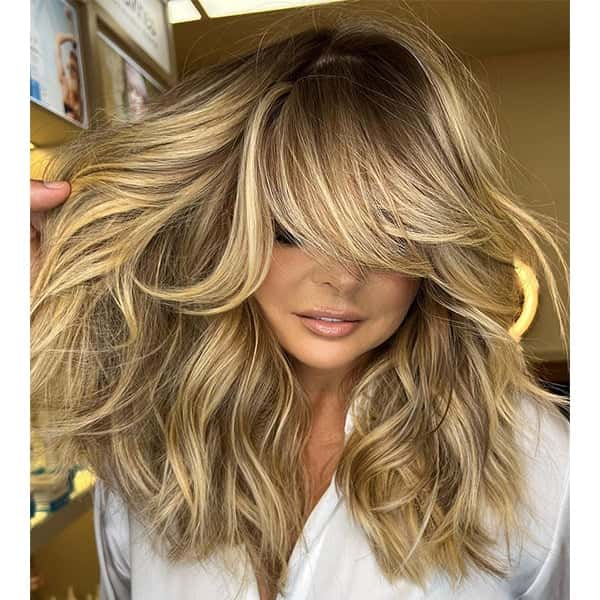
Bright honey blonde balayage against a lighter base looks like it spent a month in southern light, which is exactly why it works for the stretch between late spring and early fall. The curtain bangs sweep softness into the front, and the voluminous blowout keeps the collarbone length from falling flat at the ends. Thick, wavy hair carries the dimension without extra effort. Ask your colorist for: collarbone length, bright honey blonde balayage, curtain bangs. One honest drawback: the lighter lift can show brassiness faster, so expect a toning visit around week four or five.
Collarbone Layers With Dark Brown Honey Blonde Balayage
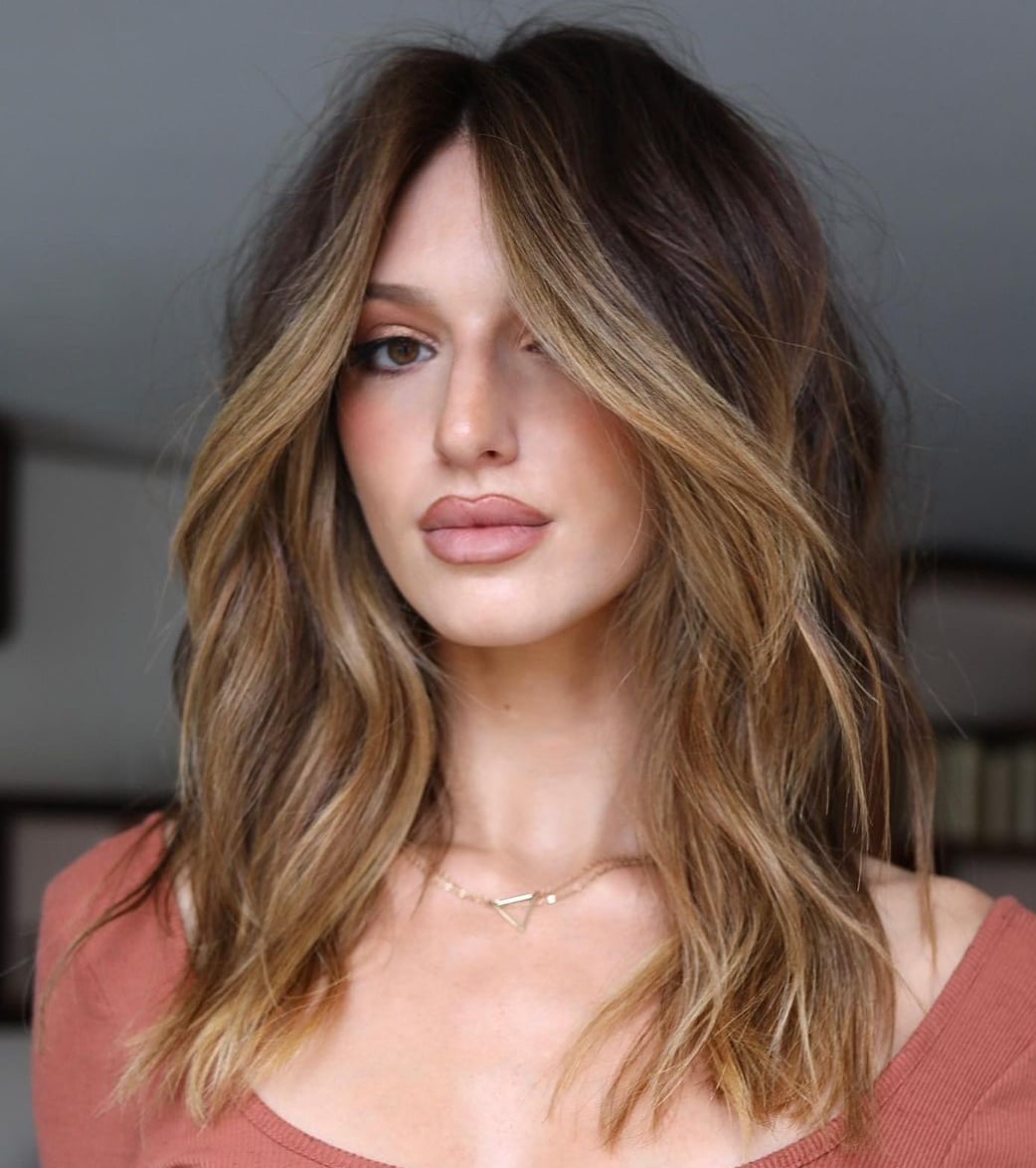
A dark brown base with honey blonde balayage creates contrast that stays sharp with a consistent schedule. The loose waves and curtain bangs soften the transition, and the collarbone length keeps the whole thing practical for everyday wear. Thick, wavy texture helps the balayage blend naturally without harsh lines.
Ask your colorist for: collarbone length, dark brown base, honey blonde balayage, curtain bangs. Work a smoothing serum through the ends to cut frizz, and plan a trim every six to eight weeks. The grow-out is forgiving for about three months, after that the contrast starts to blur.
Collarbone Balayage With Honey Blonde Face Framing
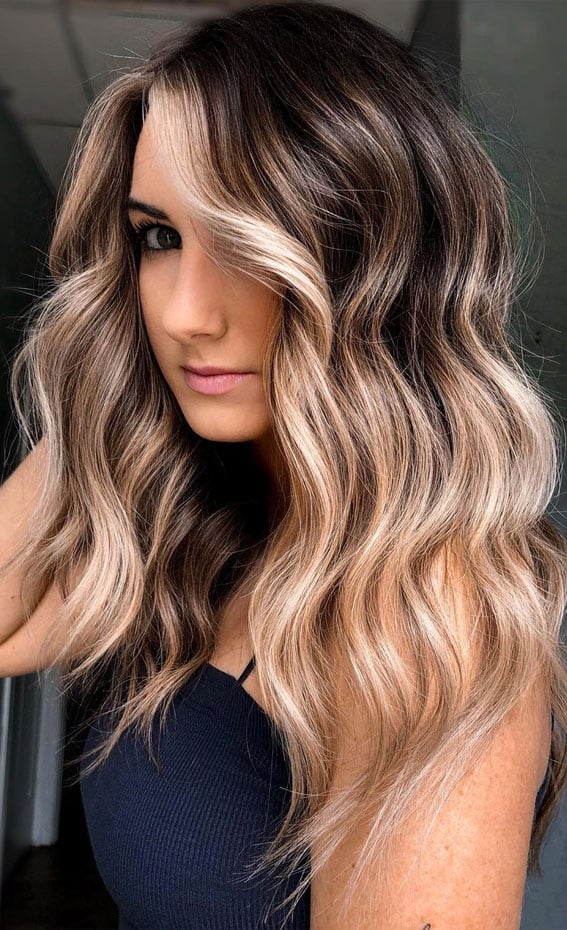
Face-framing balayage pieces are painted heavier around the front sections, so the lightness concentrates where the eye lands first. The dark brown base stays deep through the back, which gives the honey blonde highlights a graduated effect. Thick, wavy texture at collarbone length lets the framing pieces swing without losing body. Ask your colorist for: collarbone length, dark brown base, honey blonde face-framing highlights. This is a salon-only placement. The front sections need a hand-painted blend that a box kit cannot replicate.
Collarbone Ash Blonde With Honey Balayage
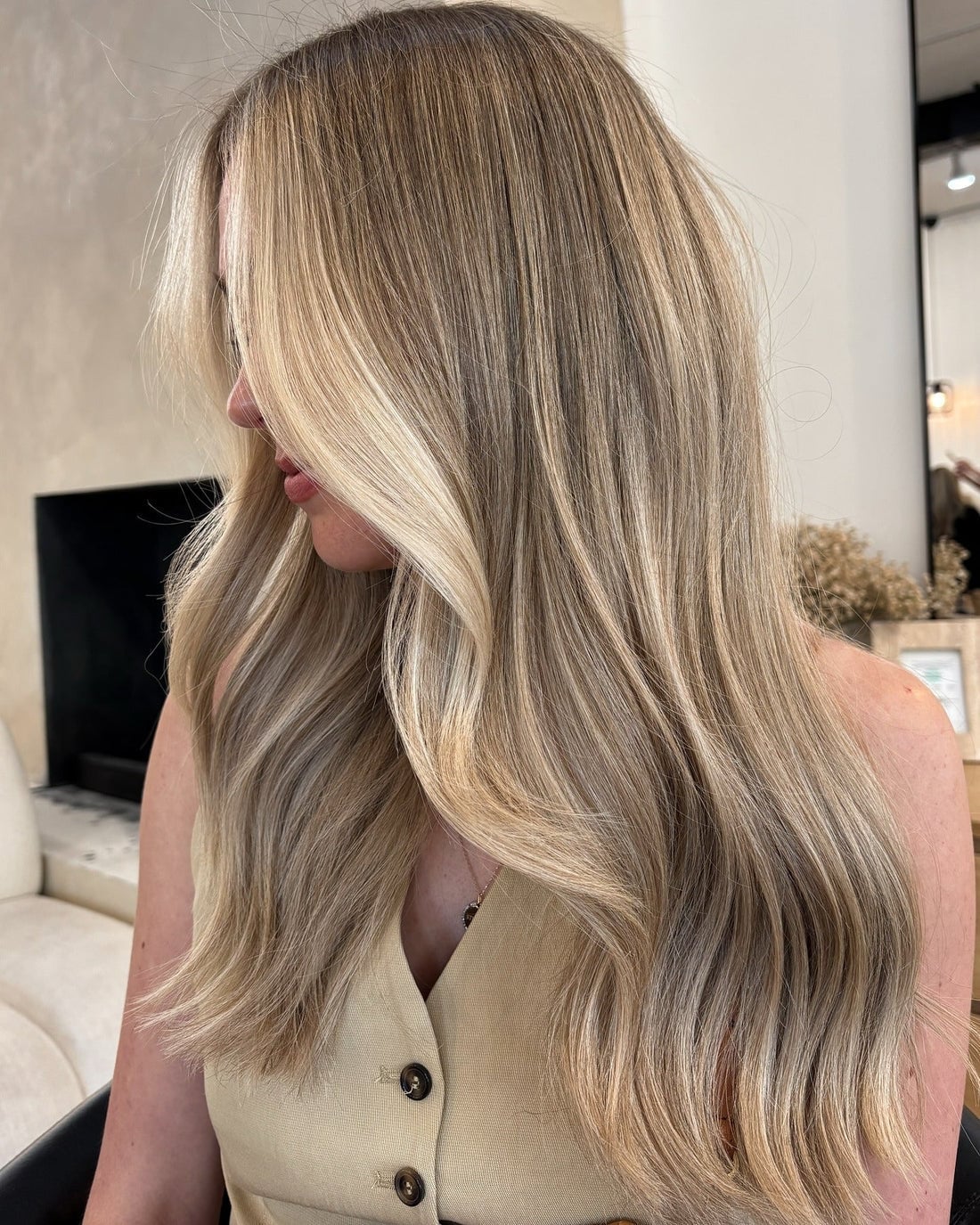
An ash blonde base can read flat on its own, but a honey balayage woven through the length adds warmth without veering brassy. This combination works especially well for fine, wavy texture, where the lighter pieces create an illusion of depth and movement that darker all-over color would not. The curtain bangs and collarbone length keep the look current and soft. Ask your colorist for: ash blonde base, honey blonde balayage, curtain bangs, collarbone length. A volumizing mousse and a small round brush give the blowout lift that lasts through the day.
Shoulder Length Medium Brown With Honey Blonde Balayage
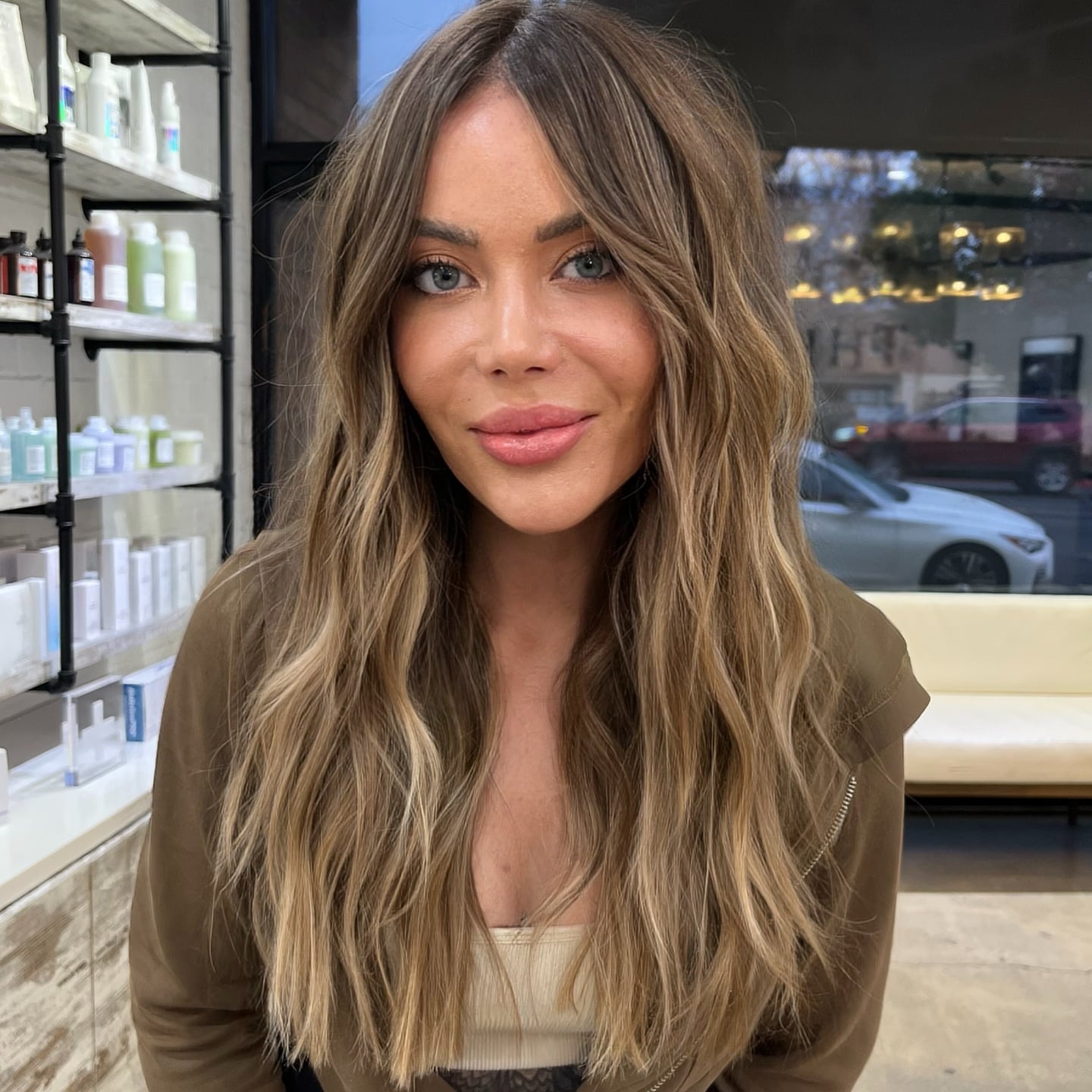
To coordinate honey blonde balayage with curtain bangs, ask your colorist for a medium brown base with honey blonde balayage, then ask your stylist for shoulder length layers and curtain bangs. The balayage softens the dark to light transition, and the curtain bangs frame the cheeks. Thick, wavy hair of shoulder length works best here, and the middle part keeps both elements grounded. The layers give the waves somewhere to land, so the honey tones appear as dimension, not stripes.
Shoulder Length Dark Brown With Honey Ash Balayage
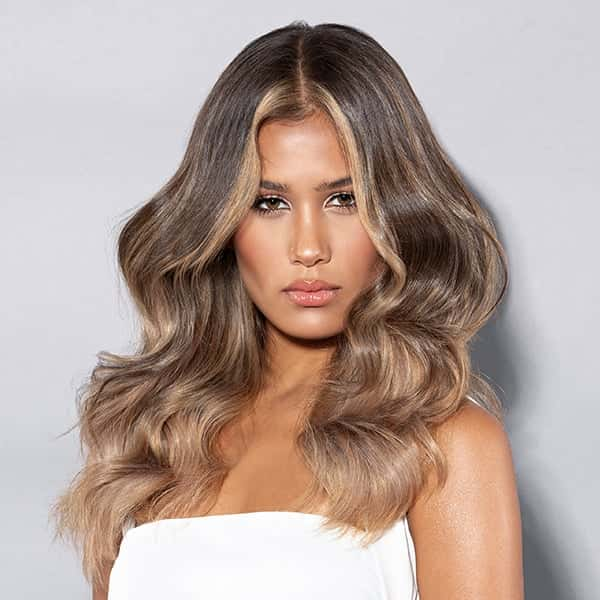
The dark brown base is the anchor, the honey blonde balayage provides warmth, and the ash blonde highlights keep the whole thing from going too golden. It is a balancing act. Shoulder-length wavy hair styled in a blowout shows off the three tones clearly, and the middle part lets the dimension speak for itself. There is no bangs to obscure the color work. The upkeep is honest: the dark base needs a gloss every six to eight weeks to stay rich, and the ash highlights will need a purple shampoo once a week to avoid turning brassy. A trim every six weeks keeps the ends sharp.
Shoulder Length Light Honey Brown Balayage
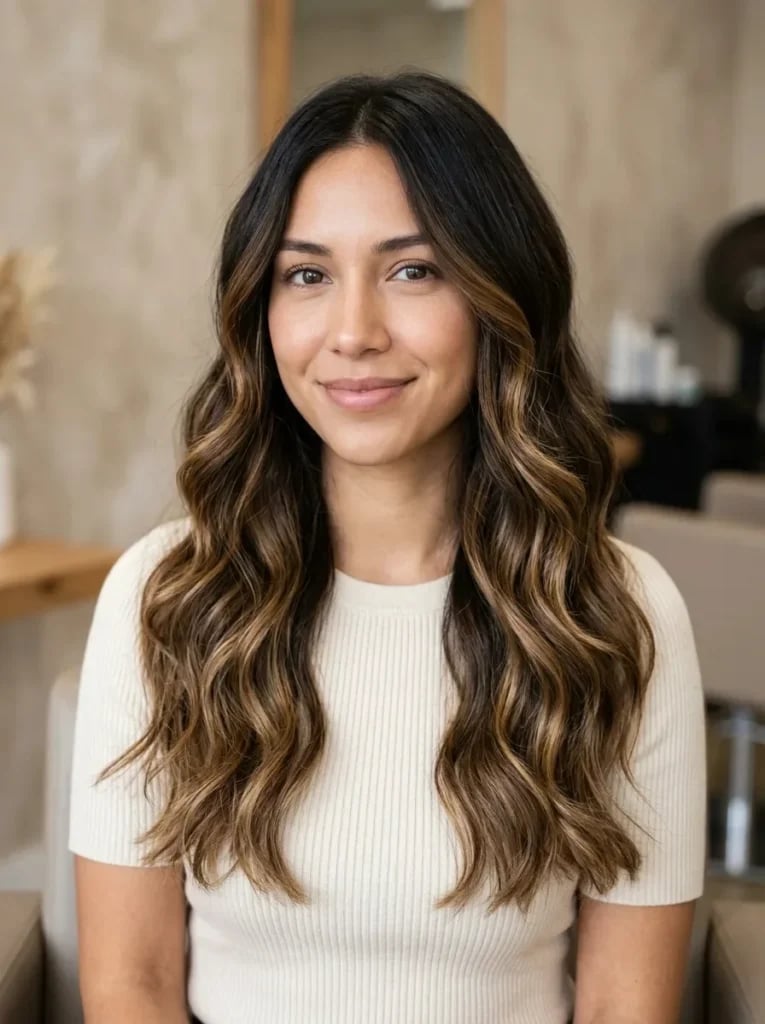
A light honey brown balayage that lives in the same tonal family as the base is deceptively hard to pull off at home. The subtlety is the whole point. Shoulder-length fine, wavy hair styled with an air-dried finish shows off the soft warmth without the contrast screaming for attention. Ask your colorist for a light honey brown balayage with a very fine weave. The salon-leaning difficulty comes from avoiding stripes on fine hair, which happens fast if the sections are too thick. A middle part keeps the distribution even, and the lack of bangs means the color work starts at the crown.
Mid-Back Straight With Honey Blonde Gradient
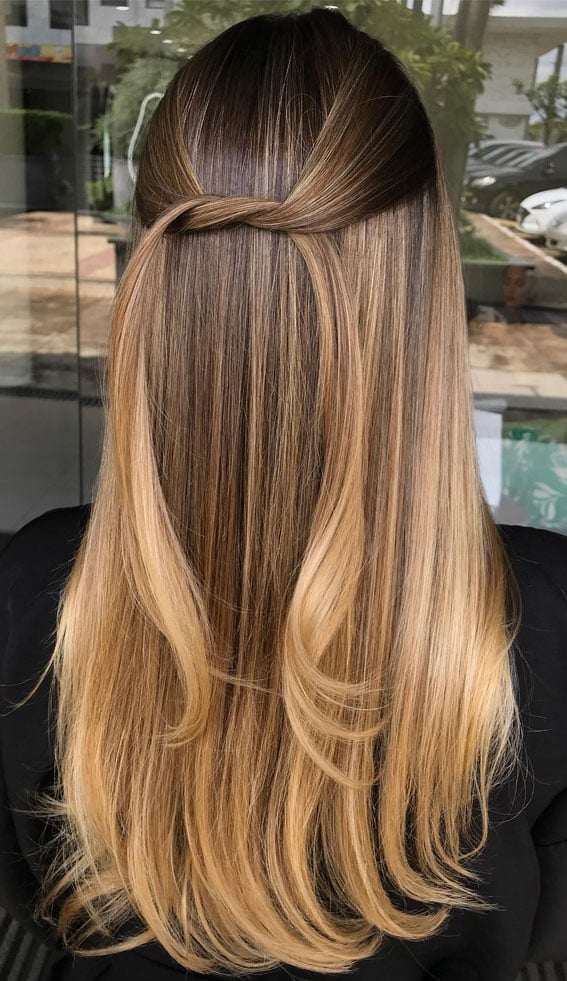
A dark brown base that graduates into honey blonde balayage toward the ends is a gradient, not a highlight pattern. The back view shows the technique best, since the color is concentrated below the shoulders. Mid-back length straight, thick hair needs long layers to let the gradient read clearly, and soft waves at the ends stop the line from looking blunt. Ask your colorist for a dark brown base with a honey blonde balayage gradient.
The drawback: the honey blonde ends can turn brassy around week four, especially on straight hair where the light hits the same spot. A toning gloss at the eight-week mark keeps the gradient intact.
Mid-Back Dark Brown With Caramel Honey Balayage, Wavy
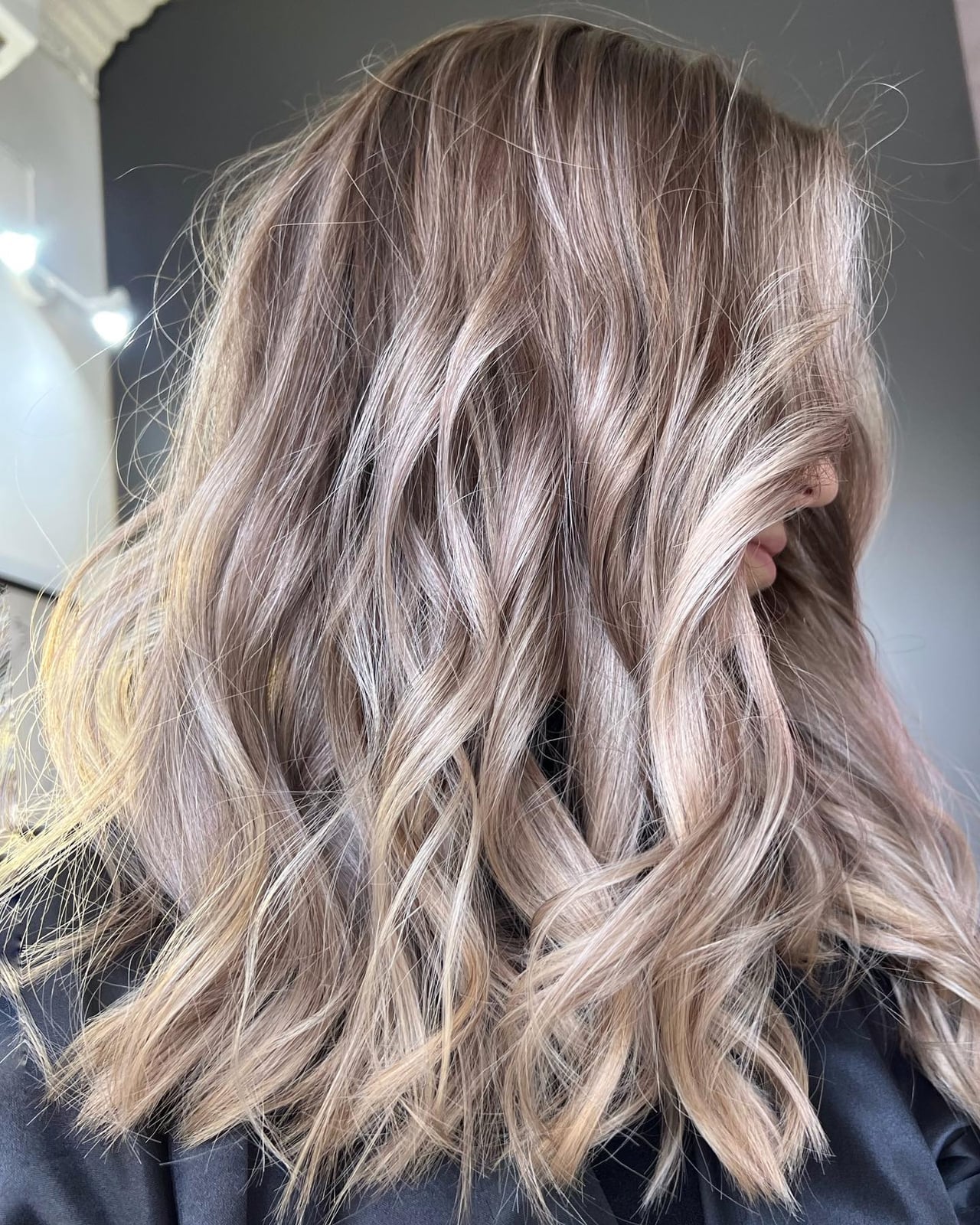
Dark brown hair with caramel honey balayage wears differently depending on how you style it. On loose waves, the caramel tones catch light in the bends, which makes the color look deeper and more blended than it actually is. Thick, wavy hair of mid-back length holds the wave pattern for a full day without re-curling, so the balayage stays dimensional until you wash. Ask your colorist for a dark brown base with caramel honey balayage. A salon does the heavy lifting here, but the DIY upkeep is manageable: a curl cream and scrunching to refresh the shape between washes. A trim every eight weeks keeps the ends from tangling.
Mid-Back Dark Brown With Honey Caramel Balayage, Close-Up Take
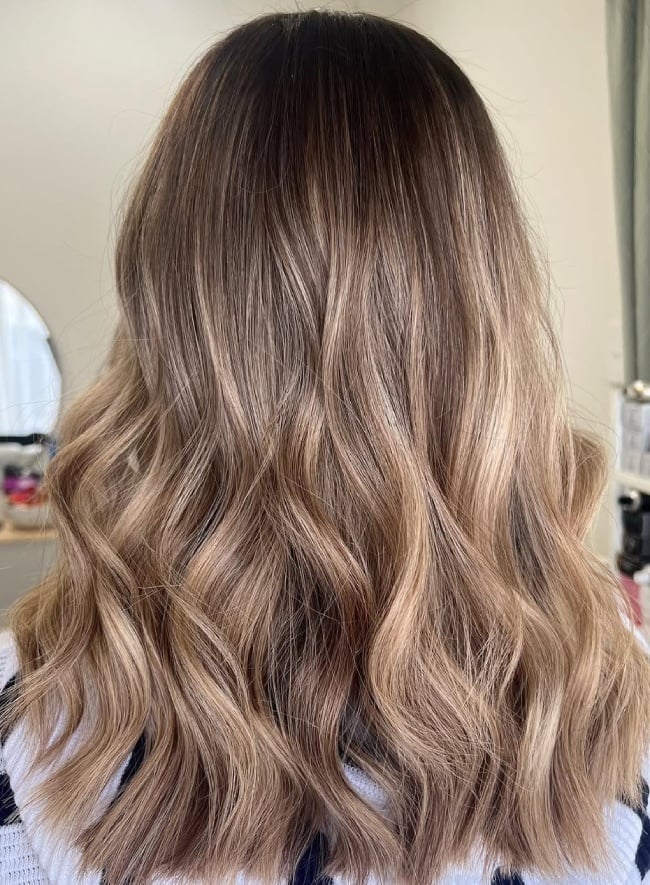
This honey caramel balayage does not rely on a single shade. The dark brown base keeps things grounded while the lighter pieces add dimension. It suits thick, wavy hair at mid-back length, with a middle part. Ask your colorist for: dark brown base, honey caramel balayage. A texturizing spray helps define the loose waves without weighing them down. Plan on a trim every eight to ten weeks to keep the shape fresh. The trade-off: this depth and dimension take about three hours in the salon, and the multi-tonal effect requires a colorist who understands how to layer caramel over brown.
Mid-Back Honey Balayage With Darker Base
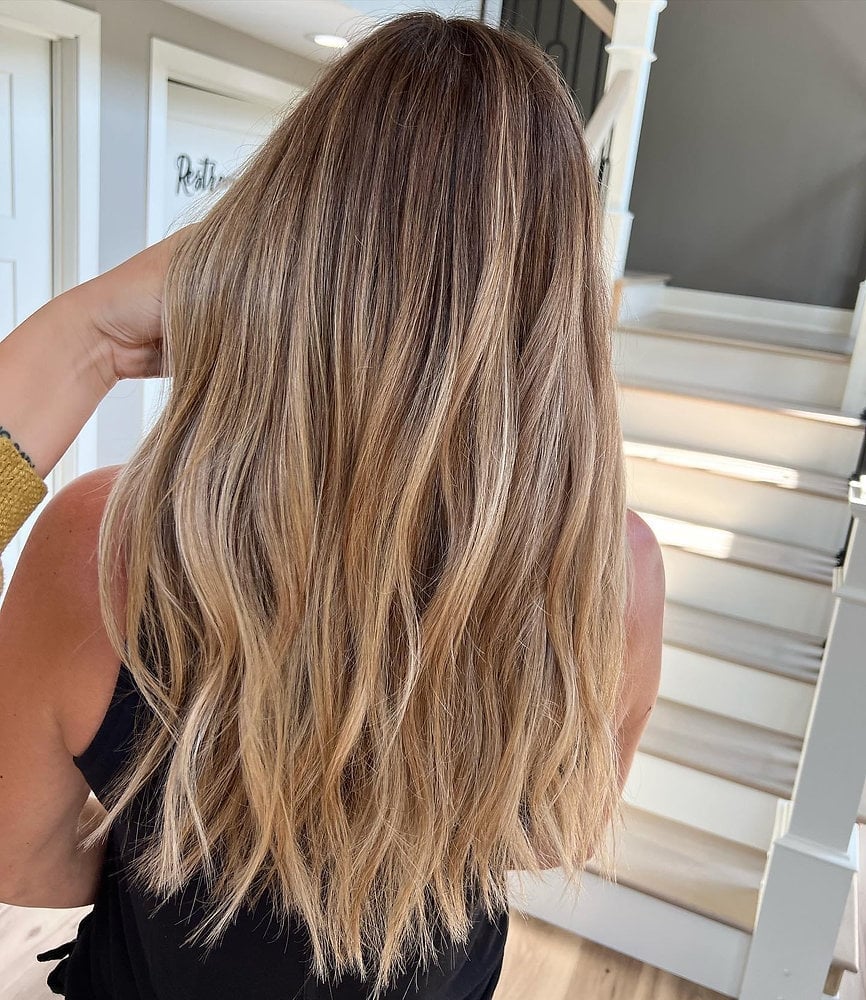
Can a honey balayage work from summer through autumn without looking out of place? This one does, and the darker base is the reason. The lighter blonde pieces sit within the mid-back length, so the overall effect stays warm rather than beach-bright. It suits thick, wavy hair with a middle part and no bangs.
Ask your colorist for: darker brown base, honey balayage. Air dry with a smoothing serum to keep the natural texture glossy and defined. A trim every ten to twelve weeks is enough. The lived-in grow-out is the point. For a seasonal shift, swap styling from loose waves to a sleek low ponytail as the weather cools.
Side View Dark Brown With Honey Blonde Balayage
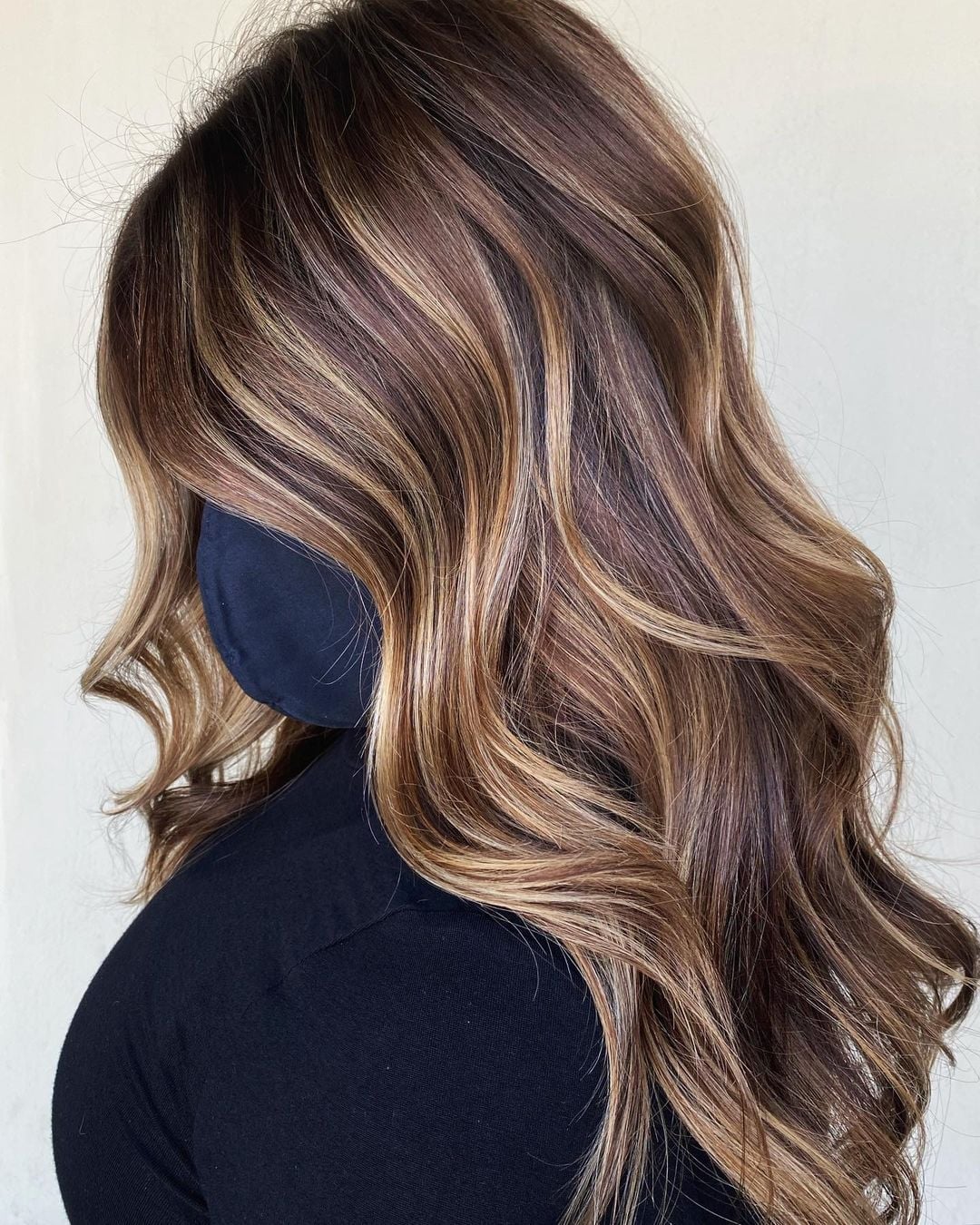
The face-framing layers here do two things: they soften the overall shape and they let the honey blonde balayage catch light from the front. The dark brown base and mid-back length keep it practical, while the loose waves add movement. It suits thick, wavy hair, and the layers work with most face shapes. Ask your colorist for: dark brown base, honey blonde balayage, face-framing layers. A texturizing spray refreshes the waves between wash days. Expect a trim every eight to ten weeks to maintain the layer shape, and a toning session every six to eight weeks to keep the honey blonde from pulling brassy.
Final Thoughts
A honey balayage works best when the contrast between your base and the lighter pieces is deliberate. For the lowest upkeep, choose a base that is only one to two shades darker than the painted ends, and avoid a very short blunt cut that exposes the grow-out line too fast.
- Schedule balayage touch-ups every 10-12 weeks to maintain blended tone.
- Use color-safe shampoos and conditioners to preserve vibrancy.
- Incorporate a weekly deep conditioning treatment to maintain shine.
- Protect hair from heat styling with a thermal protectant spray.
Embrace the warm glow of honey balayage.

