The ponytail is getting a major style upgrade for 2027. Gone are the days of a simple pull-back; now it’s about polished finishes, dynamic textures, and details like wrapped bases or braided crowns that make it feel intentional.
This collection of 18 Pony Hairstyles covers the full spectrum, from sleek low ponytails to voluminous coily versions, with plenty of wavy and braided options in between. Whether your fine hair needs a volume boost or your thick strands can handle intricate braids without losing shape, there’s a style here that solves the problem of a ponytail that falls flat, slides out, or just looks like an afterthought.
The 18 looksOpen list +
Honey Blonde High Bubble Ponytail
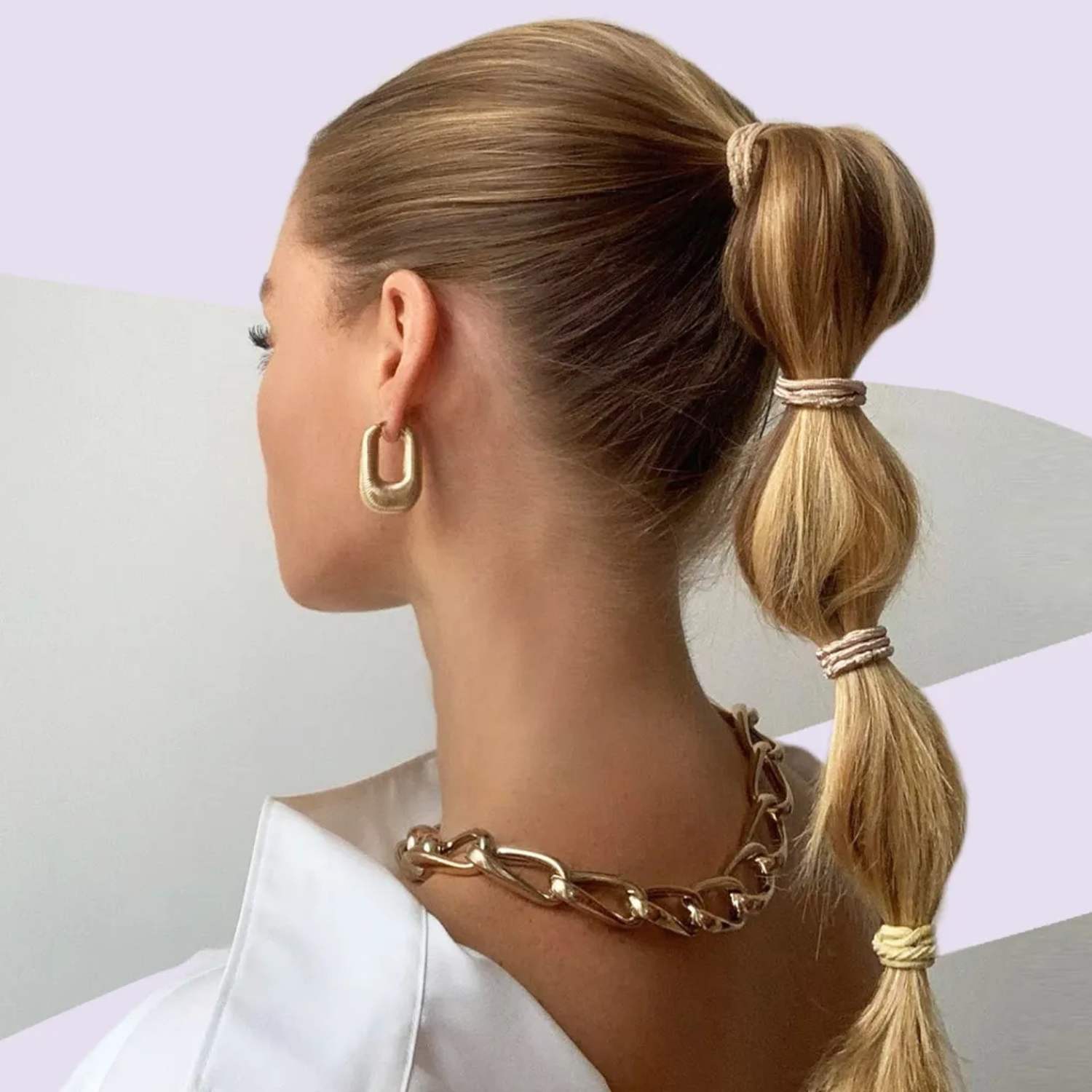
The bubble ponytail works because it is not one continuous shape but a series of elastic-segmented spheres. This honey blonde version, with lighter highlights running through straight, thick hair, lands at mid-back and uses a middle parting to keep the crown smooth. Ask your stylist for: high bubble ponytail with elastic segments.
The construction matters more than the finish here. Each section is secured with an elastic placed about two inches below the last, then gently tugged to create that rounded volume. The hair needs to be straight and thick to hold the shape without collapsing. A salon handles this best since the spacing and tension require a practiced eye. This ponytail reads as a structured design choice rather than a quick pull-back.
Textured Mid-Back Ponytail With Braids
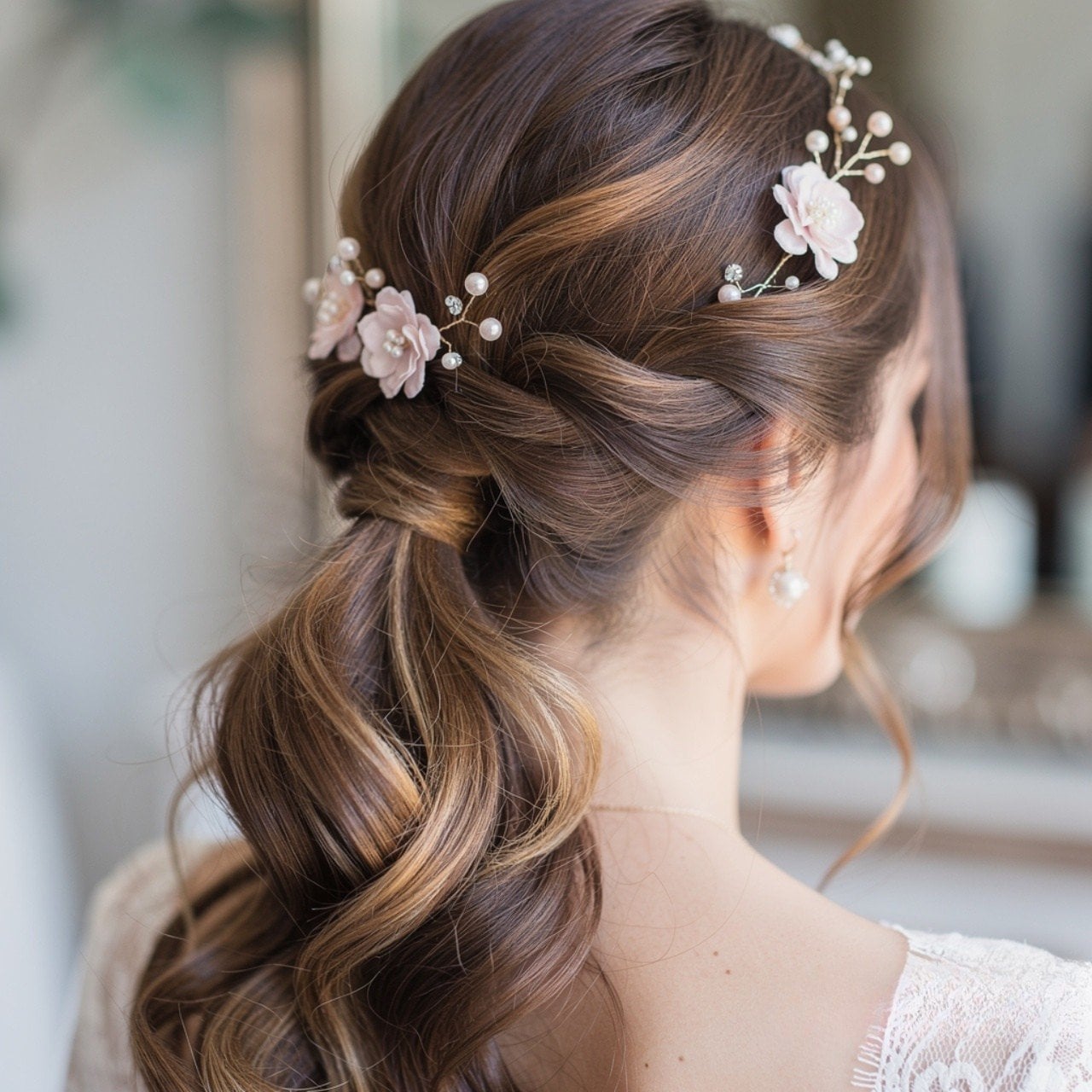
A ponytail with visible braided accents looks intricate without being overdone. This honey blonde version, with highlights woven through thick, wavy hair, reaches mid-back and keeps face-framing pieces out for softness around the jaw. Ask your stylist for: mid-back ponytail with subtle braided details.
The braids are what set this apart. They are worked into the upper sections of the hair, then gathered into the main ponytail so they blend into the whole. The loose waves through the length stop the style from looking too stiff. Face-framing pieces are cut to fall naturally, which helps the overall look stay cohesive. This is a salon request, not a quick home job, given the braid placement and the need for even tension throughout.
Ash Blonde Braided Crown Ponytail
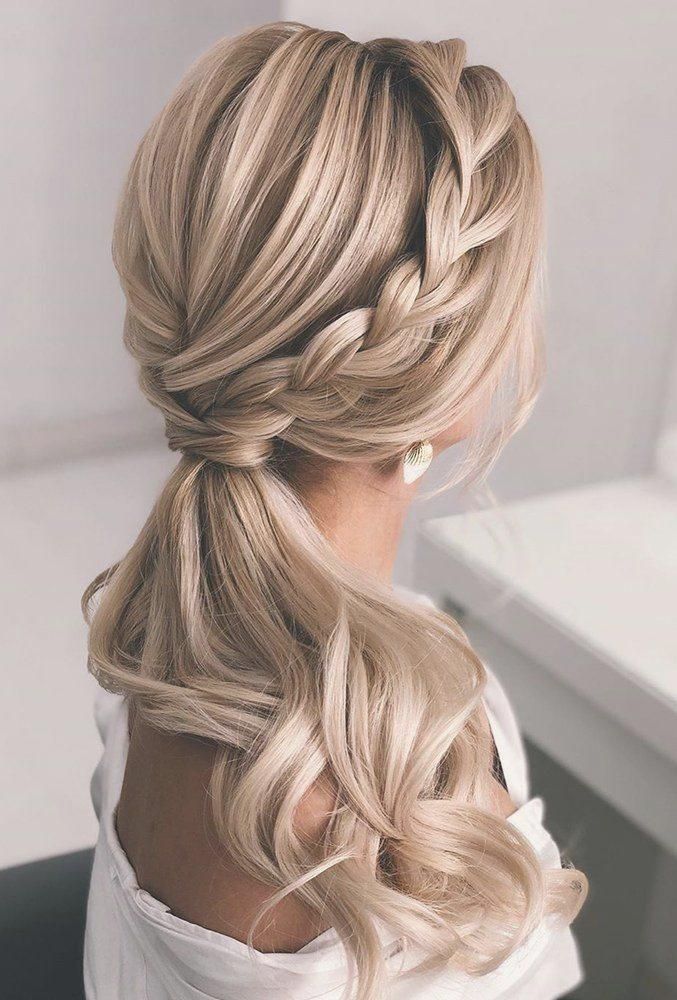
A braided crown that circles the head and feeds into a ponytail requires enough density to keep the braid visible. This ash blonde version, with subtle highlights and thick, wavy hair reaching mid-back, has the volume to pull it off. Ask your stylist for: ponytail with a braided crown detail. The braid wraps from one ear across the top and merges into the ponytail at the nape. A mist of hairspray keeps the braid from shifting during the day. Trim the ends every eight to ten weeks to maintain the shape through the waves.
Dark Brown Braided Crown With Waves
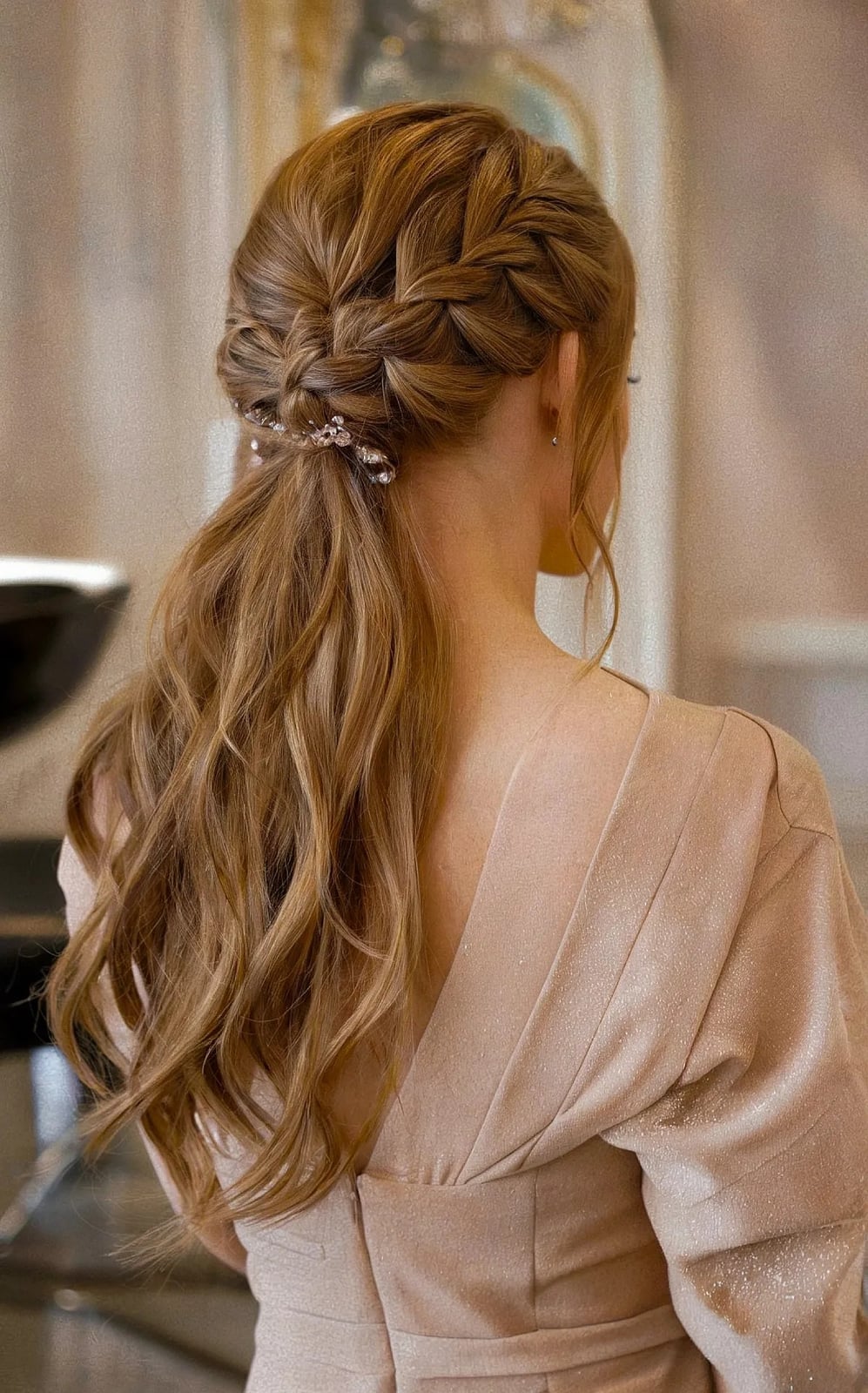
A lighter braided crown can look delicate, while dark brown with subtle lighter tones looks grounded and rich. This version uses the same crown to ponytail architecture but lets the loose waves through the length do the talking. Ask your stylist for: ponytail with intricate braided crown and loose waves. The braid circles the crown tightly, then releases into thick, wavy hair that falls to mid-back. The color depth means the braid detail is less about contrast and more about texture. The waves benefit from a product that gives definition without stiffness. This style holds better when the hair has natural wave to begin with.
Medium Brown Twisted Crown Ponytail
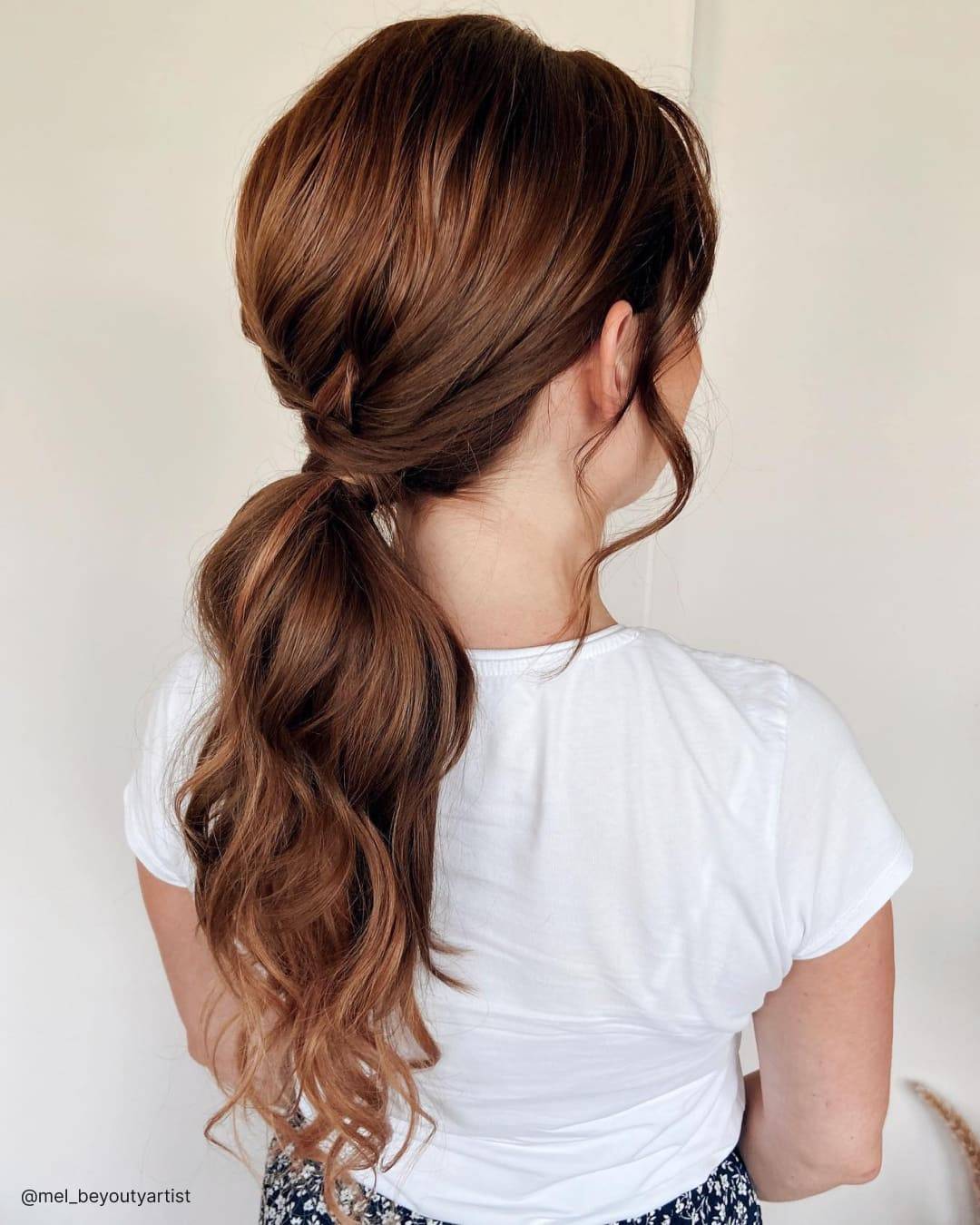
The twisted crown is a quieter version of a braided one: less intricate, faster to build, and easier to live with. This medium brown version, with subtle highlights and thick, wavy hair to mid-back, uses a twist at the crown rather than a full braid. Ask your stylist for: ponytail with a twisted crown detail and face-framing tendrils. The tendrils are cut to fall around the jaw and are meant to be gently pulled out after the ponytail is secured. They move independently, which means they need a quick re-tuck or a dab of pomade by midday. Trim the ponytail ends every six to eight weeks so the layers through the length stay visible.
Platinum Blonde High Ponytail With Waves
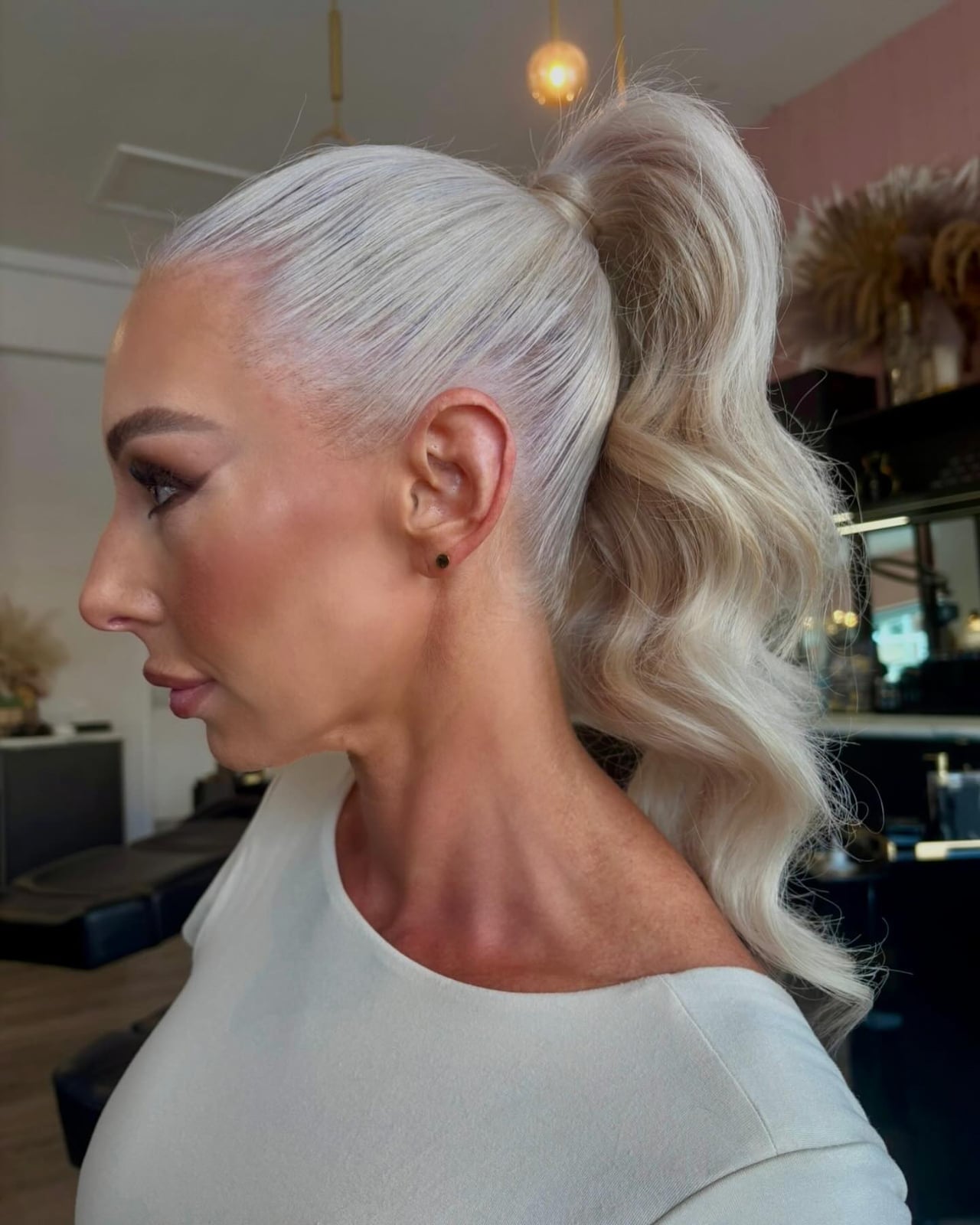
What does it take to turn a ponytail into a statement? A platinum shade with a soft root shadow and a high placement that clears the shoulders entirely. This one uses a middle part and wide, loose waves that stack in the hair, so the texture looks polished and controlled. Ask your stylist for a voluminous high ponytail with loose waves in platinum blonde. The color alone needs a toning appointment every four to six weeks to stay cool. A side view tells you the real story: the layers are cut to hold the wave pattern without collapsing, which means a trim every eight weeks keeps the shape honest.
Dark Brown Curly High Ponytail
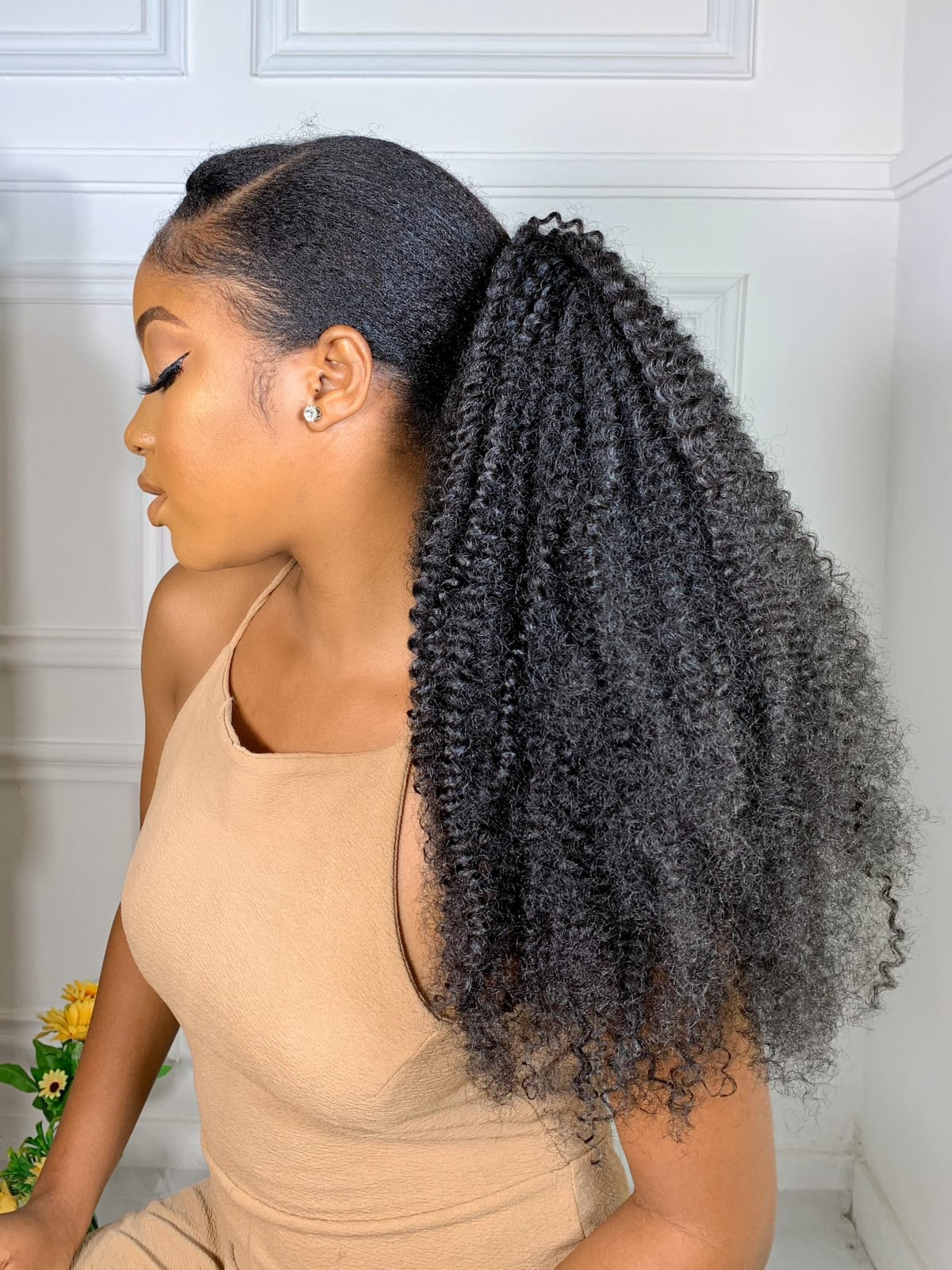
A high ponytail on thick, curly hair is a test of gravity. The weight of mid-back-length coils pulls on the roots, and without the right tension at the base, the whole thing sags by midday. This style uses a middle part and gathers everything high on the crown, letting the natural curl pattern fan out below the elastic. Ask your stylist for a high ponytail with natural volume and curls. The trade-off is real: the hold relies on a strong gel or a curl cream applied to damp hair, and even then, the top section can feel tight after a few hours. Finer curl types may find the ponytail too heavy and lose definition at the ends. A trim every eight to ten weeks prevents the curls from looking straggly.
Black Voluminous Coily Ponytail
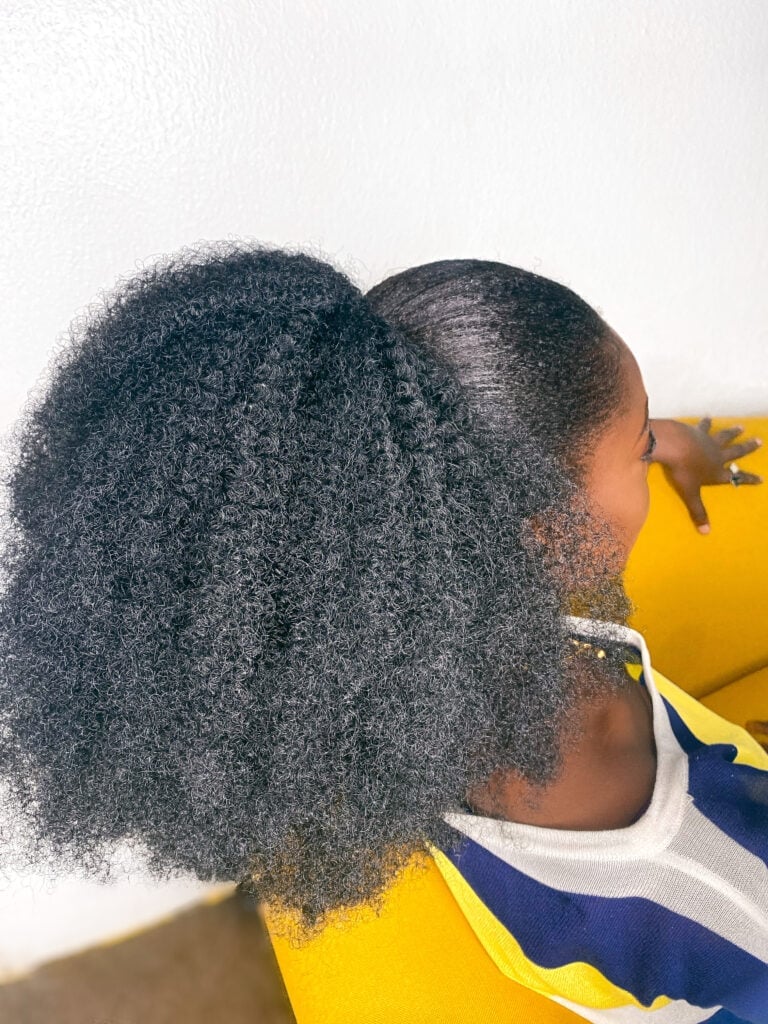
From the back view, the first thing you notice is the silhouette: a high ponytail that rises off the crown in a dense, rounded shape before falling into defined coils. The middle part keeps the front clean while the coily texture does the visual work. Ask your stylist for a high ponytail with natural coily volume. To get close at home, start with damp hair, apply a leave-in conditioner, and use a diffuser on low heat to set the coil pattern before pulling it up into the ponytail. The difficulty is moderate: the hair must be fully dry before the elastic goes in, or the shape will shift. For non-coily textures, the same volume requires a curl-defining product and a diffuser.
Ash Blonde Sleek High Ponytail With Curtain Bangs
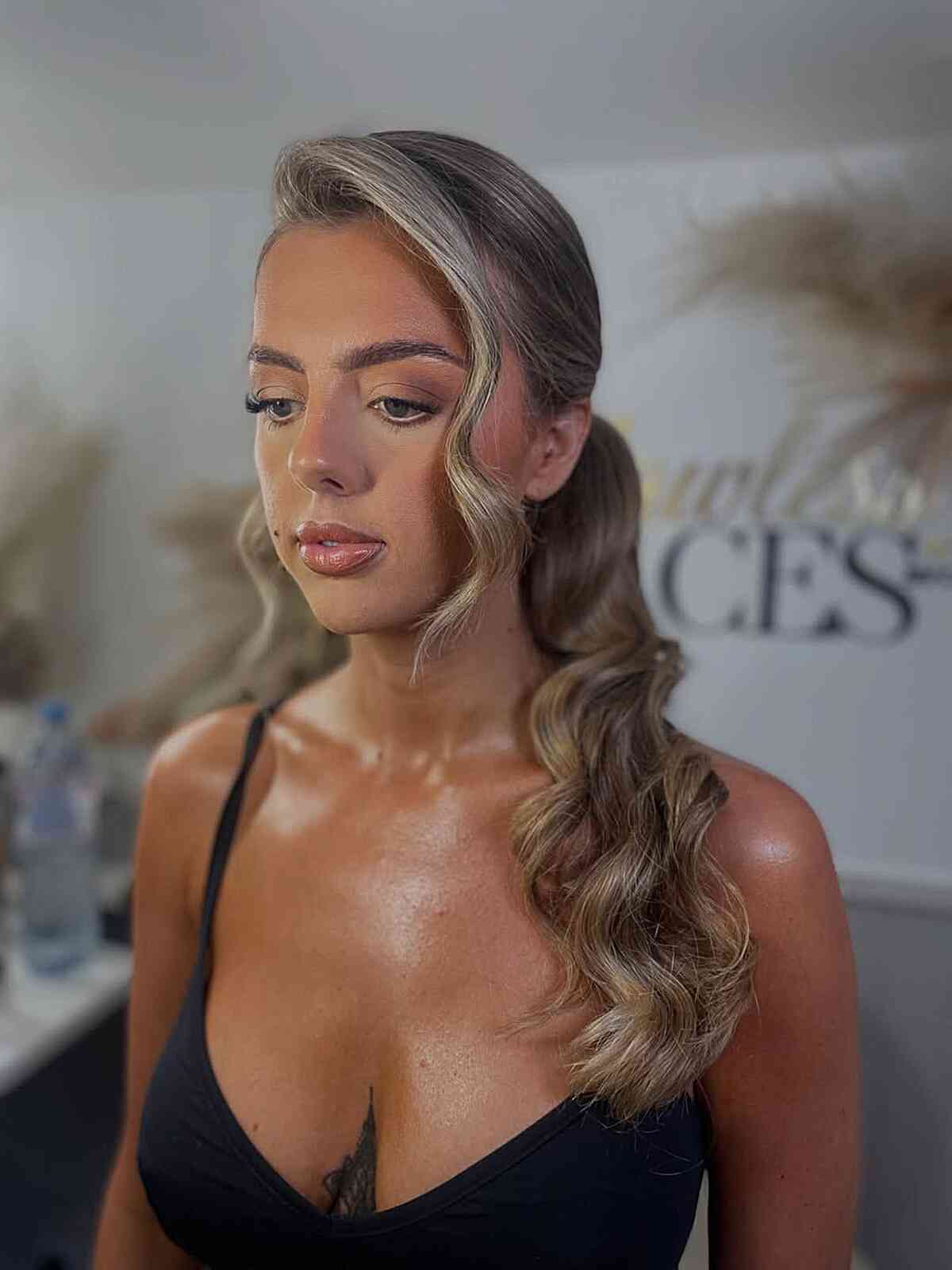
Can a ponytail soften a face at the same time it pulls everything back? Yes, if curtain bangs are doing the work. The high ponytail is smooth and straight, anchored at the crown, while the bangs break the line across the forehead and graze the cheekbones. Ask your stylist for a sleek high ponytail with curtain bangs. This works best on fine to medium straight hair that can hold a polished finish without frizzing. The bangs need a round brush and a blow-dryer every morning, plus a trim every four to six weeks to keep them from sliding into side-bang territory. A smoothing serum on the ponytail handles flyaways without making the hair look greasy.
Black High Ponytail With Blunt Bangs
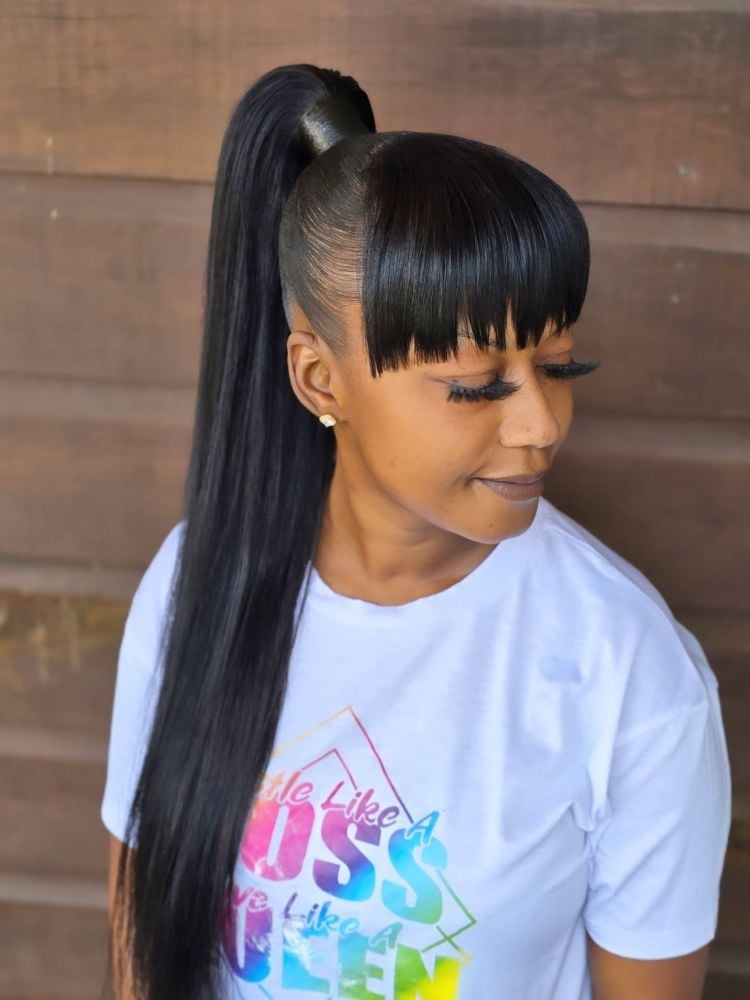
The blunt bang and the high ponytail are a study in precision. The hair is slicked back tightly from the face into a smooth, uniform ponytail that falls to mid-back, while the bangs cut a straight line across the forehead. There is no room for a wispy edge or a crooked hem. Ask your stylist for a high ponytail with blunt bangs. The mistake people make is asking for a soft version of this: blunt bangs cannot be feathered or textured and still hold a clean edge. If the forehead is short or the face is round, the horizontal line can look harsh instead of graphic. A strong-hold hairspray keeps the bangs flat, and a trim every three to four weeks keeps the line sharp. The payoff is a ponytail that looks like it was drawn with a ruler.
Medium Brown Voluminous Ponytail With Side Bangs
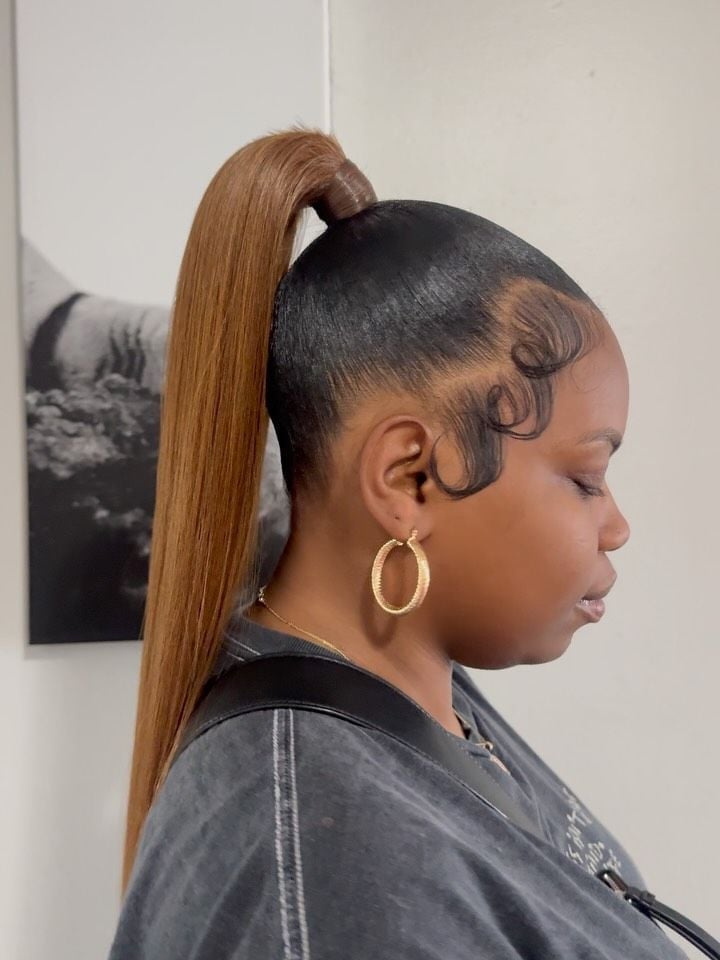
This is the ponytail that earns its keep when the weather can’t decide what it wants to be. The high placement keeps thick, wavy hair off the neck, while the caramel highlights catch whatever light is actually showing up. It’s a practical answer to transitional seasons, with enough polish to walk into a meeting without looking like you wrestled a hair tie.
Ask your stylist for: voluminous ponytail with side-swept bangs. The middle part and mid-back length give the volume somewhere to go, and the side bangs soften the angles of a square or round face. A little teasing at the crown adds height that holds through the day. Plan on a bang trim every four to six weeks to keep the sweep from turning into a curtain.
Copper Red High Ponytail With Loose Waves
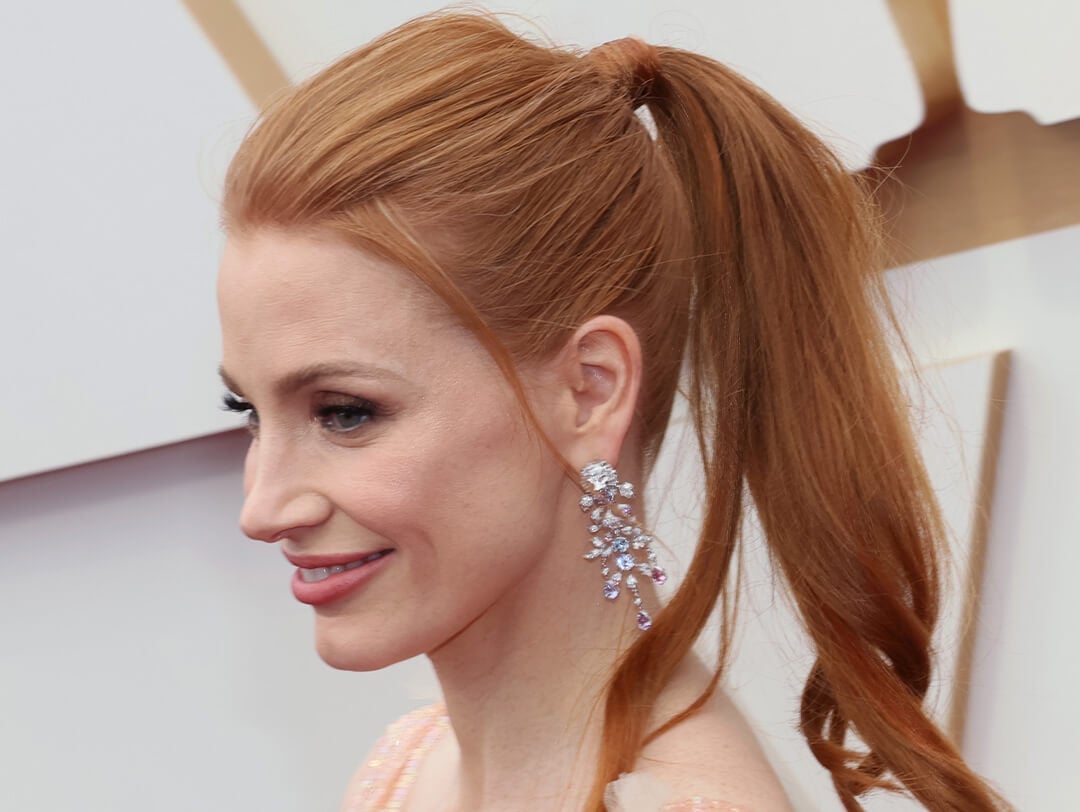
The color placement drives the look here. A copper red base with blonde highlights gives the loose waves dimension that moves when you do. The high ponytail keeps the shoulder-length layers from falling flat, and the middle part lets the bright shade read clearly from the side. Ask your colorist for: copper red with blonde highlights. On medium density wavy hair, this holds its shape without much fuss. The vibrancy fades fastest in the first few washes, so a color-safe shampoo and a toning appointment every six to eight weeks keep the copper from turning brassy.
Wavy Shoulder Length Black Ponytail
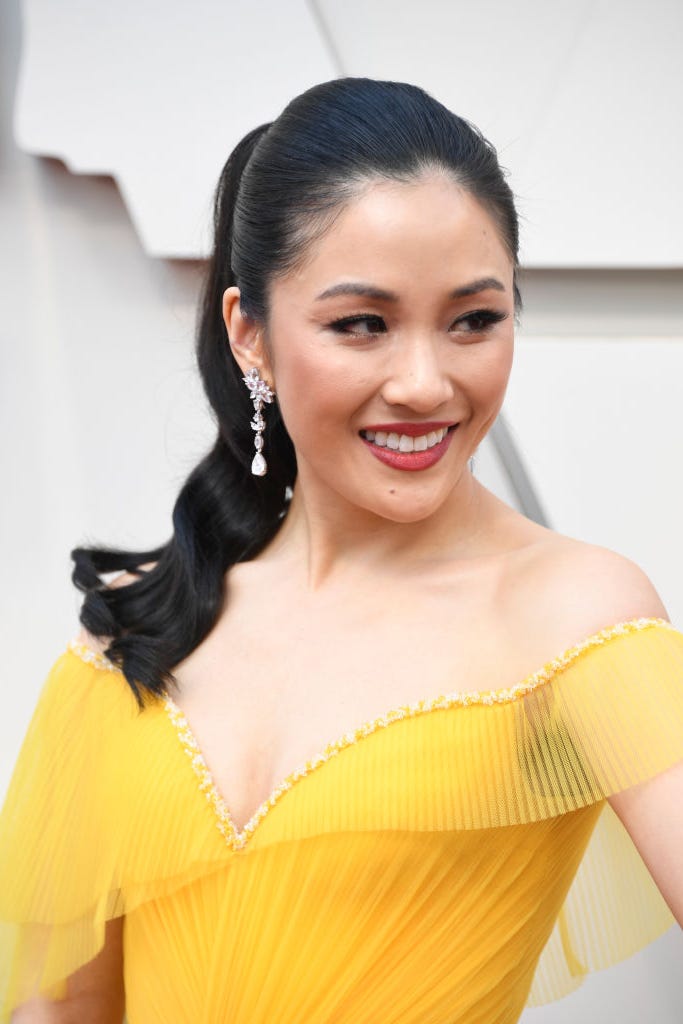
Does a classic ponytail actually stay put on medium wavy hair, or is that just a myth? This one works because the shoulder length keeps the weight down, so the black waves hold their bend rather than pulling straight. The side part gives the front a clean line, and because there are no bangs to fuss with, the whole thing stays put from morning to evening. Ask your stylist for: classic shoulder length ponytail, side part. A quick pass with a brush and a light hairspray smooths the front without killing the wave pattern. A trim every six to eight weeks keeps the ends from looking ragged.
Blonde Collarbone Ponytail With Curtain Bangs
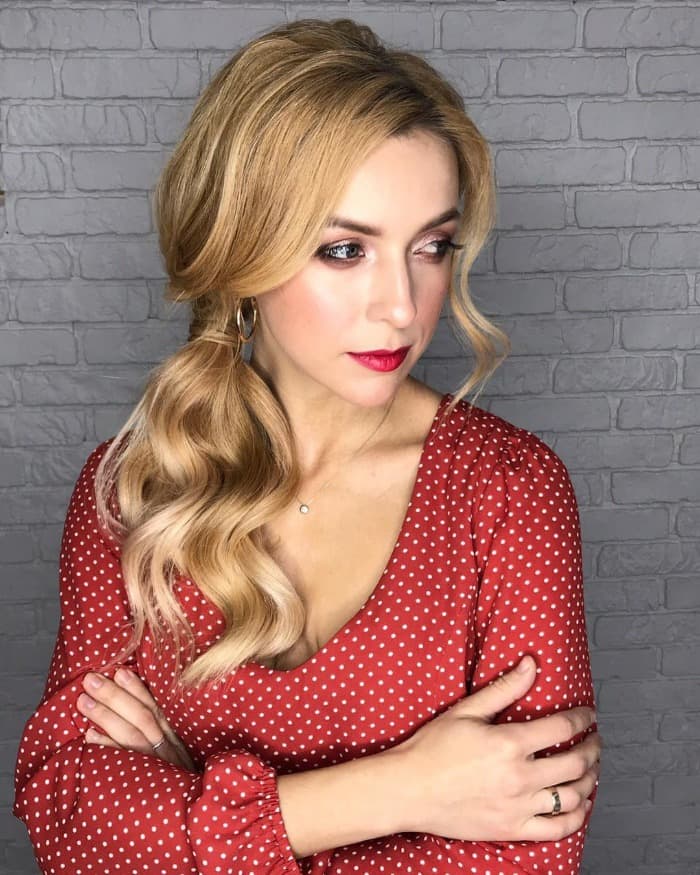
The collarbone length is the secret to why this ponytail looks relaxed. A loose, low side ponytail on thick, wavy blonde hair gives the highlights room to shine, and the curtain bangs soften the whole arrangement. It is the kind of look that suggests you put in effort, and the side part keeps the curtain bangs sweeping where they should.
Ask your stylist for: loose collarbone ponytail with curtain bangs. The thickness of the hair means the ponytail holds its shape well, but a texturizing spray helps the waves stay separated. Blow-dry the bangs with a round brush so they curve away from the face. Bangs need a trim every four to six weeks; the length itself can go six to eight.
Ash Blonde Loose Side Ponytail With Waves
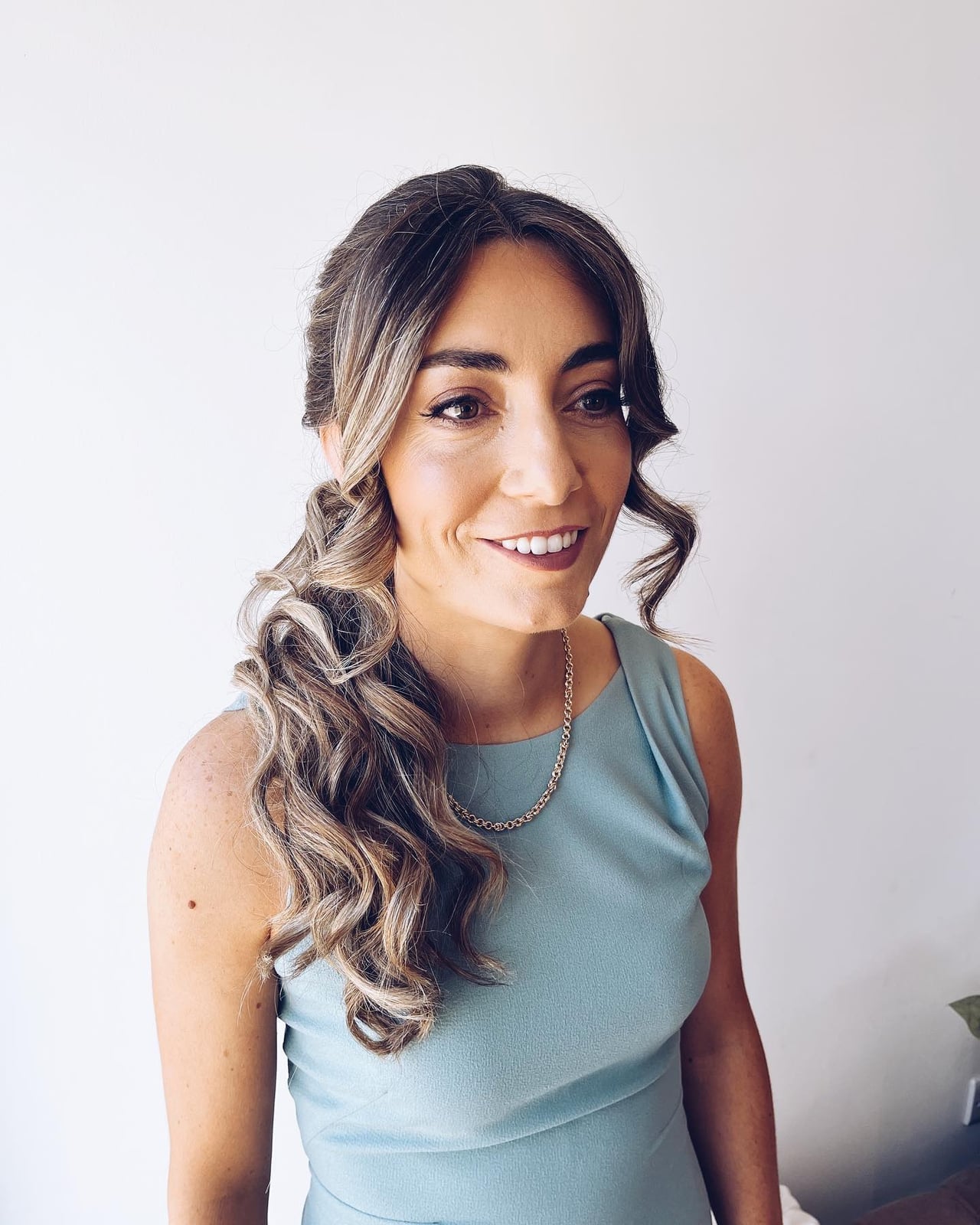
Against the warmer blondes that dominated the last few years, the ash blonde balayage here is the cooler, quieter sibling. A loose side ponytail with soft waves and face-framing pieces keeps the collarbone length from looking too careful, and the medium density hair holds the bend without going crunchy. Ask your stylist for: loose side ponytail with soft waves and face-framing pieces. The cool undertone of the balayage needs a purple shampoo once a week to stay silver rather than yellow. Finger-tousle the waves after a quick dry, and keep the collarbone length trimmed every six to eight weeks so the ends stay soft.
Light Brown Ponytail With Wrapped Base
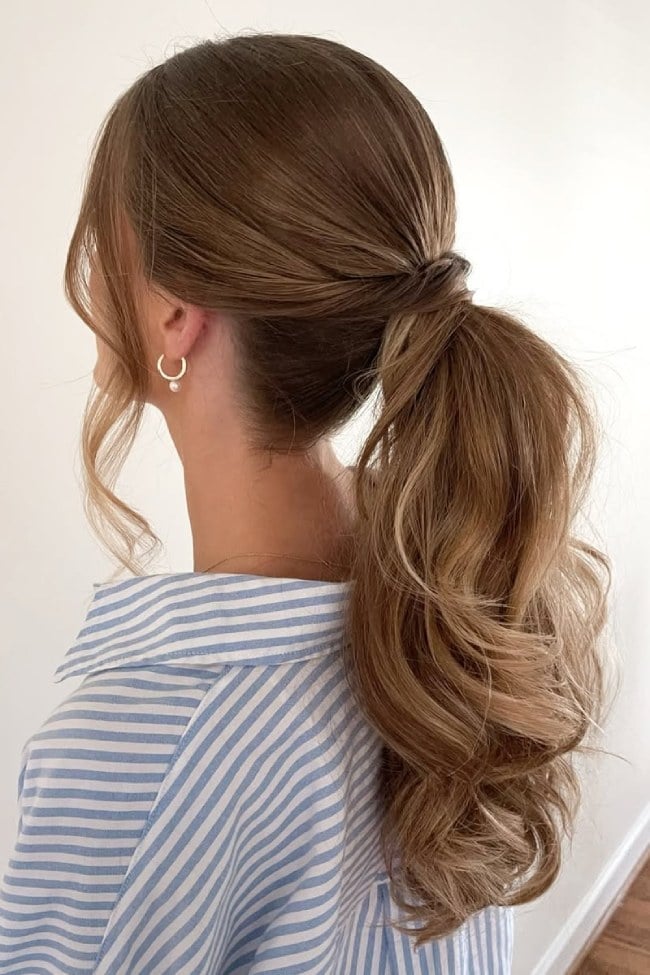
The wrapped base is doing double duty here: it hides the elastic and adds a finished edge. This light brown ponytail with blonde highlights hits collarbone length and falls in soft waves, with a side parting keeping the front clean. Medium density, wavy hair holds this shape best. Ask your stylist for: a ponytail with a wrapped base and soft waves. Getting that wrap perfectly smooth takes practice, so expect a few tries before it sits flush against the head without puckering.
Dark Brown Curly Shoulder Length Ponytail
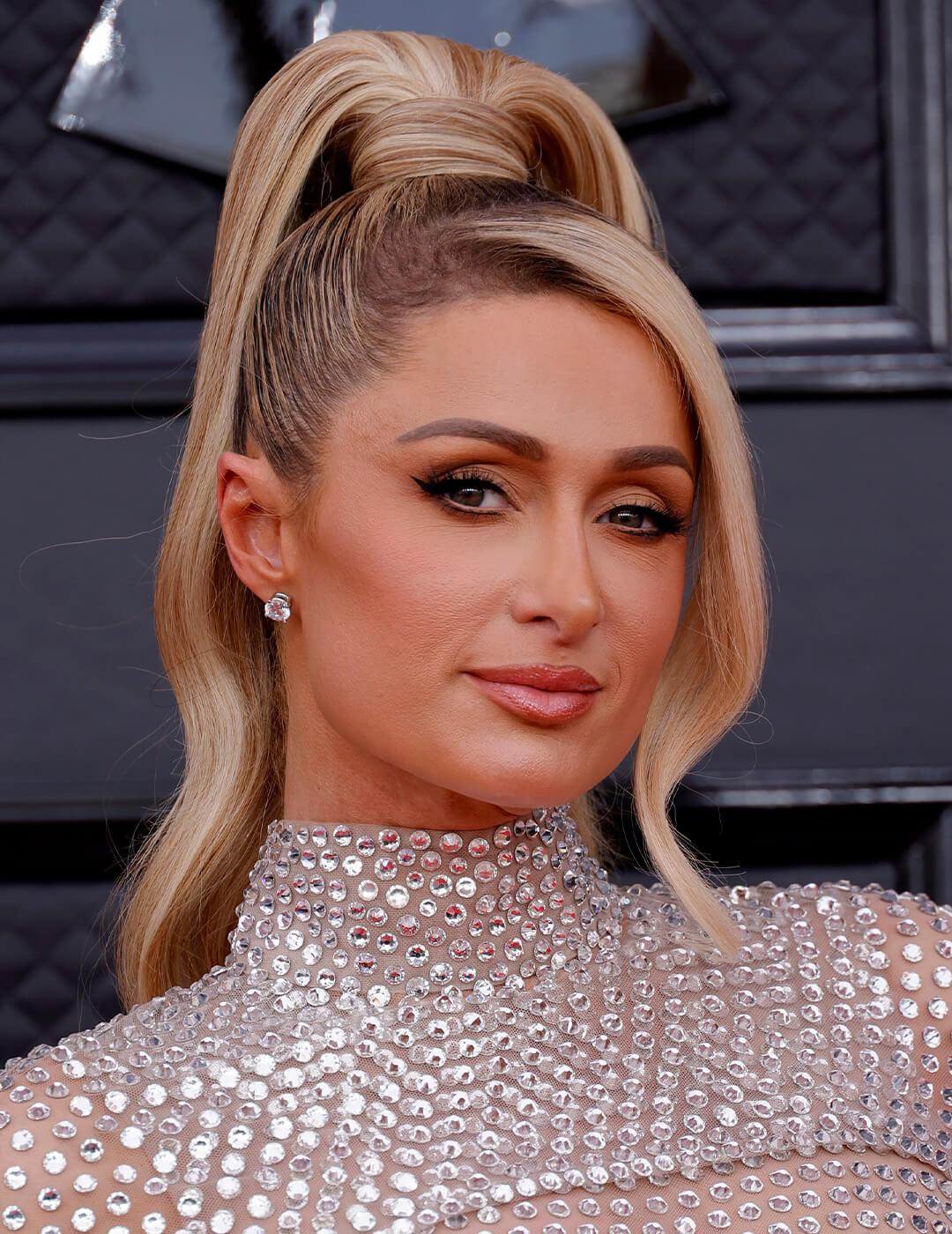
How do you get defined curls in a ponytail without the front turning into a frizz halo? Start with damp hair and a curl-defining mousse, then scrunch from ends to roots before gathering it at the crown. This shoulder-length ponytail uses a side parting for a sleek front that contrasts with the bouncy, dark brown curls behind it. Thick, curly hair is the ideal starting point. The density gives the ponytail volume that lasts.
Ask your stylist for: a shoulder length curly ponytail with defined curls. This is a solid DIY option: apply mousse, scrunch, secure with a soft elastic, and let it air dry or use a diffuser on low heat. A trim every six to eight weeks keeps the curl shape from losing its spring.
Black Sleek Low Ponytail
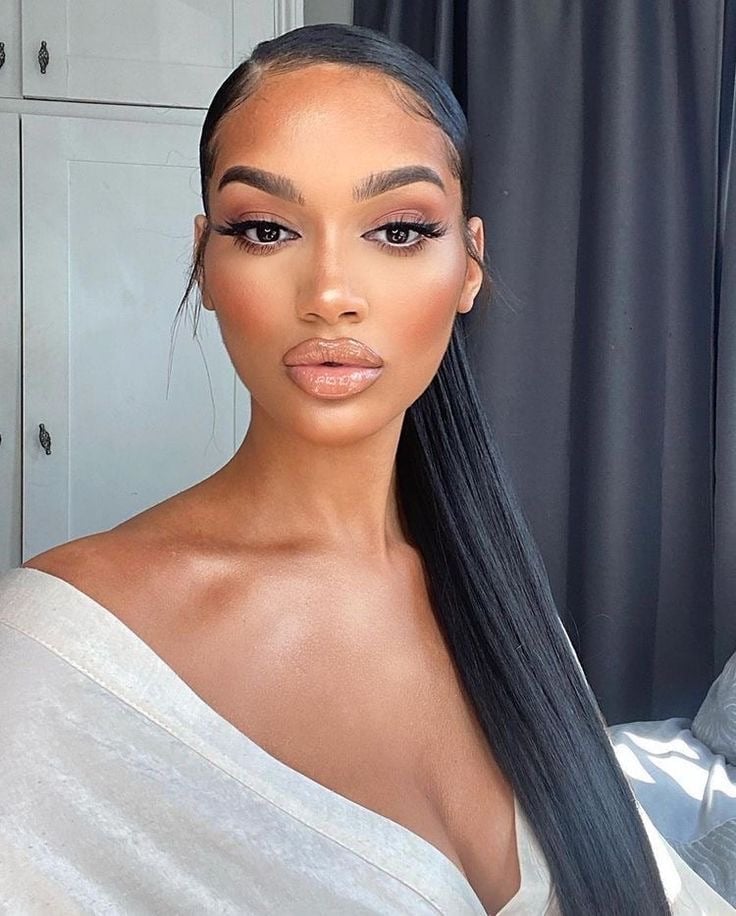
A low ponytail is only as sleek as its roots, and this one sets the bar at glass-level shine. The black, straight hair is pulled back with a side parting, falling long past the shoulder with zero flyaways. Fine, straight hair of long length is the natural match. The lack of bulk makes the smooth finish achievable without fighting texture. The low placement also elongates round face shapes.
Ask your stylist for: an extremely sleek low ponytail with a side part. The upkeep is about the finish: apply gel or pomade to the roots before smoothing back, then seal with a lightweight serum on the length. A trim every ten to twelve weeks keeps split ends from breaking the clean line, because once that sleek surface is interrupted, the whole look reads as tired rather than sharp.
Final Thoughts
For fine hair, reach for styles with added texture or volume, like a wavy ponytail or a wrapped base. Thick hair can handle sleek low ponytails or intricate braids without losing shape.
- Refresh wavy textures with a texturizing spray or by re-curling ends.
- For sleek styles, use a smoothing serum to combat flyaways.
- Braided details may require touching up braids every few days to maintain crispness.
- High ponytails can cause tension; vary your ponytail height and style to avoid scalp fatigue.
Master the art of the modern ponytail.