Parting braids have evolved from a simple protective style into a precise art form, with scalp designs ranging from geometric squares to intricate stitch patterns. This season, the trend leans into glossy natural texture and lived-in color, making the part lines pop without looking overly done.
Trendy Parting Braids offers 20 artistic styles that balance intricate scalp art with practical wear, from low-maintenance large box braids to detailed cornrow buns. Whether your hair is fine or thick, short or long, there is a parting braid here that holds its shape and keeps your edges neat, solving the struggle of styles that fall flat or lose definition within days.
The 20 looksOpen list +
Intricate Stitch Braids With Heart Patterns
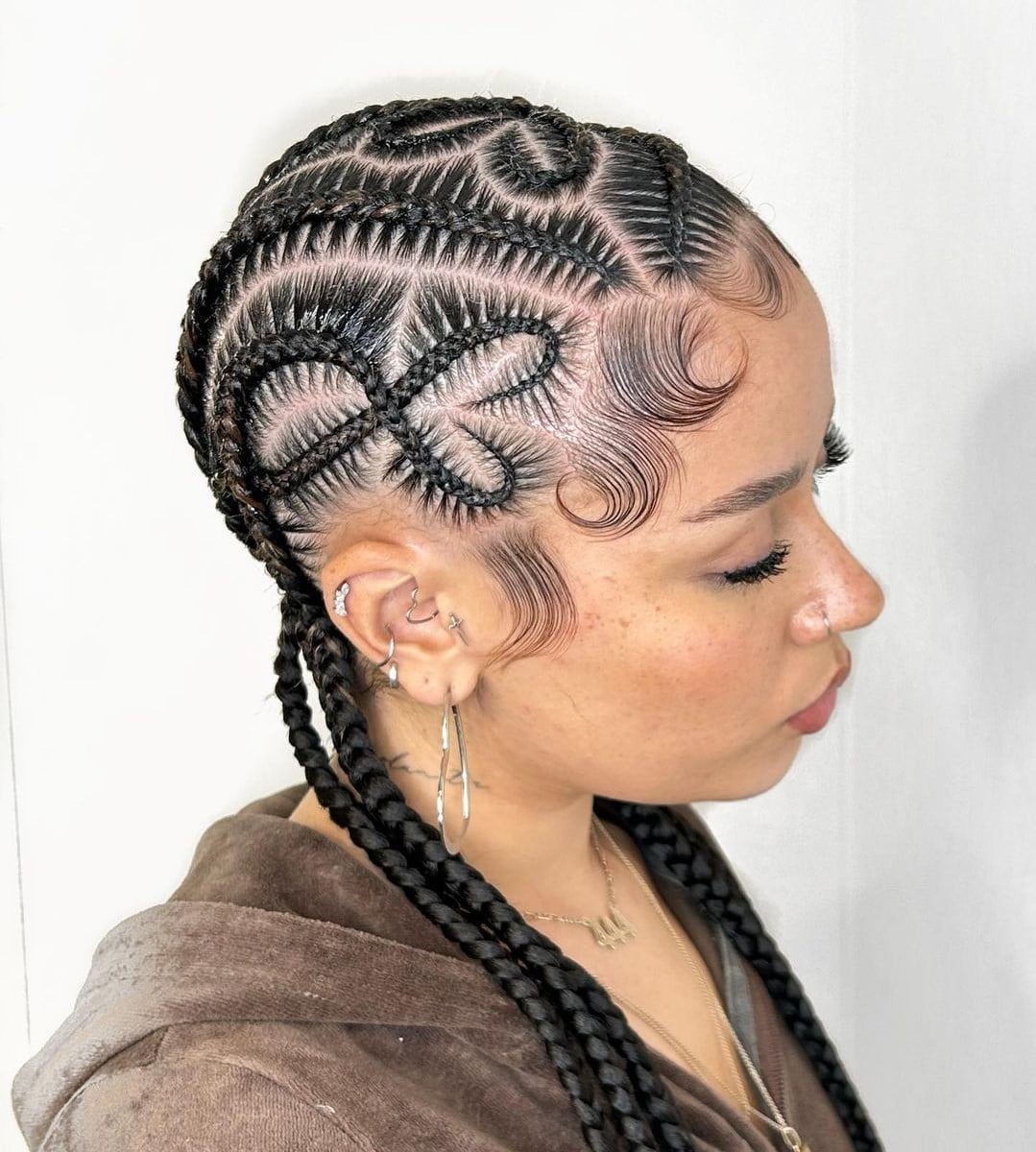
A heart shape drawn in braid work along the scalp takes a steady hand and a clear map before the first stitch is placed. Stitch braids with heart patterns are built by feeding sections under and over in tight, flat rows, then curving those rows into loops that meet at a middle parting. The effect depends on thick, straight hair reaching mid-back, where the braids sit heavy and black from root to tip. Styled baby hairs along the hairline finish the edge.
Ask your stylist for: stitch braids with heart parting designs. A few things to settle before the appointment:
- Confirm the heart placement along the parting, since a center line changes where the loops land.
- Bring the length you want, mid-back or shorter, because stitch rows read best when the pattern has room.
- Mention the baby hairs, styled flat and curved, so the hairline gets its own block of time.
This is salon work. The precision of the pattern determines the final look, and a rushed stitch shows in the curve.
Box Braids With Geometric Square Parting
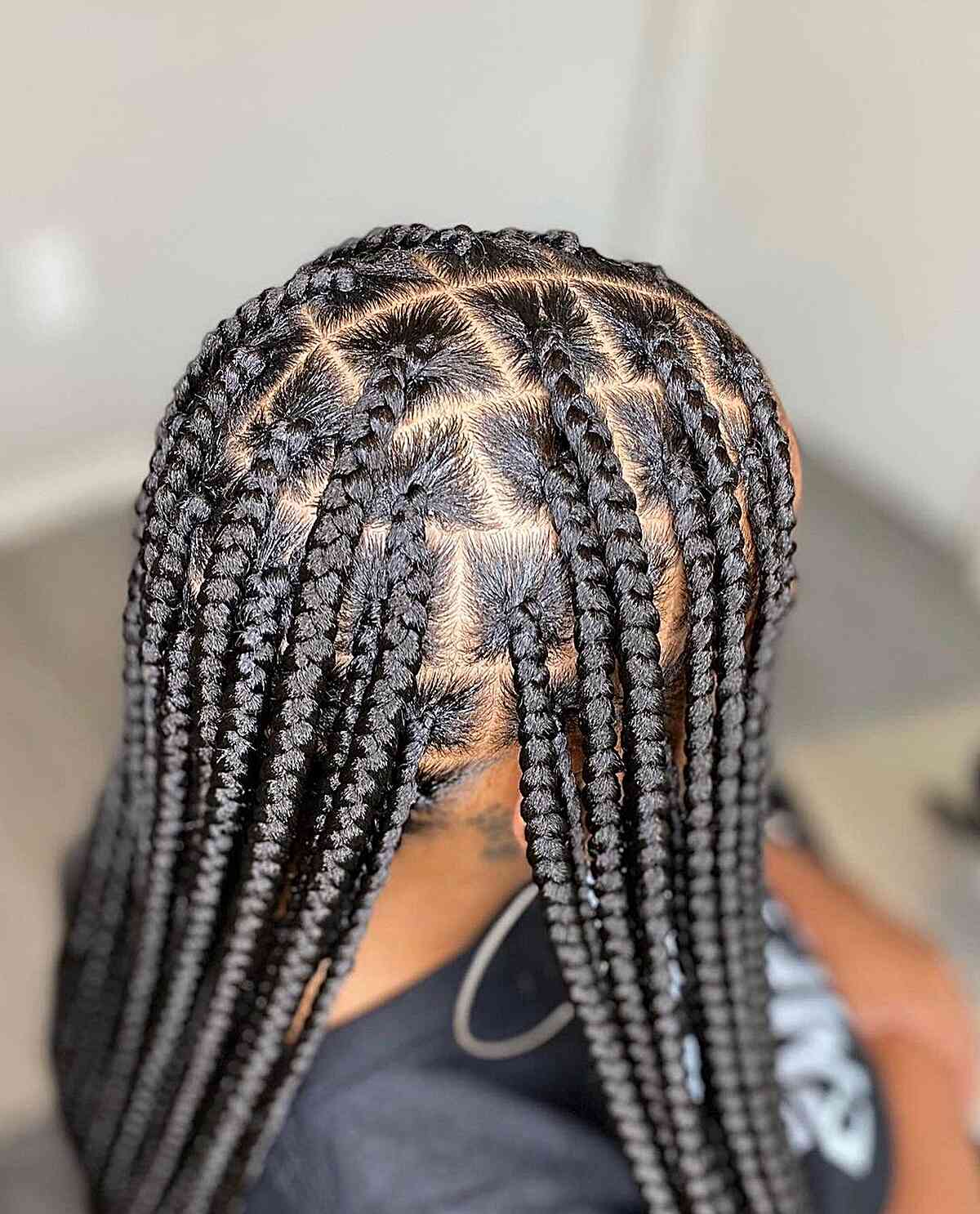
Where a curved part softens the scalp, a geometric square parting turns it into a grid, and that grid is the argument for box braids over a simple center part. The braids are black, straight, and cut to mid-back, with each square sitting square to its neighbor and a middle parting running clean down the center. Uniform density keeps the pattern legible from above.
This is the choice for thick hair that holds a sharp line and for anyone who wants the scalp design to do the talking. A softer, curved parting suits a rounder face better, since the eye follows the curve rather than the corners. Ask your stylist for: box braids with geometric square parting. The pattern depends on even tension at the root, so the squares stay square instead of drifting into rhombuses after a week. Refreshing the perimeter and trimming loose ends every four weeks keeps the outline crisp.
Tribal Braids With Sharp Geometric Parting
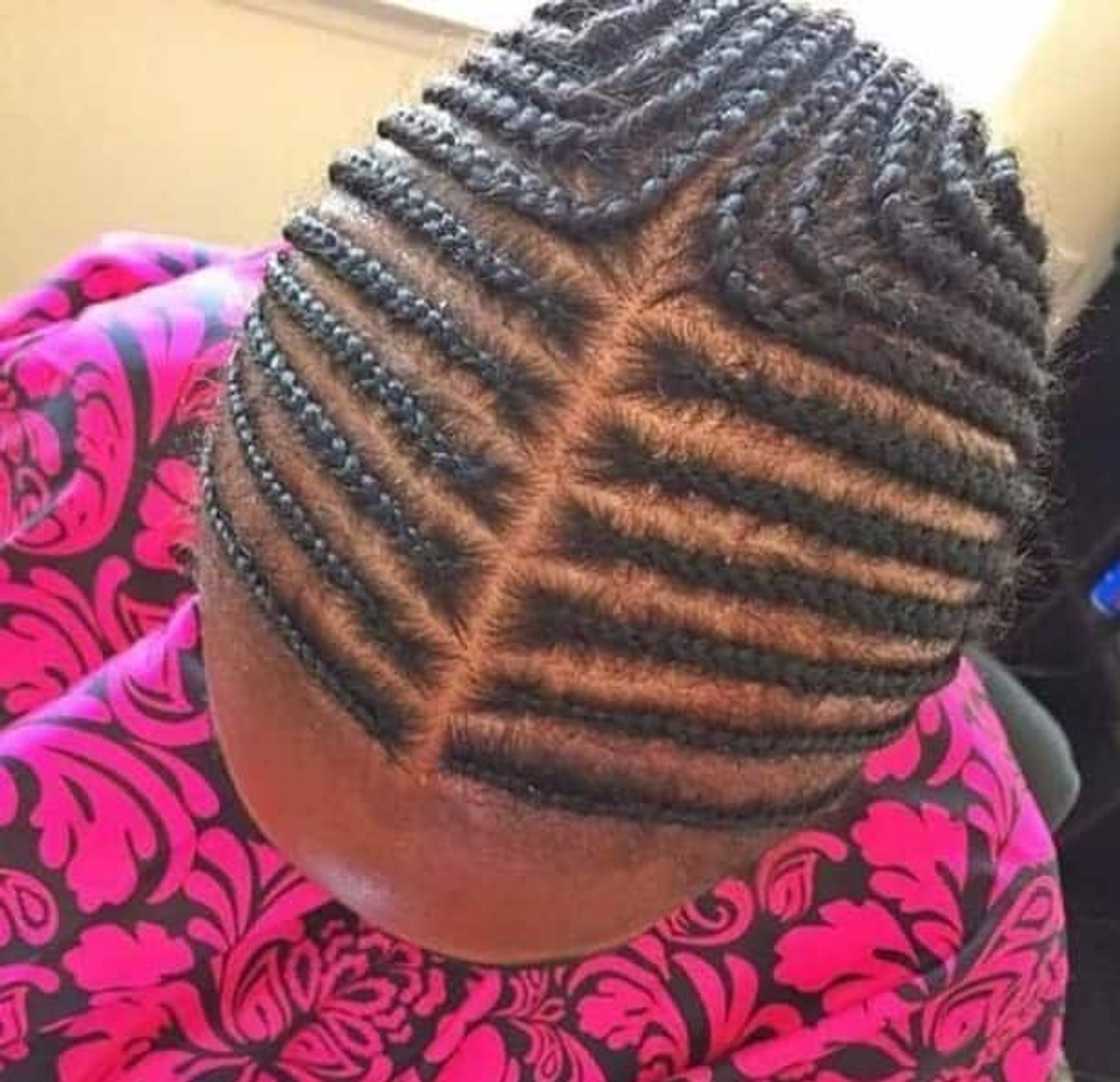
Will sharp corners on the scalp work with your hair, or fight it? Tribal braids with a geometric parting need thick, straight hair at mid-back length, because the pattern is drawn in the gaps between braids and fine hair blurs those gaps. The braids run black and straight to mid-back, with a middle parting and lines cut hard enough to read from above. If your hair is low density or very coily, the same parting tends to soften and lose its edges. Ask your stylist for: tribal braids with geometric parting.
Shoulder Length Box Braids With Geometric Parting
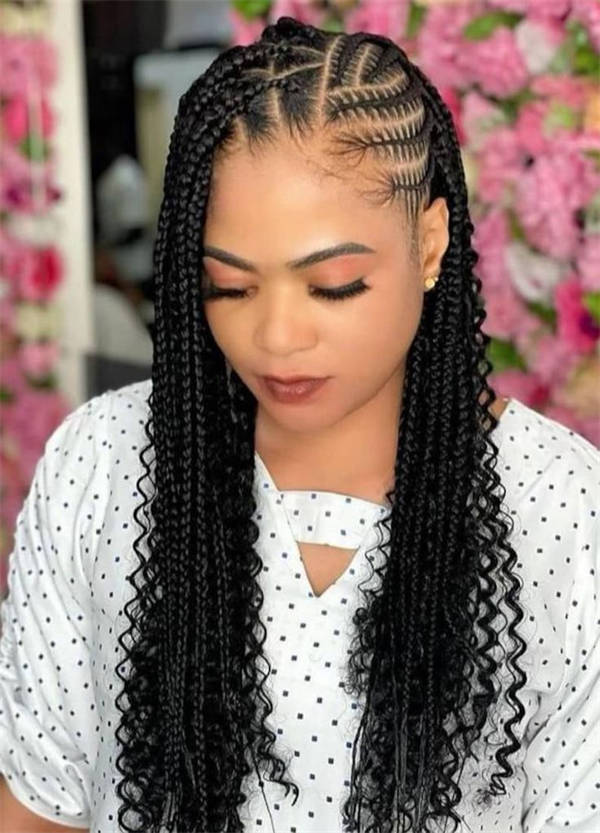
Shoulder length changes the math on box braids: the geometric parting still reads at the scalp, but the curly ends sit at the collarbone instead of swinging past it. Black braids, a clear middle parting, and a squared pattern up top give the style its structure. Expect the curls to need a light curl cream to keep their shape between washes, and plan a trim of the baseline every six to eight weeks as the ends fuzz. The shorter length also means less weight on the roots, which helps the parting stay defined longer.
Mid-Back Box Braids With Wavy Ends
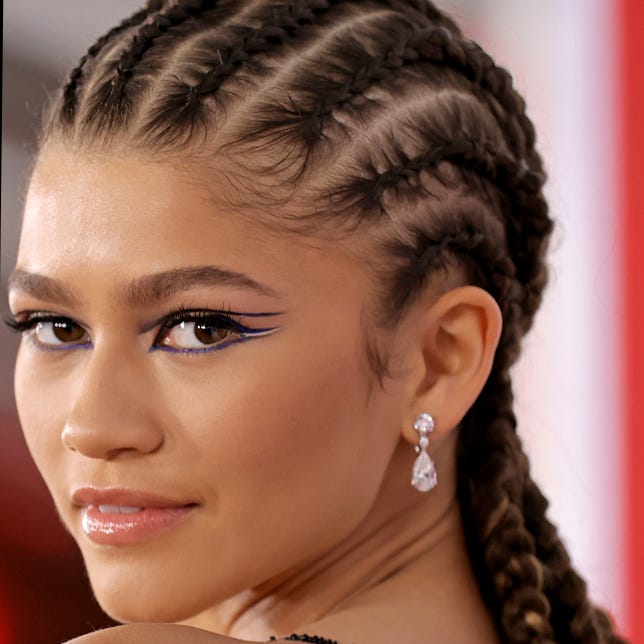
Ask your stylist for: box braids with wavy ends and intricate parting. Be specific about the pattern itself, since intricate can mean a spiral, a zigzag or a set of curved lanes, and the braider needs to know which before the first row goes in. The drawback is time and patience: a detailed parting adds to the appointment, and the waves need a texturizing spray and a loose rewrap to hold their shape rather than collapsing into crimp. Trimming loose ends every six to eight weeks keeps the finish clean.
Large Box Braids With Middle Part
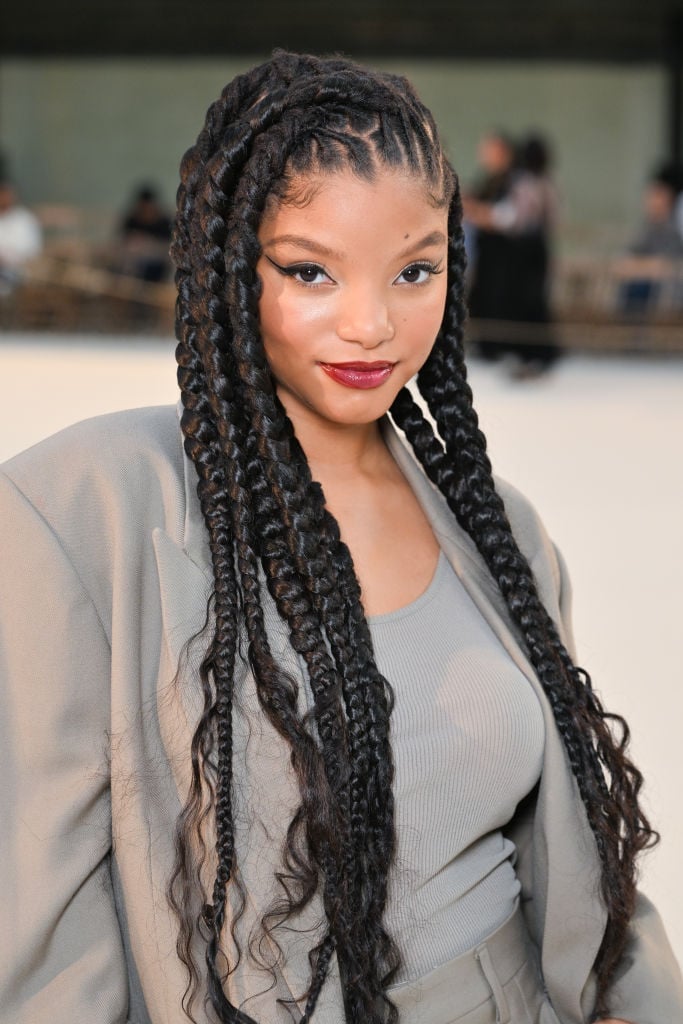
The golden rule with large box braids is to respect the parting. When the middle part is this clean, any stray braid crossing it reads as messy, not relaxed. The wavy texture in these mid-back braids adds dimension, but it also means the part can drift if you’re not careful. Thick hair at mid-back length or longer carries the weight of these braids best, keeping the style bold without the strain.
Ask your stylist for: large box braids with a middle part. A light serum on the braids keeps them smooth and the part crisp, so you can stretch the style to the usual 6-8 weeks between salon visits. This one is a salon job, not a weekend DIY. The braids are heavy, and getting the part straight takes patience and a steady hand.
Neatly Defined Box Braids
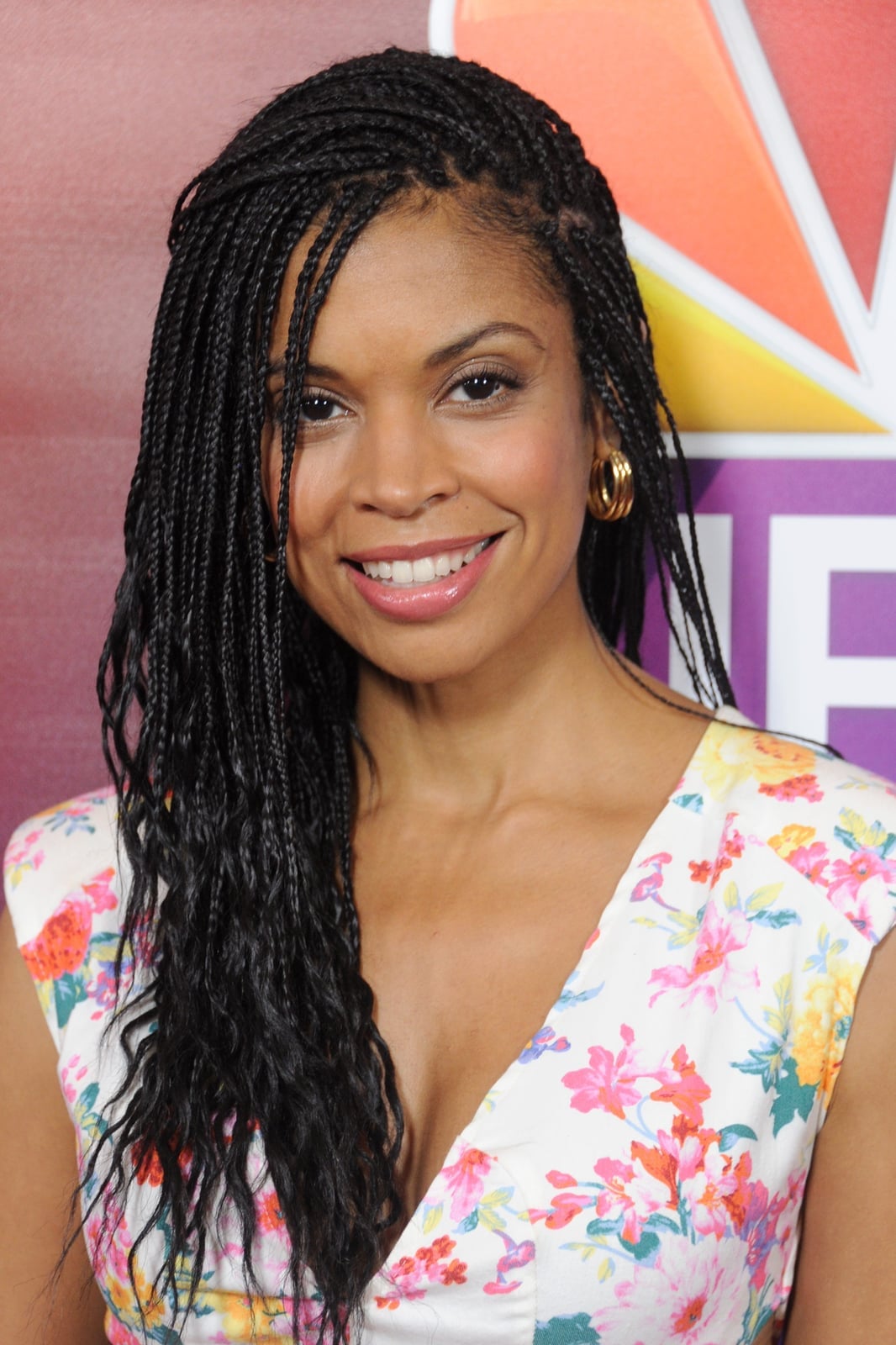
What makes these box braids work for every season? It’s the uniformity. The precise middle part and the smooth, even braids give a tidy look that fits a Monday meeting and a summer wedding without changing a thing. Thick hair at mid-back length gives the braids enough density to hold their definition. Ask your stylist for: neat box braids with a middle part. Keep the scalp clean and the braids hydrated, and plan a re-braid every 6-8 weeks. The neatness is the point, so don’t let it grow out past that window.
Thick Box Braids Past Shoulders
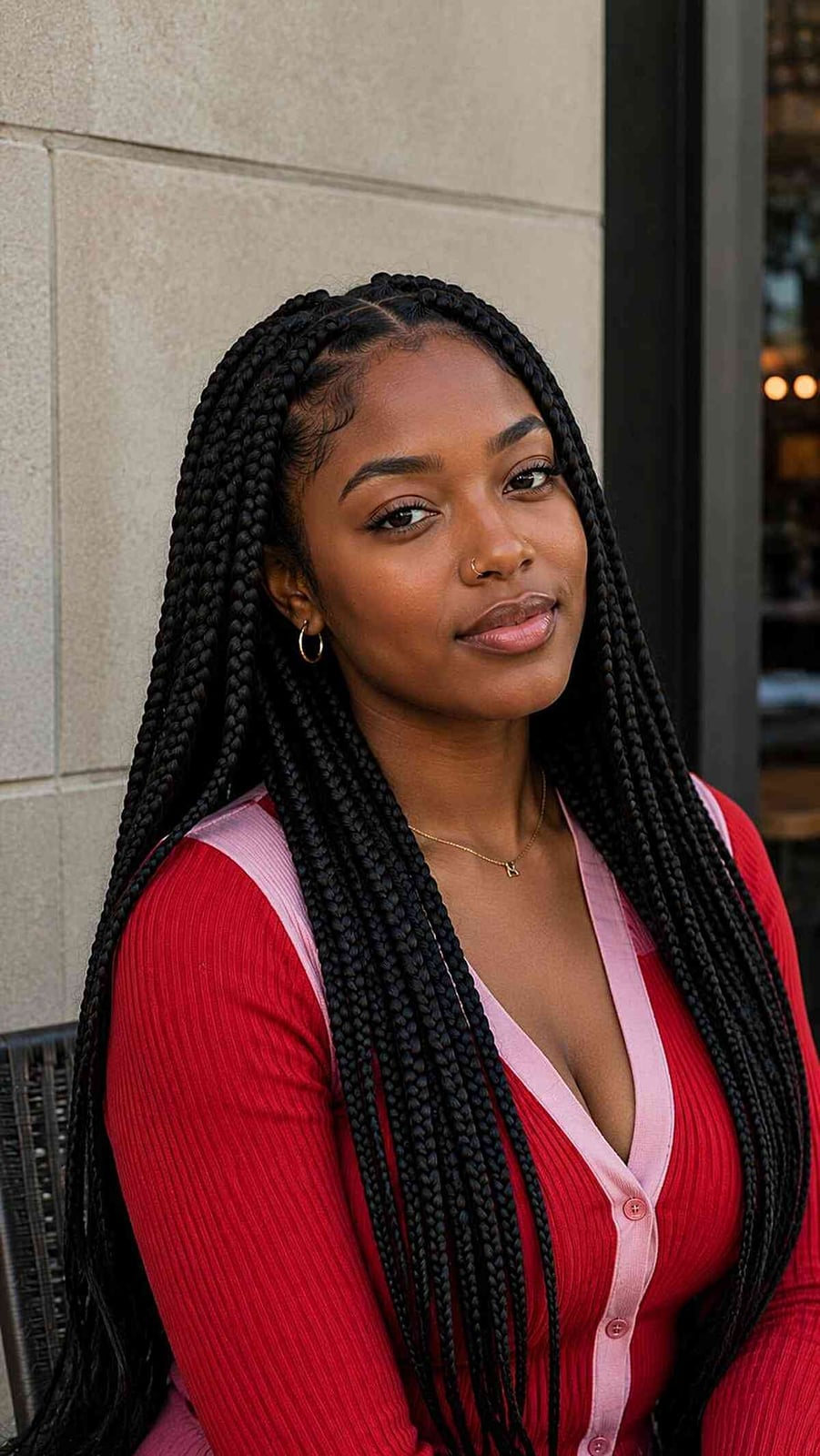
These are the box braids that make you look twice: large, defined, and perfectly smooth, with a middle part that splits the scalp like a ruler. The thickness is the standout feature, and it’s also the trade-off. Each braid carries real weight, so your neck and scalp will feel it by the end of a long day. That’s the honest drawback, and it’s why this style suits thick hair at mid-back length or longer, where the hair can support the heft.
Ask your stylist for: thick box braids with a precise middle part. A light oil on the scalp keeps dryness at bay, and you’ll want to trim the ends every 6-8 weeks to prevent them from getting ragged. If you’re not prepared for the weight, opt for smaller braids or a shorter length.
Mid-Back Braids With Voluminous Curly Ends
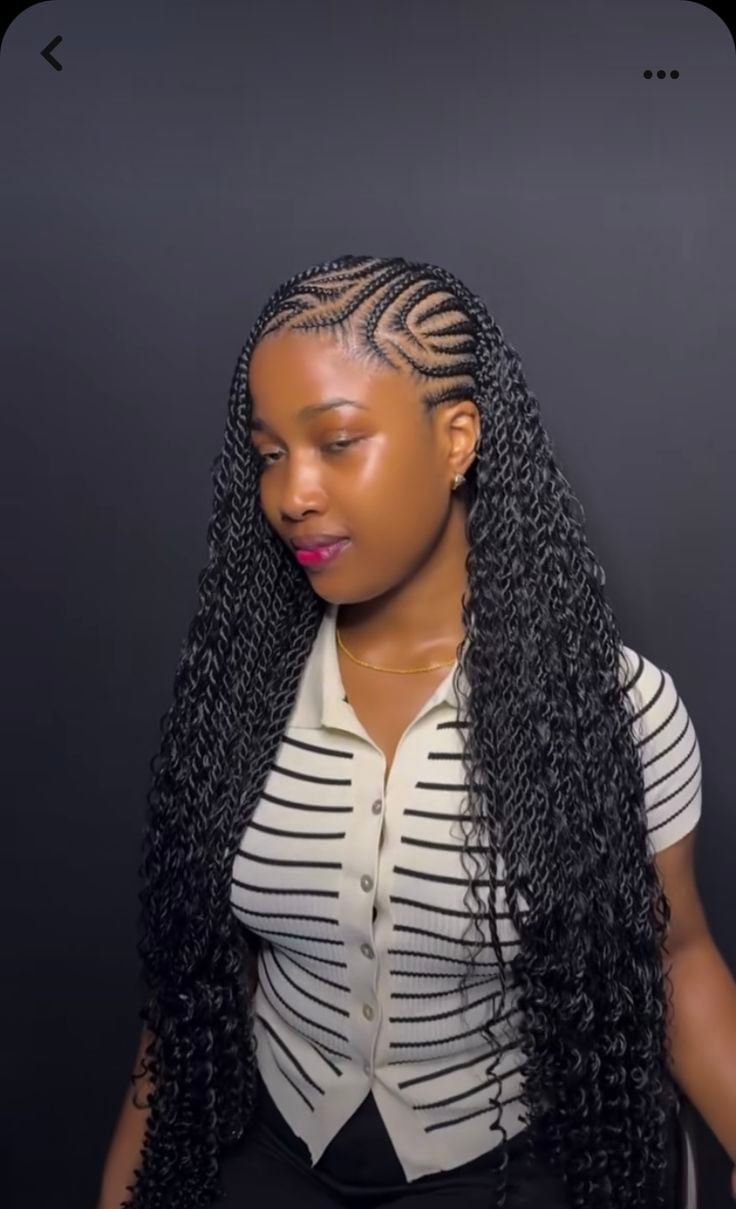
These mid-back braids, built with extensions on dark curly hair, end in a burst of voluminous curls that make the whole style feel like a party. The middle parting keeps the top neat while the curly ends add movement and drama. This look genuinely flatters medium to thick curly hair of mid-back length, because the natural texture blends seamlessly into the added curls, giving you more volume than a straight braid ever could.
Ask your colorist for: mid-back braids with voluminous curly ends. To keep those ends defined, apply a curl cream to the tips and trim any loose strands every 4-6 weeks. It’s a salon-only style, but the payoff is a texture that catches the eye without trying.
Mid-Back Braids With Curly Ends Mix, Black
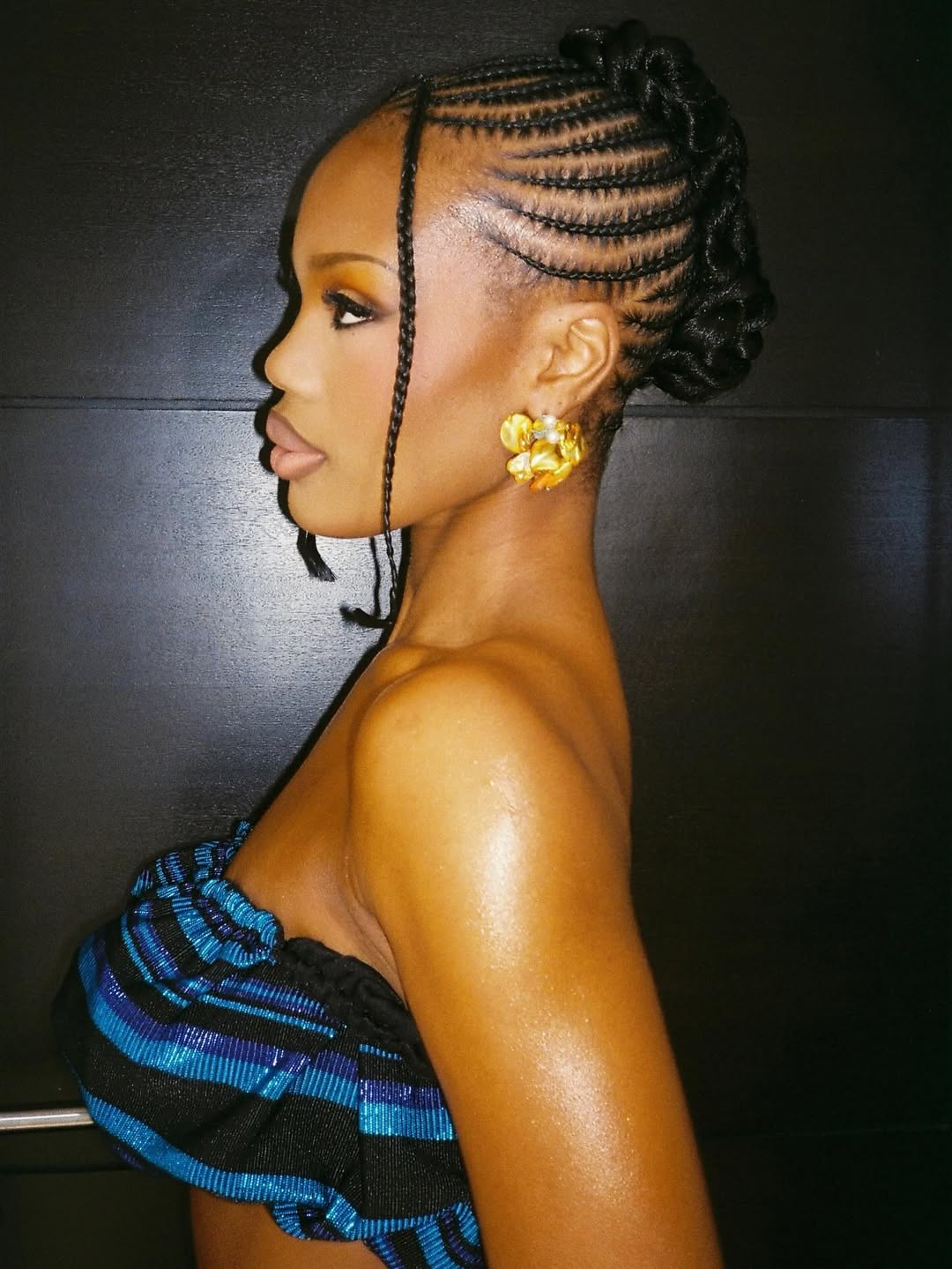
If you can’t decide between smooth and curly, this mix is the answer. Some braids stay sleek while others finish in loose curls, all separated by a clean middle part that runs to mid-back. The contrast is the technique: smooth sections give the style structure, curly ends add softness and movement. Thick hair of mid-back length carries this best, as the mix needs weight to hold its shape.
Ask your stylist for: braids with a mix of smooth and curly ends. A light finishing spray enhances the texture and keeps the part from frizzing. Trim any stray ends as they appear, and you’ll keep the contrast sharp. It’s a look that works for everyday wear, and it’s easier to maintain than you’d think.
Large Dark Brown Box Braids
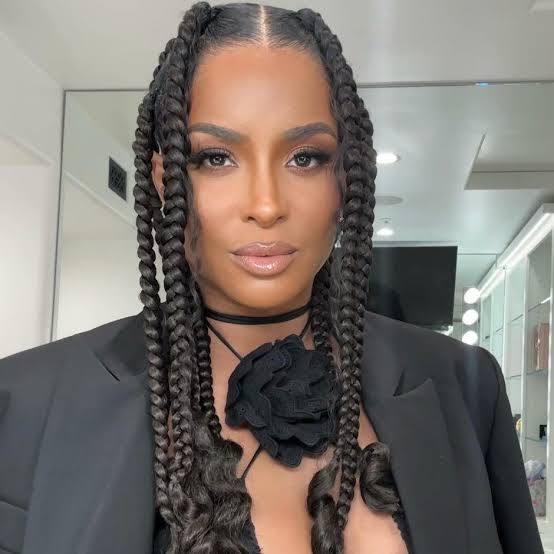
Ask your stylist for: large dark brown box braids with wavy ends. Medium to thick hair at mid-back length carries the weight best, and the style suits everyday wear and the office without looking like a weekend experiment. A moisturizing serum through the ends keeps that wave from collapsing into a straight tail by day three. Book a trim every six to eight weeks to keep the ends from looking chewed.
Double Dutch Braids Dark Brown
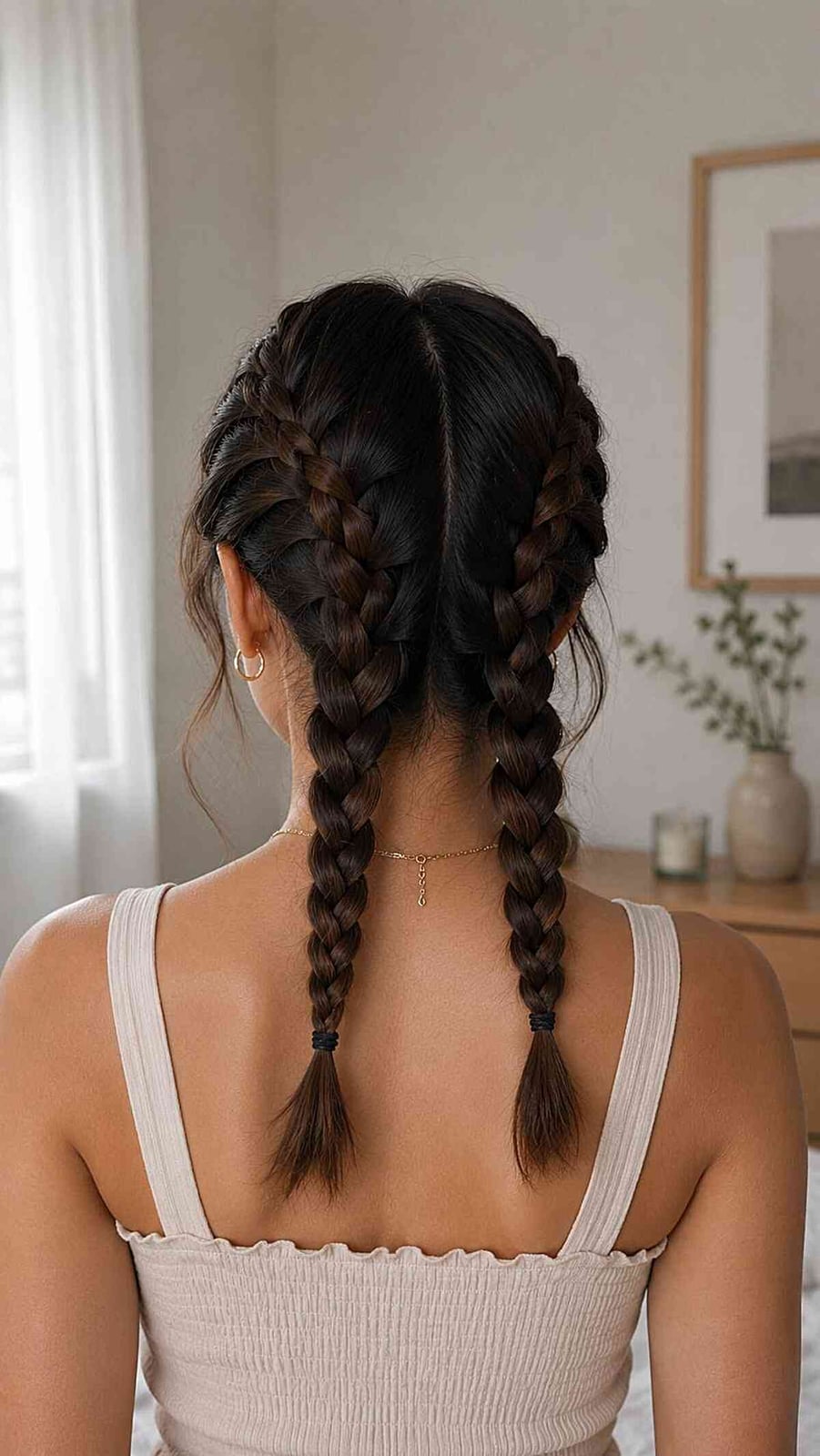
How long can you actually leave double dutch braids in before the middle part starts to fuzz? Longer than you think, provided the braids are tight at the root and the ends are secured with small black elastics. Two thick Dutch braids worked symmetrically from a center part on straight, dense dark brown hair give a clean, defined shape that holds its lines for days.
Ask your stylist for: double dutch braids from a middle part. Thick, straight hair at mid-back or longer is the right starting point, since finer hair tends to slip out of the braid by the second day. Between appointments, trim any flyaways at the part with small scissors to keep the finish sleek, and re-moisturize the ends so they do not fray. A fresh set every four to six weeks keeps the shape crisp.
Sleek Cornrows Into Low Bun
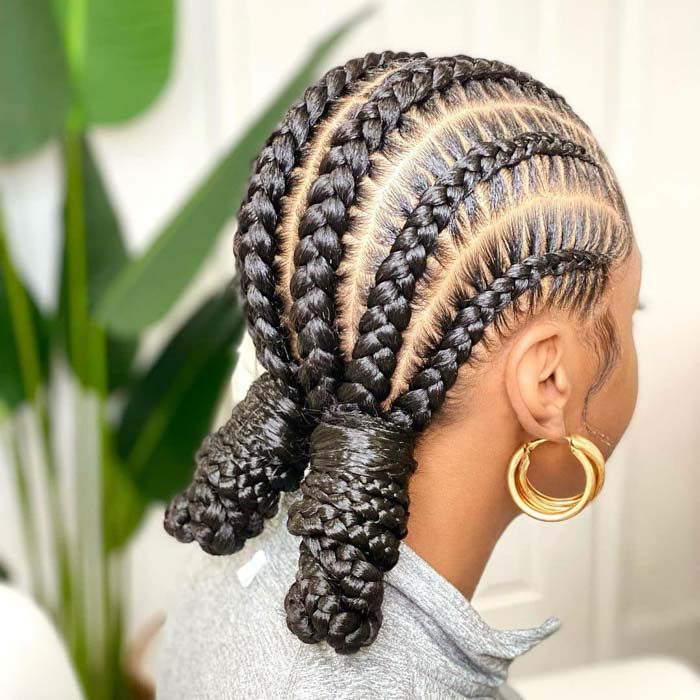
These cornrows are flat, dark brown, and gathered into a low bun with a center part running clean down the scalp. Ask your stylist for: sleek cornrows braided into a low bun. To get that polish, be specific about what you want. Ask for cornrows flat to the scalp with no visible bumps. Ask for a low bun sitting at the nape, not mid-crown. Ask for the part to run straight down the middle. Thick, straight hair at shoulder length or longer holds the lines best. A smoothing serum before braiding helps the finish stay neat.
Cornrows Into Sleek Braided Bun, Shoulder
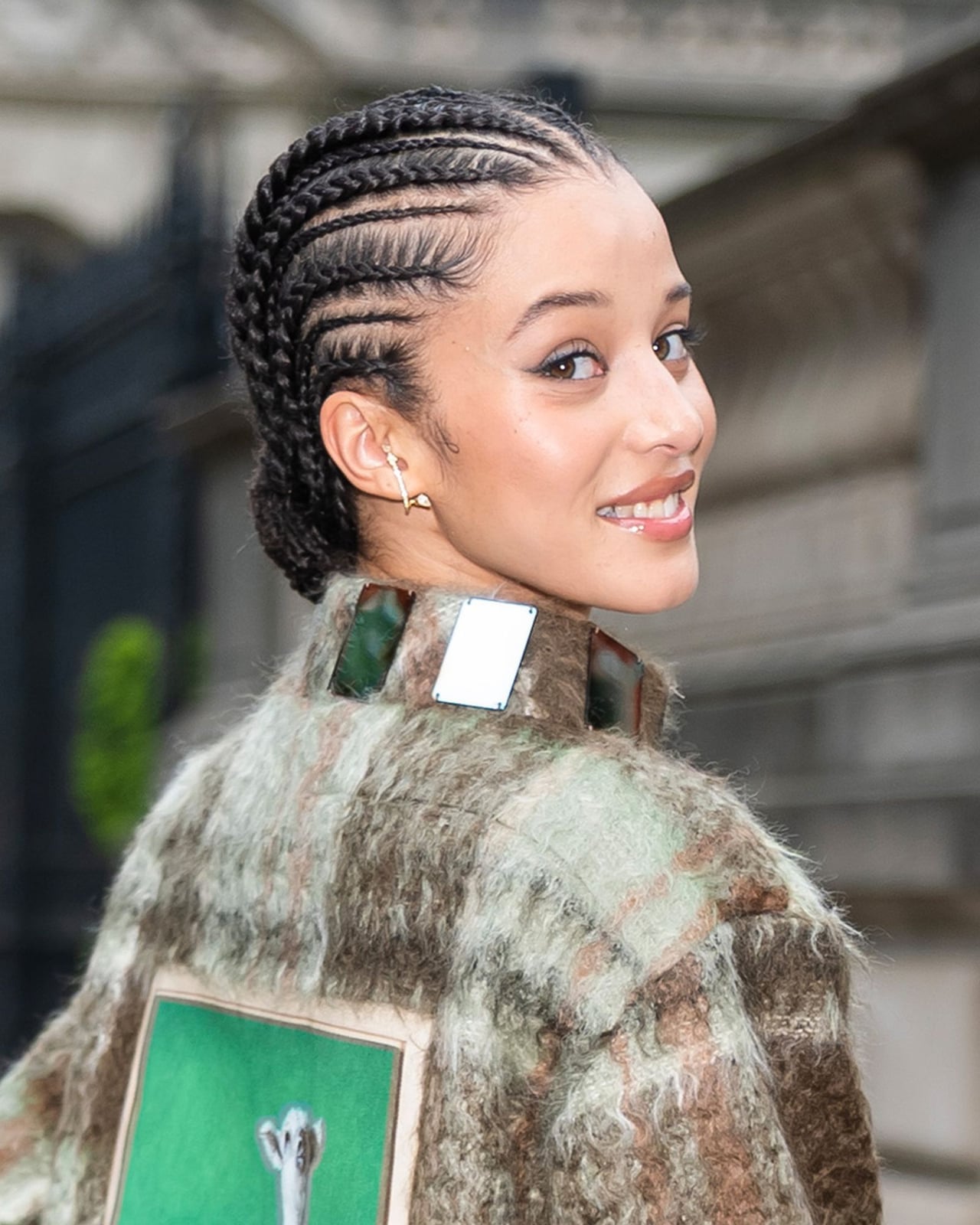
Compare this with a cornrow style that ends in loose hanging braids: the braided bun keeps everything contained, while loose ends give more movement and less control. Neat cornrows in black, parted down the middle and gathered into a sleek braided bun at the nape, suit thick hair at shoulder length or longer when the goal is a controlled updo for work or everyday wear.
Ask your stylist for: cornrows into a sleek braided bun. This one is a salon job; the parting and the bun need clean tension that is hard to manage alone. A strong hold gel slicked along the edges keeps the front smooth between visits.
Collarbone Cornrows Into Bun
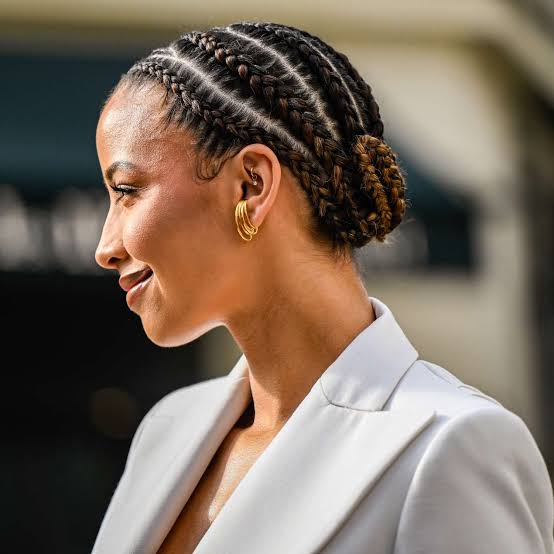
Ask your stylist for: collarbone cornrows braided into a bun. Thick, straight hair at collarbone length or longer suits this best, and the style works for the office or an event without tipping into formal. The catch: at collarbone length there is less hair to work into the bun, so the gather can look thin if density is low. Keep the braids tight and re-book every three to five weeks.
Vibrant Blue Box Braids Mid-Back
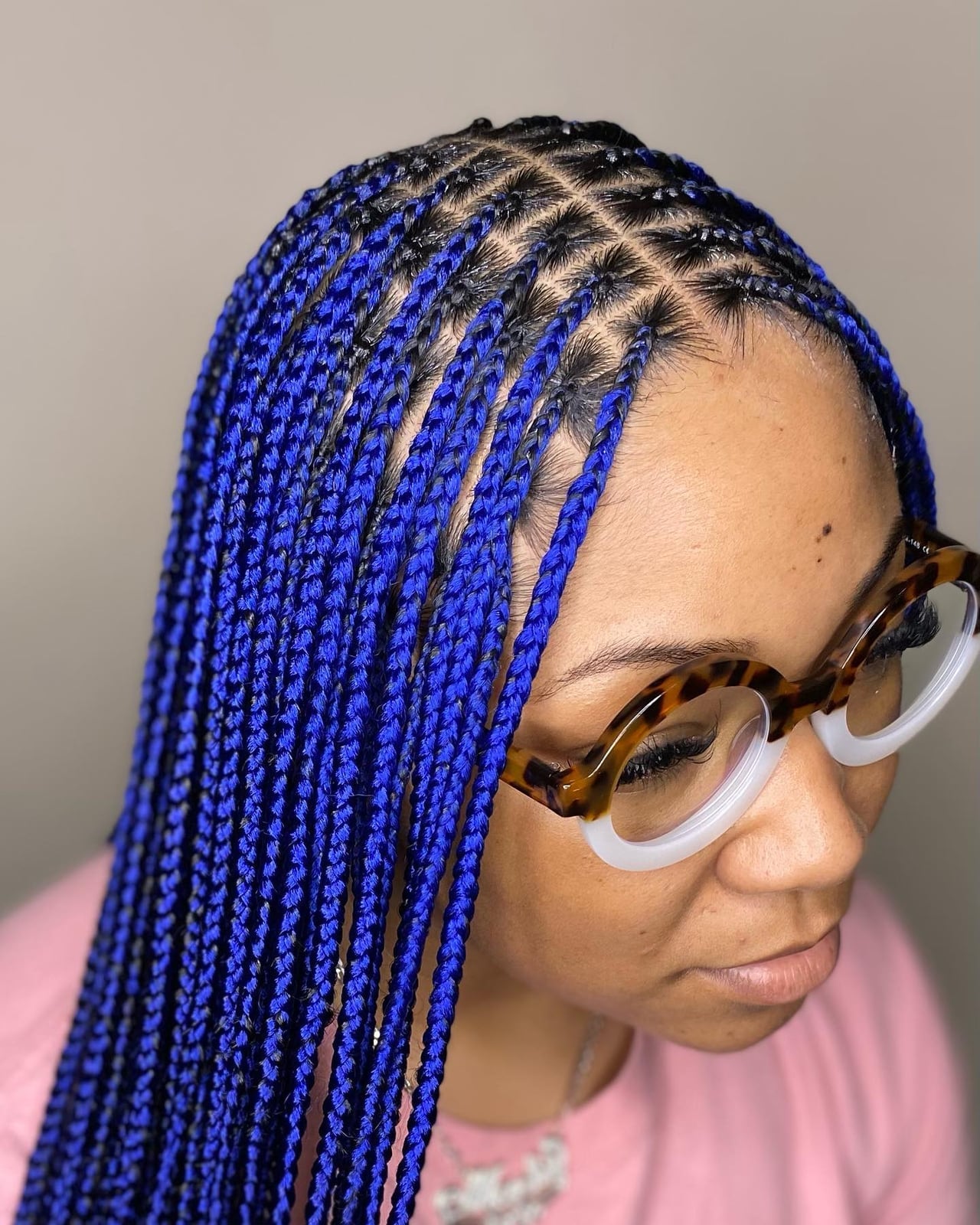
Blue box braids are built in two stages, and the order matters more than the shade itself. The braider sections thick hair into clean squares along a precise middle parting, then feeds in the color as the braid grows, which is why the blue stays locked inside each plait instead of sitting on top like a rinse. Vibrant blue reads as a single block of color from root to tip, so any uneven sectioning shows up immediately.
Ask your stylist for: vibrant blue box braids with a middle part. Mid-back length keeps the color visible without weighing the braids down, and thick hair gives each plait the body to carry a saturated blue. The finish is salon work, since the color has to be placed strand by strand through the whole run. Book a touch-up on the parting every six to eight weeks to keep the grid sharp. A color-safe wash keeps the blue from going murky between appointments.
Shoulder Length Micro Braids With Curly Ends
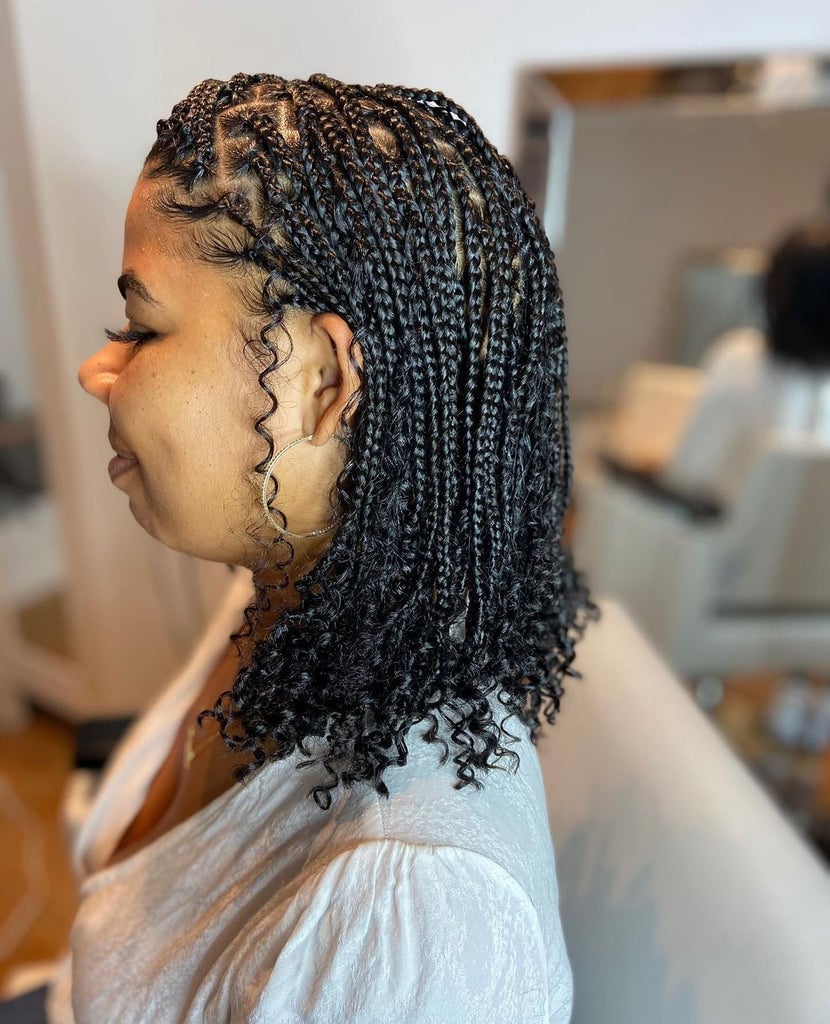
How much time does a head of micro braids actually eat? More than the shoulder length suggests. Dense, small sections mean a long first appointment, and the curly ends need a spritz and a light oil on the scalp to stay defined instead of fuzzy. Ask your stylist for: shoulder length micro braids with curly ends. Fine to medium hair takes the density well, and the clear middle parting keeps the scalp visible between the rows. Budget a redo every six to eight weeks, sooner if the roots start to slip.
Brown Box Braids With Hair Jewelry
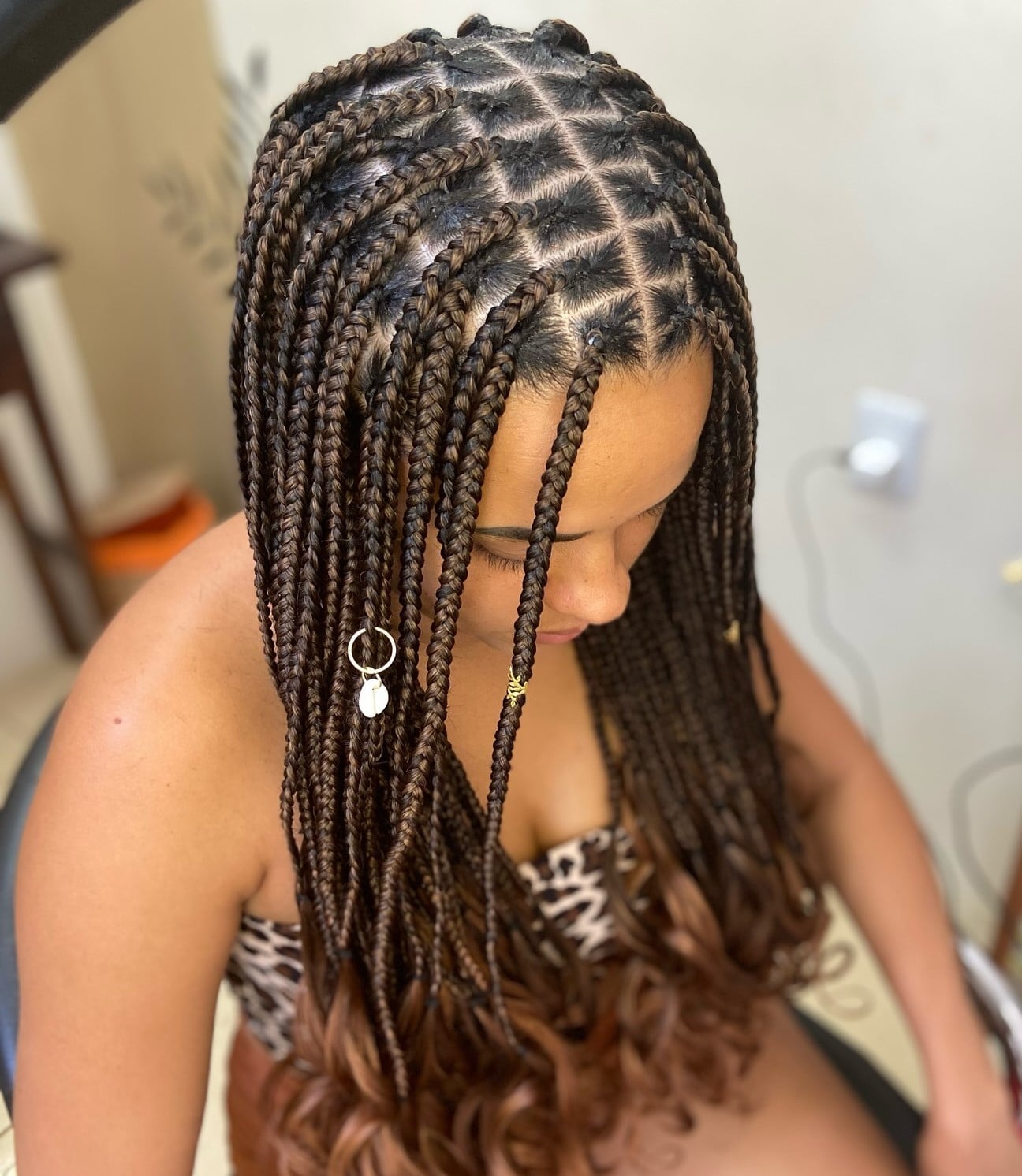
Small gold rings and beads sit along the mid-back braids like punctuation, and the defined middle parting keeps the whole grid readable from the side. The mistake is treating jewelry as a last-minute add-on. Rings clamped too high slide down within days, and beads placed unevenly throw off the balance of the style, so the decoration ends up fighting the braids instead of finishing them.
Ask your stylist for: brown box braids with wavy ends and gold hair jewelry. Medium to thick hair carries the weight of metal without the braids going limp, and wavy ends soften the line at mid-back. Have the pieces fixed where the braid is thickest, and check each one at home after washing. The real drawback is sleep: metal against a pillowcase means a bonnet every night, no exceptions. Loops snag on zips and bag straps too. Plan a removal appointment instead of pulling them out yourself, and rebook the style every six to eight weeks.
Intricate Braids Converging Down Back
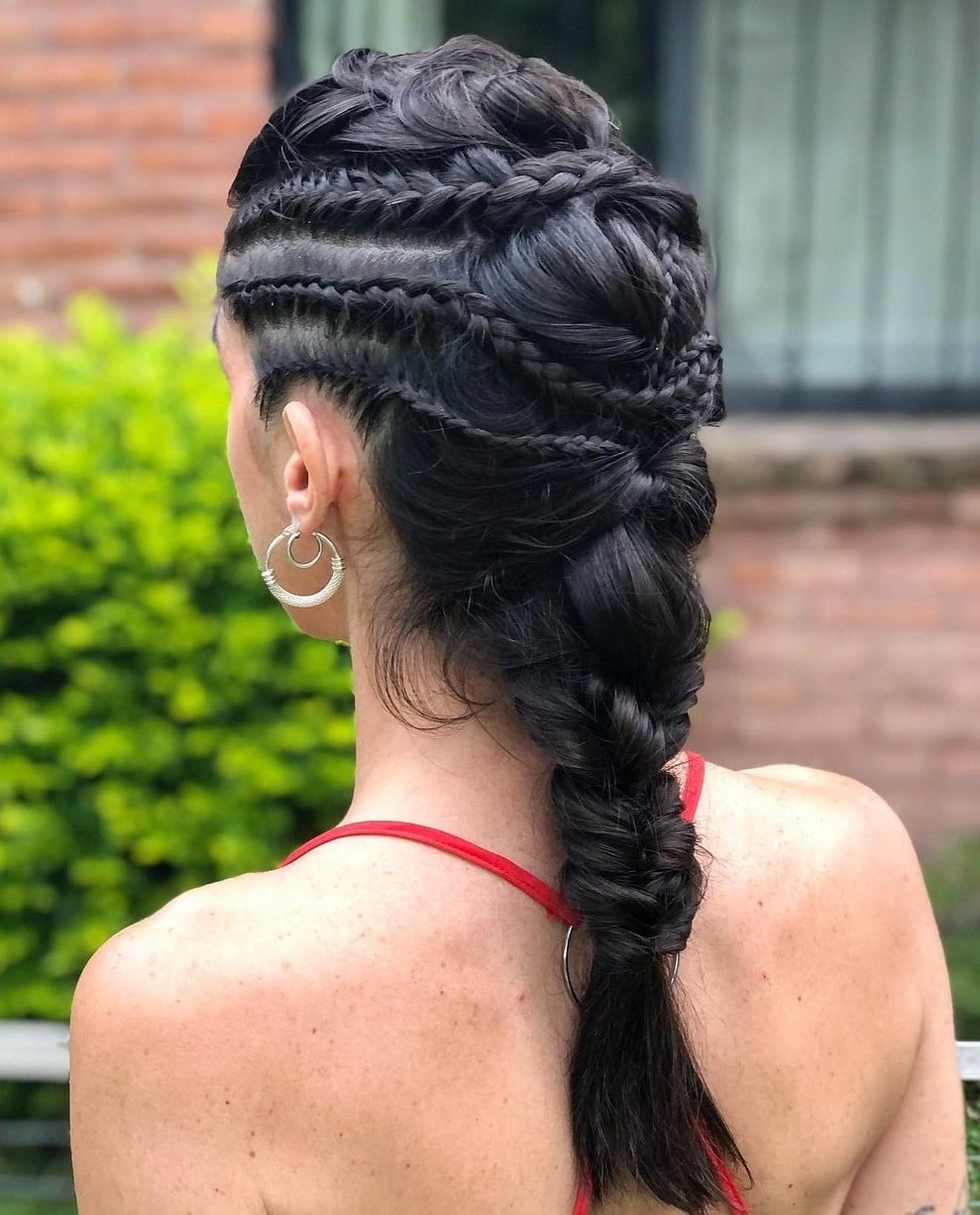
Several braids leave a middle parting, travel across the back and merge into one large braid that runs to mid-back. The convergence is the whole design: the top half is a map of smaller plaits, the bottom half a single thick tail, and the join has to sit level or the back view looks lopsided.
Ask your stylist for: intricate braids converging into a single braid. Thick, wavy hair gives the pattern enough volume to read, and the waves add texture to the larger braid without extra work. Bring a reference and point to where the merge should land, roughly the crown or lower. Ask how many feed-in braids the pattern needs before the single tail starts. Layered length helps the smaller braids sit flat against the head. The braiding itself takes a couple of hours, and a light oil on the scalp keeps the pattern neat for the week. A full redo every six to eight weeks holds the shape.
Blonde Braided Updo With Highlights
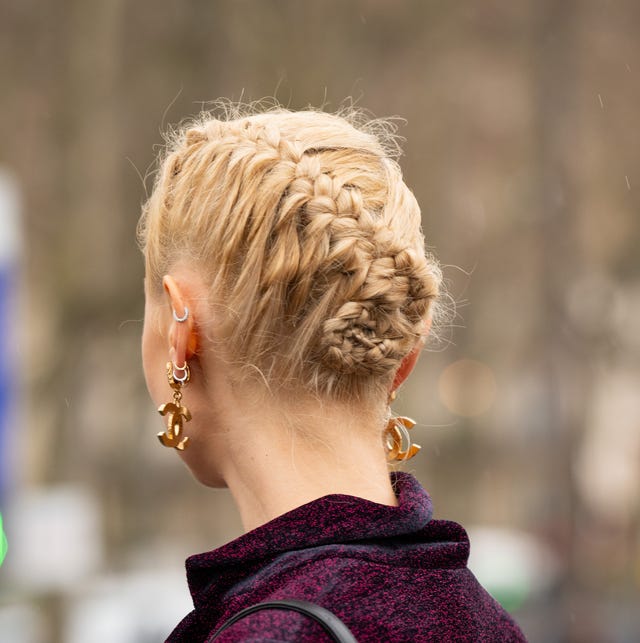
Set against a plain dark updo, this one wins on dimension: the subtle lighter highlights break up the blonde so the braid pattern stays visible from the back. Blonde braided updos show regrowth fast, and a toning appointment every four to six weeks keeps the highlights from turning brassy. Ask your stylist for: blonde braided updo with subtle highlights. Thick, wavy collarbone length gives the pins something to grip. Skip it if you want a low-maintenance morning, since the color upkeep never really stops.
Final Thoughts
When choosing your parting braids, let your scalp sensitivity and styling patience guide you. If you want maximum definition with minimal daily fuss, stitch braids or cornrows with a clean middle part deliver sharp lines that last for weeks. For a softer look with more movement, large box braids with wavy or curly ends give volume without the weight.
- Re-braid or touch up every 4 to 8 weeks to keep parts crisp.
- Moisturize the scalp with a light oil or spray along the parting.
- Sleep in a silk or satin scarf to reduce friction and frizz.
- Skip heavy styling products to prevent buildup at the roots.
Master the middle part with these artistic braid designs.