
Small talk can feel like an energy drain when you’re introverted, but it’s actually a low-stakes way to connect without needing to be the life of the party. The trick is to stop treating it as a performance and start treating it as a tool for finding common ground. This article covers practical strategies, from preparing a few open-ended questions to knowing when to exit gracefully, so you can navigate casual conversations with more ease and less anxiety.

Key Takeaways
- Prepare two or three open-ended questions in advance to reduce on-the-spot anxiety.
- Focus on active listening; the other person often gives you a thread to follow.
- Use shared observations like the weather or the event as instant common ground.
- Practice in low-stakes situations, such as with a barista or cashier, to build confidence.
- Have a polite exit line ready so you can end the conversation without awkwardness.
What is Small Talk and Why Does It Matter for Introverts?
Small talk is the light, informal chatter that fills the space before anything deeper happens: the weather, the parking situation, the coffee. Think of it as social lubricant. It helps people feel comfortable and connected before they move on to real topics or tasks.
For introverts, it can feel draining, because it asks for external focus and can seem inauthentic. But it’s how rapport and networking actually start. Approach it with a strategy, open-ended questions plus active listening, and it stops feeling like a performance and starts feeling like a conversation.
1. Prepare a Few Go-To Starters

Having two or three open-ended questions ready in advance can significantly reduce anxiety, because you’re not inventing anything in the moment. You’re just choosing.
My tip: Pull from three buckets: local but non-controversial current events, common interests, or something in the room you can both see.
- “What brought you here today?”
- “I love the decor in this place. Have you been here before?”
- “How did you hear about this event?”
Keep them light. Anything that could turn into a debate belongs in a later conversation, not this one.
2. Focus on Active Listening
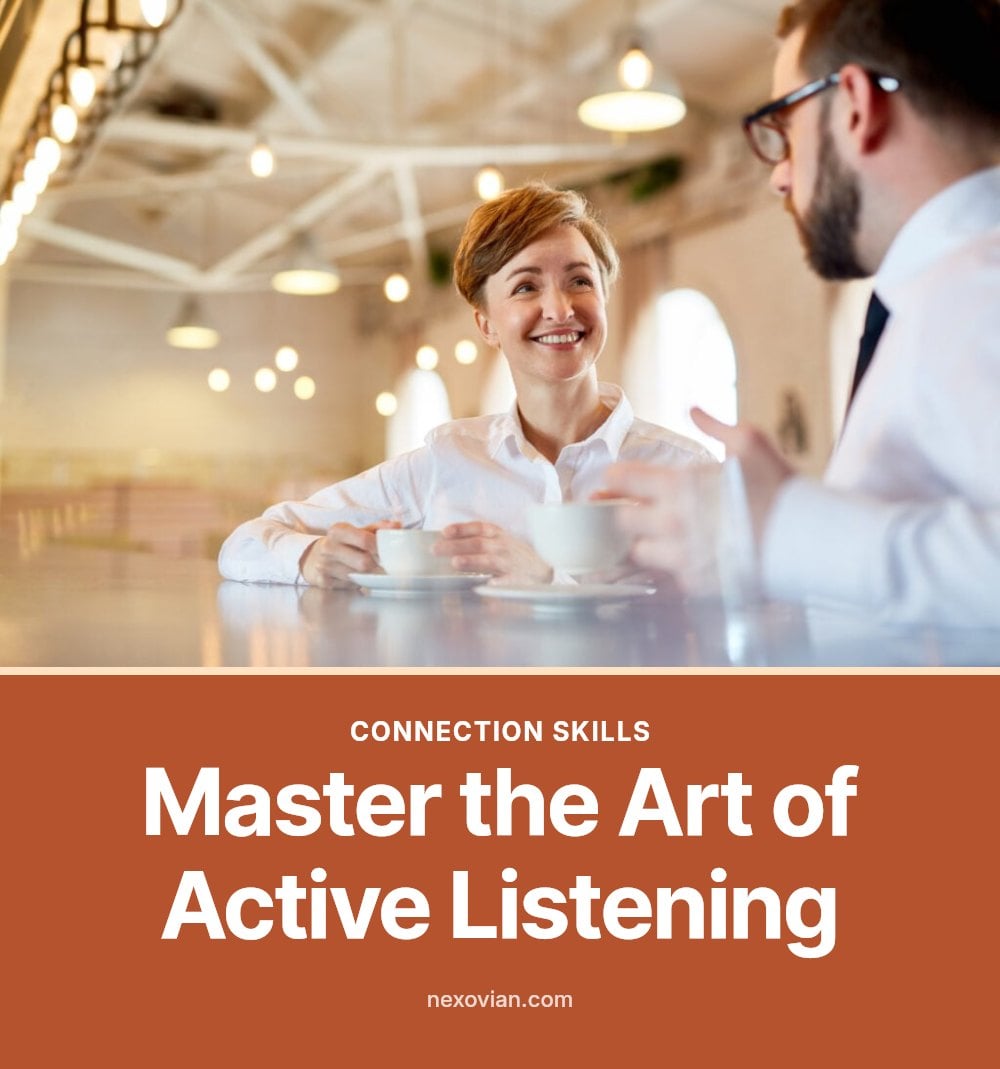
Active listening does more work than any clever line you could prepare. It shows genuine interest and hands you the next question, because people usually drop a detail worth following up on.
The trap is waiting for your turn to speak instead of actually hearing the answer. Listen for the thread: a name, a place, a complaint about the commute.
- Repeat one detail back: “You said you drove in from the coast?”
- Ask about that detail instead of switching topics.
This also takes the pressure off you to constantly generate material, and the conversation starts to feel natural rather than managed.
3. Ask Open-Ended Questions
Questions that can be answered with one word end the conversation. Questions that ask for a story keep it going, and they give you more to work with in the next turn.
- Instead of “Did you have a good weekend?” try “What was the highlight of your weekend?”
- Instead of “Do you like it here?” try “What do you like most about this neighborhood?”
If an answer still comes back short, offer one of your own first, then ask again. People usually match the level of detail you give them.
4. Find Common Ground
Shared context is the fastest route in, because you both already have something in common: the weather, the event you’re standing in, the fact that the line isn’t moving. Say the observation out loud and let the other person build on it. At a gathering, a shared connection works the same way. My tip: “How do you know the host?” is a classic for a reason. It usually opens a new avenue, like a mutual friend, a workplace, or a story about how they met.
5. Use Non-Verbal Cues

Your body does part of the talking before you get a word out. Comfortable eye contact and open posture make the exchange feel welcoming, while crossed arms or a gaze that keeps sliding away can read as disinterest, even when you’re just nervous.
- Face the person: turn your shoulders toward them, not half away.
- Nod and smile: a gentle nod signals you’re following along.
- Soften your gaze: steady eye contact, not a stare.
6. Practice in Low-Stakes Situations
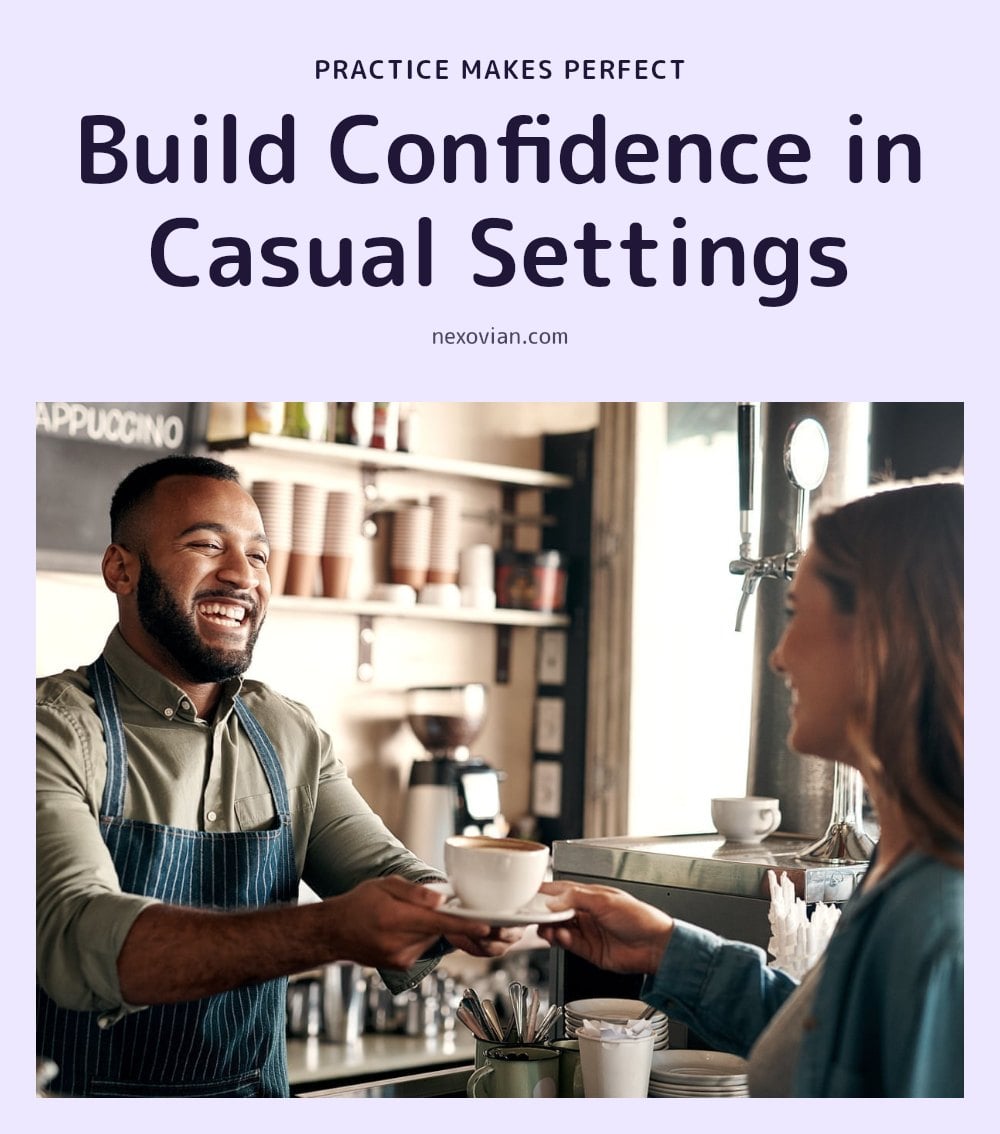
Build the skill where nothing rides on it. A barista, a cashier, a neighbor at the mailbox: these exchanges last a minute or two and carry little pressure, which makes them ideal for testing an opener or a follow-up question.
Order your coffee and add one line about the weather. Ask the cashier how their day is going. My tip: treat each one as a rehearsal, not a performance, so a flat response costs you nothing.
- Try one opener: repeat the same line all week and notice which version gets a longer reply.
- Practice a follow-up: pick up one detail from their answer and ask about it.
- End cleanly: a simple thanks and a goodbye is a complete conversation.
Starting small makes bigger social events easier, because the words have already left your mouth a hundred times before.
7. Shift Your Focus Outward
Self-consciousness grows when your attention is pointed at yourself: what you just said, how your voice sounded, what to say next. Point it at the other person instead. Get curious about their answer, their job, the trip they mentioned, and you have less room to overthink your own words.
That shift makes the conversation flow more naturally and feel less like a performance, because you’re genuinely responding rather than monitoring yourself.
8. Embrace the ‘Social Lubricant’ Role
Before you write it off as shallow, look at what it’s actually doing: it lowers the temperature so two people can relax enough to say something real. That’s the whole job. You’re building initial rapport, not instant friendship, and rapport is the bridge to deeper topics and to whatever task you’re both there for.
Once you accept that role, the pressure drops. You’re not performing; you’re warming up the room.
- Reframe: treat it as a handshake in words, not a test of personality.
- Good to know: a short exchange that ends comfortably has done its job.
9. Know When and How to Exit Gracefully
Leaving a conversation is allowed, and doing it politely is a skill, not a slight. When the exchange feels complete, or you simply need to move on, close it cleanly instead of drifting away or lingering out of guilt.
Keep one line ready so you don’t improvise under pressure:
- “It was lovely chatting with you, I’m going to grab another drink.”
- “I see someone I need to say hello to, enjoy the rest of the evening.”
- Tip: pair the exit with a small smile and a nod so it reads as warm, not abrupt.
10. Don’t Overthink Every Word
Aim for a comfortable atmosphere, not a flawless speech. People remember how the exchange felt, not whether your sentence landed perfectly. Chasing the perfect line pulls your attention inward and stalls the conversation.
Tip: a little awkwardness is normal and often endearing. A stumbled word or a pause reads as human, so let it pass and keep the conversation moving.
11. Be Patient with Yourself
This develops over time, with consistent practice, not in one good night. Expecting an overnight transformation sets you up to quit after one clumsy attempt. Instead, treat each interaction as a rep.
- Celebrate: you started a conversation, you asked one good follow-up, you exited cleanly.
- Learn: after a flat exchange, note one thing you’d try differently next time.
My journey with small talk has been a marathon, not a sprint, and yours will be too. Every attempt builds confidence.
Common Small Talk Mistakes to Avoid
Even with good openers, a few habits can sink a conversation. These are the ones worth catching early, because each has a simple fix.
- Interrogation mode: Firing question after question turns a chat into an interview. Answer your own questions too, so it becomes a back-and-forth instead of a one-sided quiz.
- Going deep too fast: Politics, health, and heavy personal stories land badly with someone you just met. Stay light until the other person signals they want more.
- Monopolizing the airtime: If you have talked for two minutes straight, stop and hand the floor back. Listening as much as you speak keeps the exchange balanced.
- Ignoring body language: A hard stare and a total lack of eye contact both read as discomfort. Aim for relaxed, intermittent eye contact and an open stance.
- Writing it off as fake: Treating small talk as pointless makes you rush it or skip it. See it as the bridge to deeper connection, and it gets easier to show up for.
Tip: Pick one item from this list to work on per week rather than fixing all five at once.
Frequently Asked Questions
Why is small talk so hard for introverts?
Small talk requires sustained external focus and can feel inauthentic or draining for introverts, who often prefer deeper, more meaningful exchanges. The effort of maintaining conversation without a clear purpose can be mentally tiring, but approaching it as a social lubricant rather than a performance can help.
How do I keep a small talk conversation going?
Ask open-ended questions that invite a story, like ‘What was the highlight of your weekend?’ instead of ‘Did you have a good weekend?’ Then listen actively for details to follow up on. This turns the exchange into a dialogue rather than an interrogation and gives you natural next steps.
What are some good small talk topics?
Stick with light, non-controversial subjects: the weather, the event you’re both attending, a shared observation about the room, or local current events. These are safe starting points that let you find common ground without diving into deep or polarizing territory too quickly.
Is it okay to end a small talk conversation early?
Absolutely. It’s polite and necessary when the exchange feels complete or you need to move on. Keep a simple exit line ready, such as ‘It was nice chatting with you, I’m going to grab another drink,’ and close cleanly without guilt or lingering.
Can small talk genuinely lead to deeper connections?
Yes. Small talk serves as the bridge to deeper conversation by establishing initial rapport and comfort. Once both people feel at ease, it’s natural to move toward more meaningful topics. The key is to see small talk as the first step, not the final destination.
Final Thoughts
My recommendation is to pick just one strategy from the list and try it in a low-pressure setting this week. Improving small talk is an ongoing process, not a one-night fix, so be patient with yourself as you practice. Each conversation is a chance to build rapport, and with time, the skill will feel more natural.

