Purple hair dye runs from a single face-framing slice to a full head of saturated violet, and the technique you pick decides the upkeep. The current swing favors deep jewel tones, lavender haze, lilac ombré, vivid violet and smoky amethyst over anything neon.
These 20 Purple Hair Dye Ideas range from a money piece you can hide in a ponytail to all-over vivid curls and plum balayage that forgives a grow-out line. Short bobs, collarbone lengths and mid-back textures all appear, with the toning rhythm and trim schedule spelled out for each. It solves the usual sticking points: a fringe that will not sit, fine hair that falls flat, and a root line that shows by week four.
The 20 looksOpen list +
Chin Length Angled Bob With Purple Money Piece
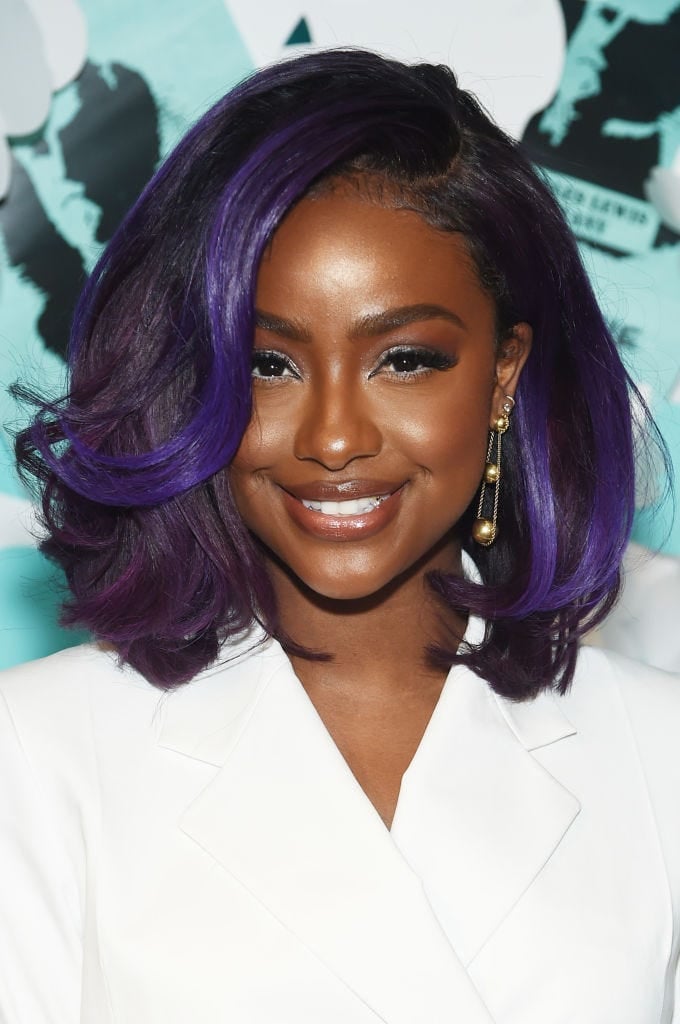
What does a money piece actually do for a bob? On a chin-length angled bob, a bright purple slice at the front does the work of a highlight without asking the other hair to commit. The dark base keeps the shape sharp, and the side part leaves the color visible from most angles. Fine to medium straight hair handles this cut well; the angle adds weight at the front and can soften a square jaw, while an oval face gets a clean frame. Ask your stylist for: chin-length angled bob, bright purple money piece. Style with a side part and a blowout for volume, and plan on refreshing that money piece every four to six weeks before the purple fades into something sadder.
Mid-Back Length Vivid Purple Curls
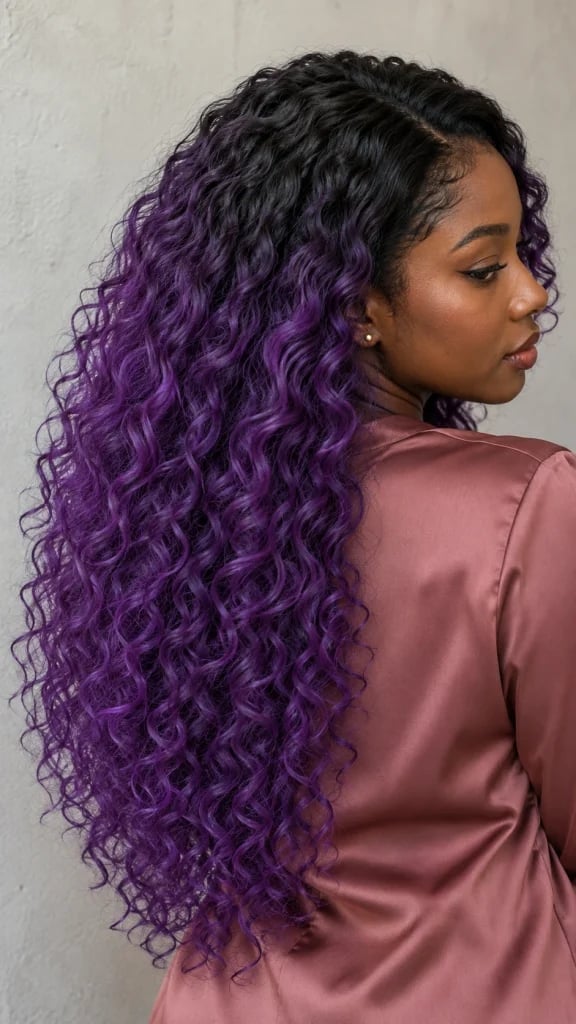
A dark base under vivid purple is the quiet trick behind saturated color: the depth underneath makes the top shade look louder. Reaching this on mid-back hair takes a lifting stage first, then a purple deposit over it, and thick curls hold that pigment in the bends where light lands unevenly. That unevenness is the point. A flat, uniform purple on loose curls would look printed; the dark base peeking through gives it movement.
Thick, curly hair at mid-back length or longer carries this best, and the layers keep the volume from turning into a triangle. Ask your colorist for: mid-back length vivid purple curls. At home, a diffuser and a curl-defining cream keep the shape, and a color-depositing conditioner stretches the tone between appointments. Expect a salon visit every six to eight weeks for the color and a trim every eight to ten to keep the ends from dulling the whole thing.
Deep Midnight Purple Wavy Mid-Back Hair
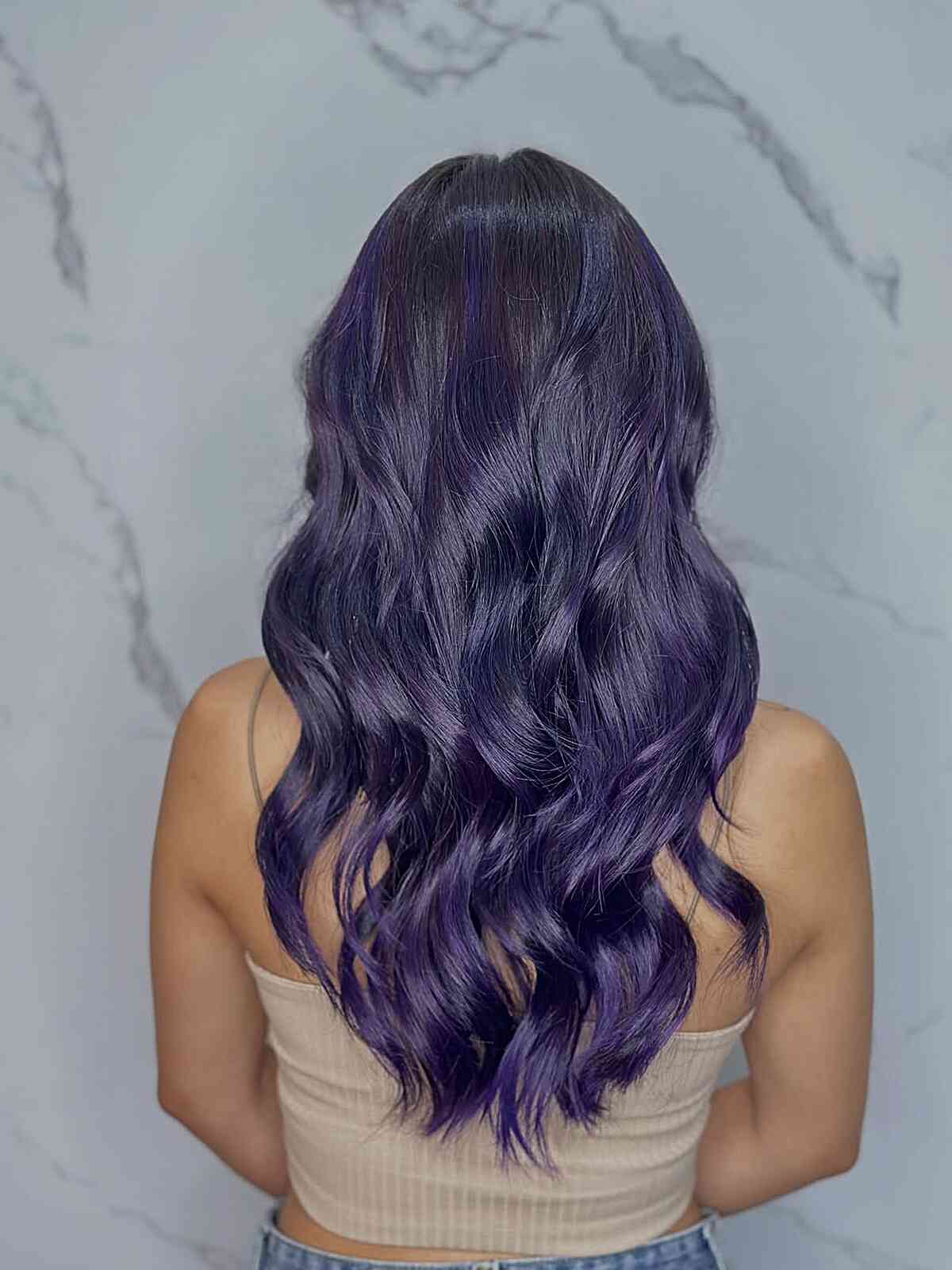
Set deep midnight purple next to a bright violet and the difference is commitment: the midnight shade reads almost black in low light and only shows its color when the light hits. That restraint suits anyone who wants purple without answering questions about it at work. The tonal variations through the mid-back length keep it from going flat, and thick waves give the depth somewhere to sit.
If the goal is a color that looks deliberate in daylight and discreet indoors, midnight is the closer match. A vivid violet is the louder option, and it asks for more frequent toning to stay vivid. Thick, wavy hair at mid-back length or longer holds this shade well, and a middle part lets the waves fall evenly on both sides. Ask your colorist for: deep midnight purple, mid-back length waves. Cooler skin tones tend to wear this depth easily, though the shade itself stays neutral enough to avoid clashing.
Black Base With Violet Ombre Mid-Back Length
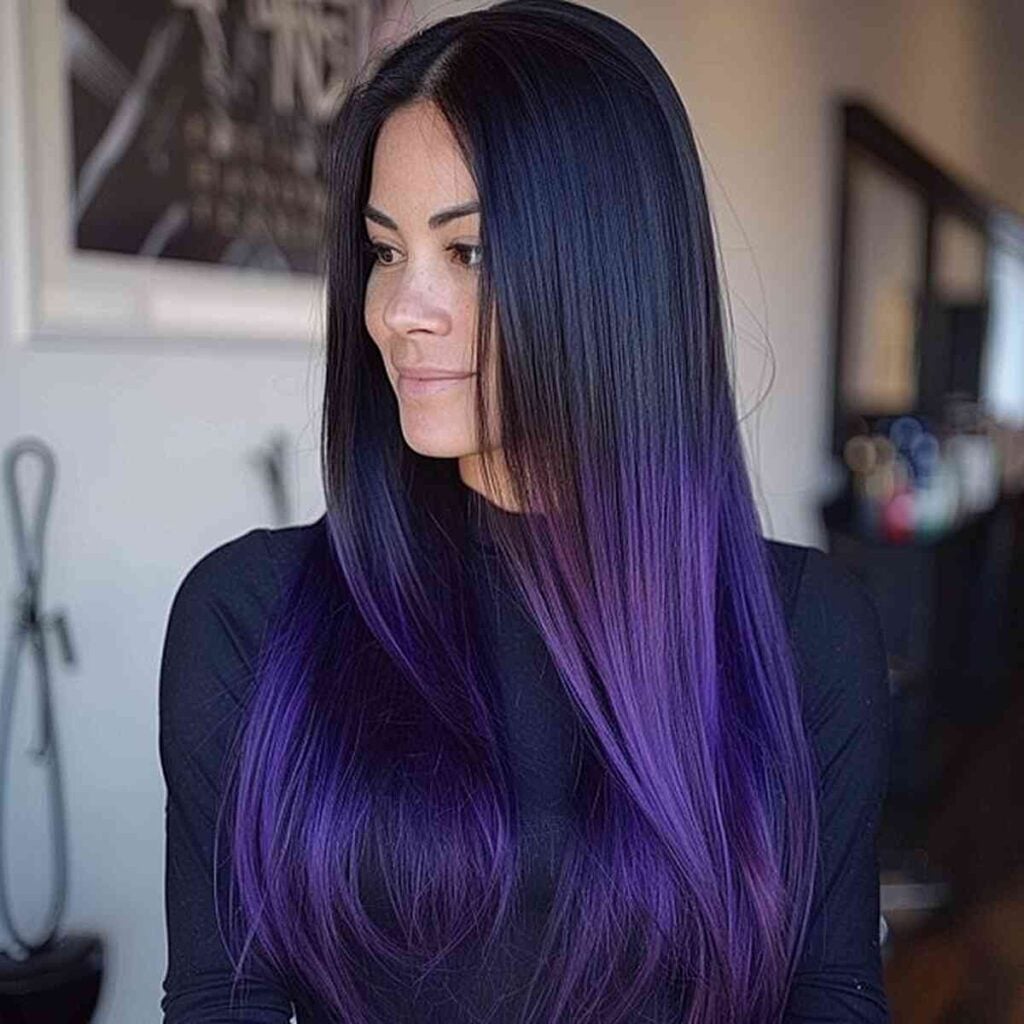
A black base fading into vivid violet at the ends is the lowest-risk way to try purple: the root line stays dark, so grow-out is a non-event for months. The transition matters more than the shade. Ask for a blended melt instead of a hard line, or the ombre turns into a stripe. Thick, straight hair at mid-back length shows the gradient cleanest, and a middle part keeps the front view symmetrical.
Ask your colorist for: black to vivid violet ombre, mid-back length. Bring these specifics to the consultation:
- Where the violet should start, roughly at mid-length or lower
- A soft melt between the black and the violet, no banding
- Vivid violet instead of a muted plum at the ends
Layers through the mid-back keep the straight texture from hanging heavy, and a flat iron on low heat maintains the finish without frying the lightened ends.
Uniform Vivid Purple Wavy Mid-Back Hair
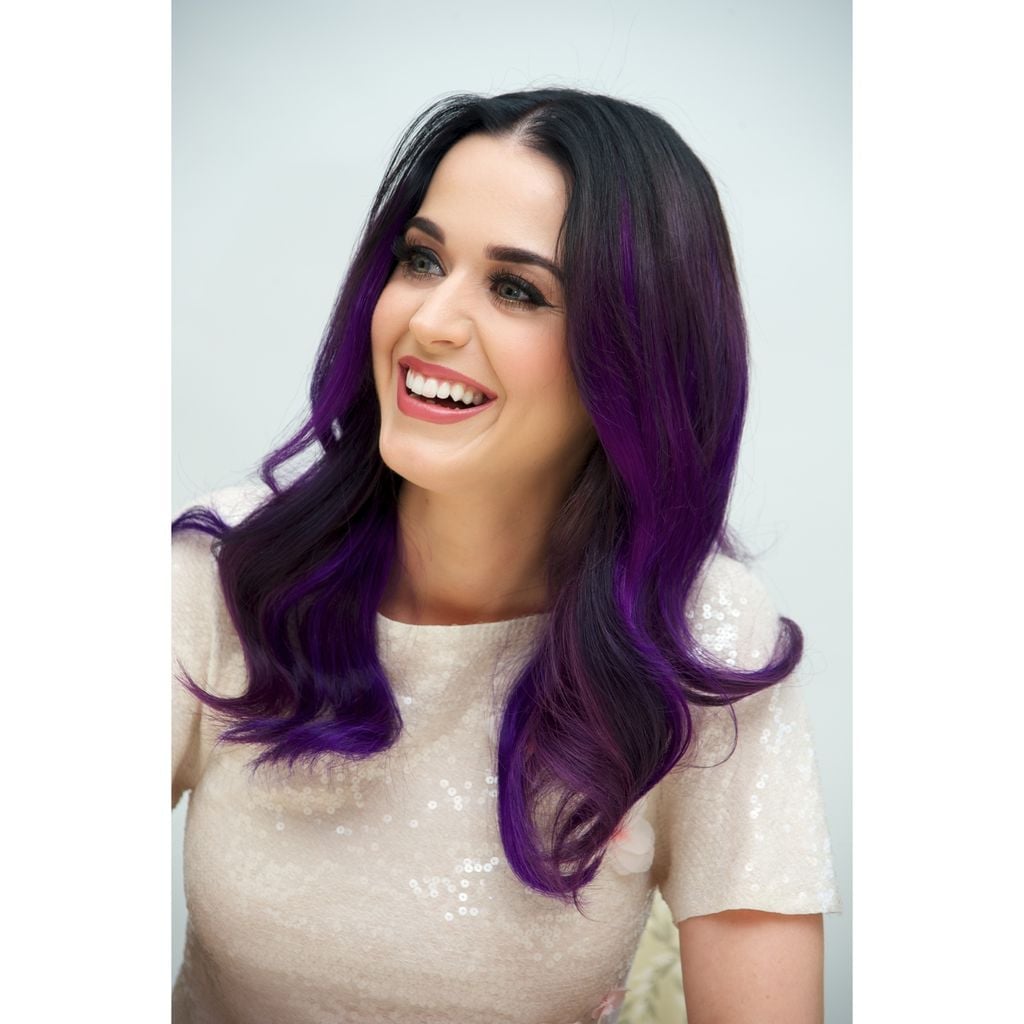
One shade from root to tip leaves nowhere to hide: a uniform vivid purple shows every bit of fade, and that is the trade for the impact. The color is applied across the whole mid-back length, so the saturation has to be even or the eye catches the patchy spots. Thick waves help here, since the bends break up the surface and make minor unevenness harder to spot.
Thick, wavy hair at mid-back length or longer carries a full-head vivid shade without the color overwhelming the cut. Ask your colorist for: uniform vivid purple, mid-back length waves. Upkeep is the real story. Vivid purple fades fastest in the first two weeks, so a color-depositing mask once a week keeps the tone from sliding toward pink, and a toning appointment every four to six weeks resets it. Roots show against the vivid length by week five or six. Air-dry or diffuse to keep the natural wave, and book a trim every eight to ten weeks so the ends stay sharp.
Mid-Back Dark Purple With Highlights And Curtain Bangs
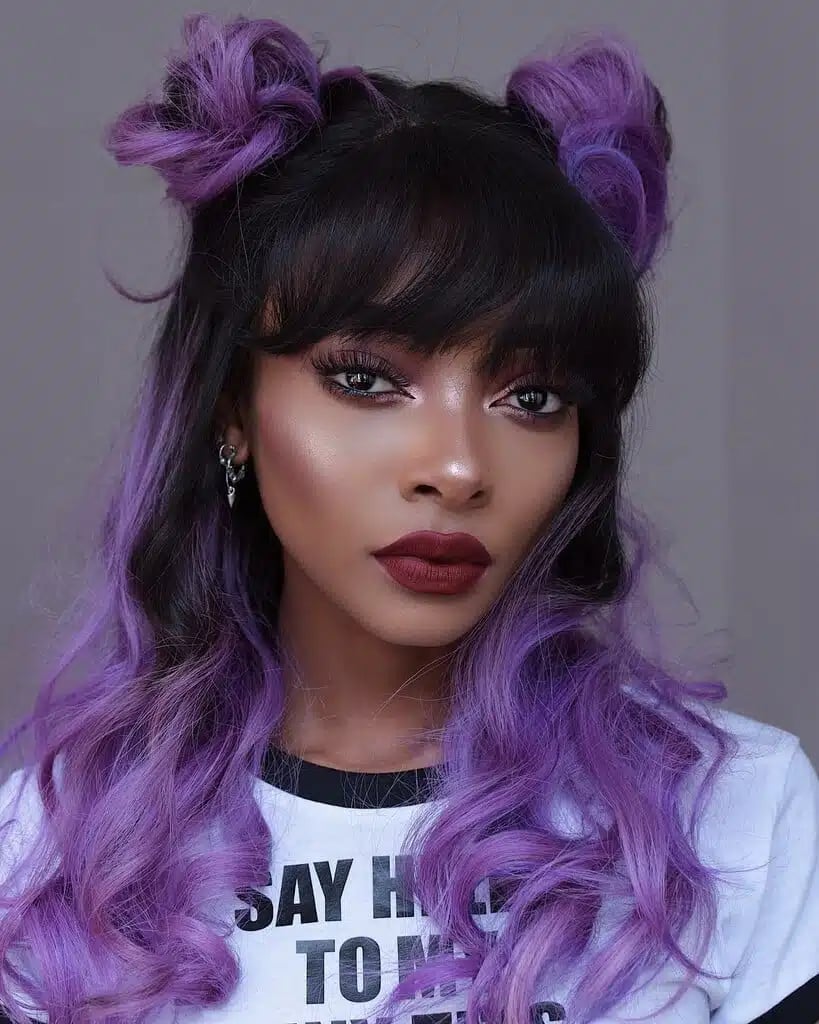
How do you wear purple without committing to a full neon statement? This is the answer, a mid-back length dark purple base with lighter purple highlights. The curtain bangs frame your face, and the loose waves keep the color from looking flat, which is the real trick with darker shades.
Ask your colorist for: mid-back dark purple with subtle highlights, curtain bangs. It suits medium density wavy hair, and the curtain bangs soften round and heart faces. This lands in autumn or winter, when the depth of the purple feels cozy instead of loud. Style the bangs with a round brush to get them to sit right, and plan a trim every 8 to 10 weeks so the shape holds.
Braided Mid-Back Hair With Violet Lilac Ombre
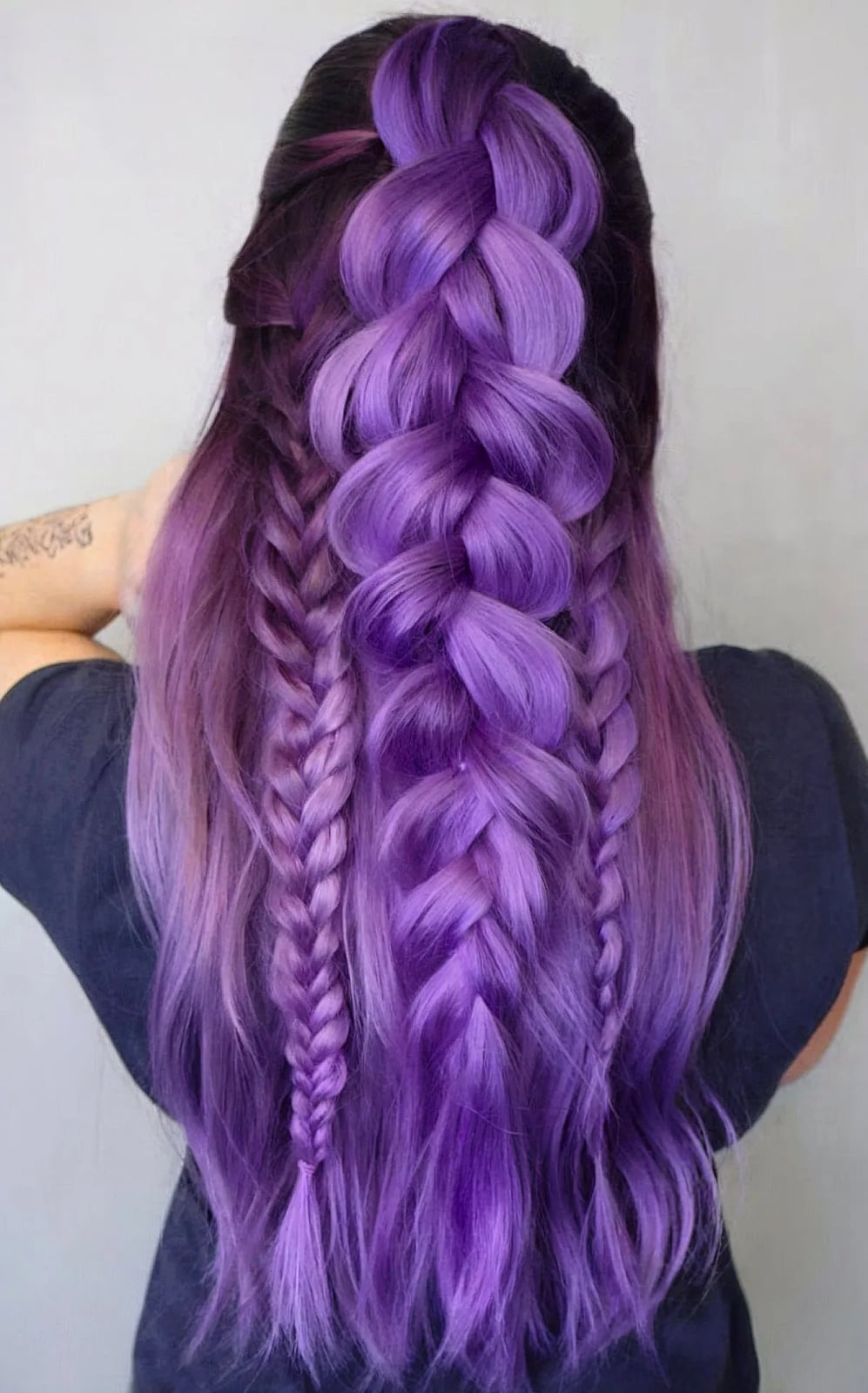
A dark base that melts into vivid violet and lilac ombre is already a lot to work with, but the braids make it a technical event. The central Dutch braid and side braids on thick, wavy mid-back length hair turn the gradient into something you can actually see, row by row. It is a clever way to show off two tones at once.
Ask your colorist for: mid-back braids with violet lilac ombre. Thick, wavy hair at mid-back length or longer is what this needs, because braids grab better when there is weight to them. Before braiding, a texturizing spray gives the sections grip, and a light hairspray keeps the braids from sliding out by the end of a festival day.
Purple Base With Pink Blue Streaks Wavy Hair
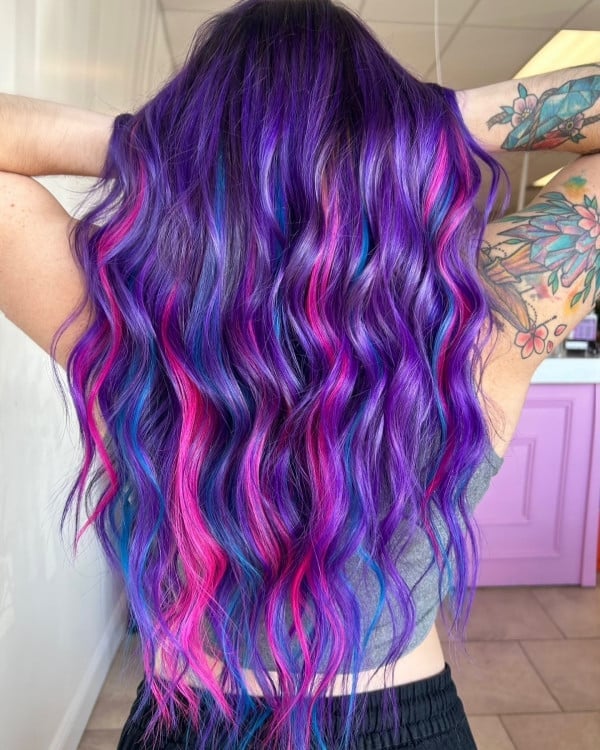
This one is a commitment with a capital C: a vibrant purple base with bright pink and electric blue streaks woven through thick, wavy mid-back length hair. The loose waves let each streak show up on its own, which is the whole appeal. It is not a subtle color job, and it should not try to be.
Ask your colorist for: purple base with pink and blue streaks. This is a salon-only situation, not a DIY weekend project, because three colors in one head need someone who knows how to keep them from bleeding into each other. Thick, wavy hair at mid-back length or longer carries the multi-dimensional effect best. Between visits, color-safe shampoo and skipping daily washes are what keep the pink, blue and purple from turning into one muddy mess.
Collarbone Angled Bob With Deep Purple Lowlights
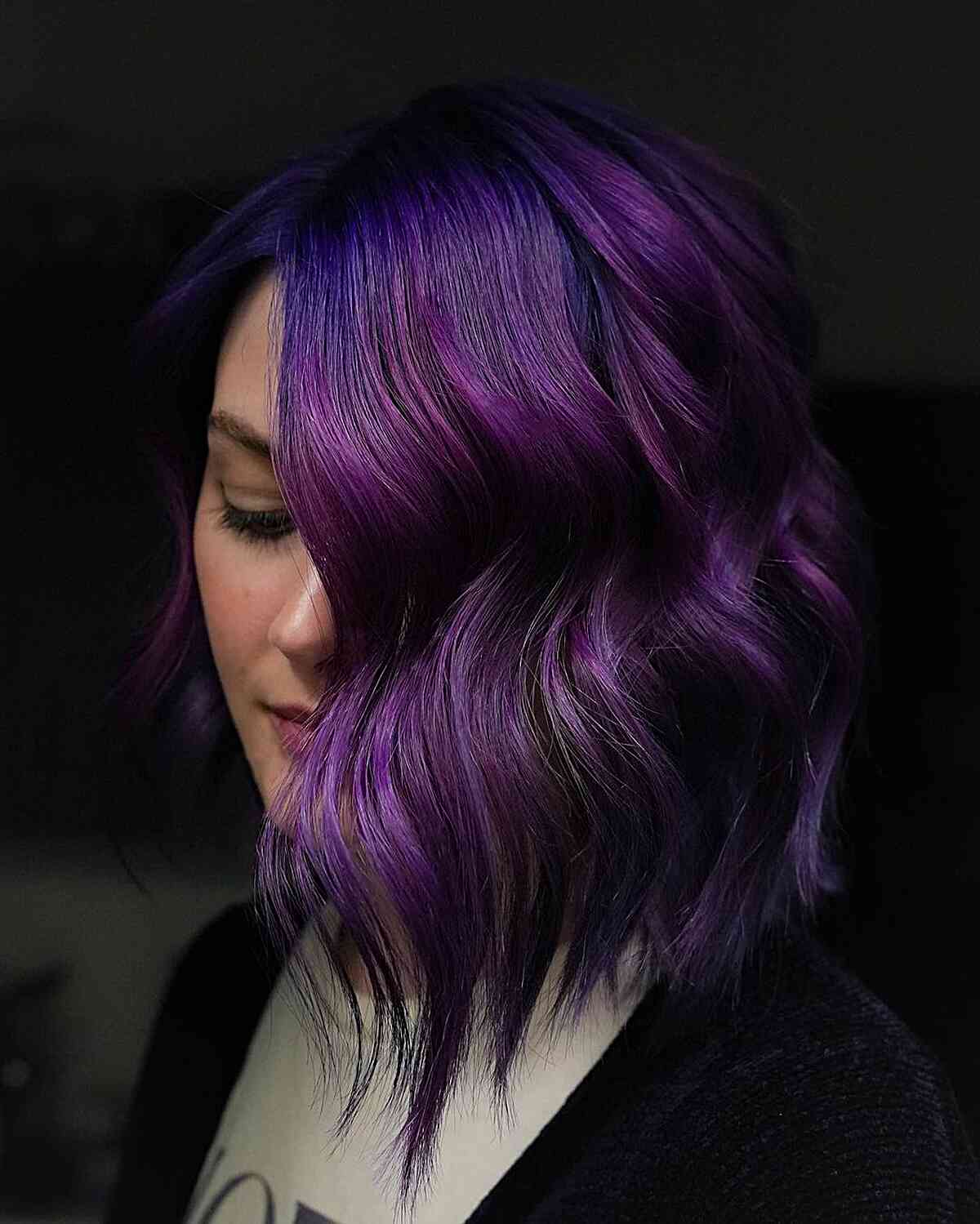
Does an angled bob work on your face shape? Generally, yes, because the angle adds length to round faces and softens square jaws, but the side parting is what shapes the look. This collarbone-length angled bob has a dark base with deep purple lowlights, which gives you color depth without the upkeep of an all-over vivid shade. The soft waves and side parting make the lowlights peek out as you move.
Ask your colorist for: collarbone angled bob, deep purple lowlights. It suits medium textured hair that is already at collarbone length, and it is a workable everyday color. To keep the angle sharp, you are looking at a trim every 6 to 8 weeks, because an angled bob loses its line fast when it grows out.
Collarbone Bob Pink Purple Balayage
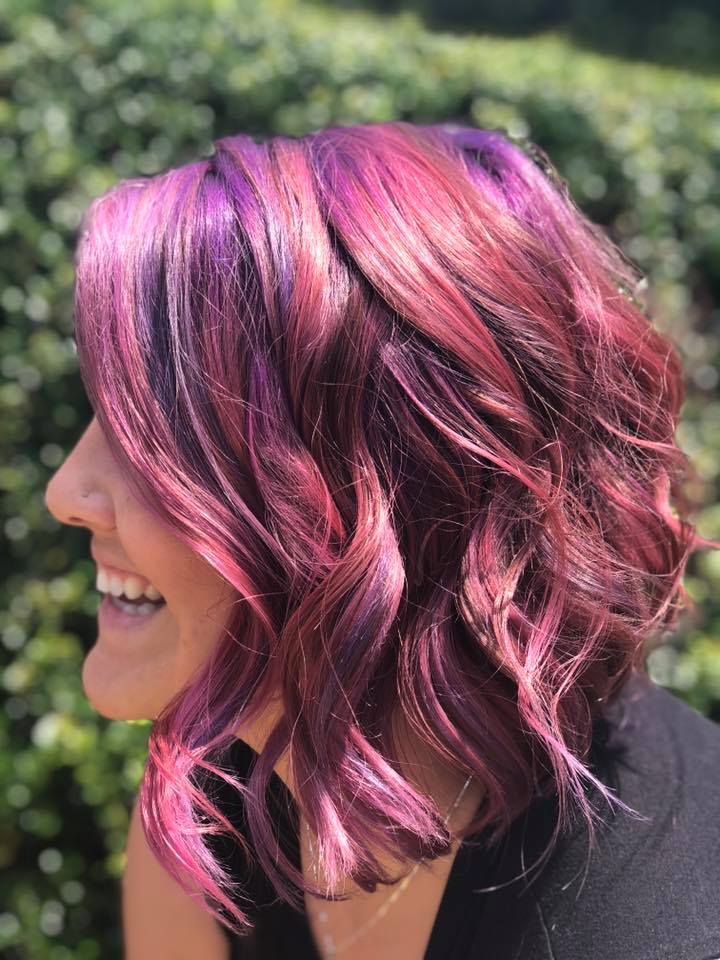
If you are torn between a solid purple and something softer, balayage is the middle path. This collarbone bob blends vibrant pink and purple tones into a wavy blowout, so the color looks painted on. The side part gives it a casual, undone finish that a full block of color would not. For thick, wavy hair, the balayage catches the texture and adds dimension that a flat application cannot match.
Ask your colorist for: collarbone bob, pink and purple balayage. The waves keep the shape loose and the color visible. Balayage grows out with less of a line than a solid color, but you will still want a touch-up every 10 to 12 weeks to keep the pink and purple from turning into a faded lilac.
Shoulder Length Layers With Purple Highlights
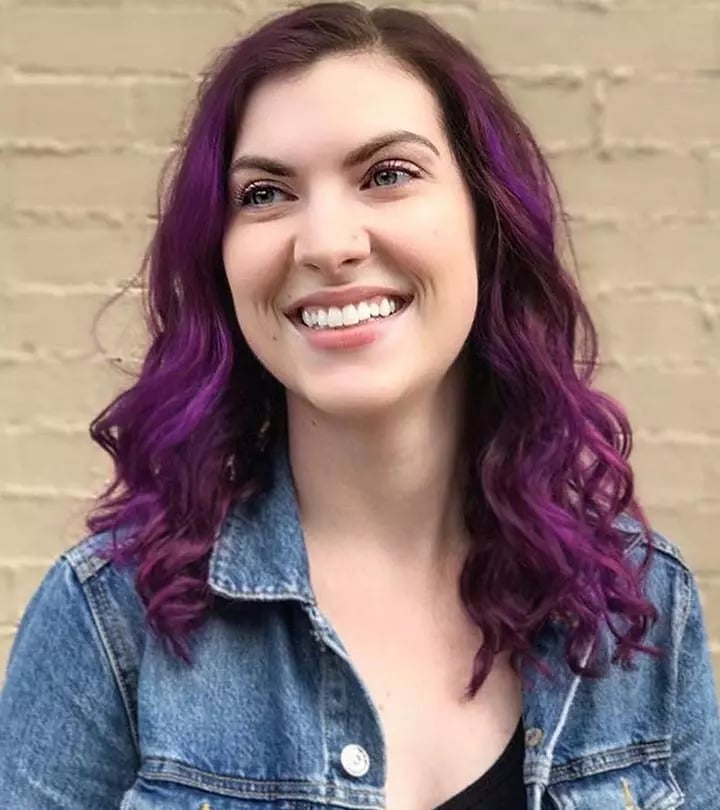
Vivid purple highlights are woven through a dark base, creating pops of color that move with each layer. Medium density wavy hair starting at shoulder length gives the highlights enough surface to read clearly without overwhelming the cut. Ask your colorist for: shoulder length layers, dark base with purple highlights. Blow-dry with a round brush to smooth the layers and let the purple pieces show their shine.
Keep the purple tone fresh with a color-depositing conditioner every other wash. The highlights will need a touch-up every 6-8 weeks to maintain their vibrancy against the dark base. A middle part keeps the look balanced, letting the color feel deliberate rather than scattered.
Mid-Back Mystic Purple to Magenta Ombre
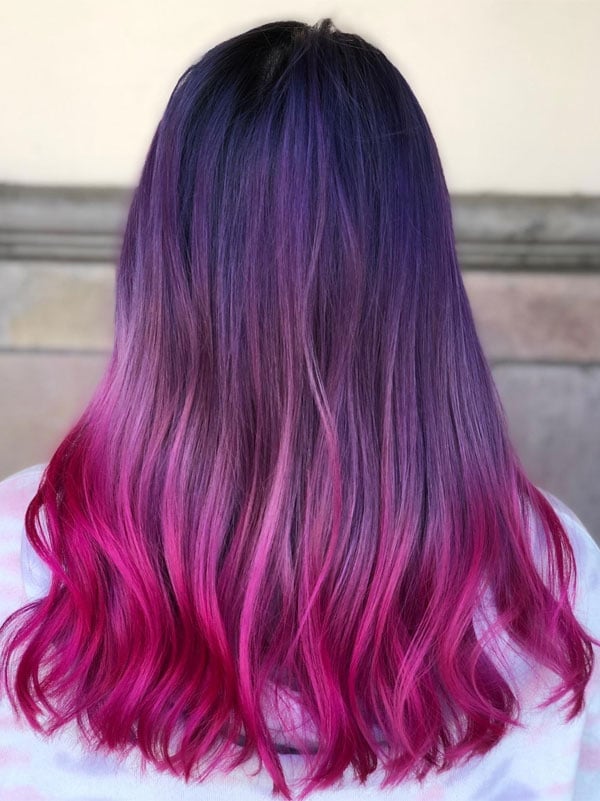
This ombré transitions from a deep mystic purple at the roots to a vivid magenta at the ends, with the color intensifying as the hair lengthens. Medium density wavy hair of mid-back length or longer gives the gradient room to breathe. Ask your colorist for: mid-back mystic purple to magenta ombre.
Expect the magenta ends to fade toward a rose-toned pink after about six weeks, especially with warm-water washes. A cool-water rinse and a purple shampoo used once a week will slow that shift. The lighter ends show warmth first, so a toning appointment every 8-10 weeks keeps the gradient crisp and clear. A silk pillowcase helps the waves hold overnight without creating frizz at the color line.
Collarbone Wavy Bob With Subtle Plum Balayage
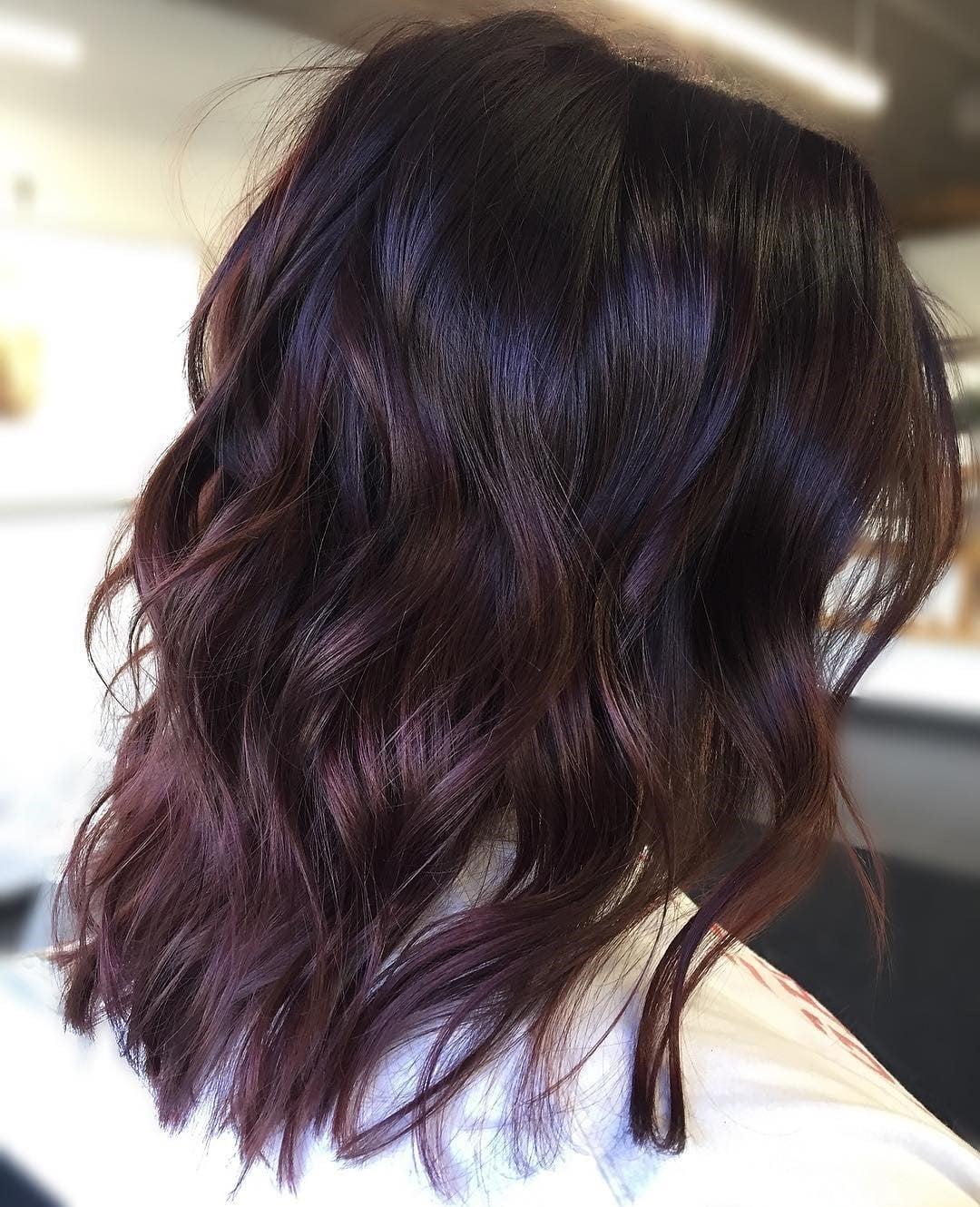
Wondering how to add purple without going full neon? This collarbone-length wavy bob uses a dark brown base with subtle plum balayage blended through the ends, so the color reads as a sophisticated accent. Medium textured wavy hair at collarbone length lets the plum settle into the natural movement. Ask your colorist for: collarbone wavy bob, subtle plum balayage. This balayage lands naturally in fall and winter, when jewel tones feel more grounded than pastels. A sea salt spray will emphasize the texture and keep the waves from looking too polished. The plum fades gracefully into a dusty rose over time, which is a decent second act.
Collarbone Dark Brown With Vivid Purple Ombre
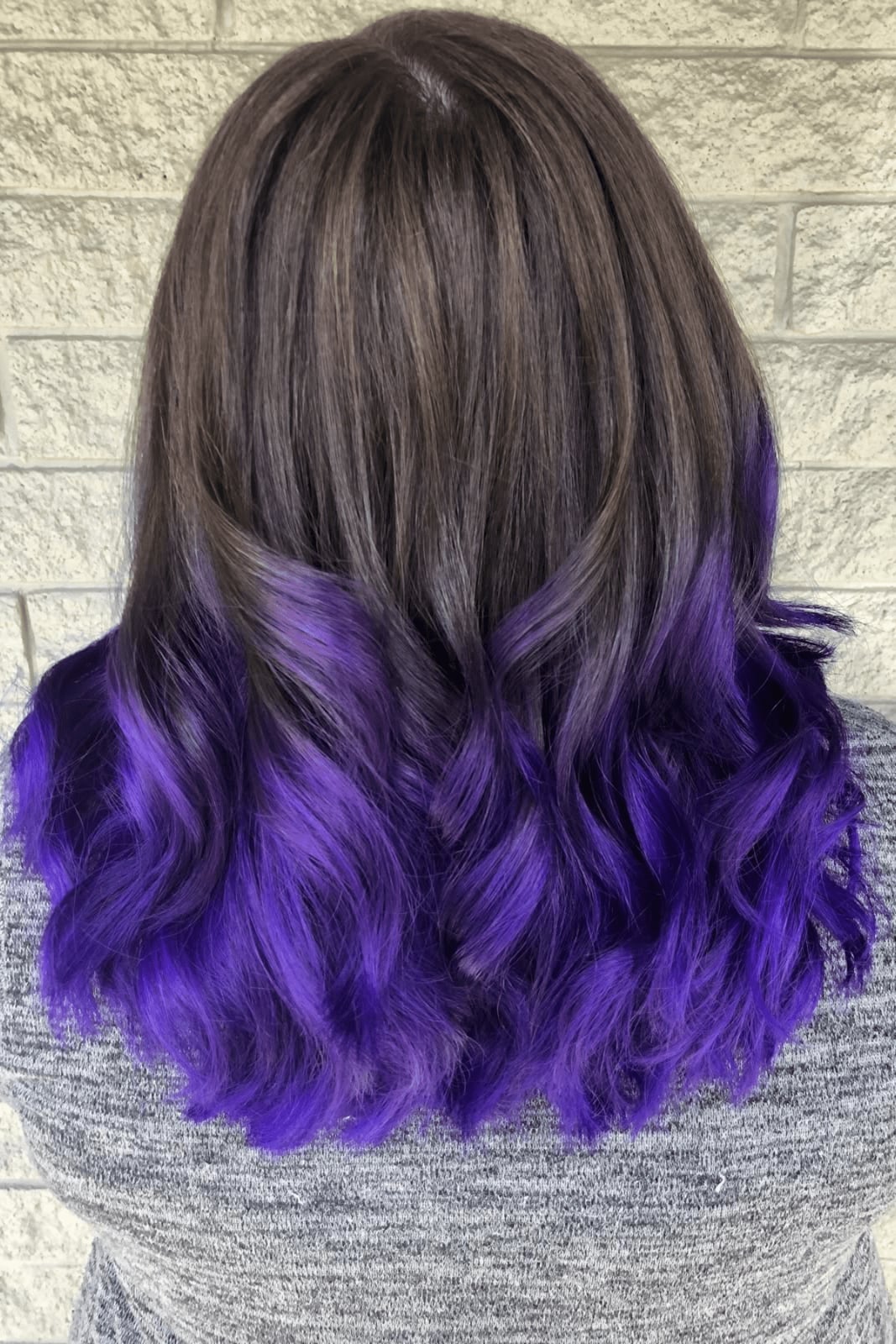
The technique here is a true ombré, with the dark brown base kept intact near the roots and the vivid purple applied only to the ends. Thick, wavy hair of collarbone length or longer provides enough weight for the color to land visibly. Ask your colorist for: collarbone dark brown with vivid purple ombre. The colorist will section the hair horizontally, lightening the ends before applying the purple tone, which keeps the transition soft rather than striped. Because the roots stay dark, the grow-out is forgiving for about eight weeks. The vivid ends will need a color-depositing mask every few washes to stay punchy rather than turning muted.
Collarbone Layered Hair With Multi-Colored Streaks
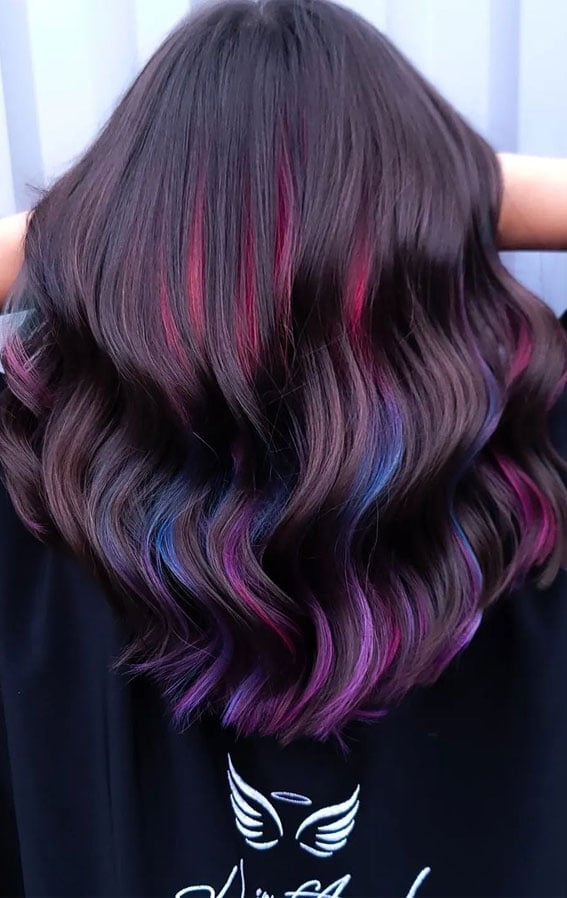
Subtle streaks of red, blue, and purple are scattered through a dark base, giving collarbone-length layers a playful accent without committing to a single shade. Medium density wavy hair at this length shows each streak clearly through the movement. Ask your colorist for: collarbone layered hair with red, blue, purple streaks. This is a salon-leaning job because multiple colors require separate foils and careful placement to avoid bleeding. The honest trade-off: the red and blue tones fade faster than the purple, so the balance shifts within a few weeks. A color-safe shampoo and cold rinses help, but expect the palette to change over time rather than staying true.
Mid-Back Electric Magenta Violet Ombre
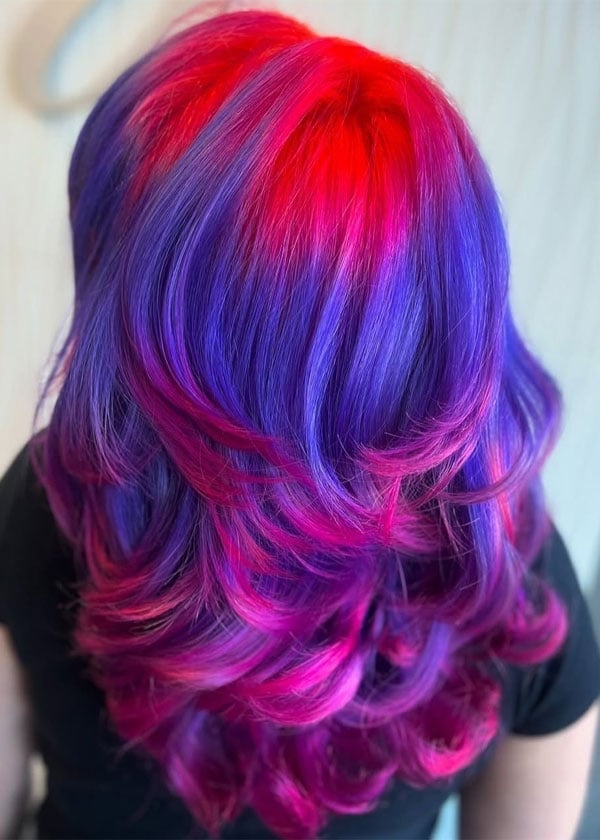
Can a single ombre do two jobs at once? This one answers yes: electric magenta at the roots shifts into deep violet through the ends, a two-tone gradient that lives somewhere between party and serious color commitment. Loose waves and a middle part let the transition land naturally, and medium-density hair of mid-back length or longer has enough body to carry the contrast without it reading as a stripe.
Ask your colorist for: mid-back electric magenta and violet ombré. A trim every eight to ten weeks keeps the ends healthy enough for the lighter violet to hold its saturation. A finishing spray with shine boosts the metallic quality of the magenta.
Mid-Back Dark Base To Violet Pink Ombre, Wavy
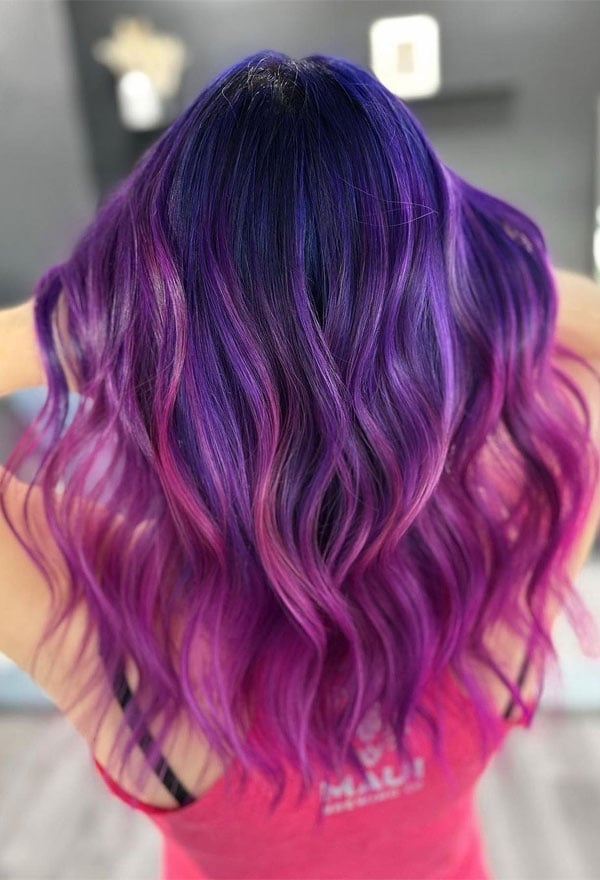
A uniform pastel is a different animal from this triple-decker gradient. Here the hair starts dark at the roots, opens to vivid violet, then lands on bright pink at the ends, a transition that needs length to show three distinct zones. Loose waves on medium-density mid-back hair keep the three zones connected.
Ask your colorist for: mid-back dark base to violet and pink ombre. The fade from dark to light means the root line stays invisible for a solid stretch, so you can push touch-ups past the usual rhythm. A color-protecting shampoo and conditioner help the pink end not turn brassy.
Mid-Back Dark Base With Plum Balayage
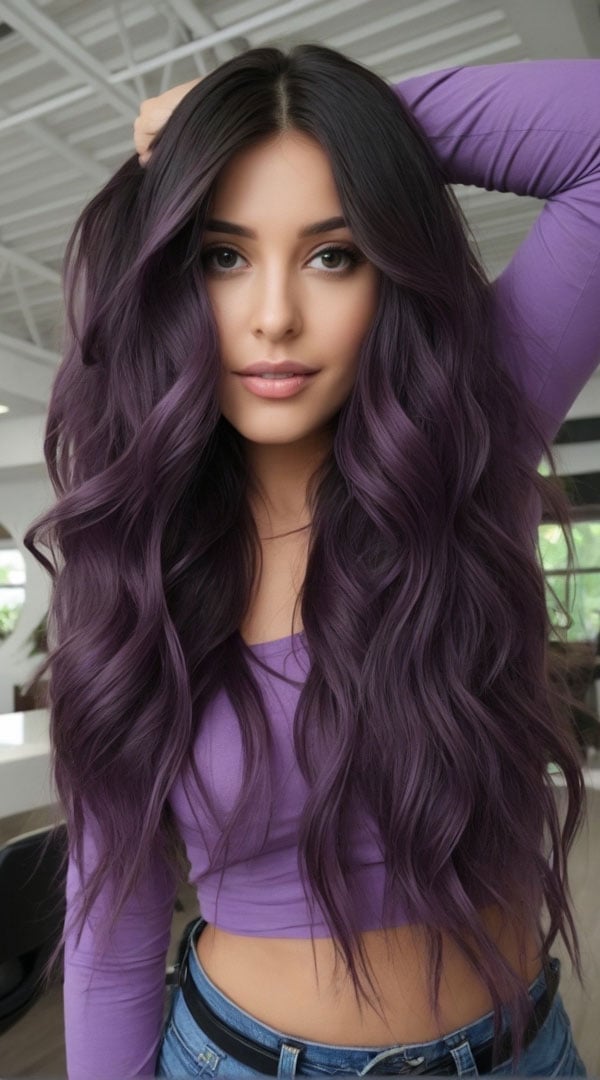
The trick with a dark base and plum balayage is placement: the lighter sections sit through the mid-lengths and never start at the root. Thick, wavy mid-back hair carries the soft hand-painted strokes without losing the depth of the natural dark color. A middle part and loose waves let the plum peek through without overwhelming the base.
Ask your colorist for: mid-back dark base with plum balayage. The face-framing sections are the ones that catch light first. Refresh the balayage every ten to twelve weeks, and use a texturizing spray to separate the waves so the plum shows up as dimension, not a single blanket.
Chin Length Straight Bob With Lavender Color
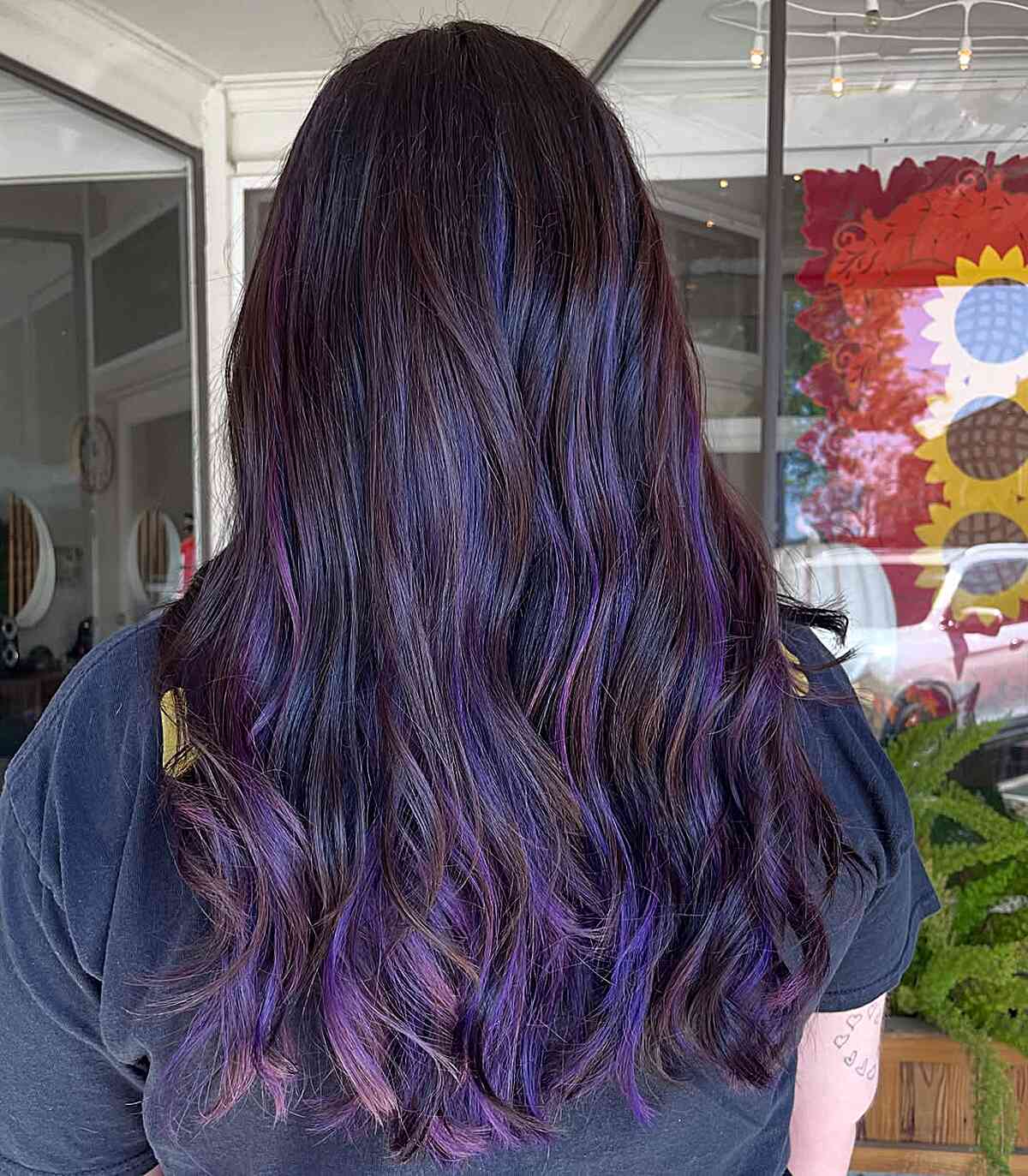
A chin-length bob with a side-swept fringe and fine texture is a clean canvas. The lavender color here is soft and muted, not pastel-bright, which means it sits closer to a dusty lilac than a candy tone. Straight styling and a side part keep the line sharp, and the fringe softens the transition from face to cut.
Ask your colorist for: chin length bob, soft lavender color, side-swept fringe. Lavender on fine hair shows fading faster than deeper shades, expect a toning appointment every four to six weeks to stop it pulling beige. A flat iron for smoothness and lightweight products keep the fine texture from weighing down.
Short Choppy Bob With Pastel Purple Ombre
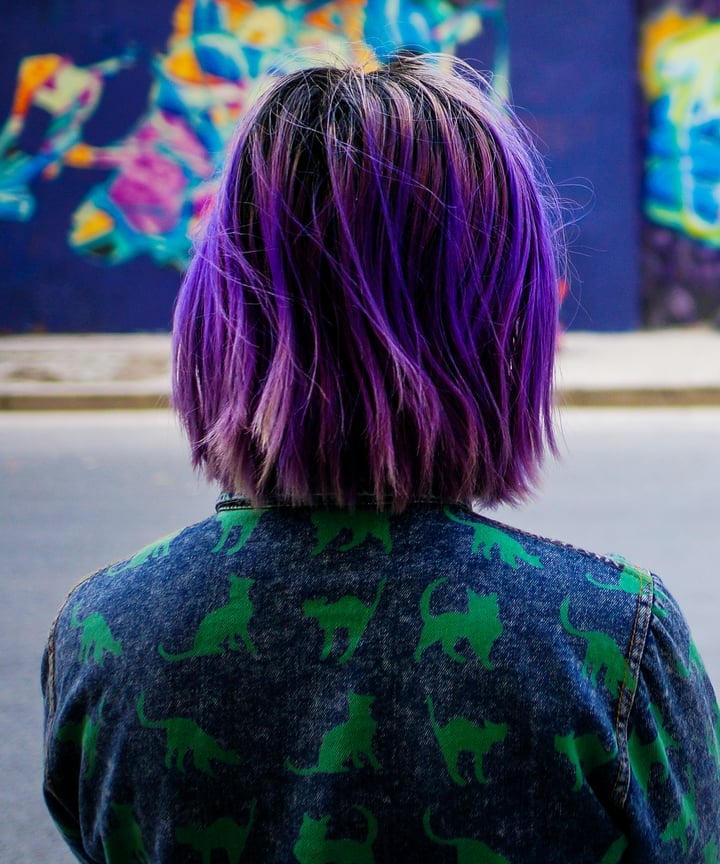
Pastel purple, pink and silver tones in one ombre sound like a lot of requests for a short bob. The trick is the choppy cut and short bangs, which break up the colors into fragments rather than a single stripe. Straight, fine hair at ear length holds the pastel blend without the texture fighting the pastel.
Ask your colorist for: short choppy bob, pastel purple pink silver ombre, short bangs. This is a spring or summer move. The pastel family reads best in natural light. A texture paste on the ends reinforces the choppy shape, and a purple shampoo once a week keeps the silver from going muddy.
Final Thoughts
Match the commitment to your calendar. A vivid all-over purple wants a toner every four to six weeks and a root touch-up at six to eight; plum balayage or lowlights can stretch to ten or twelve between salon visits. Fine hair holds a blunt line better than heavy layers, and a round face benefits from length falling below the chin.
- Use color-safe shampoo and conditioner to preserve vibrancy.
- Wash with cool water to slow color fade.
- Book toning every four to six weeks for vivid shades.
- Deep condition weekly to keep shine and strand health.
- Plan root touch-ups every six to eight weeks.
Pick the maintenance you will actually keep, then let the color do the rest.