Face-framing layers are back, and this time they are about subtle shape rather than drastic texture changes. The shift has moved toward soft, lived-in cuts that work with your natural movement, not against it.
20 ideas cover everything from a collarbone lob to mid-back lengths with curtain bangs or wispy fringe. Whether your hair is fine and falls flat or thick enough to hide a visible grow-out line, there is a version here that keeps the shape intentional without demanding a full reset. The common thread is a cut that moves with you, not a static line that requires a round brush every morning.
The 20 looksOpen list +
Collarbone Lob With Soft Waves

The layers here start right at the cheekbone and dissolve into gentle waves before they reach the collarbone, which is the whole trick of a collarbone lob with face framing. Brunette with subtle highlights keeps it quiet. Oval and heart-shaped faces get the most from those layers, since the sweep softens a wider forehead and adds curve where the jaw tapers. Fine to medium density hair is the right starting point; thin hair loses the wave, and heavy hair fights it. Ask your stylist for: collarbone lob, soft face-framing layers. A large barrel curling iron does the work in about fifteen minutes, and a trim every six to eight weeks keeps the ends from dragging the shape down.
Choppy Lob With Curtain Bangs

The choppy layers and curtain bangs do the rest, and they need to be cut as one idea so the fringe blends into the sides instead of sitting on top of them. Brown base with blonde balayage gives the texture something to catch. Ask your stylist for: choppy lob, curtain bangs, textured waves. Say the words “lived-in” and “piecey ends” out loud, because a cautious stylist will hedge toward smooth. Medium density wavy hair holds the chop best; very fine hair can end up looking sparse at the tips.
Collarbone Wavy Hair With Curtain Bangs and Air Dried

A side parting shifts the weight of collarbone-length waves to one side, which is how this cut avoids looking symmetrical without trying. The curtain bangs start near the temples and sweep out, meeting the long face-framing layers below the jaw. On medium density wavy hair, the whole thing air dries into a lived-in shape a diffuser just speeds up. Ask your stylist for: collarbone length wavy hair, curtain bangs, face-framing layers. The fringe needs a trim every six weeks, and the subtle lighter pieces keep the dark brown from reading flat when the wave pattern softens.
Layered Collarbone Lob With Side Part
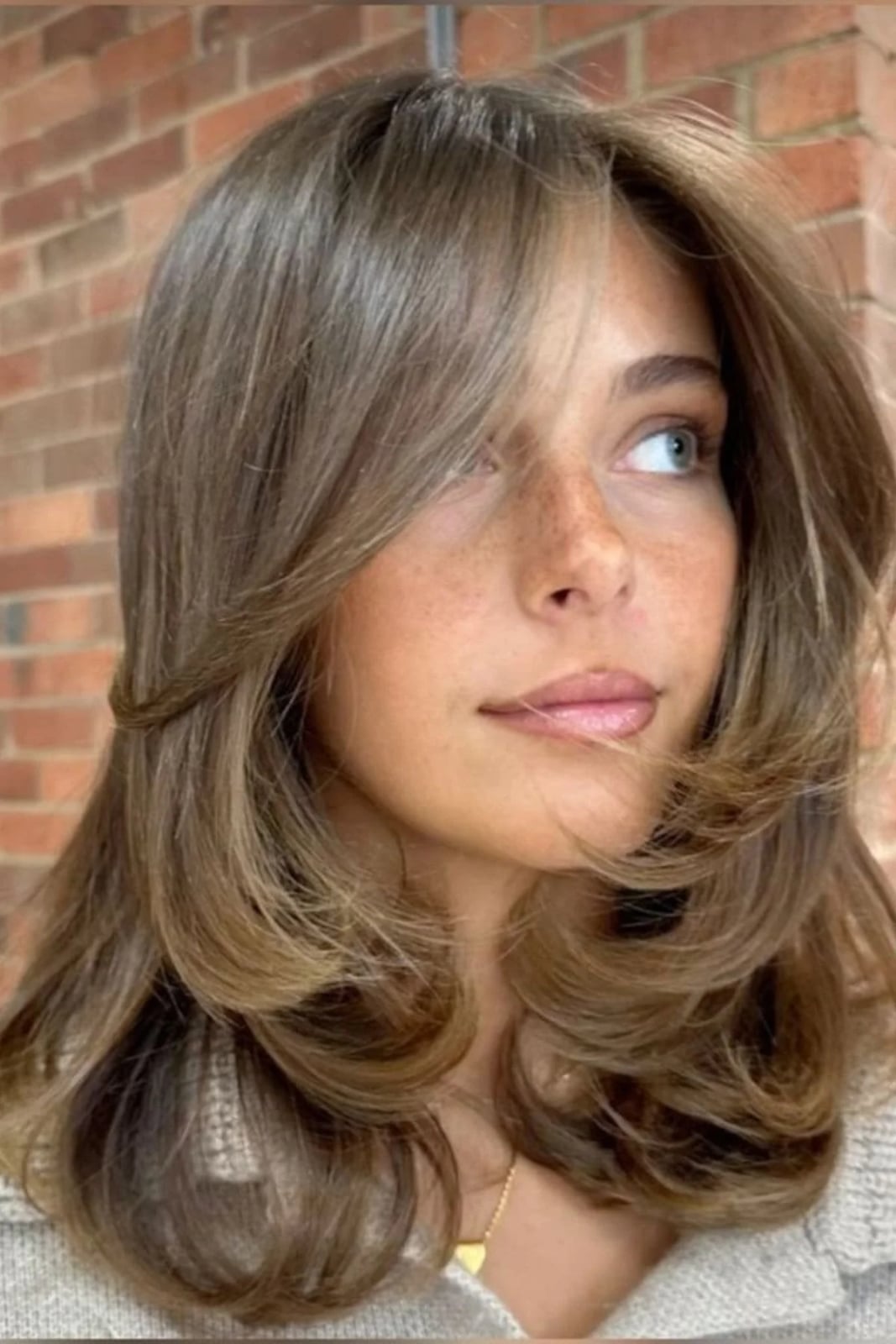
Compare this with a blunt collarbone cut: the weight sits in a different place. A blunt lob holds a clean horizontal line; the layered version breaks that line with face-framing layers that sweep away from the jaw, and a side part tips the volume to one side. Ash brown with subtle highlights reads softer with movement in it. Fine to medium density hair gains fullness from the layering, while very thick hair can turn pyramid-shaped without careful thinning. Ask your stylist for: collarbone layered lob, side part, face-framing layers. A round brush blowout gets the lift in about twenty minutes, and a trim every six to eight weeks keeps the layers from collapsing into one length.
Shoulder Length Layered Shag With Curly Bangs
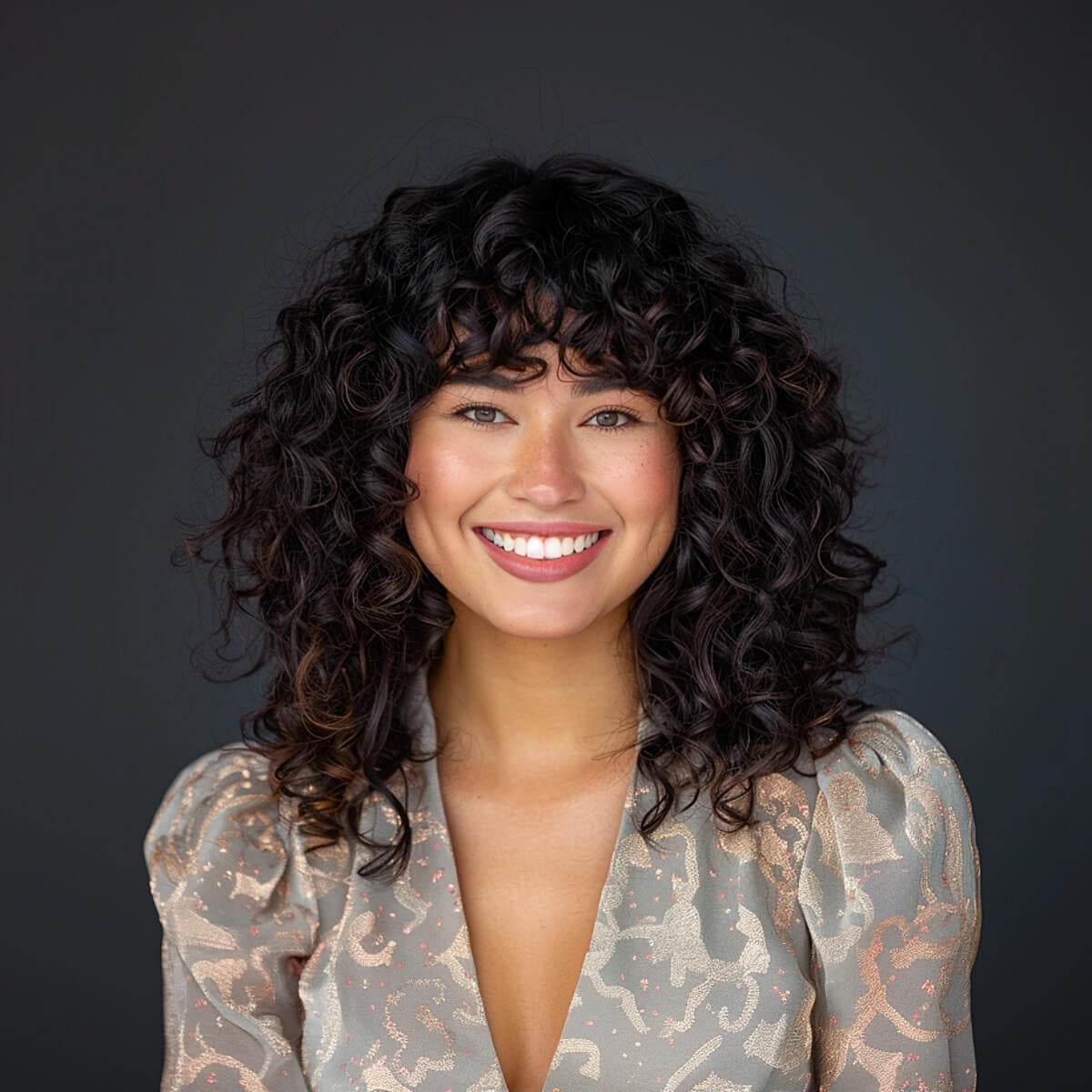
Curly bangs are the detail that makes this shag work: cut short enough to coil, long enough to sit above the brow, they merge with the face-framing layers instead of fighting them. The shape is a layered shag at shoulder length, dark brown, air dried into defined curls. Thick, curly hair is the honest requirement, because the cut relies on density to hold its stacked shape; fine curls go stringy at this length. Rounder faces get a strong frame from the bangs and the layers around the cheek. Ask your stylist for: shoulder length shag, curly bangs, face-framing layers. Curl cream and a diffuser do the daily work, and a trim every eight weeks keeps the silhouette from turning into a triangle.
Mid-Back Ash Blonde With Wispy Bangs
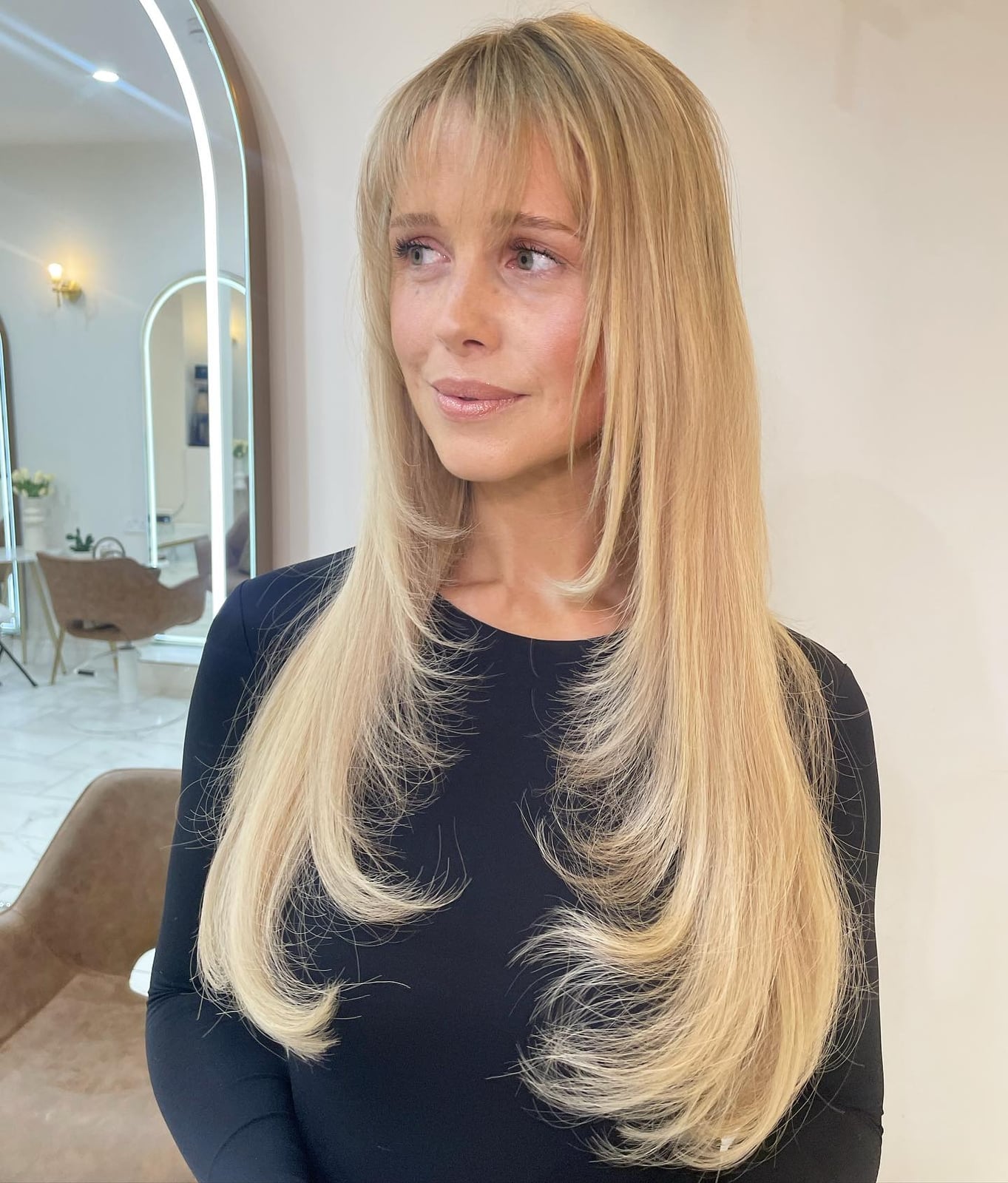
Wispy bangs on fine hair work because the cut leaves gaps: the fringe is point-cut so air moves through it, and the long layers below are sliced vertically rather than chopped horizontally. That keeps mid-back length from collapsing into a triangle. The ash blonde is even end to end, which helps a straight blowout read as deliberate shape instead of flatness.
Ask your stylist for: mid-back length, wispy bangs, face-framing layers. Fine, straight hair holds this cut well as long as the stylist keeps the layers long and sparse. A middle parting splits the fringe into two soft pieces that sit around the cheekbones. Run a texturizing spray through the bangs and rough them with your fingers for separation. Wispy bangs need a trim every six to eight weeks, and they start poking at the eyes around week five.
Mid-Back Straight Dark Brown With Layers

The layers here start around the cheekbones and curve down, which is the difference between shape and a shelf. Fine, straight hair of mid-back length can wear this cut, but the margin is thinner than the photo suggests. Every layer removed takes weight with it, and on low-density hair that can read as stringy by the third week, especially in a middle parting.
Ask your stylist for: mid-back straight hair, long face-framing layers. Bring a photo and say you want the layers kept long: short, choppy pieces in fine hair go see-through fast. A blowout with a round brush gives the curve at the cheekbones; a flat iron alone leaves it limp. Book a trim every eight weeks, because fine ends split and the layers lose their line. Skip this if your hair is already thin at the ends: a blunt cut at collarbone length will look fuller.
Mid-Back Dark Blonde With Wispy Bangs and Air Dried

What does a haircut that survives a beach week actually look like? Not a blowout. This one is mid-back length with wispy bangs and face-framing layers, cut to sit well with natural texture rather than against it. The balayage highlights are the quiet hero: they run through the lengths in soft bands, so the wave pattern shows up without any styling at all.
Ask your stylist for: mid-back dark blonde, wispy bangs, face-framing layers. Fine, wavy hair takes this cut easily, and a side parting gives the bangs somewhere to fall. In summer, wash it, add a texturizing spray to damp ends, and let it dry in the sun. The wave does the work. Wispy bangs behave the same way, though humidity will test them. Trims every six weeks keep the layers from growing into one heavy mass by August.
Mid-Back Dark Chocolate With Layers

Thick, straight hair at mid-back can carry face-framing layers that begin at the jawline without losing body, and that is the whole request. Say you want long layers that keep the weight but add movement through the front, and that you plan to wear it smooth. Ask your stylist for: mid-back dark chocolate hair, face-framing layers from jawline. No bangs keeps the front clean. The cut itself is a salon job: a jawline start point on thick hair is hard to correct at home, and the blowout is what makes the layers visible.
Mid-Back Auburn With Soft Waves

Long layers in thick, wavy hair work best when the shortest piece lands around the jaw and the rest taper down from there. That is the geometry here, and the soft waves keep the auburn from looking like a solid block from the crown to mid-back. The subtle highlights break up the depth so the curve of each layer stays visible.
Ask your stylist for: mid-back auburn hair, long face-framing layers, soft waves. Thick, wavy hair holds this shape with minimal help: spritz damp hair with a texturizing spray, scrunch, then leave it alone. Auburn shifts with washing, so a colorist appointment every six to eight weeks keeps the tone from drifting. Trims land on the same schedule, since wavy ends thin out quietly before they look split.
Mid-Back Dark Brown With Long Layers, Wavy
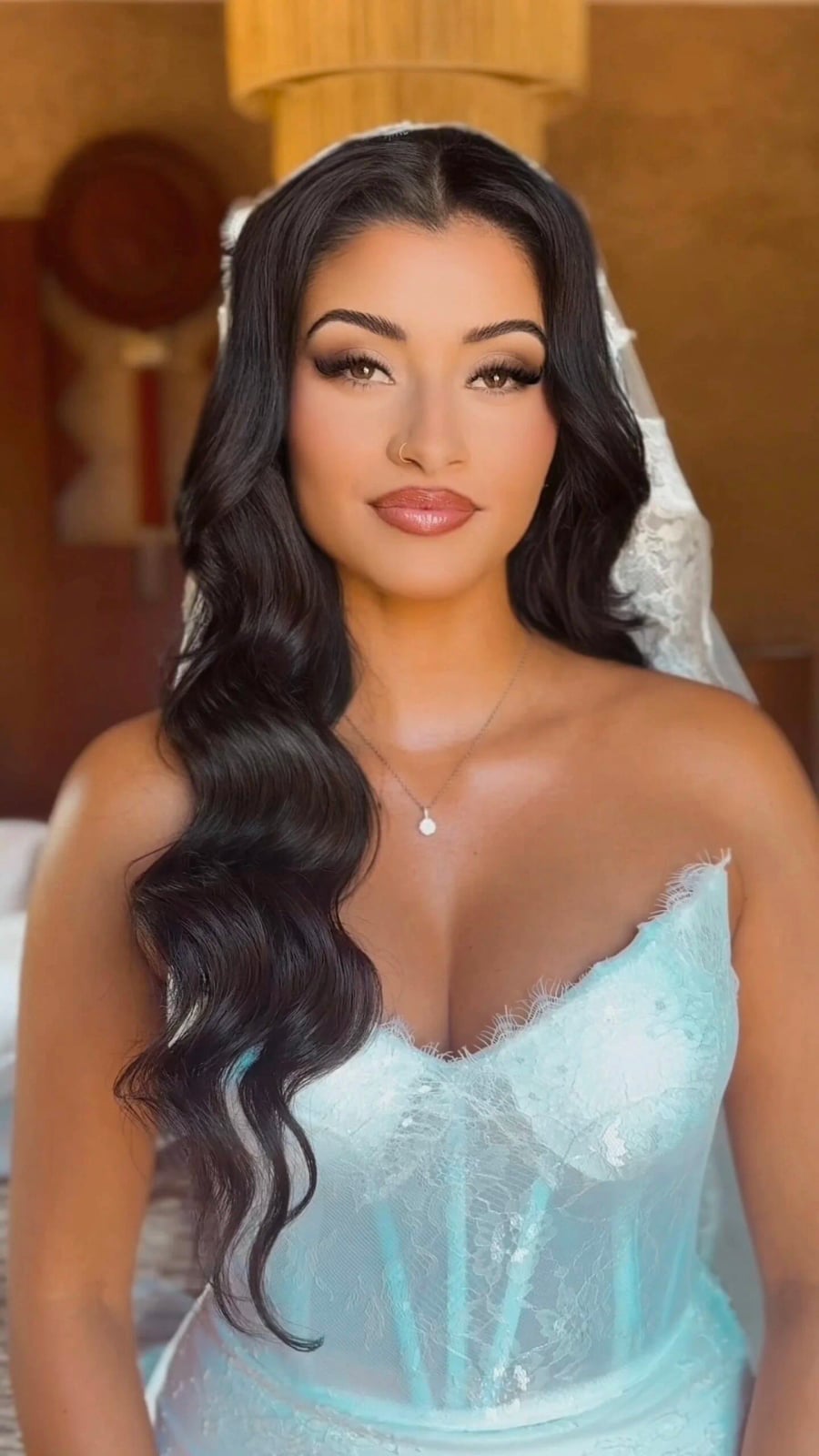
A design built on contrast: long, face-framing pieces carved into thick, wavy hair that otherwise wants to sit heavy. The middle part lets those front layers fall forward, softening the line around the jaw instead of letting the weight pull everything down. This cut works best on hair that already has some wave or bend, since the layers rely on texture to spread out and avoid collapsing into a triangle.
Ask your stylist for mid-back dark brown hair, long face-framing layers. The technique keeps the interior length so you don’t lose volume at the bottom, which matters when the hair is naturally dense. A large barrel curling iron can define the wave further, but air-drying with a lightweight cream also works. Expect a trim every eight weeks to keep those front pieces from merging back into the bulk.
Mid-Back Honey Blonde With Sweeping Layers
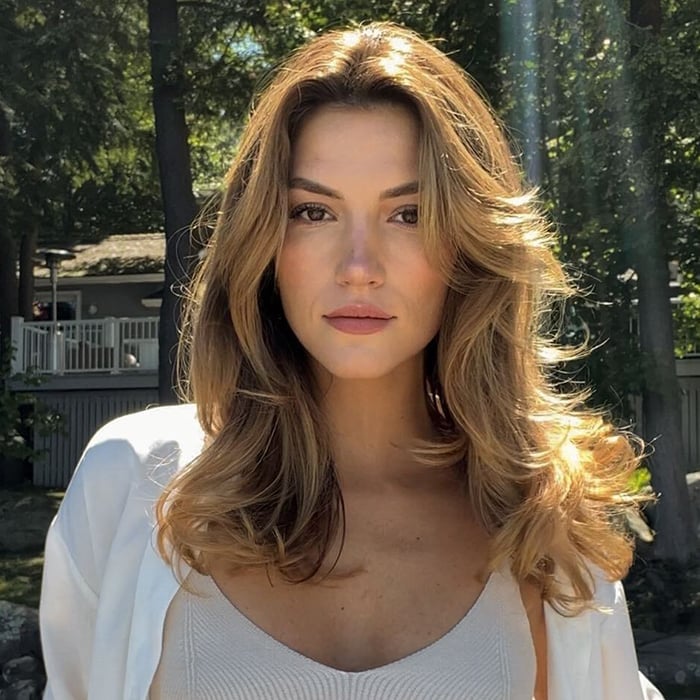
These sweeping layers are cut to open up and then fall away, which balances a stronger jaw or a squarer face shape by adding width where you want it. The honey blonde base with lighter highlights keeps the ends from looking flat, and the middle part lets both sides mirror each other. Ask your stylist for mid-back honey blonde, sweeping face-framing layers. A voluminous blowout with a round brush gives the lift this design asks for, though a large curling wand can fake it in less time. Thick hair is the canvas here; fine hair would need more internal layering to hold the shape.
Mid-Back Fine Blonde With Layers
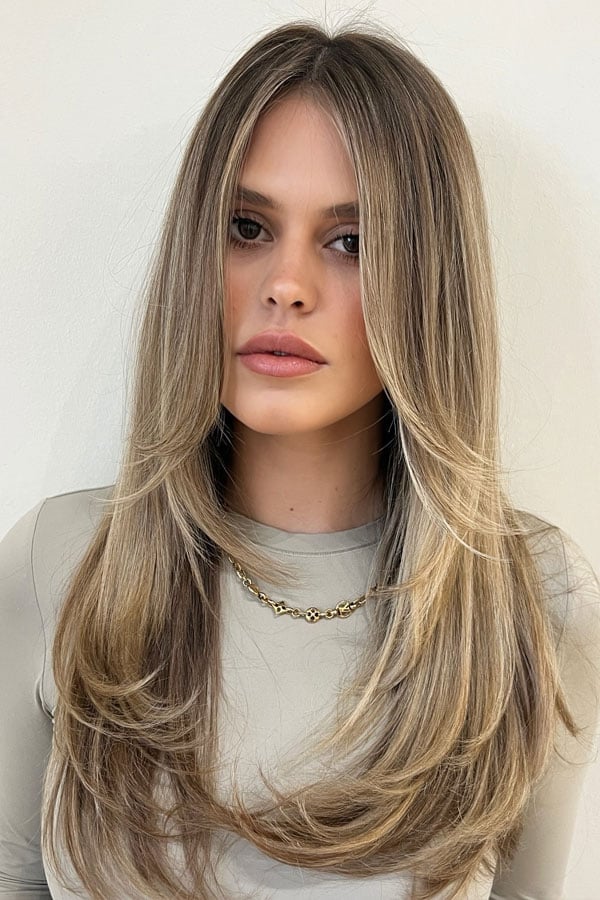
The long layers here start around the jawline and feather down into the mid-back length, which adds the illusion of movement to straight, fine hair. Fine texture can sometimes look stringy with too many layers, so the cut keeps them subtle and blended. The blonde with highlights helps, since lighter pieces reflect light and trick the eye into seeing more volume.
Ask your stylist for mid-back fine blonde hair, face-framing layers. A salon blowout gives the best finish because the round brush can lift the roots without heat damage at home. The alternative is a volumizing mousse and a diffuser, which takes longer and still won’t match a pro’s lift. Regular toning is needed: the blonde needs a gloss or toner every six to eight weeks to stay bright.
Mid-Back Dark Brown With Curtain Bangs

Curtain bangs are the softer cousin of blunt bangs, and that is the whole point here. Instead of a solid line across the forehead, these part in the middle and feather into the long layers, which means they suit round or heart-shaped faces without shortening the face visually. The side part on this cut adds volume at the crown, and the loose waves keep the dark brown from looking flat.
Ask your stylist for mid-back dark brown, curtain bangs, face-framing layers. The bangs are the main commitment: they need a trim every four to six weeks to stay at the right length, while the rest of the layers can go eight weeks. A texturizing spray and a quick blast with a round brush are enough to style the bangs, and the rest air-dries into the wave.
Mid-Back Brunette With Curtain Bangs
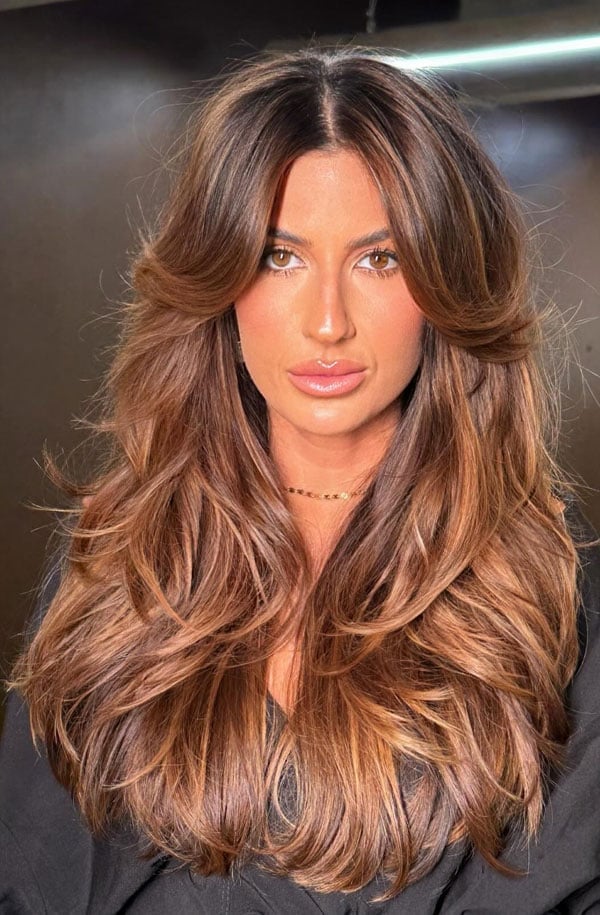
The balayage highlights here are painted onto the long layers so that the lightest pieces land where the hair curves around the face, creating dimension without a stripe effect. The curtain bangs sweep away from the center, which opens up the features and lets the highlights appear on both sides. A middle part keeps the distribution even, and the voluminous blowout adds the lift that thick wavy hair needs to avoid looking heavy. Ask your stylist for mid-back brunette, curtain bangs, voluminous blowout. The technique relies on the stylist placing the balayage low enough that the roots stay dark and the grow-out is gradual.
Mid-Back Light Brown With Curtain Bangs and Creating Dimension
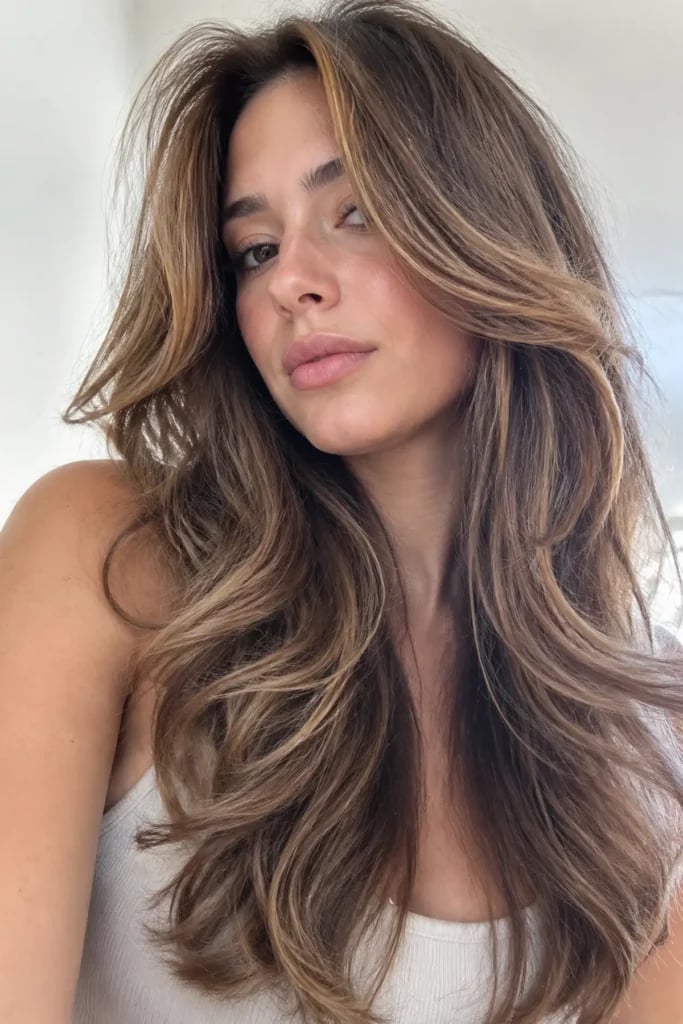
What do you actually say at the salon when you want layers that move but do not announce themselves? Start with the length: mid-back, with long layers that carry the shape. The light brown base carries blonde highlights, and that contrast is what creates dimension through the wavy, thick texture. Curtain bangs split at the center and sweep outward, meeting face-framing layers that begin around the cheekbones.
Ask your stylist for: mid-back light brown, curtain bangs, face-framing layers. The key word is blend. Layers that connect into the curtain bangs form one shape instead of two separate haircuts, and on thick wavy hair that connection keeps the front from looking heavy. A round-brush blowout gives the shape direction, and bangs need a trim every four to six weeks to stay out of your eyes. For a light brown curtain bangs look that holds its dimension between appointments, the highlight placement matters as much as the cut.
Collarbone Layered Shag With Curtain Bangs
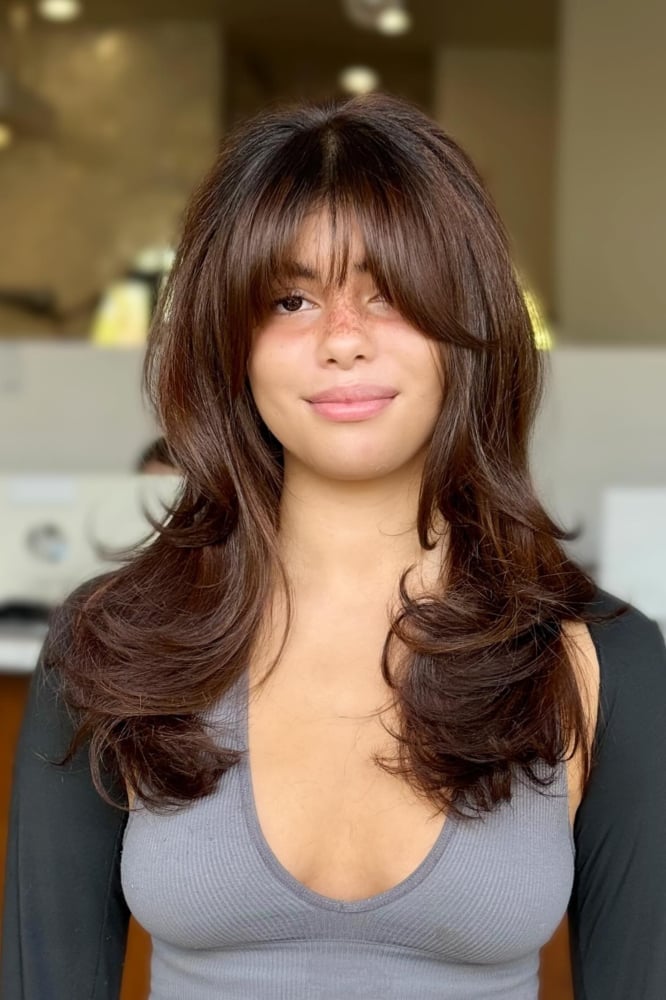
The cut is a layered shag that stops at the collarbone, with curtain bangs and face-framing layers cut to move instead of sitting flat. On thick, wavy hair the shag does most of the work: the layers give the texture somewhere to go, and the dark brown base with subtle highlights keeps the shape visible instead of turning into one dark mass. The middle parting lets the curtain bangs fall outward on their own. A textured blowout is the finish that sells it, and a texturizing spray helps the waves hold their shape through the day. Upkeep runs on a six to eight week trim, since shag layers lose their lift once the ends grow out. The styling effort is real: thick wavy hair needs some product and a diffuser or round brush to look deliberate, and skipping that step leaves the cut looking rounder than intended.
Mid-Back Blonde With Curtain Bangs, Wavy
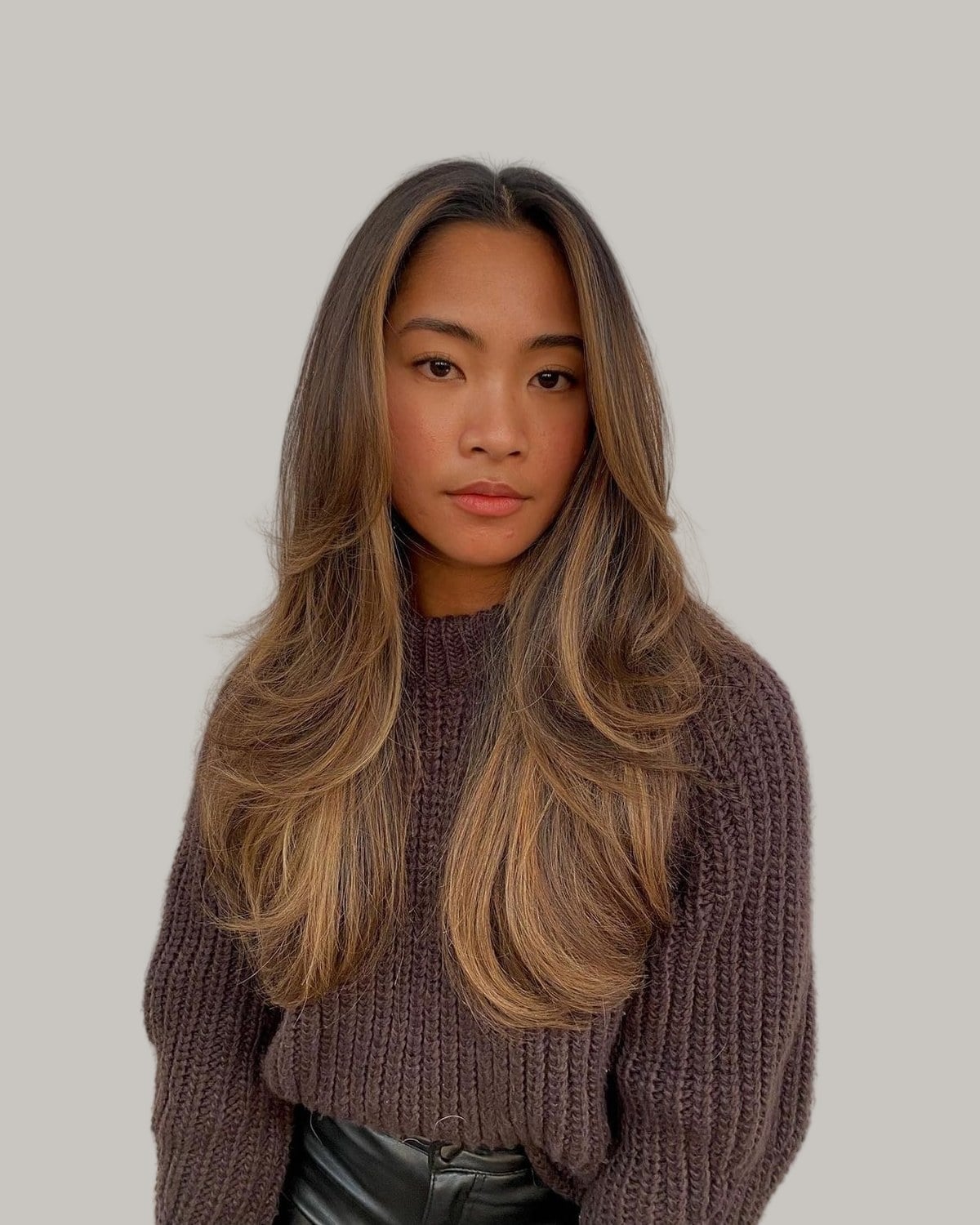
Soft curtain bangs and face-framing layers are the most forgiving version of bangs, and this mid-back cut shows why. The blonde base with subtle highlights keeps the length from reading heavy, and the long layers let wavy, medium density hair keep its movement through a blowout. A middle parting splits the bangs cleanly, and the layers pick up around the cheekbones.
Ask your stylist for: mid-back blonde hair, curtain bangs, face-framing layers. Medium density is the sweet spot here: enough body for the waves to hold shape, not so much that the layers bunch up. Angular features get a softer line from layers that curve around the cheekbones instead of cutting straight across. If your hair is very fine, ask for fewer, longer layers so the ends do not thin out. A volumizing spray and a round brush carry the blowout, and bangs need a trim every four to six weeks. For blonde curtain bangs, keep the highlight tone close to the base so roots grow out without a hard line.
Long Hair With Cheekbone Face-Framing Layers

The layers here start at the cheekbones, which is a precise placement rather than a general one. Long hair at mid-back length carries loose waves, a side parting adds volume at the root, and brunette with balayage gives the length lighter tones toward the ends. No bangs: the face-framing layers do the framing on their own, which keeps the front easy to style and easy to grow out.
Ask your stylist for: long hair, face-framing layers starting at cheekbones. This is not a cut to attempt at home. The difference between layers that start at the cheekbone and layers that start an inch lower is the whole effect, and a freehand trim tends to land in the wrong place. Book the salon for the initial cut, then keep it going with a trim every six to eight weeks so the shortest layer stays where it was placed. A texturizing spray gives the loose waves some grip. For long hair cheekbone layers, the side parting is doing quiet work: it lifts the root and keeps the front from lying flat against the head.
Mid-Back Copper With Curtain Bangs, Straight
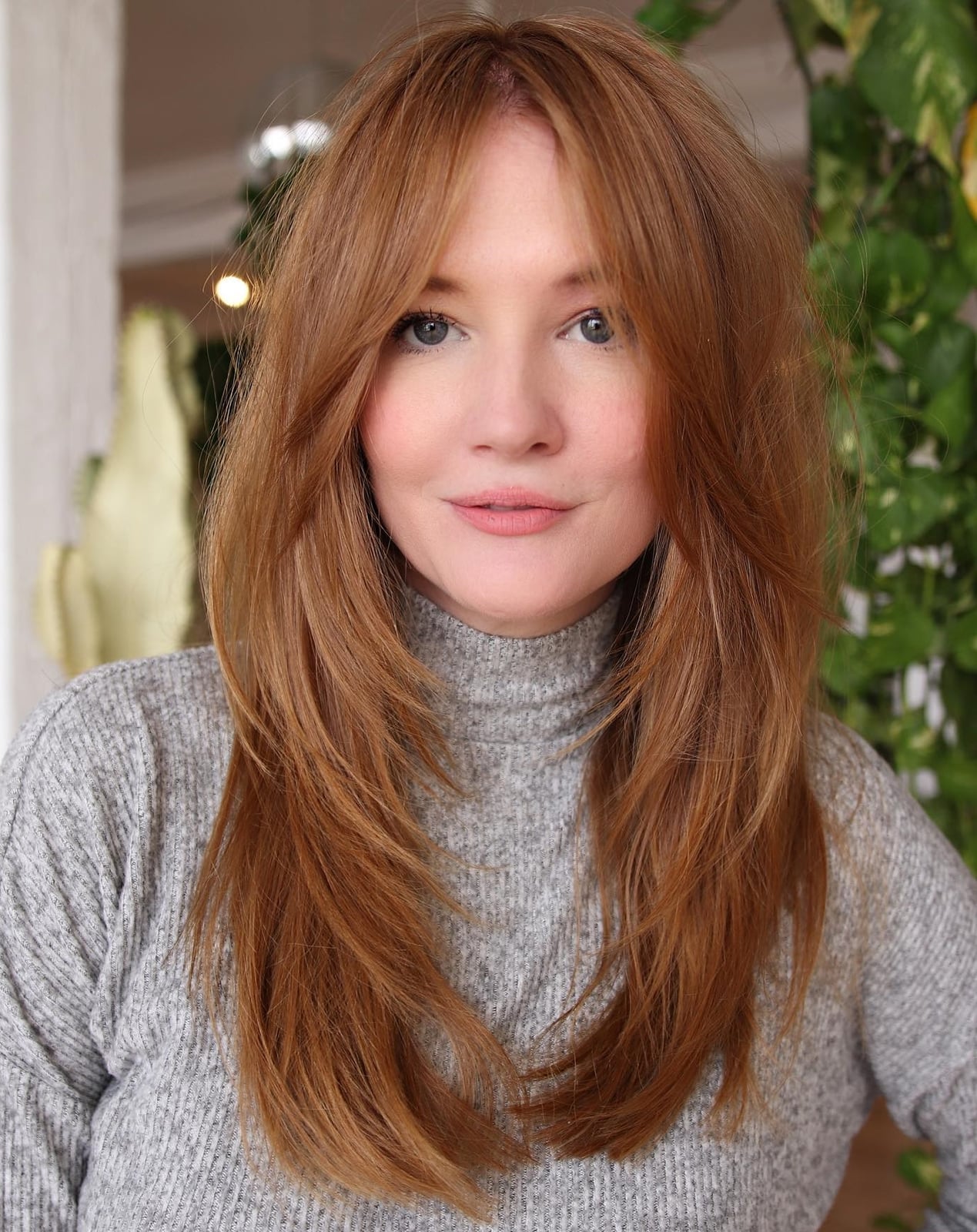
Can you get close to a copper blowout at home, or does it need a salon chair? The cut you can maintain; the color you cannot fake. Mid-back length with long layers and curtain bangs is a straightforward ask, and thick straight hair holds a blowout well. The copper base with subtle highlights is the part that needs a professional: copper shifts fast, and a highlight placement that adds depth without streaking takes a trained eye.
Ask your stylist for: mid-back copper hair, curtain bangs, face-framing layers. At home, a heat protectant and a smoothing serum plus a round brush get the straight, smooth finish, and the middle parting lets the bangs sweep out. Bangs need a trim every four to six weeks. This is an autumn cut in the best sense: copper warms up as the light goes flat, and the layers keep the length from looking like a curtain. For copper curtain bangs, book a toning appointment between color visits to keep the shade from drifting.
Final Thoughts
For fine hair, keep the baseline blunt and let the face-framing layers start at the cheekbones. That one detail does more for fullness than any amount of texturizing ever will. For rounder face shapes, let the longest layer fall below the chin to lengthen the silhouette. Face-framing layers offer endless possibilities for enhancing your natural beauty.
- Trim face-framing layers every 6-8 weeks to maintain shape.
- Use a round brush when blow-drying to smooth and shape layers around the face.
- Consider a subtle toner every 8-12 weeks to keep highlights fresh.
- Apply a heat protectant spray before styling to preserve hair health.