
You know that feeling when your mind keeps circling the same worry, even though you know there is nothing you can do to change it? That is where letting go becomes a daily practice, not a one-time decision. This article covers practical steps to shift your focus from what you cannot control to what you can, using simple tools like journaling, mindfulness, and boundary-setting that you can start using today.
Letting go is not about giving up or pretending you do not care. It is about accepting reality as it is and then directing your energy toward your own reactions, efforts, and choices. When you stop fighting what you cannot change, you free up mental space for what actually matters.

Key Takeaways
- Acceptance means acknowledging reality as it is, not approving of it or giving up.
- Focus your energy only on what you can control: your reactions, efforts, and boundaries.
- Practice mindfulness daily, even for five minutes, to stay present and reduce rumination.
- Set clear boundaries in relationships to manage expectations from uncontrollable behaviors.
- Seek professional support if feelings of helplessness persist and interfere with daily life.
Letting Go: Finding Peace When Things Are Out of Your Hands
Letting go is not about giving up or approving of a bad situation. It means looking at reality as it is and then shifting your energy to the parts you can actually influence, your own reactions, efforts, and choices. When you stop fighting what you cannot change, your stress drops and your emotional well-being improves. Acceptance creates room for peace.
Practical Steps to Start Letting Go Today

None of these steps require an hour of free time or a special app. I run through them in order when something has me wound up, and most days the first two are enough.
- Sort it into two columns: Write the situation at the top of a page and draw a line down the middle. On the left, list what you can actually influence: your reaction, your effort, your attitude, the next conversation you schedule. On the right, list what you can’t: someone else’s decision, a past event, a future outcome. Most of the right column turns out to be things you were never assigned.
- Take one action on the left side: Pick a single item you control and do something concrete with it today, even something small like sending one email or making one call. Problem-solving on controllable issues is what pulls you out of helplessness, and one finished task does more for your mood than an hour of replaying the problem.
- Anchor yourself for five minutes: Sit down, set a timer, and follow your breath or a guided recording. When your mind drifts back to the worry, note it and return to the breath. The point is not to empty your head but to interrupt the rumination loop long enough that it loses its grip.
- Talk to yourself like a friend: Name what is hard out loud: this is genuinely stressful, and I am doing what I can. Self-compassion is not softness; it is what keeps you steady enough to keep going when the process takes longer than you hoped.
- Put one joyful thing on the calendar: A walk, a hobby, coffee with someone you like. Activities with a sense of purpose redirect your attention away from the stressor, and having it scheduled means you won’t wait to feel ready.
My tip: Keep the two-column page somewhere visible for a week. Seeing the same right-hand column day after day is a quiet reminder that those items were never yours to fix.
Mindfulness and Cognitive Tools for Releasing Control
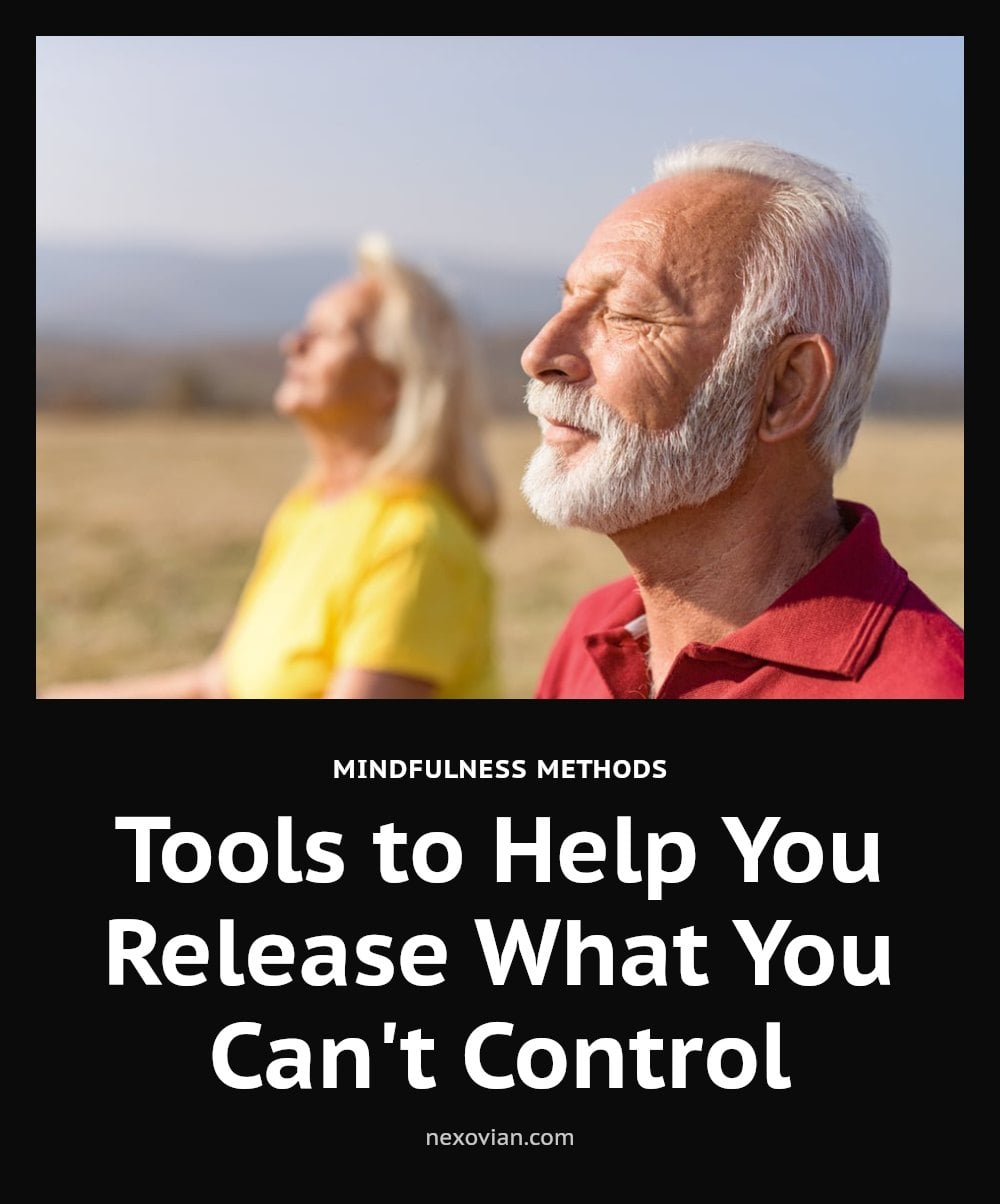
These three tools help me step out of the mental spin cycle and into a calmer place. I use them in rotation depending on what feels most stuck.
Mindfulness meditation
A 5-minute daily meditation anchors you in the present. When you notice your mind drifting to what you cannot change, you gently return to your breath. Over time this reduces the habit of rumination. My tip: Use a guided meditation app if sitting in silence feels hard. Even 2 minutes helps.
Journaling
Writing gets the thoughts out of your head and onto paper. I journal for 10 minutes without censoring myself. Then I read back and look for patterns, the same worry, the same story. Caution: Do not use journaling to rehearse your resentment. The goal is to process, not to replay. If you feel worse after writing, try a structured prompt: what is within my control today?
Cognitive reframing
This changes the lens you view the situation through. Ask yourself: is there another way to see this? What would I tell a friend in the same spot? Pro move: Write down the thought that feels true (example: I ruined everything). Then write a more balanced version (example: I made a mistake and I am learning from it). Your brain will eventually shift toward the reframe if you repeat it.
Common Missteps When Trying to Let Go
I have made every one of these mistakes, and they kept me stuck longer than necessary. Here is what to watch for.
- Confusing acceptance with resignation: Acceptance says I see this is real. Resignation says I give up. The first opens the door to action. The second closes it.
- Believing letting go means you do not care: You can care deeply and still release the outcome. Caring about the person and accepting that you cannot control their choices are not opposites.
- Forcing yourself to get over it: Skipping the emotional processing does not work. The feeling will surface later, often stronger. Let yourself feel sad, angry, or disappointed for a set time. Then move on.
- Focusing only on external factors: You cannot change other people or the past. The only reliable place to put your energy is your own internal response. Adjust your expectations, not the world.
Best Tips for Cultivating a Letting Go Mindset
I find that setting boundaries in relationships is one of the most practical ways to let go. You cannot control other people’s actions or feelings, but you can decide what you will and will not accept. A clear boundary might be saying no to a request that drains you or limiting time with someone who consistently oversteps. It protects your energy without requiring the other person to change.
Physical activity is another outlet I rely on. A 20-minute walk or a short yoga session releases built-up stress and shifts my mental state faster than any reasoning. My tip: pair movement with deep breaths to double the calming effect.
Seek support from trusted friends, family, or a therapist. Sharing what you are holding onto reduces its weight. And practice self-compassion. Letting go is not a one-time decision. You will circle back to the same feelings, and that is normal. Patience with yourself matters more than perfection.
When to Seek Professional Support
If feelings of helplessness, sadness, or anxiety persist for weeks or interfere with your ability to work, sleep, or connect with others, consult a mental health professional. A therapist can help you develop coping strategies tailored to your situation. Caution: Do not use alcohol or drugs to manage these emotions. Self-medicating delays real progress and often deepens the distress. Reaching out for professional support is a sign of strength, not weakness.
Frequently Asked Questions
Is letting go the same as giving up?
No. Letting go is not giving up or approving of a bad situation. It means looking at reality as it is and then shifting your energy to the parts you can actually influence, your own reactions, efforts, and choices. Giving up implies you stop caring. Letting go is an active, intentional process that frees you to act where you can.
How long does it take to truly let go?
There is no set timeline. The process is ongoing and varies for each person, depending on the situation, your emotional history, and how consistently you practice the strategies. Expect it to take weeks or months, and know that it is rarely linear. Some days you will feel lighter, and other days the old feelings will resurface. That is normal.
Can I let go of something I still care about?
Yes. Caring about something and being attached to controlling its outcome are two different things. You can still love a person, value a goal, or grieve a loss while accepting that you cannot dictate how it unfolds. Letting go is about releasing the grip on the outcome, not the caring itself. That distinction is key to moving forward without losing what matters to you.
What if I keep dwelling on past events?
Dwelling is a common struggle, and it usually means your mind is trying to find a solution to something that cannot be changed. When you notice yourself replaying the past, gently redirect your attention to the present moment. A short mindfulness meditation, a few deep breaths, or writing down what you are feeling in a journal can help break the cycle. If the dwelling persists for weeks and interferes with daily life, consider speaking with a mental health professional.
How do boundaries help with letting go?
Boundaries are one of the most practical tools for letting go because they define what you will and will not accept from others. You cannot control other people’s actions or feelings, but you can decide your own limits. A clear boundary, like saying no to a request or stepping away from a draining conversation, shifts your focus from trying to change someone else to protecting your own peace.
Final Thoughts
My recommendation: start with the two-column sorting exercise the next time you feel stuck. Write the situation at the top, then list what you can control on one side and what you cannot on the other. That single act often shows you where your energy belongs. Expect the process to feel uncomfortable at first, letting go is a skill you build over weeks and months, not overnight. Be patient with yourself, and keep coming back to the present moment.
This article is for general informational purposes only and does not constitute professional mental health advice. If you are experiencing persistent feelings of helplessness, sadness, or anxiety that interfere with your daily life, please consult a licensed mental health professional. Do not use alcohol or drugs as a coping mechanism during this process.

